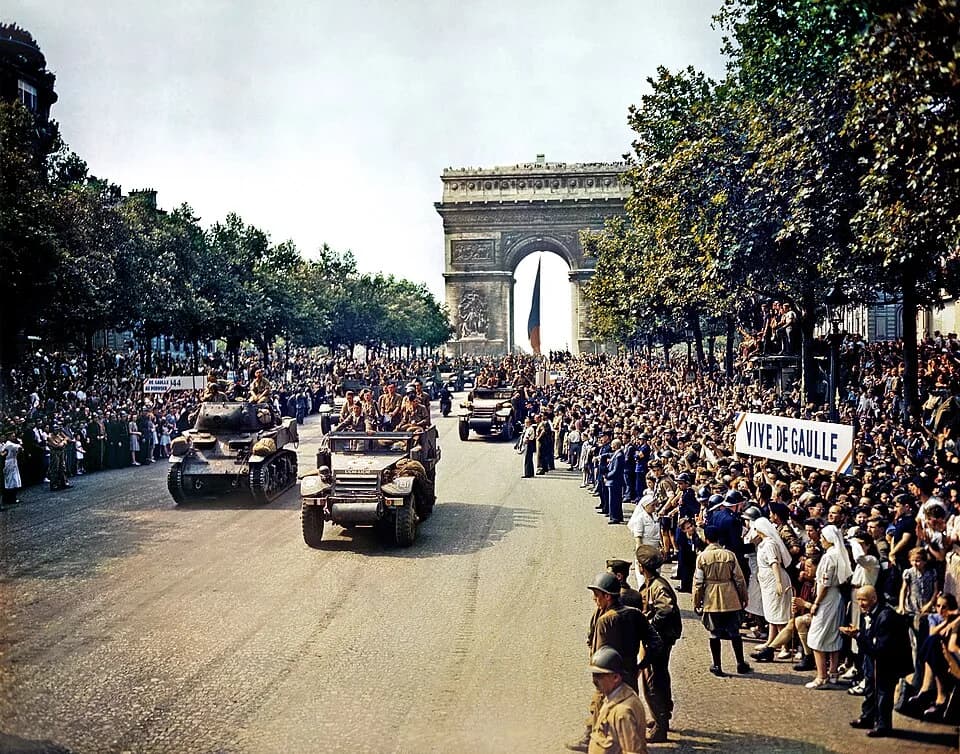
The Western Front, opened by the Normandy landings on June 6, 1944, saw Allied forces liberate France, Belgium and the Netherlands before invading Germany. From the Avranches breakthrough to the Rhine crossing, this eleven-month campaign ended the Third Reich from the west.
The Western Front stretched from the Normandy coast to the Elbe, passing through France, Belgium, Luxembourg, the Netherlands, and Germany. The terrain was varied: the beaches of Normandy, the Norman bocage (dense hedgerows that favored the defense), the open plains beyond the Seine ideal for armor, the dense forests of the Ardennes and Hurtgen, the Rhine (the last major natural obstacle before the industrial heartland of the Ruhr), and the Reichswald forest. Major cities — Caen, Paris, Brussels, Antwerp, Aachen, Cologne — were strategic objectives. Ports were crucial for logistics: the lack of deep-water ports after the destruction of Cherbourg's facilities and the damage to the Mulberry harbors created a supply crisis that slowed the Allied advance in autumn 1944. Antwerp, captured intact on September 4, 1944, did not become operational until November after the clearing of the Scheldt estuary.
Allied forces in Western Europe reached a peak strength of 4.5 million men under Eisenhower's supreme command. Montgomery's 21st Army Group (British, Canadian, Polish) operated in the north, while Bradley's 12th Army Group (American) held the center and Devers's 6th Army Group (American, French) the south after the landings in Provence. The French 1st Army under General de Lattre de Tassigny, reconstituted from Free French Forces and colonial troops, participated in the liberation of southern France and then invaded Germany. Allied air superiority was overwhelming: 12,000 aircraft against a few hundred from the Luftwaffe. German forces, commanded by Field Marshals von Rundstedt and then Model, numbered between 1 and 1.5 million men, but were consistently inferior in equipment, fuel, and air cover. Despite these disadvantages, German soldiers fought with fierce determination, particularly in defense of their homeland.
After the June 6 landings, the Battle of Normandy lasted over two months. The capture of Caen, planned for D-Day, required six weeks of fierce fighting. Operation Cobra (July 25, 1944) finally broke through the German lines, allowing Patton and his 3rd Army to sweep into Brittany. The Falaise Pocket (August 1944) trapped 100,000 Germans. Paris was liberated on August 25. The lightning advance of summer gave way to the autumn exhaustion: the Siegfried Line held, the Battle of Hurtgen Forest was a bloodbath, and Operation Market Garden (Arnhem, September 1944) failed. The German surprise of the Ardennes offensive (December 16, 1944) created an 80 km bulge in American lines — the Battle of the Bulge was the largest engagement of the American army in the war, with 89,000 casualties. Bastogne held out heroically. In March 1945, the Allies crossed the Rhine at Remagen and Oppenheim, encircled 300,000 soldiers in the Ruhr Pocket, and advanced to the Elbe.
The failure of the Ardennes offensive (December 1944-January 1945) was the final turning point of the Western Front. Hitler committed his last reserves — 200,000 men, 600 tanks including Tiger IIs — in a surprise offensive through the Ardennes, aiming for the port of Antwerp to split the Allied armies in two. The initial surprise was total: fog grounded Allied aircraft, and inexperienced American troops on the front line were overwhelmed. But heroic resistance at key points — Bastogne (101st Airborne), Elsenborn Ridge, Saint-Vith — slowed the advance enough to allow a massive response. When the weather cleared at Christmas, Allied aircraft decimated the German armored columns. Patton performed a logistical feat by pivoting his 3rd Army 90 degrees in three days to relieve Bastogne. The offensive failed completely, costing Germany its last armored reserves and 100,000 men — irreplaceable losses. After the Ardennes, the Wehrmacht in the West was nothing more than a shell incapable of coordinated resistance.
The Western Front campaign cost the Allies approximately 785,000 casualties (killed, wounded, captured), including 200,000 Americans killed. German forces suffered approximately 1.4 million casualties in the West. The liberation of France, Belgium, and the Netherlands ended four years of Nazi occupation for 80 million people. The destruction was considerable: Allied bombing and ground combat devastated Norman cities (Caen, Saint-Lo), ports (Le Havre, Brest), and German cities. The liberation of concentration camps in the West — Buchenwald, Dachau, Bergen-Belsen — confronted the Allies with the absolute horror of Nazi barbarism. Eisenhower ordered German civilians and soldiers to visit the camps so that no one could deny what had happened. The Western campaign, though less deadly than the Eastern Front, was decisive for the postwar configuration: the Western occupation zones would become the Federal Republic of Germany, cradle of European reconstruction and the Atlantic alliance.
The Ardennes offensive, launched December 16, 1944, committed Hitler's last reserves: 200,000 men and 600 tanks including Tiger IIs. The objective was to capture Antwerp's port to split the Allied armies in two. The initial surprise created an 80 km bulge in American lines. The Battle of the Bulge was the largest engagement of the American army in the war, with 89,000 casualties. After the offensive's failure in January 1945, the Wehrmacht had no more armored reserves.
In March 1945, Allied forces crossed the Rhine at Remagen on March 7 (Ludendorff Bridge captured intact) and at Oppenheim on the night of March 22-23. After the crossing, the Allies encircled 300,000 German soldiers in the Ruhr Pocket. Eisenhower decided not to race for Berlin, leaving that symbolic prize to the Soviets. Allied armies advanced to the Elbe, where they met Soviet forces on April 25, 1945.
The Western Front campaign (June 1944 – May 1945) cost the Allies approximately 785,000 casualties, including 200,000 Americans killed. German forces suffered approximately 1.4 million casualties in the West. The liberation of France, Belgium, and the Netherlands ended four years of Nazi occupation for 80 million people. The discovery of the concentration camps Buchenwald, Dachau, and Bergen-Belsen confronted the Allies with the absolute horror of the Nazi regime.
Information cross-checked against Wikipedia and reference historical works.
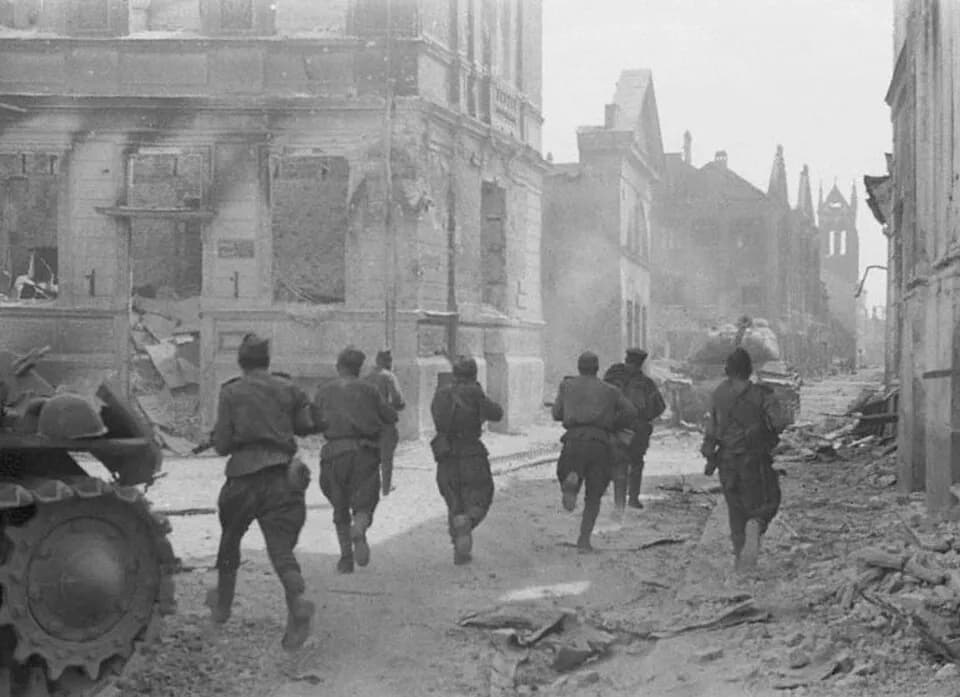
Eastern Front
The Eastern Front was the largest and deadliest theatre of operations in World War II. The clash between Nazi Germany and the Soviet Union caused over 30 million deaths and decided the outcome of the war in Europe. Four out of five German soldiers killed in the conflict fell there.
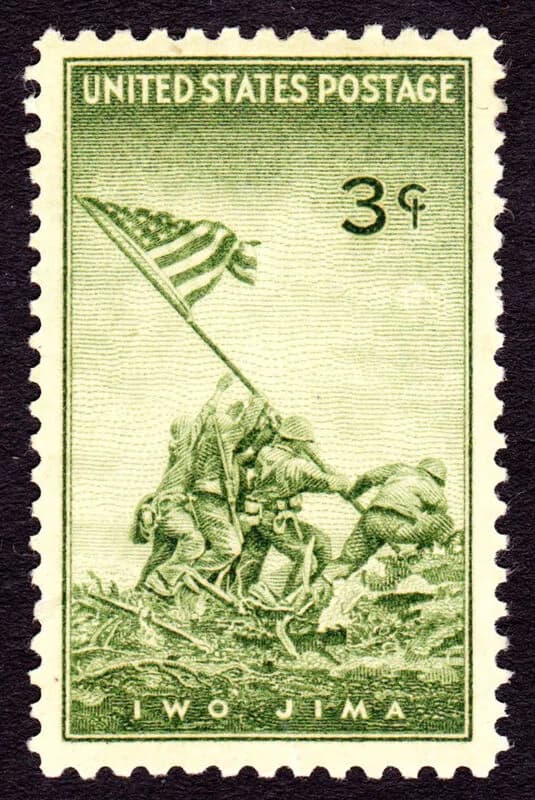
Pacific Theater
The Pacific Theater primarily pitted the United States against Imperial Japan in a naval and amphibious war spanning thousands of kilometers of ocean. From Pearl Harbor to Hiroshima, this fierce campaign concluded with the use of the first atomic bombs in history.
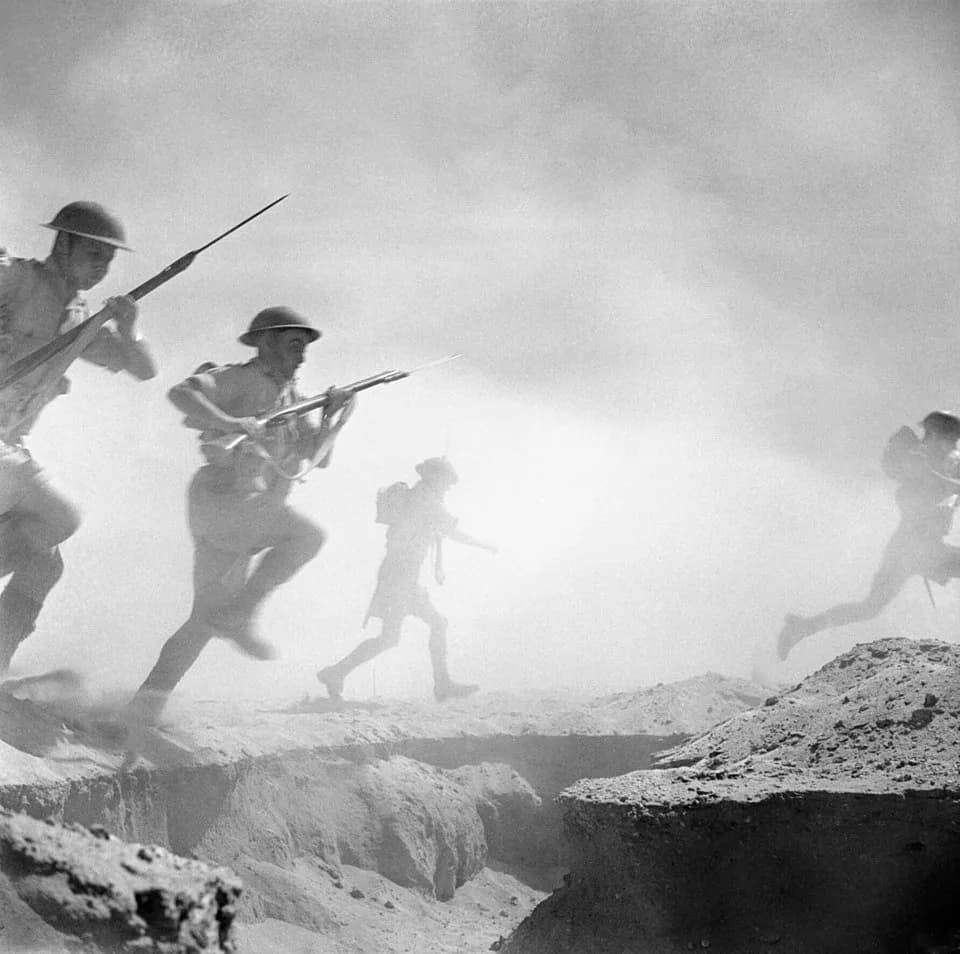
North African Campaign
The North African Campaign saw Axis and Allied forces clash in the deserts of Libya, Egypt and Tunisia. Theater of Rommel's desert war and Montgomery's decisive victory at El Alamein, it concluded with the surrender of 250,000 Axis soldiers in May 1943.
Battle of the Atlantic
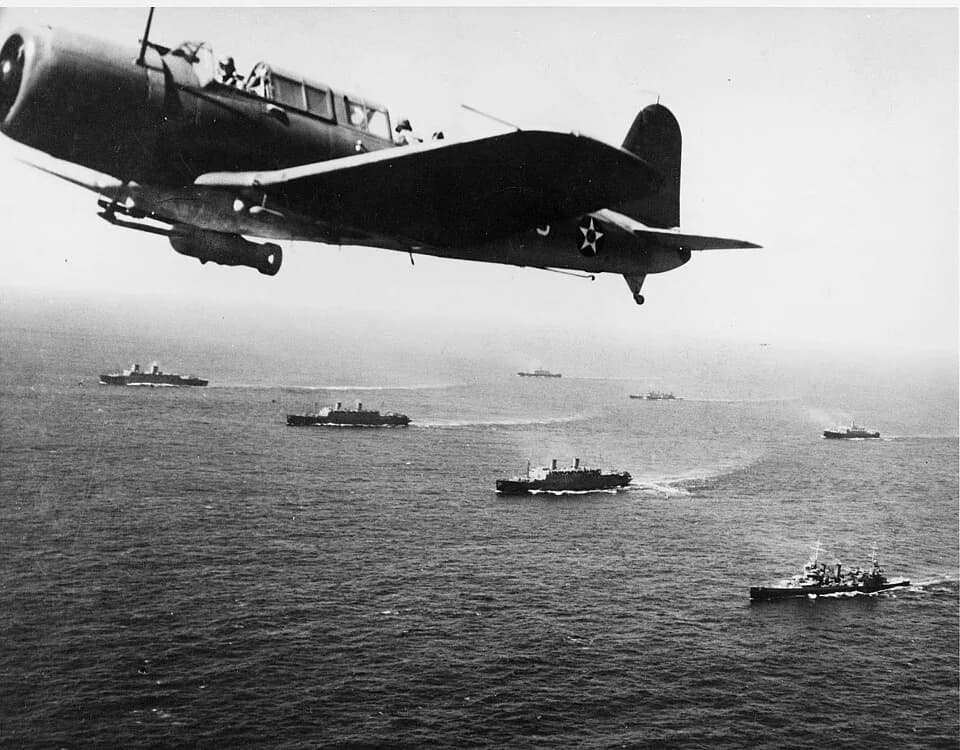
The Battle of the Atlantic was the longest continuous campaign of World War II, pitting German U-boats against Allied convoys for six years. This struggle for control of sea lanes determined Britain's ability to survive and the Allies' capacity to wage war in Europe.
