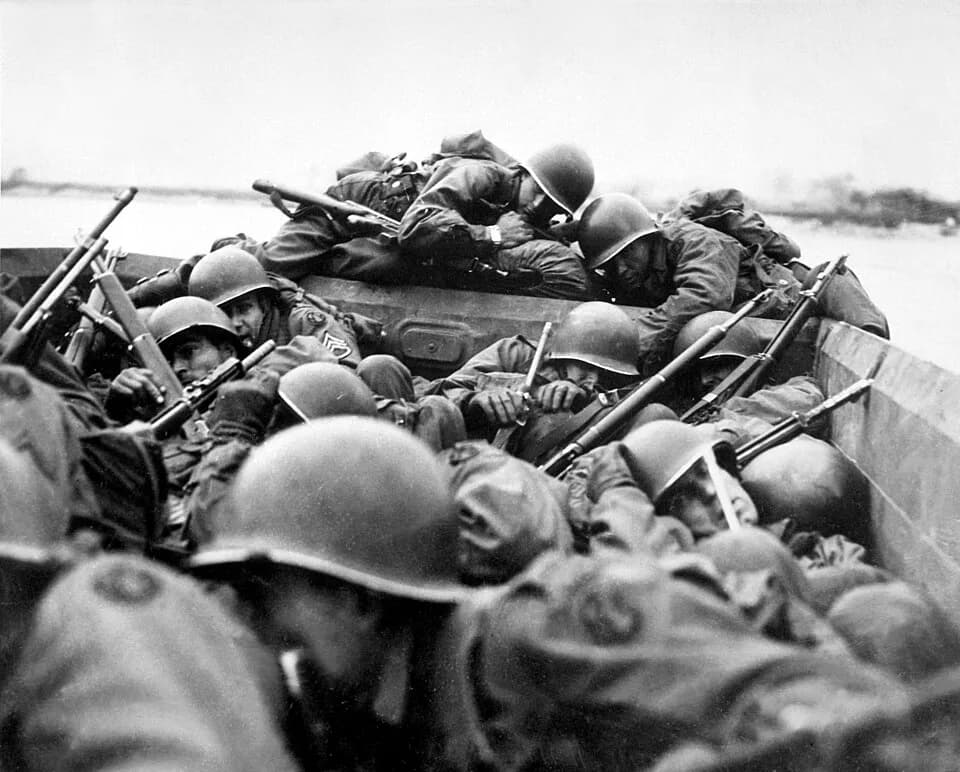
The United States, drawn into the war after the attack on Pearl Harbor on 7 December 1941, became the arsenal of democracy and the decisive industrial and military power that helped the Allies to victory on both theatres of operations. Its war production alone exceeded that of all the Axis powers combined.
The United States entered World War II on December 7, 1941, when the Empire of Japan launched a devastating surprise attack on the Pearl Harbor naval base in Hawaii. This attack, which destroyed or damaged eight American battleships and killed more than 2,400 military personnel and civilians, caused immense shock in American society and abruptly ended years of isolationism. President Franklin Delano Roosevelt called December 7 a date which will live in infamy and asked Congress to declare war on Japan. Nazi Germany and Fascist Italy declared war on the United States on December 11, thus engaging America in a truly global conflict. Before Pearl Harbor, the United States had nonetheless played a growing role in supporting the Allied powers. The Cash and Carry Act of 1939, and especially the Lend-Lease Act of March 1941, enabled the United States to provide massive quantities of military equipment, food, and raw materials to Great Britain, the Soviet Union, and China. President Roosevelt, convinced that American security depended on Great Britain's survival, skillfully maneuvered to circumvent restrictions imposed by the Neutrality Acts. The Atlantic Charter, signed by Roosevelt and Churchill in August 1941, set forth the principles of a postwar world order based on freedom and democracy. American strategy adopted the fundamental Germany First principle, prioritizing the defeat of Nazi Germany while conducting a defensive then offensive war in the Pacific. This strategic decision, made at the Arcadia Conference in December 1941-January 1942, reflected the conviction that Germany represented the most dangerous threat to global security. However, implementation of this strategy was gradual, and the first major engagements of American forces occurred in North Africa with Operation Torch in November 1942. The North Africa campaign, conducted jointly with British forces, allowed Americans to gain essential combat experience. The initial defeat at Kasserine Pass in February 1943 revealed tactical weaknesses in still-inexperienced American forces, but the lessons were quickly assimilated. The Italian campaign, launched in July 1943 with the landing in Sicily, opened a second front in Europe but transformed into an attritional campaign in the Italian mountains that lasted until war's end. The Normandy landings on June 6, 1944, Operation Overlord, constituted the culminating moment of the American war effort in Europe. Under the supreme command of General Dwight Eisenhower, the largest amphibious operation in history landed more than 150,000 soldiers on the Norman beaches. American forces assaulted Utah and Omaha beaches, the latter being the scene of particularly bloody fighting. The Avranches breakout in July 1944 enabled the rapid liberation of France, and Allied forces reached Paris on August 25, 1944. The Battle of the Bulge in December 1944, Germany's last major counter-offensive in the West, was repulsed at the cost of heavy American casualties, and the Rhine crossing in March 1945 opened the road to Germany's heart. In the Pacific, the war against Japan followed a distinct trajectory. After initial defeats in the Philippines, Guam, and Wake, the Battle of Midway in June 1942 marked the conflict's turning point by destroying four Japanese aircraft carriers. The island-hopping strategy, bypassing fortified Japanese garrisons to strike directly at strategic positions, enabled rapid progress toward Japan. The battles of Iwo Jima and Okinawa in 1945, of extreme violence, foreshadowed the human cost that an invasion of the Japanese mainland would have entailed. President Truman's decision to use atomic bombs on Hiroshima on August 6 and Nagasaki on August 9, 1945, precipitated Japanese surrender on August 15, ending World War II.
The United States armed forces underwent an extraordinary expansion during World War II, growing from a modest army of fewer than 200,000 men in 1939 to a colossal force of more than 12 million military personnel in 1945. This unprecedented mobilization in American history transformed the United States into the world's dominant military power, a position it has never relinquished since. The organization of American forces rested on three main branches: the US Army, the US Navy, and the Marine Corps, supplemented by the Army Air Forces, precursor to the US Air Force. The US Army constituted the largest component of American armed forces, reaching a maximum strength of approximately 8.3 million men and women. Organized into army groups, armies, corps, and divisions, it deployed 89 divisions in total, including 16 armored divisions and 5 airborne divisions. American infantry, well-trained and properly equipped, distinguished itself by its considerable firepower. The M1 Garand semi-automatic rifle, which equipped every infantryman, offered a significant advantage in rate of fire over German and Japanese bolt-action rifles. American logistical capacity, supported by massive industrial production, kept troops abundantly supplied with ammunition, food, and equipment, a decisive advantage that Axis forces could never match. American armored forces, though initially suffering from the relative inferiority of the M4 Sherman tank against heavy German armor, compensated through numbers, mechanical reliability, and excellent logistical support. The Sherman, produced in over 49,000 units, was easy to maintain and transport, and its massive availability overwhelmed German defenses. Improved versions, notably the Sherman Firefly equipped with the British 17-pounder gun and the M26 Pershing introduced late in the war, offered better anti-tank capability. American artillery was unanimously recognized as the conflict's best by Axis forces themselves, thanks to its exceptional precision, coordination, and responsiveness. The US Navy became the world's most powerful navy, growing from 394 combat vessels in 1941 to over 6,700 in 1945. The American carrier fleet, which included 24 fleet carriers and dozens of escort carriers by war's end, dominated the Pacific and ensured power projection across the oceans. The naval battles of the Coral Sea, Midway, the Philippine Sea, and Leyte Gulf demonstrated growing American naval supremacy. The submarine war waged by American submarines in the Pacific was equally devastating to the Japanese merchant marine, gradually strangling the Japanese archipelago's supply lines. The Marine Corps played an iconic role in the Pacific war. Specialized in amphibious operations, it led the most difficult and bloodiest assaults against fortified Japanese garrisons on Pacific islands. From Guadalcanal in 1942 to Okinawa in 1945, the Marines developed and perfected amphibious landing techniques that remain the basis of American maritime doctrine. The fanatical resistance of Japanese defenders, who preferred death to surrender, made these combats extremely violent and caused considerable casualties. The Army Air Forces, commanded by General Henry Arnold, became the world's largest air force with more than 2.4 million personnel and 80,000 aircraft at their peak. Strategic bombing over Germany, conducted in daylight by B-17 Flying Fortresses and B-24 Liberators of the 8th Air Force, caused massive destruction to German industry but at the cost of terrible air losses. In the Pacific, B-29 Superfortresses conducted a devastating firebombing campaign against Japanese cities, culminating in the atomic bombings of Hiroshima and Nagasaki. American air superiority, made possible by fighters like the P-51 Mustang and P-47 Thunderbolt, was a decisive factor in victory on both theaters of operations.
The American economy during World War II achieved an industrial performance that transformed the United States into what President Roosevelt called the arsenal of democracy. Converting the world's largest capitalist economy into a war machine constituted a logistical and productive feat without equivalent in history, and it was this economic power, more than any other factor, that guaranteed the Allies' final victory. In 1939, the United States was still recovering from the Great Depression. Unemployment remained high, industrial production had not recovered its pre-1929 levels, and Roosevelt's New Deal had achieved mixed results in economic recovery. Paradoxically, it was the war that definitively ended the Depression. Military orders, first for the Allies via Lend-Lease, then for American forces themselves, stimulated explosive industrial growth. American GDP doubled between 1939 and 1945, rising from approximately $100 billion to $213 billion. Unemployment became virtually nonexistent, falling below 2% of the workforce. Industrial conversion was supervised by the War Production Board, created in January 1942. Detroit's automobile factories retooled to produce tanks, aircraft, and military vehicles. Ford's Willow Run plant, the world's largest factory at the time, produced one B-24 Liberator bomber every hour at peak production. General Motors, Chrysler, and hundreds of other companies abandoned civilian production to devote themselves to the war effort. Civilian automobile production was completely halted in February 1942 and did not resume until after victory. American production figures are staggering. Between 1941 and 1945, the United States produced approximately 300,000 aircraft, 86,000 tanks, 2.7 million machine guns, 41 billion rounds of ammunition, 8,800 warships, and 5,600 merchant vessels. Kaiser shipyards revolutionized naval construction by assembling Liberty cargo ships in a record average time of 42 days, down from 244 days initially. Henry Kaiser applied mass production methods to shipbuilding, prefabricating ship sections in remote factories then assembling them on production lines at the yards. Financing the war effort relied on a combination of massive borrowing and tax increases. War Bonds were sold to the public through propaganda campaigns involving Hollywood stars and war heroes. Income taxes were considerably increased, reaching the middle and working classes for the first time. The top marginal rate reached 94% in 1944. Despite these measures, the federal budget deficit exploded, and the national debt rose from $49 billion in 1941 to $260 billion in 1945. The war effort profoundly transformed American society. Women's massive entry into the industrial workforce, symbolized by the Rosie the Riveter icon, broke many social taboos and laid the groundwork for postwar feminist movements. Approximately six million women joined the industrial labor force, holding positions as welders, mechanics, machine tool operators, and truck drivers that society had previously denied them. African Americans, though facing persistent discrimination, also benefited from economic expansion and began the Great Migration to northern and western industrial cities, laying the foundations for the coming civil rights movement.
The United States' political system during World War II remained a constitutional democracy, a striking contrast with the totalitarian regimes waging the conflict in Europe and Asia. The functioning of American democratic institutions in wartime, though imperfect and marked by certain civil liberties violations, constituted a demonstration of the American political model's resilience and reinforced the legitimacy of the Allied cause in the fight against fascism and militarism. President Franklin Delano Roosevelt dominated the American political scene throughout the war period. Elected to an unprecedented third term in 1940, then a fourth in 1944, he embodied the continuity of American leadership in a world in crisis. Roosevelt was an outstanding communicator whose famous fireside chats, broadcast on radio, maintained national morale and explained the war's stakes to the American people. His vision of a postwar world founded on international cooperation materialized in the United Nations project, whose charter was drafted at the San Francisco Conference in 1945. Roosevelt's sudden death on April 12, 1945, weeks before the war's end in Europe, plunged the country into mourning and brought Harry Truman to the presidency, who had to assume the heaviest decisions of the conflict's conclusion. The United States Congress, while largely cooperative with the executive in conducting the war, maintained its constitutional role as counterbalance. It was Congress that voted the declaration of war against Japan on December 8, 1941, with near-unanimity reflecting the national shock caused by Pearl Harbor. The sole dissenting vote came from Representative Jeannette Rankin of Montana, a committed pacifist who had also voted against entering the war in 1917. Congress authorized massive military budgets, voted conscription and economic mobilization laws, and supervised the war effort through its investigative committees, notably the Truman Committee that investigated waste and corruption in military contracts. American domestic politics during the war were marked by compromises between military necessities and democratic principles. Rationing of food, gasoline, and consumer goods was imposed by the Office of Price Administration, accepted by the population as a necessary sacrifice. Voluntary press censorship, coordinated by the Office of Censorship, functioned remarkably well without resorting to legal coercion. However, the internment of some 120,000 Japanese Americans in detention camps, ordered by Executive Order 9066 in February 1942, constituted the most serious civil liberties violation of this period. This measure, motivated by espionage fears and anti-Japanese racism, was supported by public opinion and even validated by the Supreme Court in Korematsu v. United States in 1944, before being unanimously condemned as a major injustice in subsequent decades. American diplomacy during the war was shaped by the great Allied conferences that defined common strategy and laid the foundations of the postwar world order. The Casablanca Conference in January 1943 established the principle of unconditional surrender of the Axis powers. The Tehran Conference in November 1943 and the Yalta Conference in February 1945 brought together Roosevelt, Churchill, and Stalin to coordinate military operations and discuss postwar Europe's fate. The Bretton Woods agreements of July 1944 created the International Monetary Fund and the World Bank, establishing an international economic system dominated by the United States. These diplomatic decisions reflected America's determination not to repeat the mistakes of the post-World War I era and to engage durably in international affairs. American war propaganda, coordinated by the Office of War Information, mobilized cinema, radio, press, and visual arts to support the war effort. Hollywood produced hundreds of war and propaganda films, with the enthusiastic collaboration of studios and stars. War posters, comic books, and radio broadcasts maintained patriotism and encouraged war bond purchases. American propaganda emphasized the values of freedom, democracy, and tolerance that distinguished the Allies from the Axis powers, while sometimes resorting to racial stereotypes, particularly in the depiction of the Japanese.
The United States' balance sheet in World War II is one of fundamental transformation, both for the nation itself and for the entire world. In less than four years of war, the United States went from being an isolationist power still marked by the Great Depression to the undisputed global superpower, a geopolitical shift that shaped the entire second half of the twentieth century and continues to influence the current international order. In terms of human losses, the United States was relatively spared compared to other major belligerent powers, though the toll paid was far from negligible. Approximately 405,000 American military personnel lost their lives during the conflict, including about 291,000 in combat and the remainder from disease, accidents, and captivity. More than 670,000 were wounded. American civilian casualties were minimal, as the continental territory suffered no significant bombing or enemy occupation. This asymmetry in losses, compared to the millions of Soviet, Chinese, German, and Japanese dead, partly explains why the American experience of war differs fundamentally from that of other belligerent nations. Victory established the United States as the world's dominant economic and military power. American industry, intact and operating at full capacity, represented approximately half of global industrial production in 1945. The American dollar became the international reference currency under the Bretton Woods agreements. The exclusive possession of atomic weapons, though temporary, gave the United States an unprecedented strategic advantage. Demobilization, though rapid, left in place a global military structure with bases on every continent, laying the foundations for the alliance network and global military presence that still characterize American foreign policy today. The United States played a central role in postwar reconstruction of Europe and Japan. The Marshall Plan, launched in 1948, provided more than $13 billion in economic aid to European countries, contributing decisively to their economic recovery and the political stabilization of Western Europe against the communist threat. The occupation of Japan, directed by General MacArthur, transformed the country from a militarist empire into a peaceful, pro-Western democracy. NATO's creation in 1949 institutionalized American commitment to European defense, definitively breaking with the isolationist tradition that had characterized American foreign policy before the war. Domestically, the war accelerated major social transformations. The GI Bill of 1944, officially the Servicemen's Readjustment Act, offered veterans access to higher education, home loans, and medical care, creating conditions for American middle-class expansion in subsequent decades. Women's experience in war industry laid the groundwork for future feminist movements. The military service of African Americans, who had fought for freedom abroad while enduring segregation at home, fueled the demands of the civil rights movement that erupted in the 1950s and 1960s. The moral legacy of American participation in World War II remains a source of national pride but also critical reflection. While the fight against Nazism and Japanese militarism is unanimously considered a just cause, certain aspects of war conduct continue to spark debate: strategic bombing of German and Japanese cities that killed hundreds of thousands of civilians, the use of atomic bombs, the internment of Japanese Americans, and the persistence of racial segregation within the armed forces themselves. These questions remind us that even the most justified war imposes painful moral choices and compromises with the values one claims to defend.
This article draws on historical works, military archives and recognized academic publications.
The United States officially declared war on Japan on December 8, 1941, the day after the Pearl Harbor attack that killed over 2,400 American military personnel and civilians. Nazi Germany and Italy declared war on the United States on December 11, 1941. From fewer than 200,000 men in 1939, US armed forces reached over 12 million military personnel in 1945, including 8.3 million in the US Army.
The 'Germany First' strategy was decided at the Arcadia Conference (December 1941-January 1942) between Roosevelt and Churchill: concentrate the main effort on defeating Nazi Germany while waging a defensive war in the Pacific. This decision reflected the conviction that Germany represented the most dangerous threat to global security. The US first fought in North Africa (November 1942), then Italy (1943), and Normandy (June 1944).
Between 1941 and 1945, the United States produced approximately 300,000 aircraft, 86,000 tanks, 41 billion rounds of ammunition, and 8,800 warships. US GDP doubled from $100 billion to $213 billion. Approximately six million women joined the industrial workforce, symbolized by the 'Rosie the Riveter' icon. The Lend-Lease program ($50 billion in materiel) supported Great Britain, the USSR, and other allies even before the US officially entered the war.
Information cross-checked against Wikipedia and reference historical works.
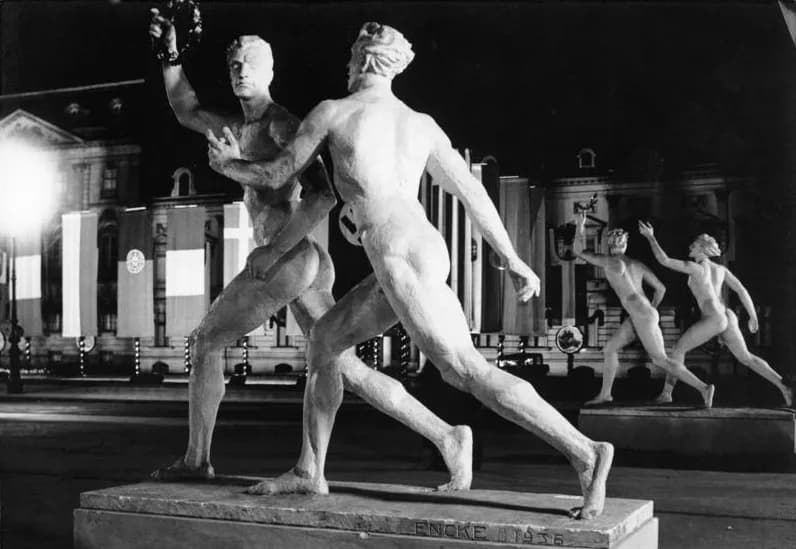
Nazi Germany
The Third Reich, led by Adolf Hitler from 1933 to 1945, plunged the world into World War II and perpetrated the Holocaust, causing tens of millions of deaths before its unconditional surrender in May 1945. Born of Hitler's appointment as chancellor on 30 January 1933, the regime dismantled the Weimar Republic within months and turned Germany into a one-party state.
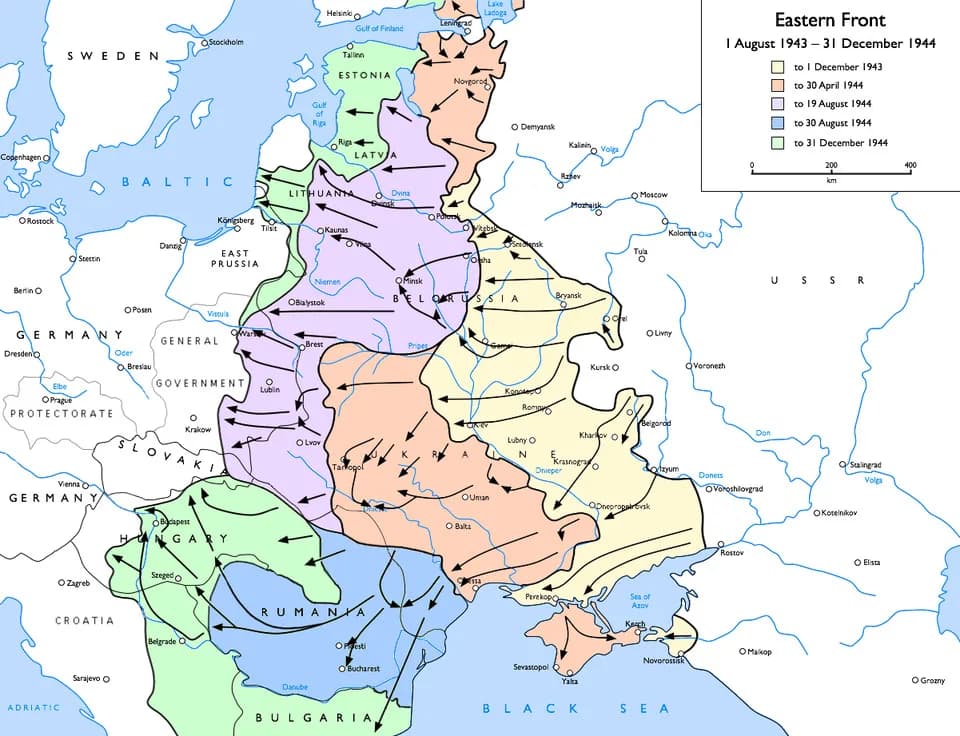
Soviet Union
The Union of Soviet Socialist Republics, led by Joseph Stalin during World War II, played a decisive role in the defeat of Nazi Germany at the cost of 27 million dead, the heaviest losses of the entire conflict. Its factories were moved beyond the Urals in 1941 to keep producing.
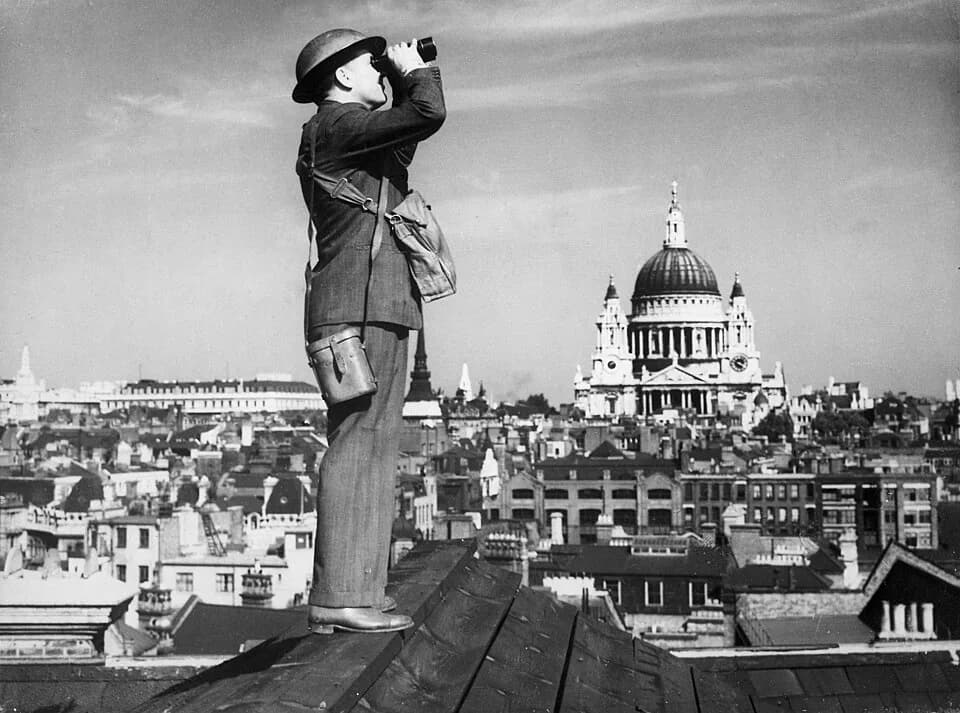
United Kingdom
The United Kingdom of Great Britain and Northern Ireland, led by Winston Churchill from May 1940, was the only major European power to fight Nazi Germany without interruption from September 1939 to May 1945. For a year after the fall of France, it stood alone against the Axis in Europe.
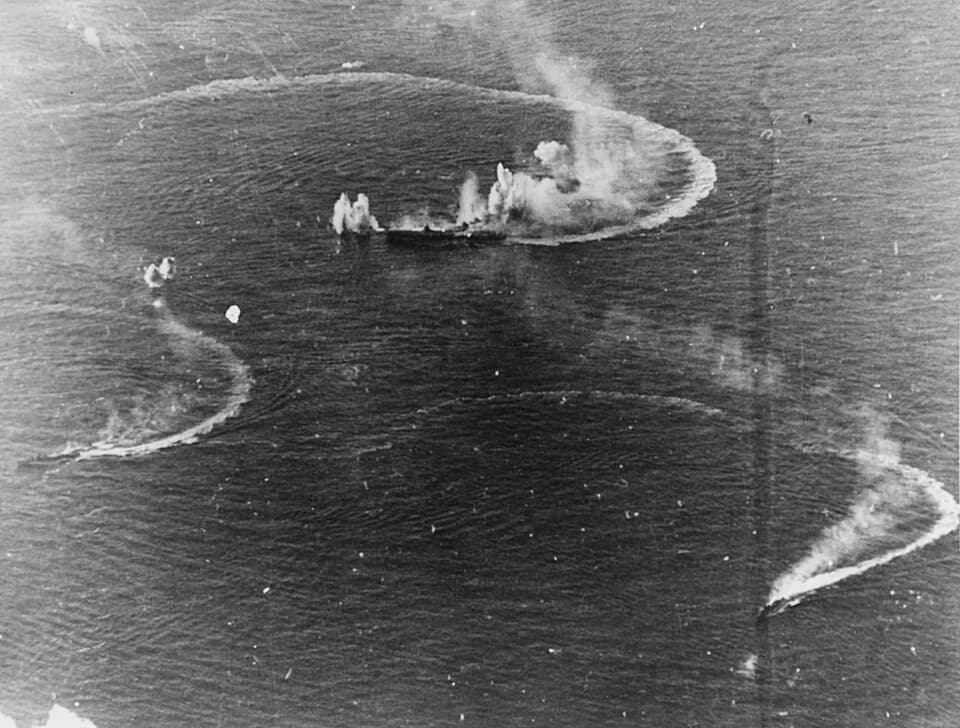
Empire of Japan
The Empire of Japan, led by Emperor Hirohito and the militarists in power, waged a war of expansion across Asia and the Pacific from 1937 to 1945, before surrendering after the atomic bombings of Hiroshima and Nagasaki in August 1945. Its Co-Prosperity Sphere project presented that conquest as a liberation of Asia from Western colonial powers.
