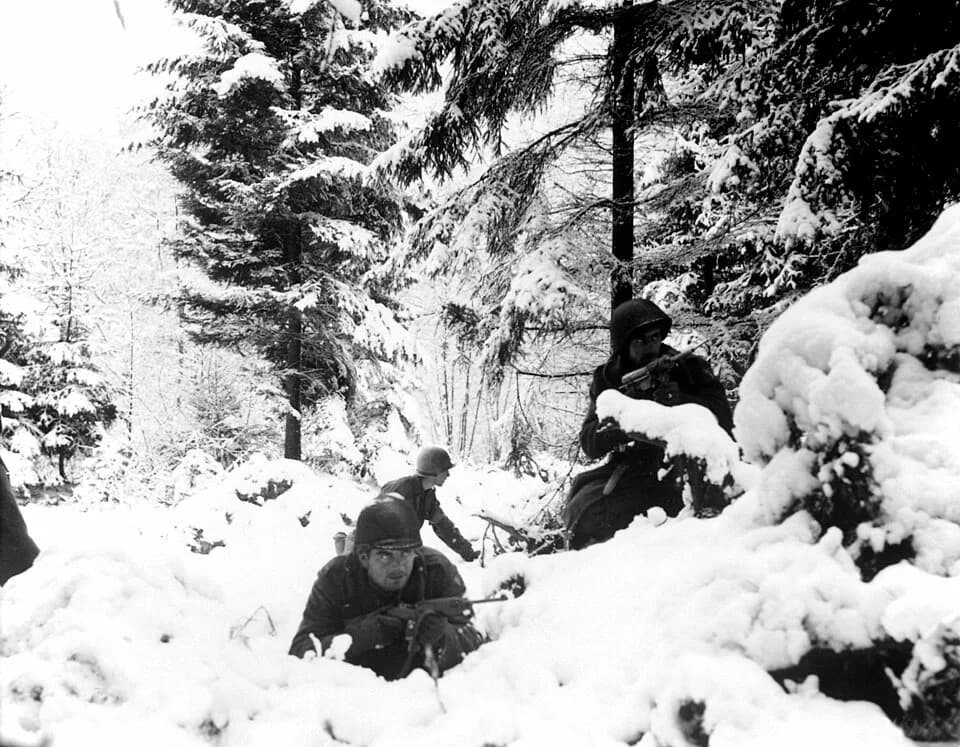
The Soviet defence in depth organised successive defensive zones across tens of kilometres, in order to absorb German armoured breakthroughs, exhaust the attacker and set up decisive counter-offensives. Applied at Kursk in 1943, it rested on minefield belts, anti-tank ditches and dug-in artillery, prepared months before the assault.
Defense in depth as practiced on the Eastern Front during World War II drew its origins from a long Russian and Soviet military tradition, enriched by the cruel lessons of the first years of the German-Soviet conflict. Historically, Russia had always used its immense territory as a defensive weapon. The scorched earth strategy employed against Napoleon in 1812 constitutes the most famous example of this exploitation of strategic depth. The Red Army inherited this tradition but added a doctrinal dimension formalized in the 1930s by theorists such as Mikhail Tukhachevsky, Vladimir Triandafillov, and Georgii Isserson. These thinkers developed the concept of deep operations, or glubokaya operatsiya, which envisioned war as a series of successive operations conducted at great depth, both in attack and defense. However, the Stalinist purges of 1937-1938 decimated the Soviet officer corps, eliminating many of these innovative theorists and depriving the Red Army of its intellectual leadership at the most critical moment. When Operation Barbarossa struck on June 22, 1941, the Red Army was deployed linearly along the border, without significant defensive depth. The result was catastrophic. German armored formations easily pierced Soviet lines and encircled entire armies during the battles of Bialystok-Minsk, Smolensk, Uman, and Kiev, capturing over three million Soviet soldiers in the first five months. These disasters imposed a complete overhaul of Soviet defensive doctrine. The lessons drawn were twofold. First, a single linear defense was fatally vulnerable to concentrated armored breakthroughs of the Blitzkrieg. Second, only a defense organized in depth, with multiple successive lines, mobile reserves, and echeloned antitank positions, could absorb the kinetic energy of an armored offensive and create conditions for a counterattack. The Battle of Moscow in December 1941 offered the first examples of improvised defense in depth, when the Soviets used a succession of defensive lines to slow then stop the German advance. These experiences were systematized and codified throughout 1942, culminating in the mature defense-in-depth doctrine that would be applied with spectacular success at Kursk in 1943.
The principles of Soviet defense in depth rested on a methodical organization of defensive space into successive zones and belts, each with a specific role in the progressive weakening of the attacker. The typical defensive system comprised three main belts. The first defensive belt, 5 to 7 kilometers deep, included three lines of trenches connected by communication trenches. This zone was densely mined, with antitank and antipersonnel minefields covering the most likely approaches. Antitank positions, comprising 45mm and 76mm guns in direct fire roles, were integrated into a system of crossfires covering the entire front. The second defensive belt, located 10-15 kilometers behind the first, reproduced a similar organization with three additional trench lines. This belt served to stop enemy forces that had breached the first zone, imposing a second attrition battle when their initial momentum was already partly exhausted. The third belt, 30-40 kilometers from the front, constituted the last line of defense and housed operational reserves intended for the counteroffensive. In total, the defensive system could reach a depth of 150 to 300 kilometers, making any rapid breakthrough practically impossible. A crucial element of this doctrine was the concept of antitank killing zones, or protivotonkovye raiony. These zones concentrated batteries of antitank guns, tank-hunter teams armed with grenades and Molotov cocktails, and antitank obstacles such as ditches, Czech hedgehogs, and abatis, all organized to channel enemy armor into killing corridors. The density of antitank mines could reach 2,400 mines per kilometer of front in critical sectors. Mobile reserves, including tank brigades and corps, were positioned in depth to launch counterattacks against enemy penetrations or to feed the counteroffensive once the attacker was exhausted. Coordination between artillery, infantry, armor, and aviation was planned in detail, with pre-established fire plans for each sector of the defensive system. This systematic approach transformed terrain into a defensive war machine whose every element contributed to the progressive attrition of attacking forces.
The most famous and accomplished application of Soviet defense in depth took place during the Battle of Kursk in July 1943, which remains the largest armored engagement in history. After the victory at Stalingrad in February 1943, the Eastern Front featured an immense salient centered on the city of Kursk, projecting deeply into German lines. Soviet intelligence, fed by Ultra decrypts transmitted by the British and by the Lucy spy network in Switzerland, confirmed that the Germans were preparing a massive offensive against this salient, Operation Citadel. Stalin and the Stavka then made the bold decision not to strike first but to deliberately absorb the German offensive in a massive defensive system before launching a crushing counteroffensive. Marshal Zhukov and General Rokossovsky supervised the construction of a defensive network unprecedented in military history. In four months, the Red Army dug over 5,000 kilometers of trenches, laid more than 400,000 antitank mines and 500,000 antipersonnel mines, and built thousands of antitank firing positions and bunkers. Eight successive defensive lines extended to a depth of nearly 300 kilometers. The local civilian population was mobilized for earthworks. Massive strategic reserves, constituting the Steppe Front under General Konev's command, were positioned behind the system. Operation Citadel was launched on July 5, 1943, with the Wehrmacht's best armored divisions, notably the SS divisions Leibstandarte, Das Reich, and Totenkopf, equipped with the new Tiger and Panther tanks. In the north, Field Marshal Model's forces bogged down in the first defensive belt, advancing only 10 kilometers in a week of fierce combat. In the south, General Hoth's forces achieved a deeper penetration, culminating in the tank battle of Prokhorovka on July 12, where some 600 Soviet tanks confronted 300 German tanks in chaotic close-range combat. Although Soviet losses were higher, the German offensive was definitively broken. On July 12, the Soviets launched Operation Kutuzov north of the salient, and on August 3, Operation Rumyantsev to the south, beginning an advance that would not stop until Berlin. Defense in depth at Kursk proved that methodically prepared defense could absorb and defeat the German Blitzkrieg.
The results of Soviet defense in depth were decisive for the outcome of the war on the Eastern Front and, by extension, for the entire Second World War. At Kursk, the toll was eloquent. The Wehrmacht lost approximately 200,000 men killed, wounded, or missing, as well as some 720 tanks and assault guns, 680 aircraft, and thousands of vehicles. These losses, particularly in armor and experienced crews, were irreplaceable for a Germany whose reserves were dwindling. The Red Army, while suffering higher losses in absolute terms with approximately 254,000 men and 1,600 tanks, possessed deep strategic reserves and an expanding industrial capacity fed by factories relocated east of the Urals and by American Lend-Lease. The most important strategic result was the definitive transfer of initiative on the Eastern Front. After Kursk, the Wehrmacht never again launched a major offensive in the East. The Red Army maintained strategic initiative without interruption from July 1943 to May 1945, launching a series of massive offensive operations known as Stalin's ten blows in 1944, which successively destroyed German army groups across the entire front. Defense in depth was also successfully applied in other battles. At Stalingrad, although the defense was more urban in nature, the principles of echeloned defense and building reserves for counteroffensive were applied at the operative level with Operation Uranus in November 1942, which encircled the German Sixth Army. During Operation Bagration in June 1944, the Soviets used their defenses in depth to protect the flanks of their offensive, while applying offensive principles derived from the same doctrinal thinking. The influence of Soviet defense in depth extended well beyond World War II. Soviet armed forces maintained this doctrine throughout the Cold War, and Warsaw Pact forces organized their defenses in Central Europe according to these same principles. Arab armies attempted to apply a simplified version during the Yom Kippur War in 1973, with notable initial success at the Suez Canal. Chinese military doctrine also incorporated elements of defense in depth adapted to Mao Zedong's people's war strategy.
Analysis of Soviet defense in depth reveals a doctrine that brilliantly exploited the respective strengths and weaknesses of both sides on the Eastern Front. The primary strength of this approach lay in its ability to neutralize the German qualitative advantage in tactical command and combined arms coordination. German officers and NCOs were generally superior to their Soviet counterparts in conducting combat at battalion and company level, and German tank crews individually surpassed Soviet tankers in training and experience. However, defense in depth transformed combat into a test of endurance and mass rather than a duel of tactical skills. Each defensive line breached required the attacker to reorganize, bring up reserves, and regain momentum, while the defender could reinforce subsequent lines with fresh troops. This dynamic progressively negated the attacker's qualitative advantages and highlighted the Soviet defender's quantitative advantages. Defense in depth also exploited the Wehrmacht's chronic logistical weakness. German armored divisions, advancing through kilometers of defenses, rapidly consumed their stocks of fuel, ammunition, and spare parts, while maintenance became increasingly problematic as they moved farther from their bases. Tank losses were particularly critical, as German industry could not replace Tigers and Panthers at the rate they were being destroyed. On the critical side, Soviet defense in depth had an appalling human cost. The Red Army absorbed enemy offensives largely through the mass of its personnel, and losses in the first defensive lines were often catastrophic. Penal battalions placed in the front line and orders not to retreat one step contributed to a terrifying human toll. Nevertheless, this doctrine represented a remarkable adaptation to Eastern Front realities. It allowed the Red Army to survive the disastrous early years of the conflict, learn from its mistakes, and ultimately develop a devastating offensive capability founded on the same principles of operational depth. The Red Army's transformation between 1941 and 1945, from a defeated and disorganized force to Europe's most powerful military machine, constitutes one of the most remarkable phenomena in military history, and defense in depth was a central element of this transformation.
Before Kursk, the Red Army dug over 5,000 km of trenches and laid more than 400,000 antitank mines and 500,000 antipersonnel mines in four months. Eight successive defensive lines extended to nearly 300 km in depth. Launched on July 5, 1943, the German Operation Citadel bogged down in the north after only 10 km in one week. The Soviet counteroffensive (Operations Kutuzov and Rumyantsev) then launched the final advance toward Berlin.
The principal theorists of deep operations (glubokaya operatsiya) in the 1930s were Mikhail Tukhachevsky, Vladimir Triandafillov, and Georgii Isserson. They envisioned war as a series of successive operations conducted at great depth, both offensively and defensively. The Stalinist purges of 1937-1938 decimated this corps of innovative officers, depriving the Red Army of its intellectual leadership just before Operation Barbarossa in 1941.
In June 1941, the Red Army was deployed linearly along the border without defensive depth. Operation Barbarossa, launched June 22, 1941, demonstrated this approach's fatal vulnerability: German armored formations easily pierced through and encircled entire armies. The Battle of Kiev alone saw 665,000 Soviet soldiers captured. These disasters imposed a complete overhaul of Soviet defensive doctrine toward defense in depth.
Information cross-checked against Wikipedia and reference historical works.
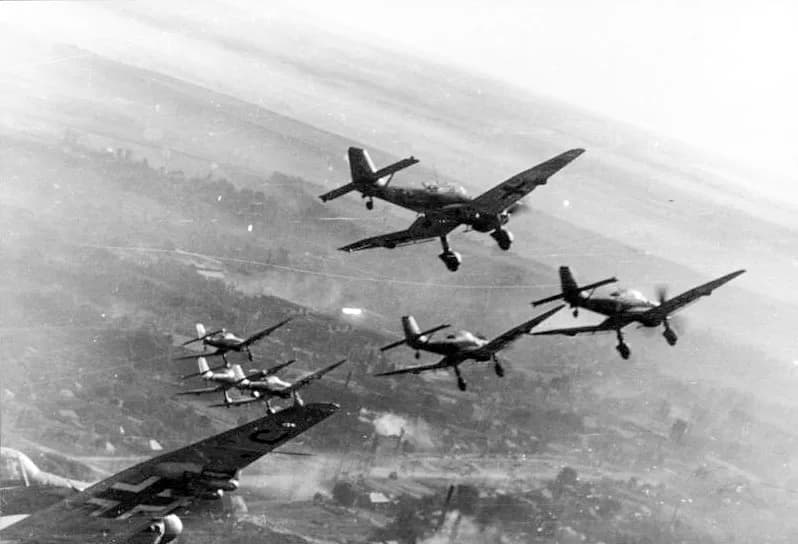
Blitzkrieg
Blitzkrieg, or lightning war, is a German military doctrine combining armour, aircraft and motorised infantry to break through enemy lines and rapidly encircle opposing forces. Applied in Poland in 1939 and then in France in 1940, it brought down a country in six weeks and reshaped modern warfare before stalling on the Eastern Front.
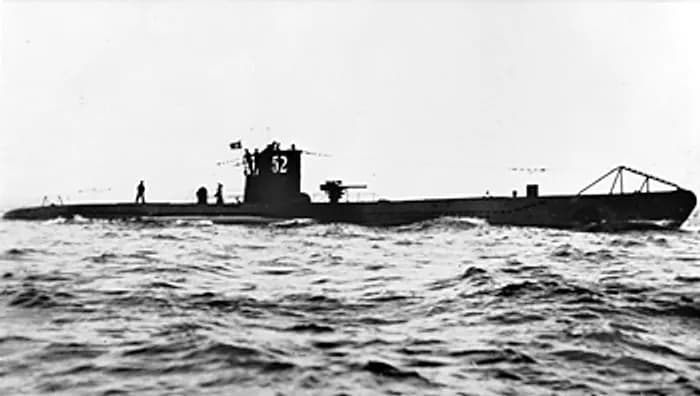
Submarine Warfare
The German submarine war, waged by the Kriegsmarine's U-boats, aimed to cut Britain's transatlantic supply lines, threatening the island's very survival during the Battle of the Atlantic. The reversal came in 1943, with the breaking of Enigma, shipborne radar and long-range escort vessels.
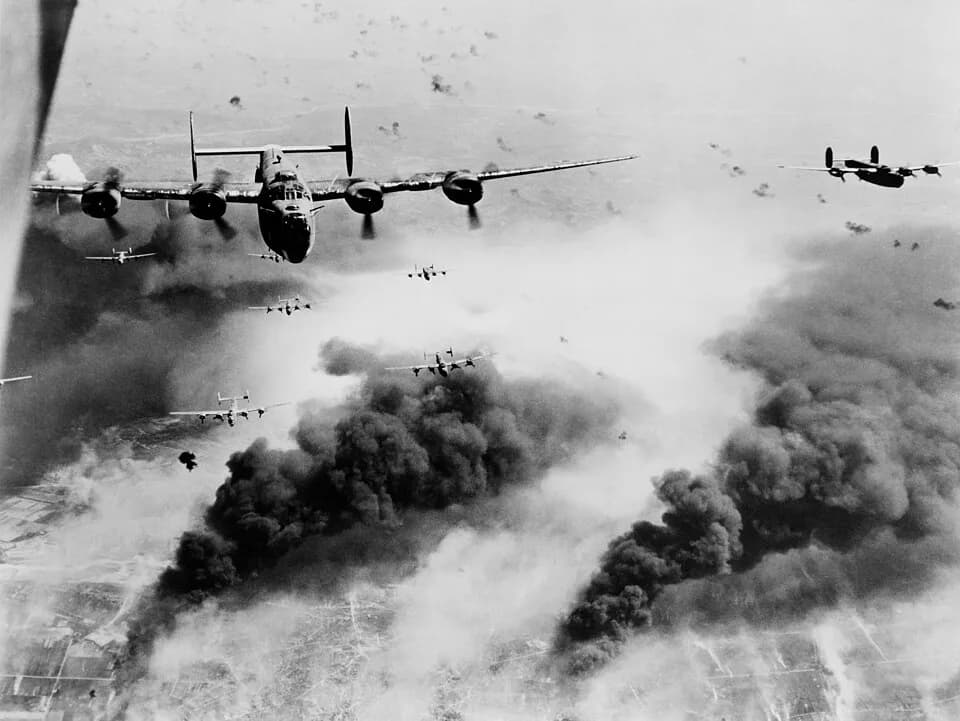
Strategic Bombing
Allied strategic bombing aimed to destroy the industrial and military apparatus of Nazi Germany through massive air raids, mixing American daylight precision bombing with British night-time area bombing. Waged from 1940 to 1945, it diverted a considerable share of German production toward air defence, at the cost of heavy civilian casualties.
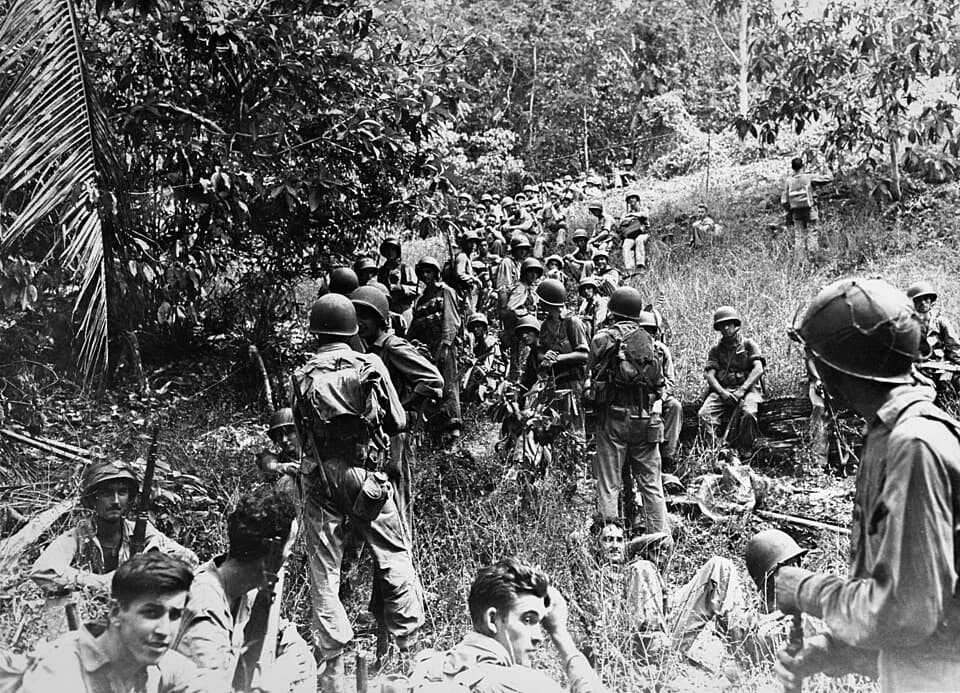
Island Hopping
Island hopping was the American strategy of bypassing fortified Japanese garrisons to seize less defended islands, gradually bringing Allied forces closer to Japan. The strongholds left behind, cut off from all resupply, ceased to be a threat without ever having to be stormed.
