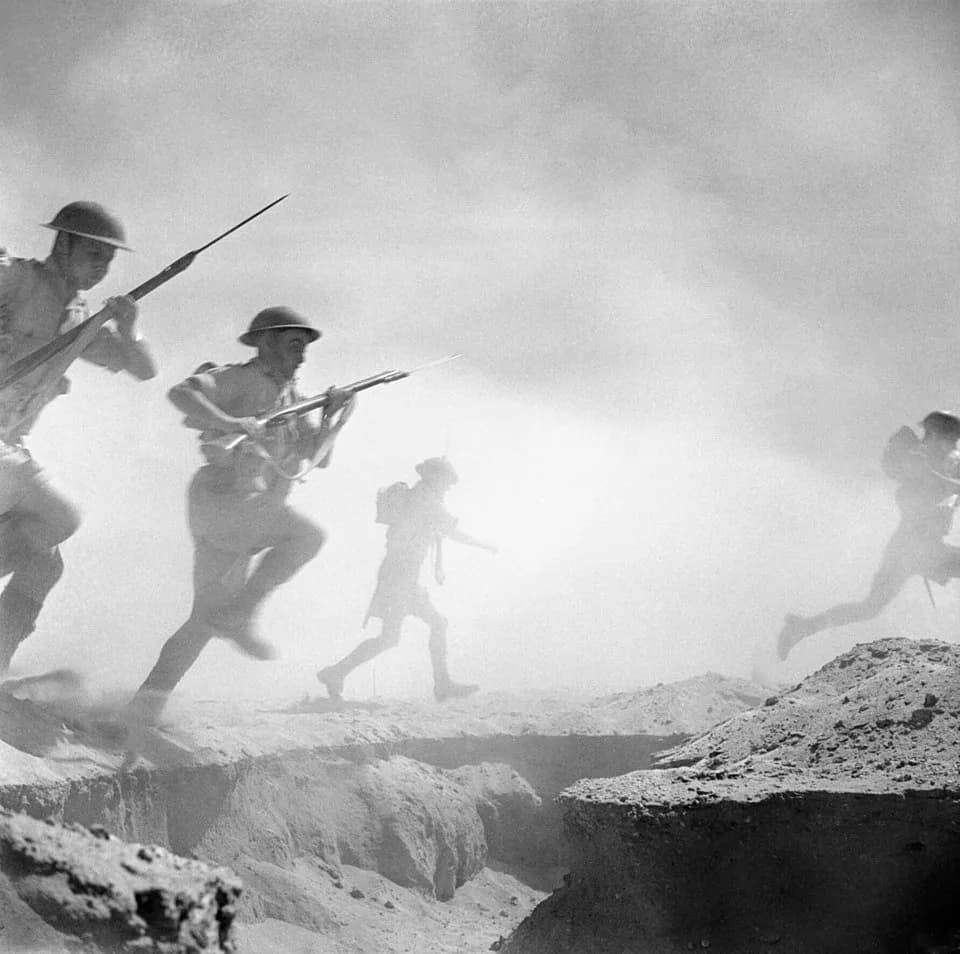
The North African Campaign saw Axis and Allied forces clash in the deserts of Libya, Egypt and Tunisia. Theater of Rommel's desert war and Montgomery's decisive victory at El Alamein, it concluded with the surrender of 250,000 Axis soldiers in May 1943.
The North African theater stretched across 3,200 km of Mediterranean coastline, from French Morocco in the west to Egypt in the east. The habitable coastal strip was narrow — between 20 and 200 km wide — beyond which lay the Sahara. The terrain was primarily desert: rocky plains, sand dunes, wadis (dry riverbeds), and a few escarpments (such as Halfaya Pass and the Mareth Line). The rare ports — Tobruk, Benghazi, Tripoli, Tunis — were vital strategic objectives for resupply. The desert offered ideal terrain for mobile armored warfare, often compared to naval warfare: vast open spaces, encirclement maneuvers, and the paramount importance of logistics (water, fuel, ammunition). Extreme temperatures (50 degrees Celsius in summer, freezing at night in winter), blinding sandstorms, and the absence of potable water made combat conditions grueling. The Via Balbia, Libya's sole coastal highway, was the vital artery upon which all large-scale movement depended.
Axis forces in North Africa included the famous German Afrika Korps (initially two divisions, including the 15th Panzer and 21st Panzer) commanded by Field Marshal Erwin Rommel, the 'Desert Fox,' and the far more numerous but unevenly equipped Italian forces. Italy deployed up to 16 divisions in Libya, but their equipment and morale were often inadequate — with the notable exception of certain elite units such as the Bersaglieri and the Ariete Division. On the Allied side, the British 8th Army (the Desert Rats) was the principal force, reinforced by Australian, New Zealand, South African, Indian, and Free French divisions (including the celebrated defense of Bir Hakeim). After the November 1942 landings (Operation Torch), American forces entered the fray with the 1st Armored Division and II Corps under Patton. Allied naval and air superiority in the Mediterranean was the decisive factor: Axis supply convoys to Africa were constantly attacked, depriving Rommel of the fuel and reinforcements he desperately needed.
The campaign began with the Italian offensive against Egypt in September 1940, quickly repelled by General O'Connor's counteroffensive, which captured 130,000 Italians in two months. Hitler sent Rommel in February 1941 to save his ally. The Desert Fox launched a series of brilliant offensives: he recaptured Cyrenaica, besieged Tobruk (which held out for 241 days), but failed at the Egyptian border. Tank battles followed in rapid succession: Gazala (May-June 1942) was Rommel's tactical masterpiece, finally seizing Tobruk and pushing to El Alamein, just 100 km from Alexandria. The First Battle of El Alamein (July 1942) halted the Axis advance. The Second Battle of El Alamein (October-November 1942), meticulously planned by Montgomery, definitively broke the Afrika Korps: 30,000 prisoners and 500 tanks destroyed. Rommel began a 2,400 km retreat to Tunisia. The Allied landings in French North Africa (November 1942) caught the Axis in a pincer. The Tunisia Campaign (November 1942-May 1943) concluded with the surrender of 250,000 Axis soldiers.
The Second Battle of El Alamein (October 23 - November 11, 1942) was the undisputed turning point of the North African campaign. Montgomery, commanding the reinforced 8th Army (195,000 men, 1,029 tanks including the new American Shermans), launched a methodical offensive against Rommel's fortified positions (104,000 men, 496 tanks). Operation Lightfoot began with a massive artillery barrage from 882 guns. Sappers cleared corridors through the minefields (the 'devil's gardens') for the armor. After twelve days of fierce fighting, Operation Supercharge broke through the Axis lines. Rommel, short of fuel and ammunition, ordered a retreat against Hitler's explicit order to 'conquer or die.' Churchill summarized the importance of the victory: 'Before Alamein we never had a victory. After Alamein we never had a defeat.' Combined with the Torch landings two weeks later, El Alamein marked the end of the Axis threat to the Suez Canal and the oil fields of the Middle East.
The North African Campaign was the first major land victory for the Western Allies and a springboard for the invasion of Europe. It eliminated 950,000 Axis soldiers (killed, wounded, captured) and opened the Mediterranean to Allied shipping, saving millions of tons of fuel previously wasted on the detour around Africa. It provided an irreplaceable training ground for inexperienced American forces — the defeat at Kasserine (February 1943) taught hard but valuable lessons that would prove beneficial in Normandy. It forged commanders who would lead the rest of the war: Eisenhower, Patton, Bradley, and Montgomery perfected their craft in Africa before the campaigns in Italy and France. Politically, it brought French North Africa over to the Allied cause and resolved the de Gaulle-Giraud rivalry. The desert campaign remains celebrated for its relatively 'clean' character compared to the Eastern Front — although this image is partially mythologized. Rommel, despite his service under the Nazi regime, retains a reputation as an honorable soldier, a controversial but enduring legacy.
Erwin Rommel, the German field marshal commanding the Afrika Korps in North Africa from 1941 to 1943, earned the nickname 'Desert Fox' for his agile and surprising maneuver tactics in the Libyan desert. He won spectacular victories at Gazala (May-June 1942) and captured Tobruk, pushing to El Alamein. His Allied opponents, including Churchill, acknowledged his tactical skills.
The North African Campaign ended in May 1943 with the surrender of 250,000 Axis soldiers in Tunisia, the largest German capitulation in history after Stalingrad. In total, approximately 950,000 Axis soldiers were killed, wounded, or captured. The Allied victory opened the Mediterranean to shipping and prepared the way for the Sicily landings in July 1943.
The Second Battle of El Alamein, from October 23 to November 11, 1942, saw Montgomery's 195,000 men crush Rommel's 104,000 with 882 guns and 1,029 tanks. The result: 30,000 prisoners, 500 tanks destroyed, and a German retreat of 2,400 km. Churchill summarized it: 'Before Alamein we never had a victory. After Alamein we never had a defeat.'
Information cross-checked against Wikipedia and reference historical works.
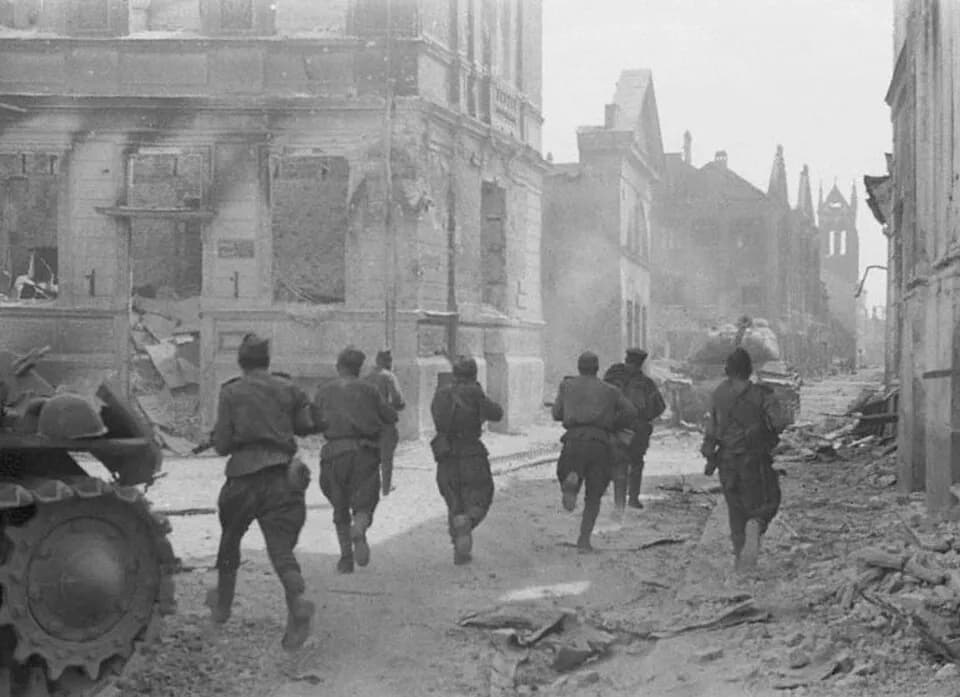
Eastern Front
The Eastern Front was the largest and deadliest theatre of operations in World War II. The clash between Nazi Germany and the Soviet Union caused over 30 million deaths and decided the outcome of the war in Europe. Four out of five German soldiers killed in the conflict fell there.
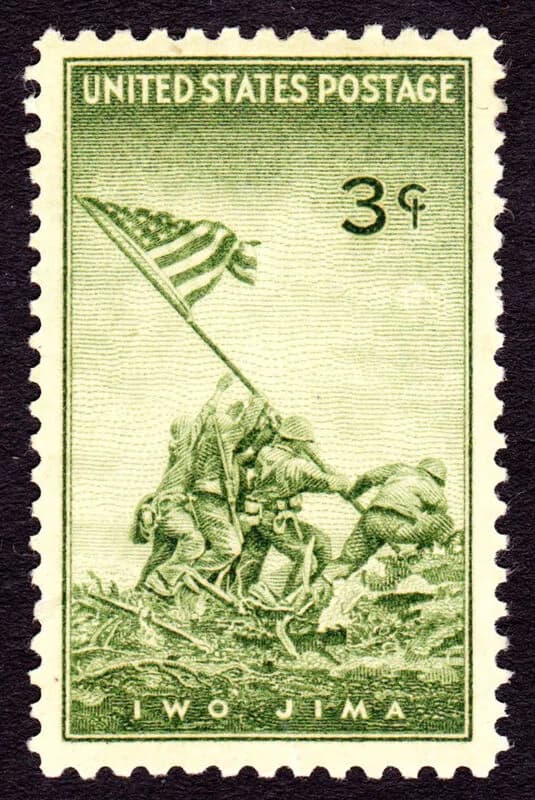
Pacific Theater
The Pacific Theater primarily pitted the United States against Imperial Japan in a naval and amphibious war spanning thousands of kilometers of ocean. From Pearl Harbor to Hiroshima, this fierce campaign concluded with the use of the first atomic bombs in history.
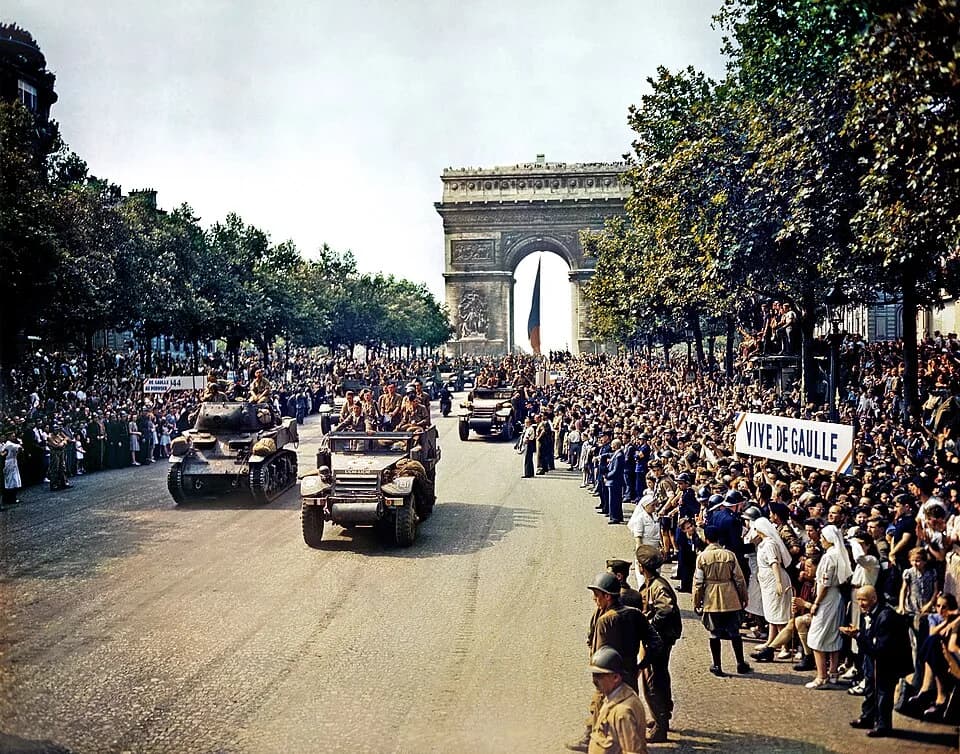
Western Front (1944-1945)
The Western Front, opened by the Normandy landings on June 6, 1944, saw Allied forces liberate France, Belgium and the Netherlands before invading Germany. From the Avranches breakthrough to the Rhine crossing, this eleven-month campaign ended the Third Reich from the west.
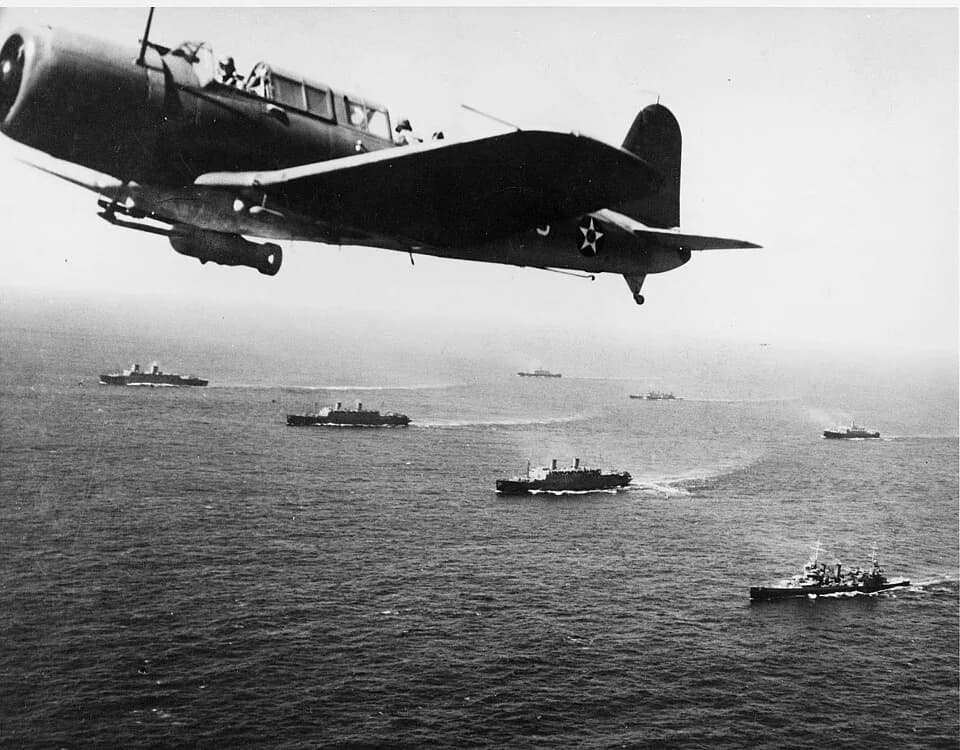
Battle of the Atlantic
The Battle of the Atlantic was the longest continuous campaign of World War II, pitting German U-boats against Allied convoys for six years. This struggle for control of sea lanes determined Britain's ability to survive and the Allies' capacity to wage war in Europe.
