
About Utahraptor
Biography coming soon.
Paleontological Comparison
The largest raptor ever discovered against the most famous.
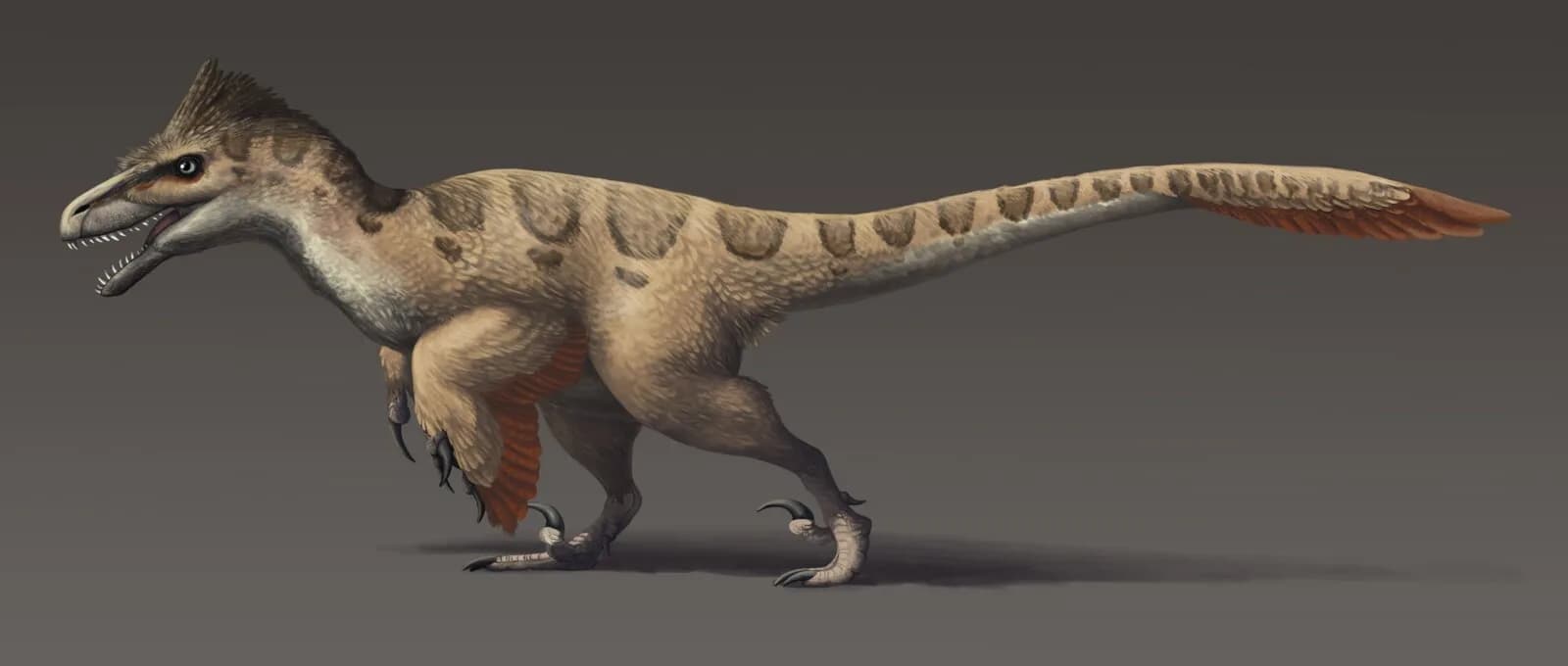
Utahraptor ostrommaysorum
Era: Mesozoic
Period: Early Cretaceous (Barremien)
Diet: Carnivore
Region: North America (Utah)
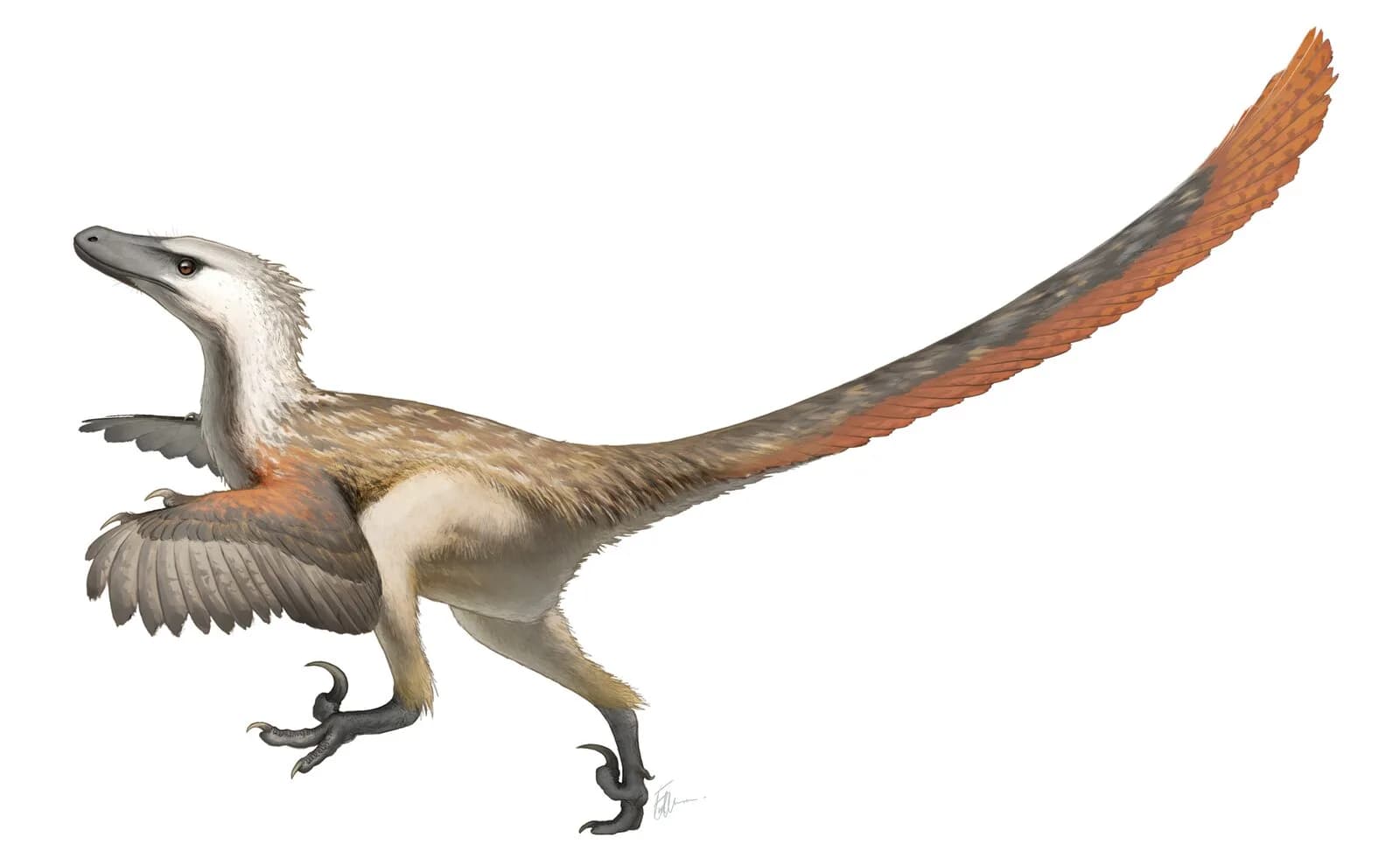
Velociraptor mongoliensis
Era: Mesozoic
Period: Late Cretaceous (Campanien)
Diet: Carnivore
Region: Central Asia (Mongolie, Chine)
| Criterion | Utahraptor | Velociraptor |
|---|---|---|
| Length | 5–7 m m | 1.8–2 m m |
| Height | ~1.5–2 m m | ~0.5 m m |
| Weight | 280–500 kg t | 15–20 kg t |
| Era | Mesozoic | Mesozoic |
| Diet | Carnivore | Carnivore |
Verdict (physical categories)
Utahraptorleads (3/3)
Note: size is only one factor. Speed, bite force, intelligence and hunting strategy matter too.
Biography coming soon.
Biography coming soon.
Yes. Utahraptor ostrommaysorum is the largest known dromaeosaurid: 6 metres long and 300-500 kg. Its retractable claw measured 22-24 cm. It lived in the Early Cretaceous (126 Ma) in Utah. Velociraptor mongoliensis (1.8 m, 15 kg) was 10× lighter — they never coexisted, separated by 50 million years.
An exceptional fossil found in Utah (2001) shows several Utahraptors trapped together in quicksand with herbivore prey — suggesting possible group hunting. However, direct evidence of hunting coordination remains rare. Its size (6 m) allowed it to attack alone prey much larger than itself.
A factor of roughly twenty in mass. Utahraptor reached 5 to 7 metres and 280 to 500 kilograms, while Velociraptor mongoliensis stayed at 1.8–2 metres and 15 to 20 kilograms. Both nonetheless belong to the same family, the dromaeosaurs, and share the sickle claw on the second toe.
Keep exploring paleontology