
About Tyrant Lizard King
Biography coming soon.
Paleontological Comparison
The most iconic Cretaceous duel: crushing jaws vs horns and shield.
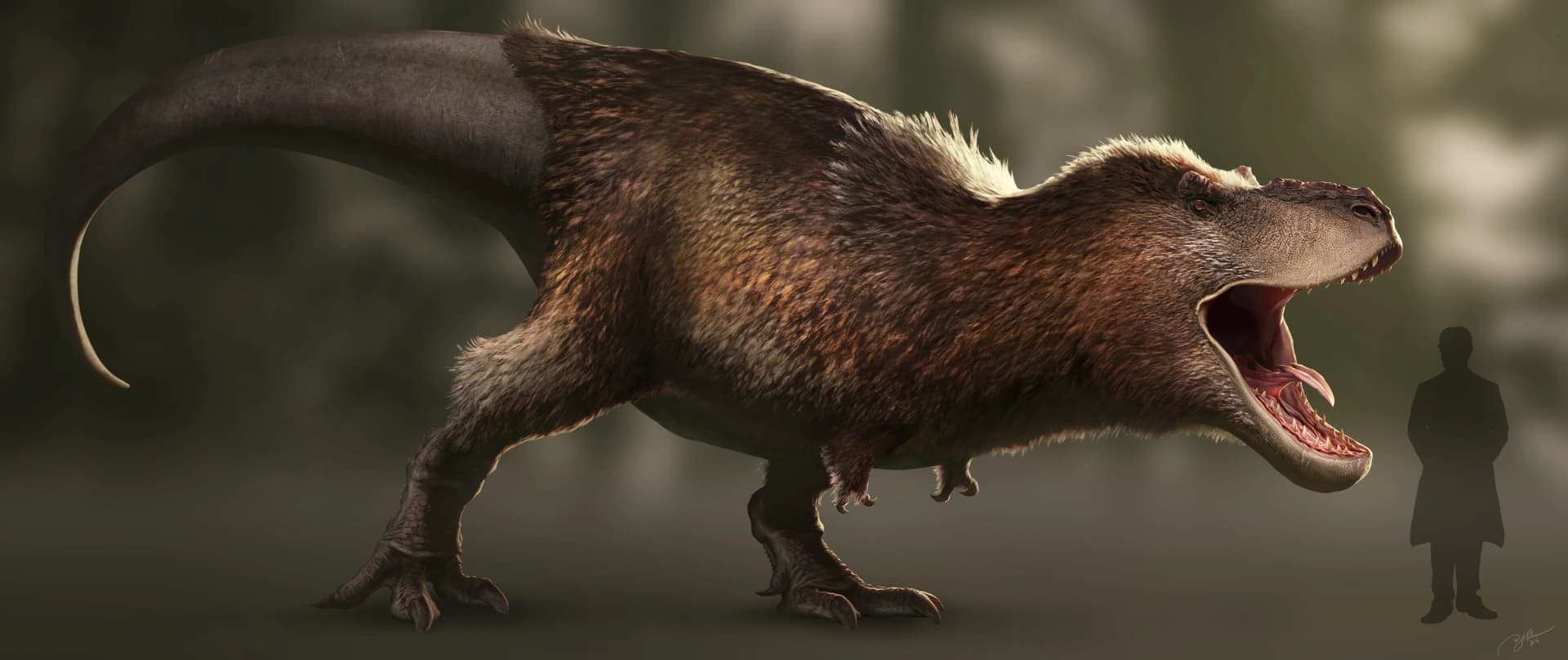
Tyrannosaurus rex
Era: Mesozoic
Period: Late Cretaceous
Diet: Carnivore
Region: North America
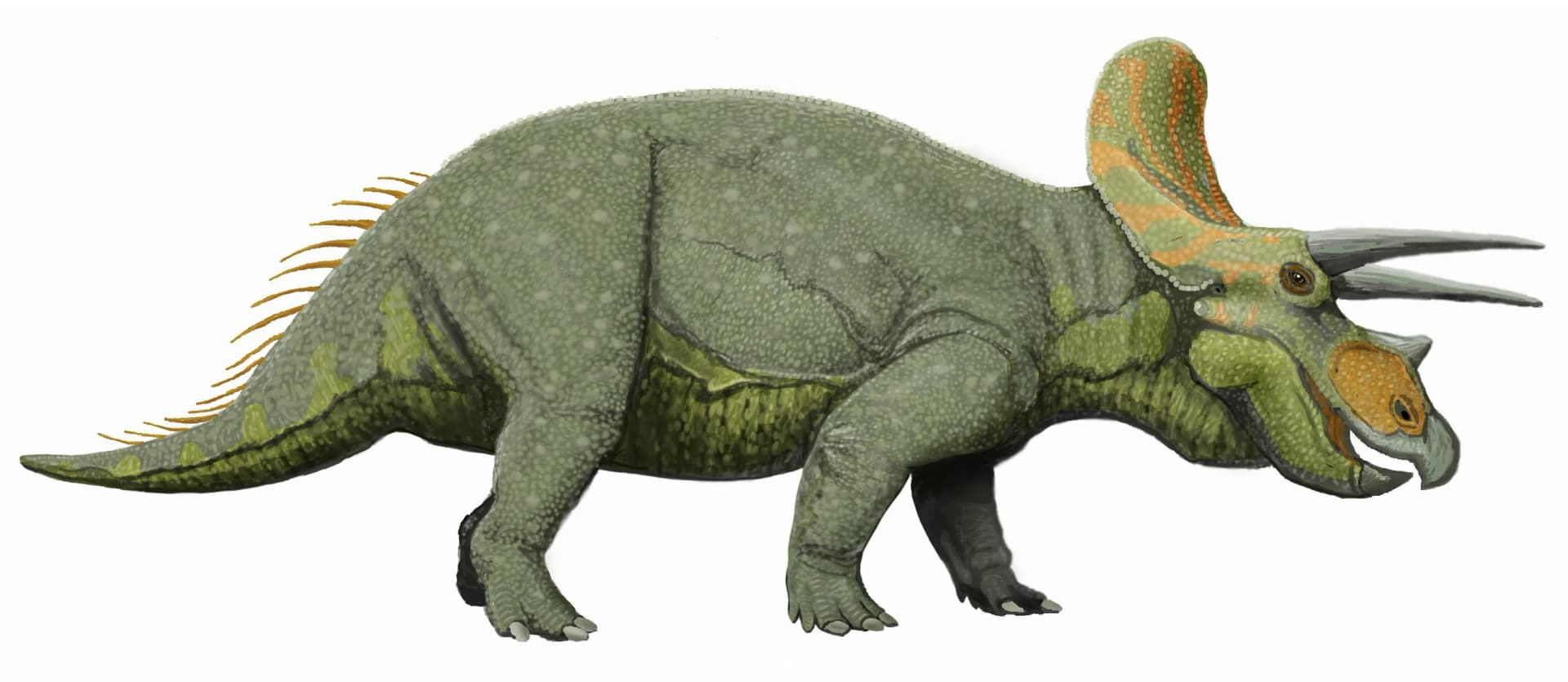
Triceratops horridus
Era: Mesozoic
Period: Late Cretaceous
Diet: Herbivore
Region: North America
| Criterion | Tyrant Lizard King | Three-Horned Face |
|---|---|---|
| Length | 12-13 m m | 7.9-9 m m |
| Height | 4 m m | 3 m m |
| Weight | 5-9 tonnes t | 6-12 tonnes t |
| Era | Mesozoic | Mesozoic |
| Diet | Carnivore | Herbivore |
Verdict (physical categories)
Tyrant Lizard Kingleads (2/3)
Note: size is only one factor. Speed, bite force, intelligence and hunting strategy matter too.
Biography coming soon.
Biography coming soon.
Yes — Triceratops horridus fossils bear confirmed Tyrannosaurus rex bite marks. Both species coexisted in the Hell Creek Formation (Montana, Dakota) 66-68 million years ago. Triceratops bones with fang marks prove T-Rex fed on this species, dead or alive.
Potentially yes. The 3 horns of Triceratops horridus (2 brow horns of 90-100 cm + 1 nasal) and its bony frill provided formidable defence. Some T-Rex fossils show healed bone lesions that may correspond to horn strikes. A frontal attack was risky even for the tyrant king.
Triceratops horridus had 3 horns: 2 brow horns (supra-orbital) measuring up to 90-100 cm each and 1 shorter nasal horn. Its bony cranial frill reached 1.5 metres in diameter. These structures served for predator defence but also likely for sexual display and intraspecific recognition.
Keep exploring paleontology