
About Therizinosaurus
Biography coming soon.
Paleontological Comparison
The longest claws in the animal kingdom vs the most powerful jaws.
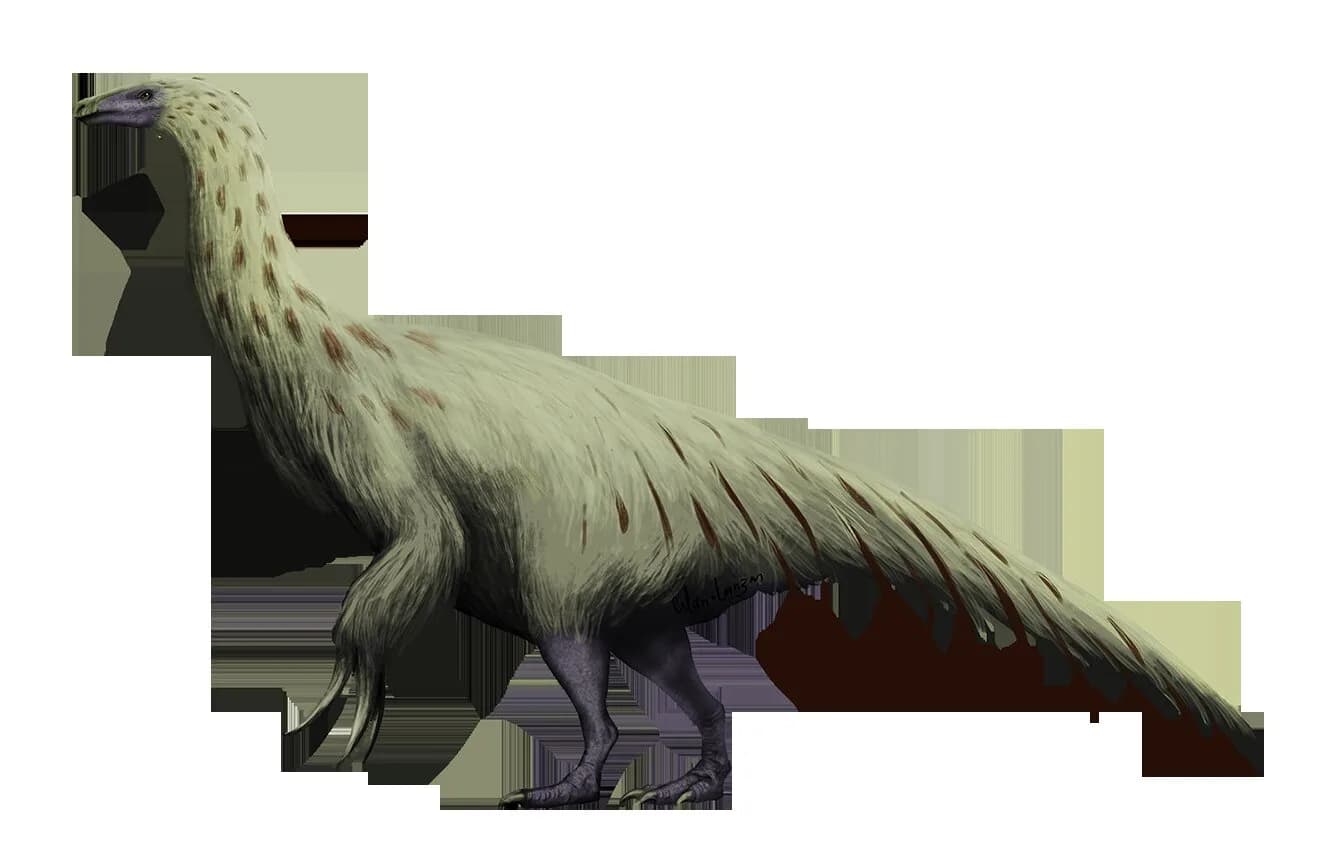
Therizinosaurus cheloniformis
Era: Mesozoic
Period: Late Cretaceous (Maastrichtien)
Diet: Omnivore
Region: Central Asia (Mongolie
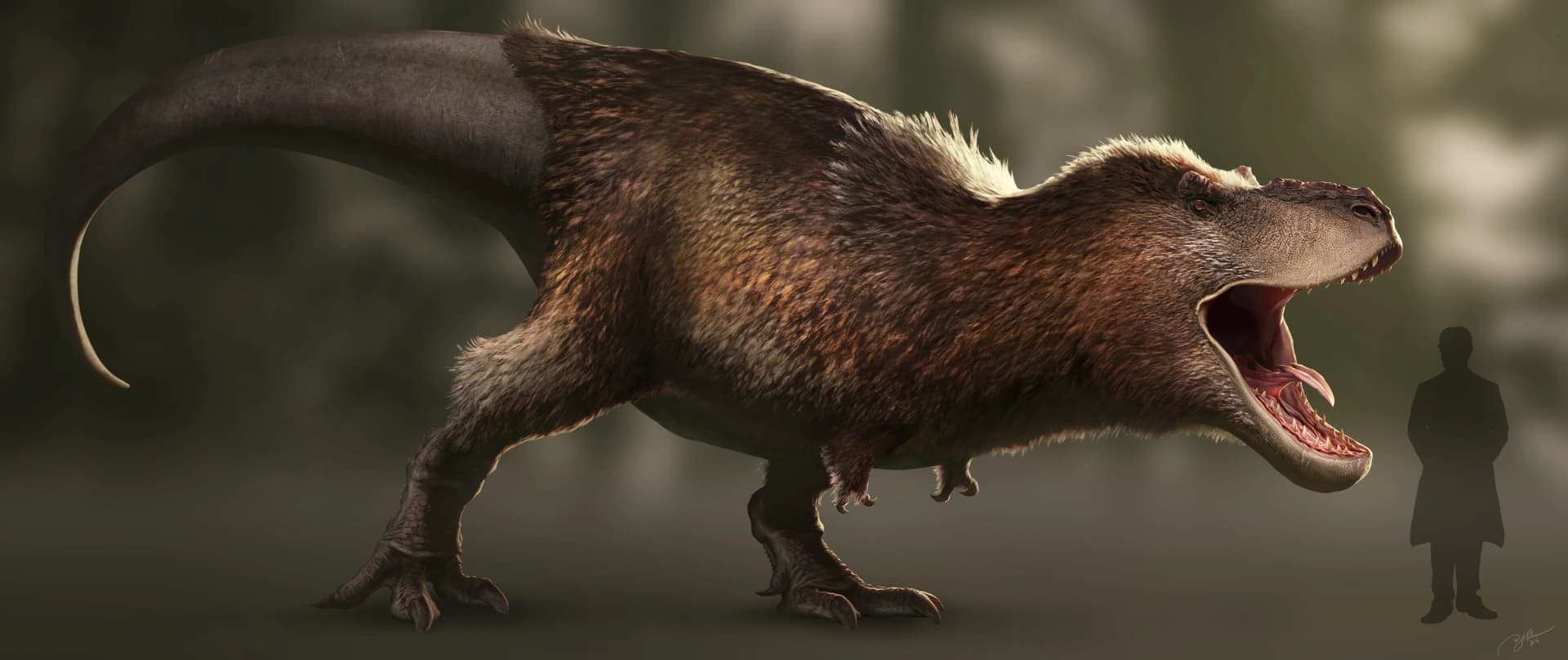
Tyrannosaurus rex
Era: Mesozoic
Period: Late Cretaceous
Diet: Carnivore
Region: North America
| Criterion | Therizinosaurus | Tyrant Lizard King |
|---|---|---|
| Length | 9–10 m m | 12-13 m m |
| Height | ~4 m m | 4 m m |
| Weight | 3 000–5 000 kg t | 5-9 tonnes t |
| Era | Mesozoic | Mesozoic |
| Diet | Omnivore | Carnivore |
Verdict (physical categories)
Tyrant Lizard Kingleads (2/3)
Note: size is only one factor. Speed, bite force, intelligence and hunting strategy matter too.
Biography coming soon.
Biography coming soon.
Therizinosaurus cheloniformis was herbivorous despite its spectacular 90-100 cm claws. Its leaf-shaped teeth, long neck and large intestine (estimated from hip width) confirmed a plant diet. It used its claws to pull down tree branches, like a gigantic ground sloth. Ironically, it is classified among theropods (a predominantly carnivorous group).
Not directly. Therizinosaurus cheloniformis lived in Central Asia (Mongolia/Kazakhstan) in the Late Cretaceous (70-66 Ma). Tyrannosaurus rex lived in North America (68-66 Ma). Their periods slightly overlap, but they inhabited different continents. However, Therizinosaurus did coexist with Tarbosaurus bataar, the Asian cousin of T-Rex.
Therizinosaurus cheloniformis claws measured 90 to 100 cm for the longest (bony phalanx), making them the largest in the animal kingdom. Adding the horn sheath (external keratinous covering), they could reach 1.2 to 1.5 metres. Only the forelimbs are well known — the rest of the skeleton is fragmentary (Mongolia discovery, 1954).
Keep exploring paleontology