
About Iguanodon
Biography coming soon.
Paleontological Comparison
The crested hadrosaurid vs the classic iguanodontid.
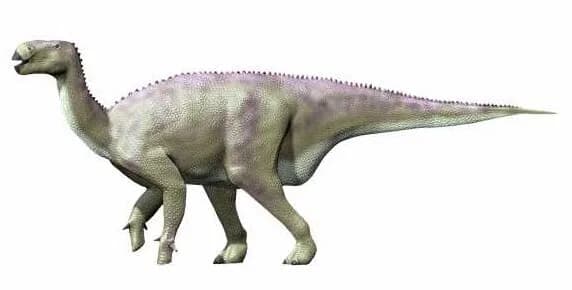
Iguanodon bernissartensis
Era: Mesozoic
Period: Early Cretaceous (Barremien–Aptien)
Diet: Herbivore
Region: Europe (Belgium, England, Germany, Spain)
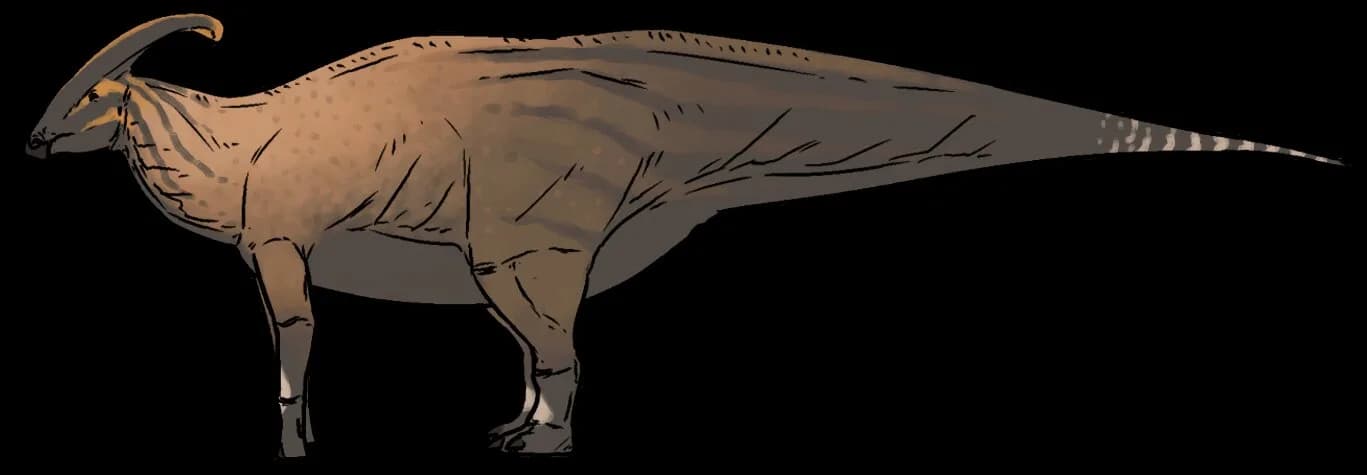
Parasaurolophus walkeri
Era: Mesozoic
Period: Late Cretaceous (Campanien)
Diet: Herbivore
Region: North America (Alberta, Utah, Nouveau-Mexique)
| Criterion | Iguanodon | Parasaurolophus |
|---|---|---|
| Length | ~10 m m | 9–10 m m |
| Height | ~3 m m | ~4 m m |
| Weight | 3 000–4 500 kg t | 2 500–4 000 kg t |
| Era | Mesozoic | Mesozoic |
| Diet | Herbivore | Herbivore |
Verdict (physical categories)
Iguanodonleads (2/3)
Note: size is only one factor. Speed, bite force, intelligence and hunting strategy matter too.
Biography coming soon.
Biography coming soon.
Iguanodon bernissartensis (Early Cretaceous, 126 Ma) and Parasaurolophus walkeri (Late Cretaceous, 76 Ma) are two ornithopod herbivores separated by 50 million years. Iguanodon is an iguanodontid (primitive group) famous for its bony spike-thumb; Parasaurolophus is a hadrosaurid (derived group) recognisable by its hollow tube crest that served as an acoustic chamber.
The hollow crest of Parasaurolophus walkeri measured up to 1.8 metres and functioned as a resonating chamber. 3D models of its internal nasal passage show it produced low-frequency sounds (~30-80 Hz) comparable to a French horn. This crest served for intraspecific communication (alarm calls, courtship display) and individual recognition.
Iguanodon bernissartensis alternated between both modes: bipedal for running and reaching high food, quadrupedal at rest or moving slowly. Its distinctive hands featured a spike thumb (defence), three central hoof-like fingers (ground support) and a prehensile fifth finger for grasping vegetation.
Keep exploring paleontology