
About Two-Crested Lizard
Biography coming soon.
Paleontological Comparison
The crested Jurassic theropod against the most famous raptor.
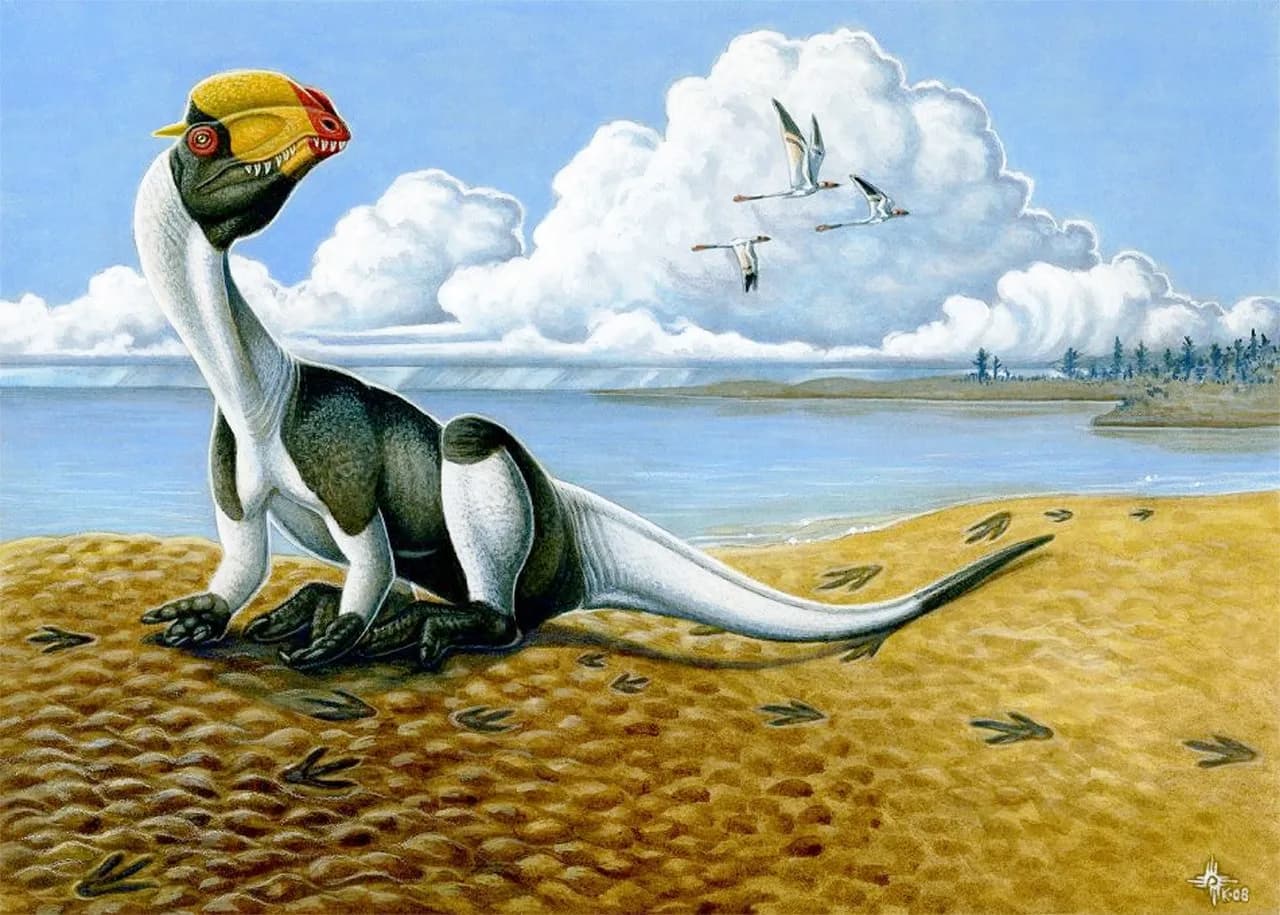
Dilophosaurus wetherilli
Era: Mesozoic
Period: Early Jurassic
Diet: Carnivore
Region: North America, Asia
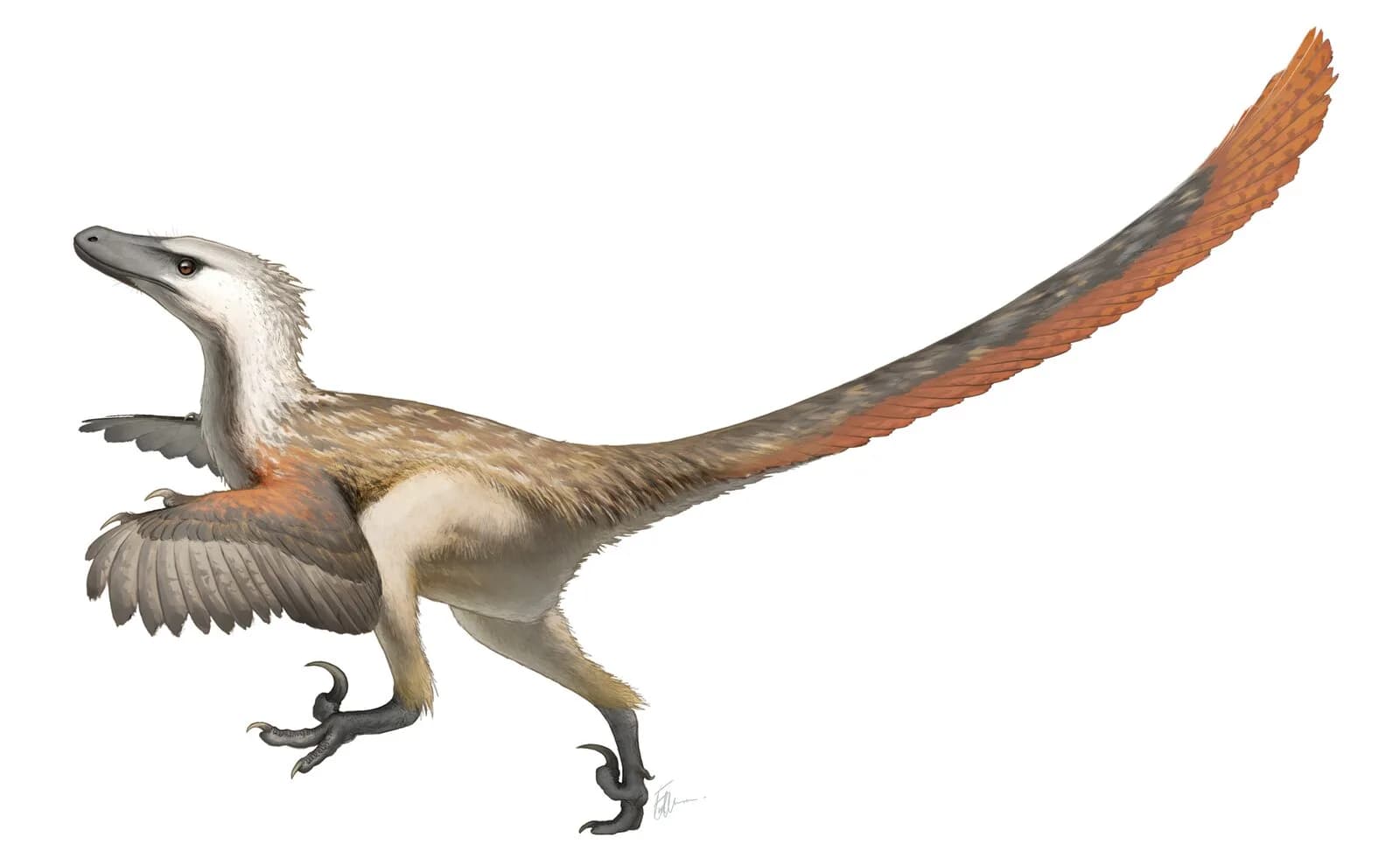
Velociraptor mongoliensis
Era: Mesozoic
Period: Late Cretaceous (Campanien)
Diet: Carnivore
Region: Central Asia (Mongolie, Chine)
| Criterion | Two-Crested Lizard | Velociraptor |
|---|---|---|
| Length | 5.5-7 m m | 1.8–2 m m |
| Height | 2 m m | ~0.5 m m |
| Weight | 300-500 kg t | 15–20 kg t |
| Era | Mesozoic | Mesozoic |
| Diet | Carnivore | Carnivore |
Verdict (physical categories)
Two-Crested Lizardleads (3/3)
Note: size is only one factor. Speed, bite force, intelligence and hunting strategy matter too.
Biography coming soon.
Biography coming soon.
No — no fossil evidence supports this idea. The Dilophosaurus wetherilli from Jurassic Park (1993) was dramatised: in reality it measured 6 metres (not 1 m as in the film), did not spit venom and had no extensible frill. These traits are inventions from Michael Crichton's novel.
No. Dilophosaurus wetherilli lived in the Early Jurassic (~193 Ma) in Arizona. Velociraptor mongoliensis lived in the Late Cretaceous (~75-71 Ma) in Mongolia. Separated by over 110 million years and two continents, they never coexisted in nature.
Dilophosaurus wetherilli bore two distinctive parallel crests on the skull, too fragile for combat use. Palaeontologists believe they served for sexual display, intraspecific recognition or thermoregulation — similar to the ornamental crests of many modern birds, the evolutionary descendants of theropods.
Keep exploring paleontology