
About Deinonychus
Biography coming soon.
Paleontological Comparison
Two American dromaeosaurids: which is the most lethal?
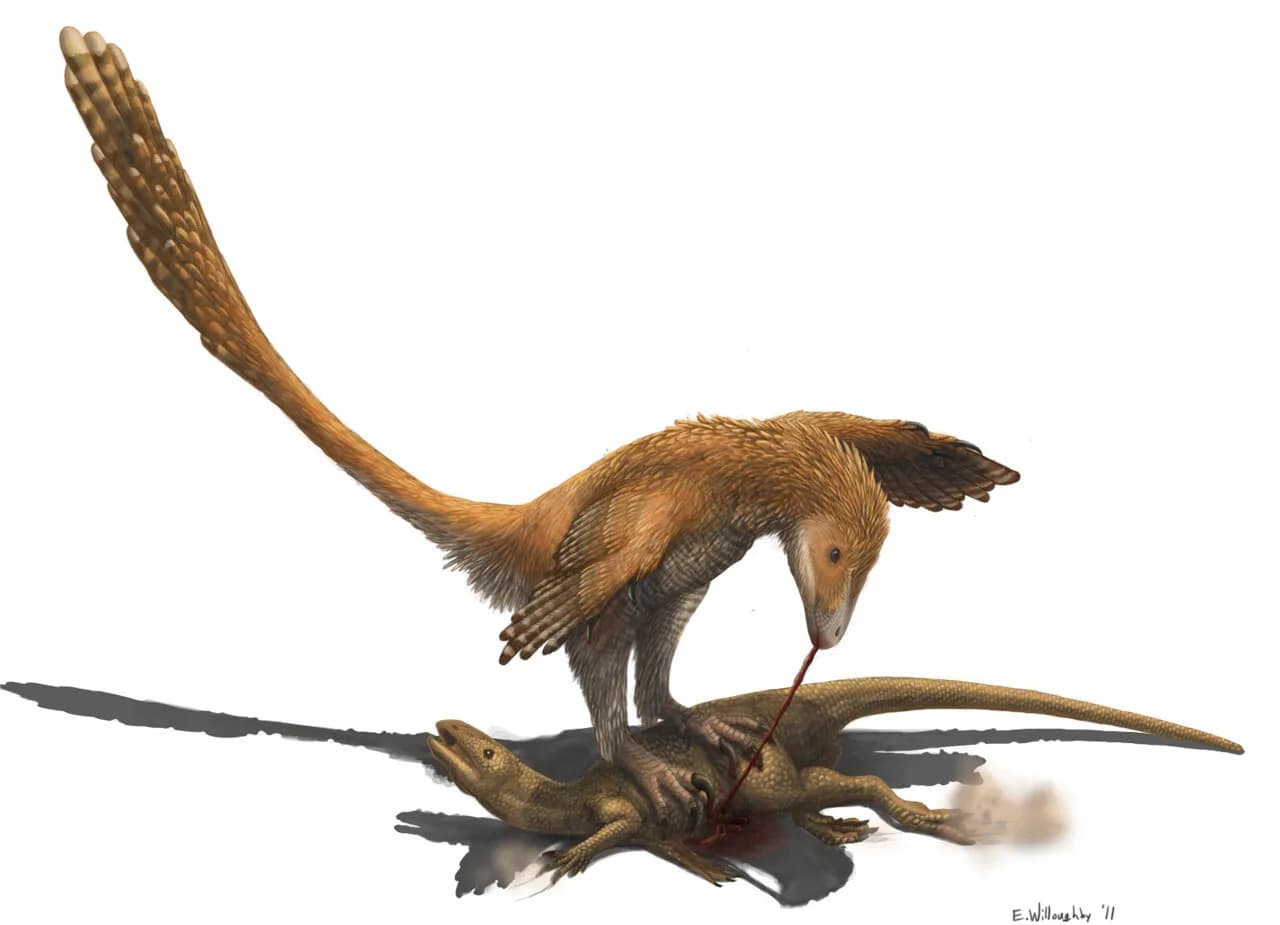
Deinonychus antirrhopus
Era: Mesozoic
Period: Early Cretaceous (Aptien–Albien)
Diet: Carnivore
Region: North America (Montana, Wyoming, Oklahoma)
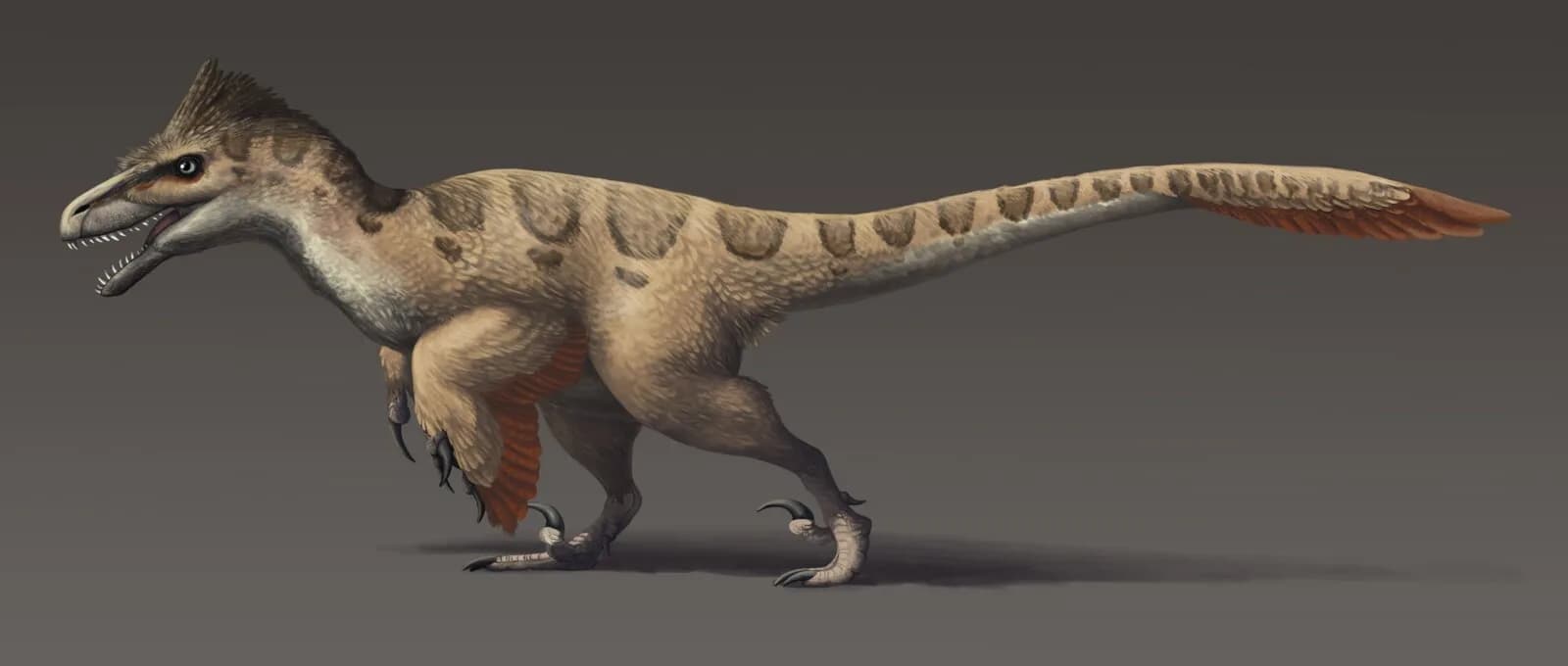
Utahraptor ostrommaysorum
Era: Mesozoic
Period: Early Cretaceous (Barremien)
Diet: Carnivore
Region: North America (Utah)
| Criterion | Deinonychus | Utahraptor |
|---|---|---|
| Length | 3.4 m m | 5–7 m m |
| Height | ~0.9 m m | ~1.5–2 m m |
| Weight | 70–80 kg t | 280–500 kg t |
| Era | Mesozoic | Mesozoic |
| Diet | Carnivore | Carnivore |
Verdict (physical categories)
Utahraptorleads (3/3)
Note: size is only one factor. Speed, bite force, intelligence and hunting strategy matter too.
Biography coming soon.
Biography coming soon.
Deinonychus antirrhopus (Early Cretaceous, 115 Ma, Oklahoma/Montana, 3.4 m, 70 kg) and Utahraptor ostrommaysorum (Early Cretaceous, 126 Ma, Utah, 6 m, 300-500 kg) are two North American dromaeosaurids. Utahraptor is nearly 2× older and 5-7× heavier. Both bore feathers and the characteristic sickle claw.
The pack hunting of Deinonychus antirrhopus, popularised by John Ostrom (1969) and Jurassic Park, is contested. Grouped fossils from the Cloverly Formation (Montana) show several individuals with a Tenontosaurus prey, but palaeontologists debate whether this was collective hunting or a scavenger accumulation.
Utahraptor, by a wide margin: 126 to 125 million years ago, against 115 to 108 for Deinonychus. It is also the larger of the two, at 5 to 7 metres and 280 to 500 kilograms, where Deinonychus tops out at 3.4 metres and 70 to 80 kilograms. Among dromaeosaurs, the giant arrived before the small one.
Keep exploring paleontology