
About Giganotosaurus
Biography coming soon.
Paleontological Comparison
The giant carnivore vs the largest sauropod ever known.
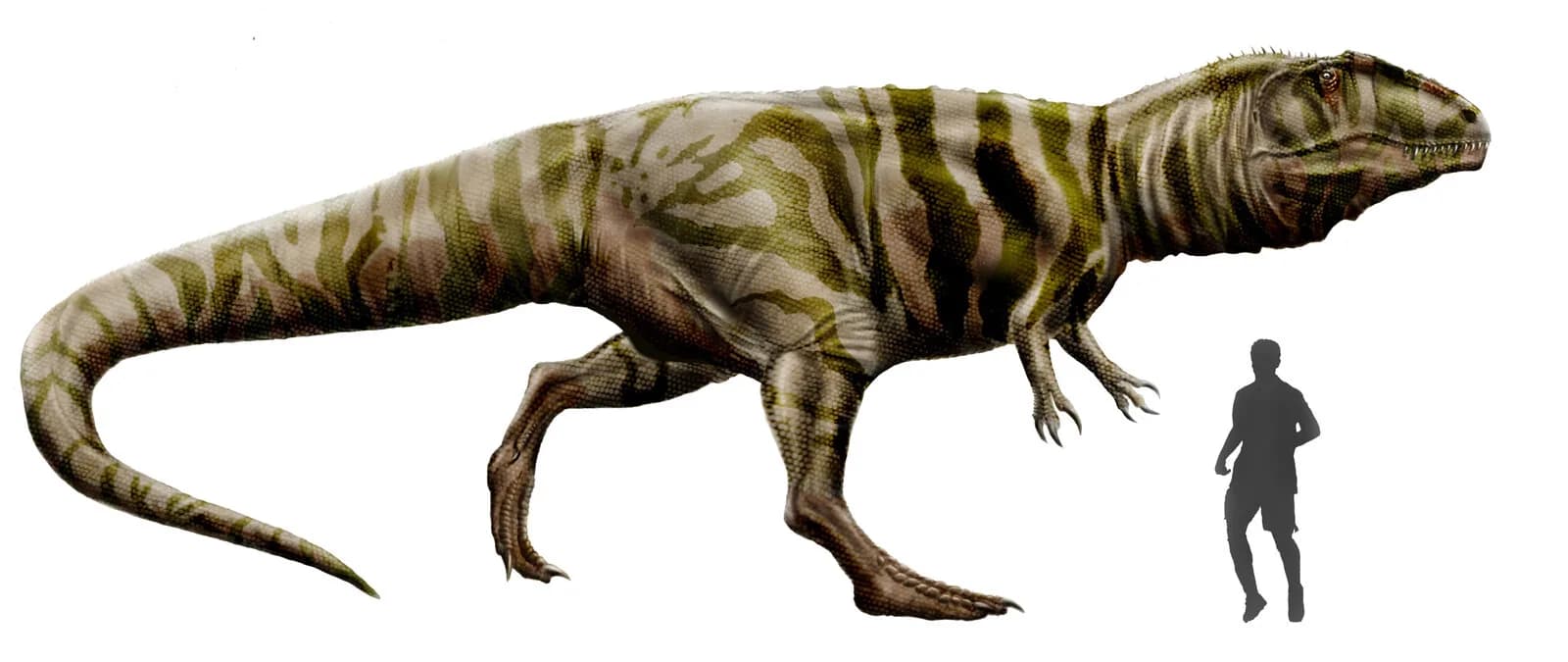
Giganotosaurus carolinii
Era: Mesozoic
Period: Late Cretaceous (Cénomanien)
Diet: Carnivore
Region: South America (Argentine
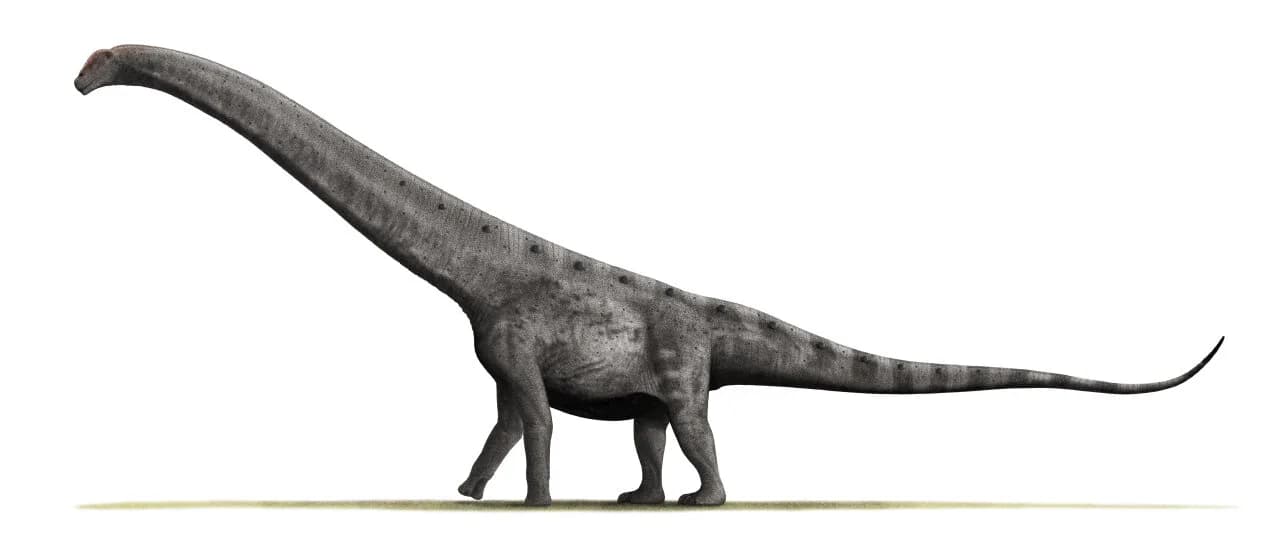
Argentinosaurus huinculensis
Era: Mesozoic
Period: Late Cretaceous (Cénomanien–Turonien)
Diet: Herbivore
Region: South America (Argentine
| Criterion | Giganotosaurus | Argentinosaurus |
|---|---|---|
| Length | 12–13 m m | 30–35 m m |
| Height | ~3.5 m m | ~7 m m |
| Weight | 6 000–8 000 kg t | 65 000–80 000 kg t |
| Era | Mesozoic | Mesozoic |
| Diet | Carnivore | Herbivore |
Verdict (physical categories)
Argentinosaurusleads (3/3)
Note: size is only one factor. Speed, bite force, intelligence and hunting strategy matter too.
Biography coming soon.
Biography coming soon.
This is the main hypothesis — both lived in Patagonia (Argentina) in the Late Cretaceous (~96-98 Ma). Rodolfo Coria (1995) suggested that Giganotosaurus carolinii hunted in packs to bring down giant titanosaurs like Argentinosaurus huinculensis. Coexistence in the same Patagonian geological layers makes the interaction very likely.
In length, barely: 12 to 13 metres, matching the largest Tyrannosaurus rex, but with a longer, narrower skull. In mass they are close — 6 to 8 tonnes against 5 to 9. Giganotosaurus lived far earlier, 98 to 97 million years ago, in Argentina, and never crossed paths with T. rex.
Very unlikely. An adult Argentinosaurus reached 65 to 80 tonnes, roughly ten times the mass of a 6-to-8-tonne Giganotosaurus. The favoured hypothesis is group hunting aimed at juveniles or weakened individuals: several Mapusaurus, a close relative, were found together in the same Patagonian bone bed.
Keep exploring paleontology