
About Different Lizard
Biography coming soon.
Paleontological Comparison
Allosaurus against the semi-aquatic giant Spinosaurus.
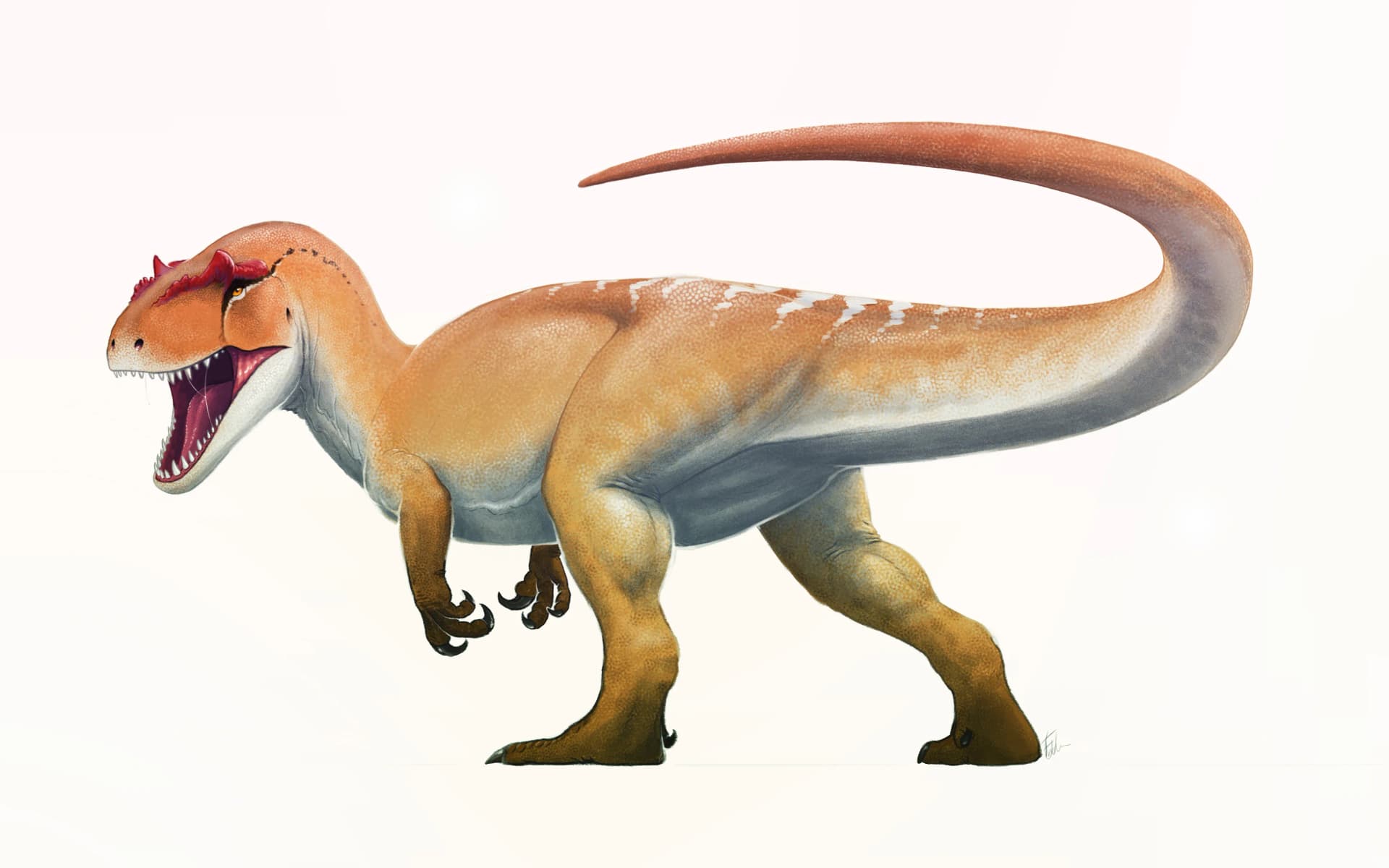
Allosaurus fragilis
Era: Mesozoic
Period: Late Jurassic
Diet: Carnivore
Region: North America, Europe
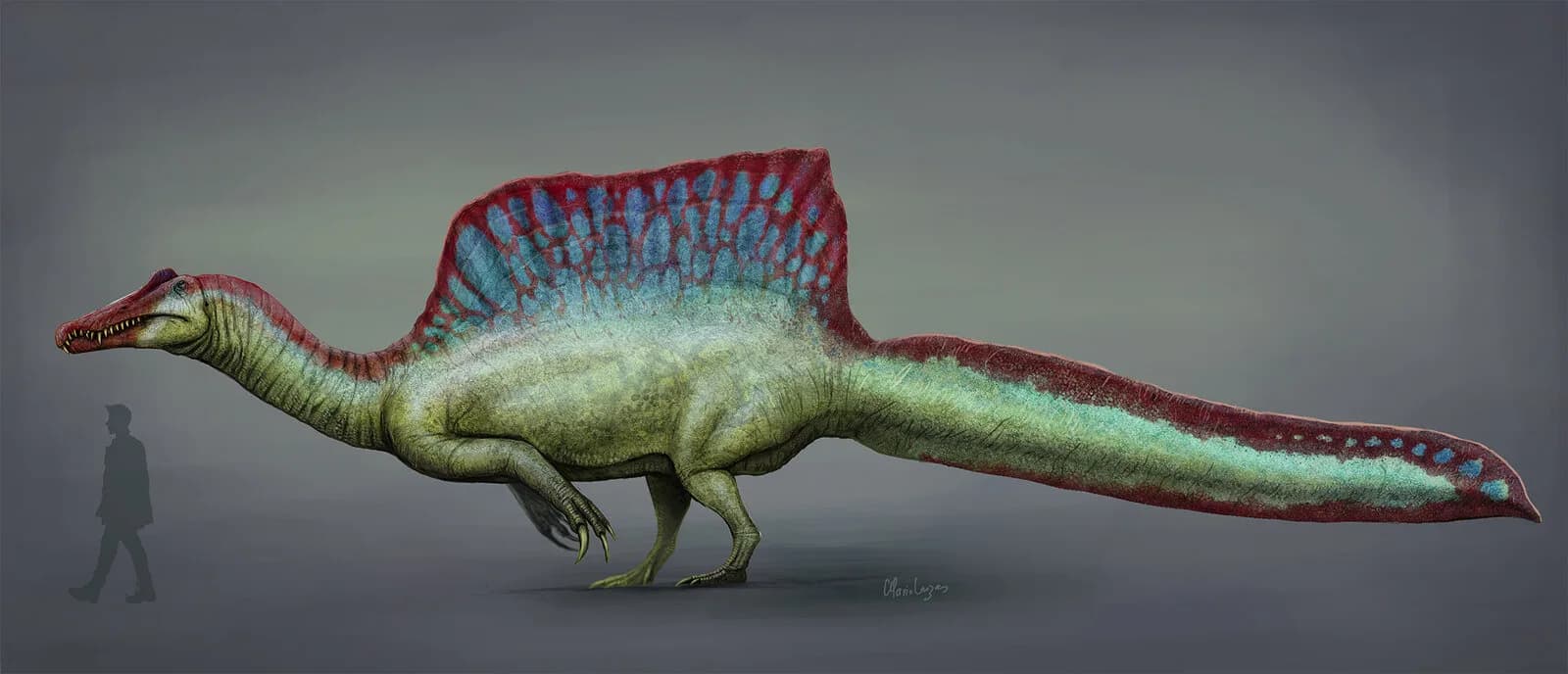
Spinosaurus aegyptiacus
Era: Mesozoic
Period: Middle Cretaceous (Cénomanien)
Diet: Piscivore
Region: North Africa (Maroc, Égypte)
| Criterion | Different Lizard | Spinosaurus |
|---|---|---|
| Length | 8.5-9 m m | 14–15 m m |
| Height | 3-3.5 m m | ~4–5 m m |
| Weight | 1.5-2 tonnes t | 7 000–14 000 kg t |
| Era | Mesozoic | Mesozoic |
| Diet | Carnivore | Piscivore |
Verdict (physical categories)
Spinosaurusleads (3/3)
Note: size is only one factor. Speed, bite force, intelligence and hunting strategy matter too.
Biography coming soon.
Biography coming soon.
Yes, clearly. Spinosaurus aegyptiacus reached 15 to 18 metres and 7 to 9 tonnes, versus 8 to 12 metres and 1 to 4 tonnes for Allosaurus fragilis. Spinosaurus is the longest theropod ever discovered. But both species lived at different times and on different continents: Allosaurus in the Jurassic (North America), Spinosaurus in the Cretaceous (North Africa).
Recent studies (Ibrahim et al., 2020) suggest Spinosaurus aegyptiacus moved on four legs on land and swam like a giant otter. Its robust forelimbs and partially webbed feet support this semi-aquatic quadrupedal locomotion hypothesis, unlike other large strictly bipedal theropods.
Yes — bones of Brachiosaurus, Apatosaurus and Diplodocus bear Allosaurus fragilis bite marks. Its axe-hunting technique (wide-open jaw) allowed it to attack much larger prey. Fossilised evidence from the Morrison Formation (Utah, Colorado) shows repeated predation behaviour on these giants.
Keep exploring paleontology