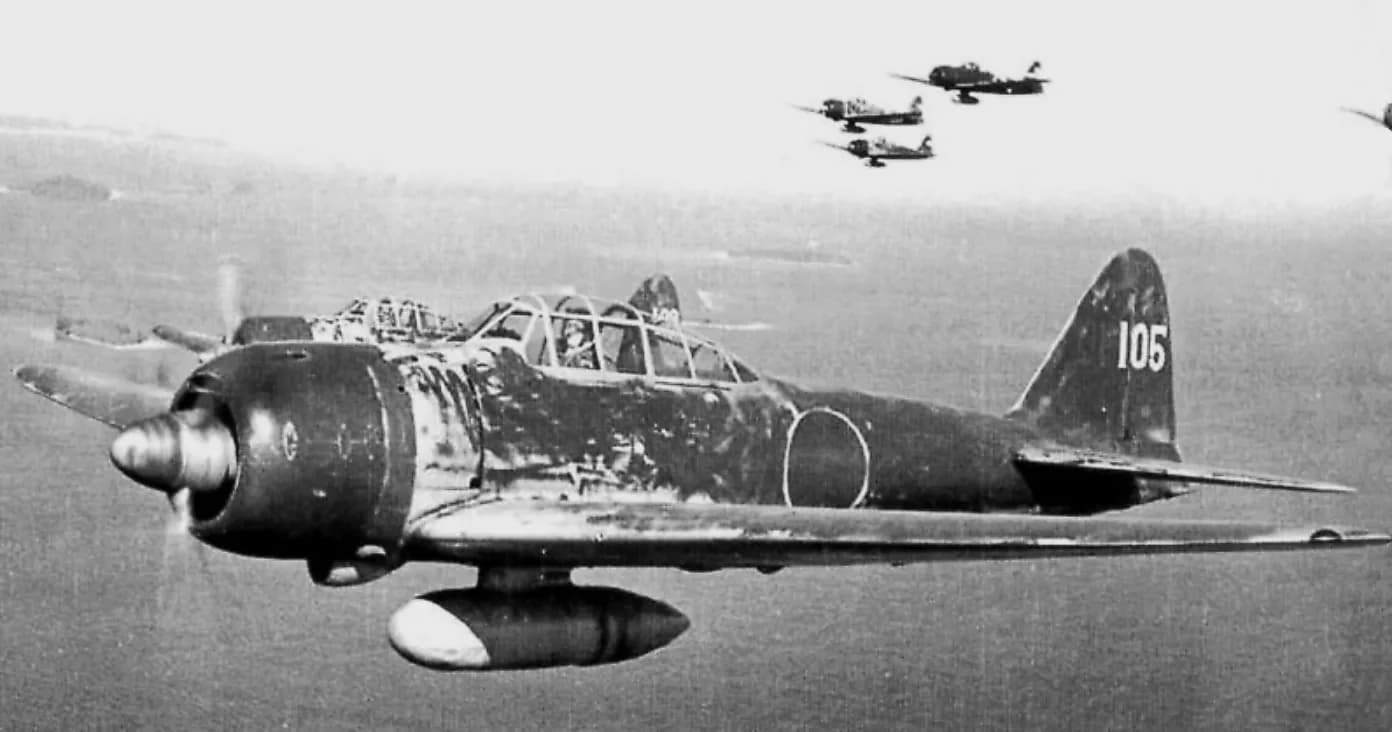
The Mitsubishi A6M Zero was the iconic fighter of the Imperial Japanese Navy during World War II. Its exceptional maneuverability and remarkable range made it the most feared fighter in the Pacific in 1941-1942, before the Allies developed tactics and aircraft capable of outperforming it.
Development of the A6M Zero began in 1937 when the Imperial Japanese Navy issued extremely demanding specifications for a new carrier-based fighter: superior maneuverability, 3,000 km range, heavy armament of two 20mm cannons and two 7.7mm machine guns, all combined with a maximum speed of 500 km/h. Nakajima abandoned the project, deeming it impossible. Engineer Jiro Horikoshi of Mitsubishi took on the challenge by making radical choices: structure entirely of ultra-light aluminum alloy (extra-superior duralumin), no pilot armor, non-self-sealing fuel tanks. These compromises, unacceptable to Western designers, produced an aircraft of extraordinary lightness (1,680 kg empty) offering an unmatched thrust-to-weight ratio and maneuverability. The first prototype flew on April 1, 1939, and tests revealed performance exceeding all expectations. The Zero entered service in July 1940 and proved itself over China, where it quickly established air superiority.
The A6M2 Model 21, the most iconic Zero version, was powered by a Nakajima Sakae 12 engine producing 940 horsepower, giving it a maximum speed of 533 km/h at 4,550 meters altitude. Its 12-meter wingspan and 2,410 kg takeoff weight made it a remarkably light aircraft for its class. Range, the Zero's greatest asset, reached 3,100 km with the auxiliary belly tank, twice that of any contemporary Allied fighter. Armament comprised two Type 99 20mm cannons in the wings (60 rounds each) and two Type 97 7.7mm machine guns in the cowling. The Zero's turning radius was exceptionally tight, allowing the pilot to get on any opponent's tail in a turning fight. However, the complete absence of armor and self-sealing fuel tanks made the Zero extremely vulnerable: a single machine gun burst could cause fuel tank explosions or pilot death. Later versions (A6M3, A6M5) progressively added armor and protected tanks, at the cost of reduced performance.
The Zero experienced its finest hour during the attack on Pearl Harbor on December 7, 1941, where 105 Zeros escorted Japanese bombers and shot down several American aircraft on the ground and in the air with minimal losses. In the first months of the Pacific War, the Zero dominated the skies with a stunning air victory ratio. Over the Philippines, Malaya, the Dutch East Indies, and Australia, Allied pilots were stunned by the maneuverability and range of this unknown aircraft. Allied fighters — the P-40 Warhawk, Brewster Buffalo, and Hurricane — proved largely inferior in turning combat. The turning point came at Midway in June 1942 and especially when an intact Zero was recovered in the Aleutians in July 1942, allowing Americans to analyze its strengths and weaknesses. New tactics were developed, notably the Thach Weave, exploiting the superior diving speed of American aircraft and the Zero's structural fragility. New fighters — the F6F Hellcat, F4U Corsair, and P-38 Lightning — progressively outperformed the Zero from 1943 onward.
The Zero saw numerous variants throughout the war. The A6M2 Model 21, produced from 1940, was the classic Pearl Harbor and early conquest version. The A6M3 Model 32 (1942) received a more powerful 1,130 hp Sakae 21 engine and clipped wings, increasing speed at the expense of range. The A6M5 Model 52 (1943), the most produced version with approximately 6,000 units, combined clipped wings, improved speed, and better dive resistance. The A6M5b added 8mm armor behind the pilot and an armored windscreen, finally acknowledging the need to protect pilots. The A6M7, the last production variant, was adapted as a fighter-bomber for kamikaze missions with a 250 kg bomb rack under the fuselage. In total, approximately 10,939 Zeros of all variants were produced, making it the most manufactured Japanese aircraft of the war. Several successor projects (A7M Reppū) never entered production in significant quantities.
The Zero's impact on the Pacific War and aviation history is immense. In 1941-1942, it imposed Japanese air superiority that facilitated all initial Empire conquests. Its superiority shocked the Allies, who had underestimated Japanese technological capabilities, contributing to the collapse of the myth of Western technical supremacy in Asia. The Zero forced the Allies to develop new aircraft specifically designed to outperform it: Grumman's F6F Hellcat, designed after studying the Zero captured in the Aleutians, achieved a 19:1 ratio against Japanese aircraft. The Zero's fundamental dilemma — maximum performance at the cost of all protection — reflected a Japanese war philosophy prioritizing attack at the expense of pilot lives, a philosophy that would culminate in the kamikaze attacks of 1944-1945 when thousands of Zeros and their pilots were sacrificed in suicide missions against the Allied fleet. Today, only a handful of Zeros survive in museums worldwide, witnesses to an era when technical ingenuity reached its limits against American industrial resources.
The Mitsubishi A6M Zero A6M2 Model 21 excelled in exceptional turning combat maneuverability and 3,100 km range with auxiliary tank, twice that of any contemporary Allied fighter. Its weaknesses were fatal: no pilot armor, non-self-sealing fuel tanks, fragile structure. A single burst could cause fuel tank explosions. Designer Jiro Horikoshi's choices achieved incomparable lightness (1,680 kg empty).
In July 1942, an intact Mitsubishi A6M Zero was recovered in the Aleutian Islands after its pilot made a forced landing. American engineers methodically analyzed its strengths and weaknesses. New tactics emerged, notably the Thach Weave exploiting the superior diving speed of American aircraft and the Zero's structural fragility. The Grumman F6F Hellcat, designed specifically after this analysis, achieved a 19:1 ratio against Japanese aircraft.
Approximately 10,939 Mitsubishi A6M Zeros of all variants were produced, making it the most manufactured Japanese aircraft of the war. Its dominance ended from 1943, when the Grumman F6F Hellcat, Vought F4U Corsair, and Lockheed P-38 Lightning outperformed it. Later versions (A6M5, A6M7) added 8mm pilot armor but lost performance. The Zero was ultimately adapted for kamikaze missions in 1944-1945.
Information cross-checked against Wikipedia and reference historical works.
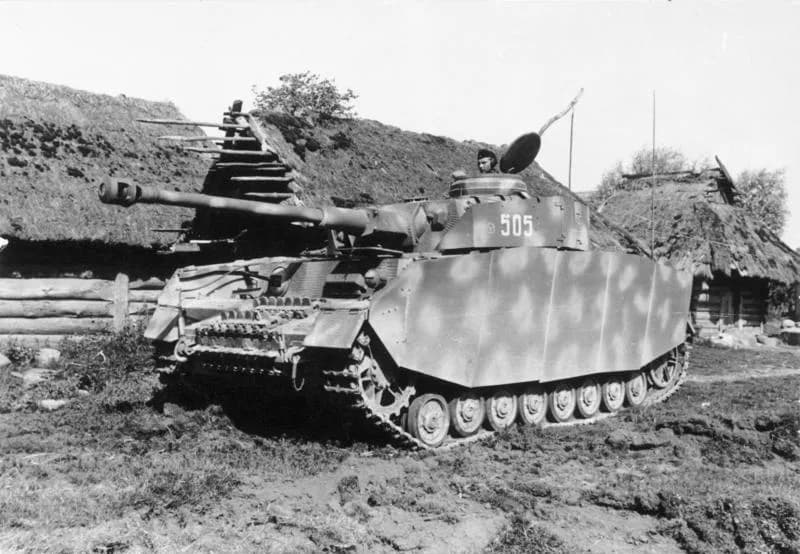
Panzer IV
The Panzerkampfwagen IV was the most produced German medium tank of World War II, with over 8,500 built. Originally designed as an infantry support tank, it evolved into the backbone of the Panzer divisions on every front. It is the only German tank in production from 1939 to 1945.
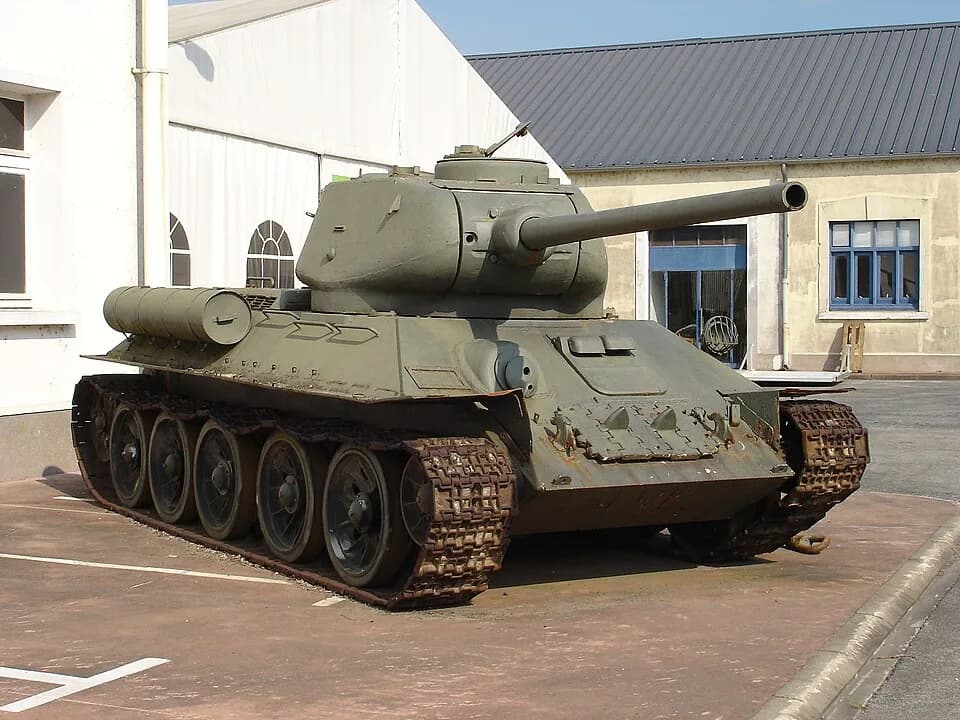
T-34
The T-34 is widely considered the best medium tank of World War II and one of the most influential in military history. Produced in over 84,000 units, its combination of sloped armor, mobility and firepower shocked the Germans in 1941 and shifted the balance of power on the Eastern Front.
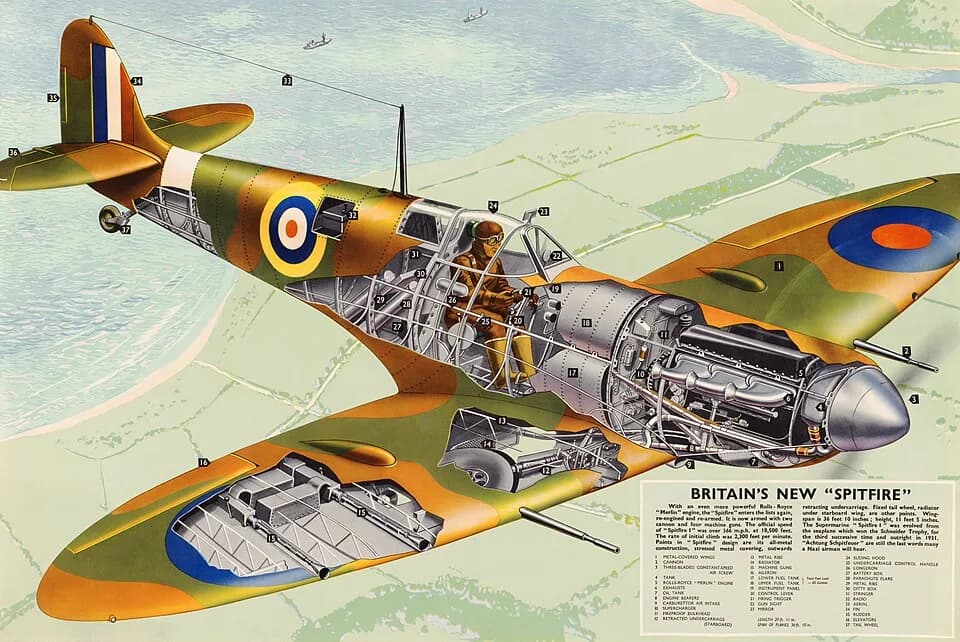
Supermarine Spitfire
The Supermarine Spitfire is the iconic fighter aircraft of the Royal Air Force and a symbol of British resistance during the Battle of Britain. Designed by R.J. Mitchell, its combination of elliptical wings, Rolls-Royce Merlin engine and exceptional agility made it one of the finest fighters of the war.
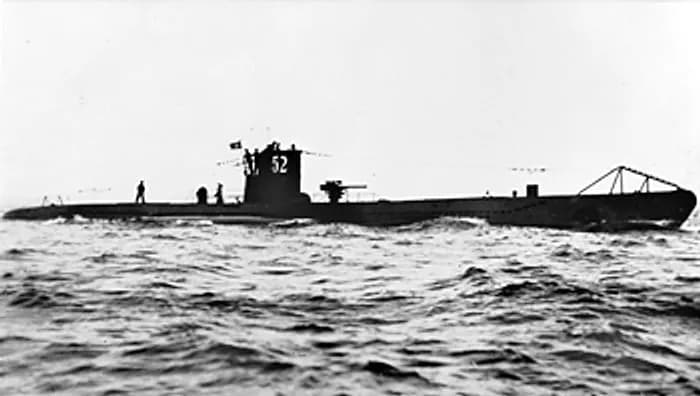
U-Boat Type VII
The Type VII U-boat is the most produced submarine in history with 703 built. The backbone of the Kriegsmarine during the Battle of the Atlantic, these vessels nearly severed the vital supply lines between America and Britain, threatening Great Britain's very survival.
