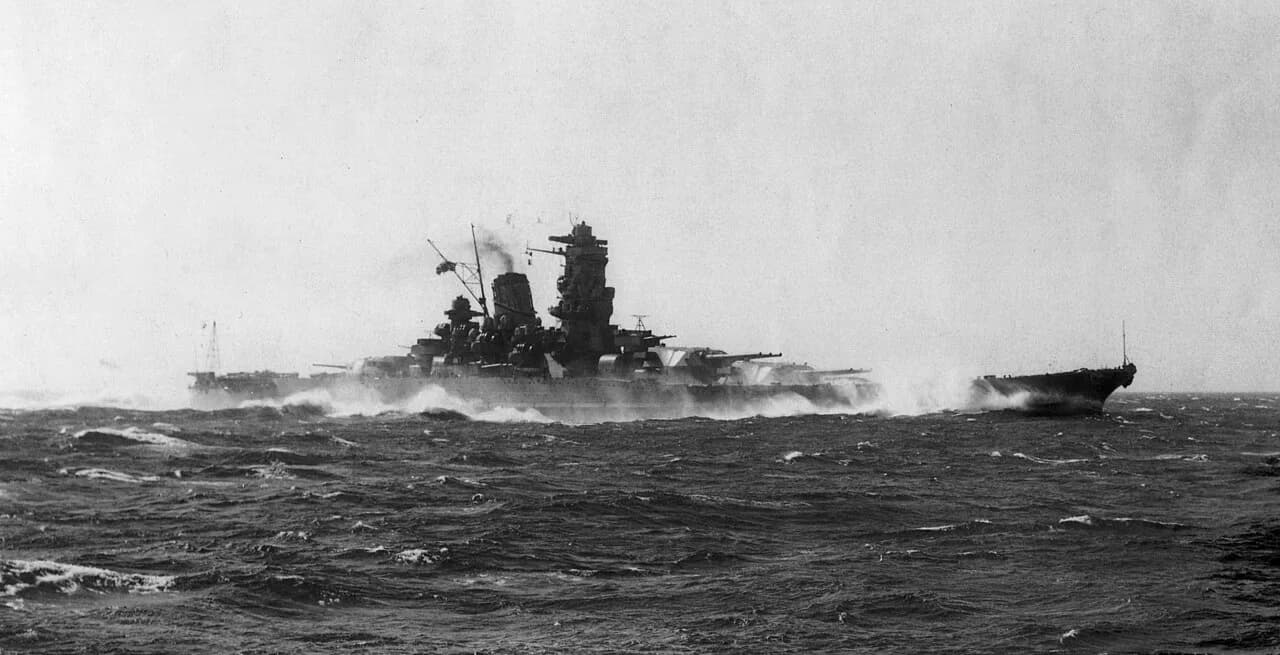
The Yamato is the largest battleship ever built in naval history. With its 72,000 tons and nine 460mm guns — the largest ever mounted on a warship — it embodied the pinnacle and end of the battleship era, sunk by American aircraft on a suicide mission in April 1945.
The Yamato was designed to counter the numerical superiority of the American fleet: if Japan could not build as many battleships as the United States, it would build more powerful ones. The keel was laid on November 4, 1937, at the Kure Naval Yard in utmost secrecy — the construction dock was covered with camouflage netting and workers were forbidden from revealing the nature of their work. The design was the fruit of theoretical research and experience gained from reconstructing the Kongo, Fuso, Ise, and Nagato classes. Japanese engineers innovated with an unprecedented underwater protection system and multi-layer deck armor. The Yamato was launched on August 8, 1940, and commissioned on December 16, 1941, one week after the attack on Pearl Harbor. Its name was deeply symbolic: 'Yamato' is the ancient poetic name for Japan itself, and some Japanese believed their country could not fall as long as the Yamato was fit to fight. The sister ship, Musashi, was commissioned in August 1942. A third ship of the class, Shinano, was converted to an aircraft carrier during construction — it would be sunk by an American submarine only 17 hours after commissioning.
The Yamato displaced 64,000 tons standard and 72,000 tons at full load — the heaviest warship ever built. Her length reached 263 meters with a beam of 38.9 meters. Main armament consisted of nine Type 94 460 mm (18.1-inch) guns in three triple turrets — the largest guns ever mounted on a warship. Each gun measured 21.13 meters and weighed 147.3 tons. The 1,460 kg armor-piercing shells could reach targets at 42 kilometers, and the 1,360 kg high-explosive shells devastated everything in their path. Rate of fire was 1.5 to 2 rounds per minute per gun. Secondary armament comprised twelve 155 mm guns, twelve 127 mm anti-aircraft guns, and over 150 25 mm anti-aircraft guns (this number increased throughout the war). Armor was unprecedented: the belt armor reached 410 mm, and the main turret faces 650 mm — the thickest armor ever installed on a ship. Four steam turbines developed 150,000 horsepower for a maximum speed of 27.4 knots. The crew exceeded 2,700 men.
Despite its colossal power, the Yamato never fulfilled the role for which it was designed. For most of the war, it served as flagship of the Combined Fleet, remaining behind the fighting. In June 1942, Admiral Isoroku Yamamoto directed the Battle of Midway operations from the Yamato's bridge, but the battleship never engaged in combat. This excessive caution was explained by the ship's symbolic and strategic value — losing it would be a disaster for Japanese morale. The Yamato used its main guns against enemy ships only once in the entire war: at the Battle of Leyte Gulf in October 1944. As part of Vice Admiral Takeo Kurita's Center Force, the Yamato participated in the Battle off Samar, where it helped sink the escort carrier USS Gambier Bay and the destroyer USS Johnston. But torpedo attacks from the USS Heermann forced the Yamato into defensive maneuvering. The irony is cruel: the most powerful battleship in the world was forced to flee from modestly-sized destroyers.
The Yamato class comprised three ships. The Yamato herself was the lead ship, commissioned in December 1941. Her sister ship, Musashi, was essentially identical and commissioned in August 1942. Musashi was sunk on October 24, 1944, at the Battle of the Sibuyan Sea (Leyte Gulf), sustaining 17 torpedoes and 20 bombs before sinking with 1,023 of her sailors. The third ship, Shinano, was converted to an aircraft carrier during construction when the Imperial Navy realized that carriers, not battleships, had become capital ships. Commissioned on November 19, 1944, Shinano was torpedoed by the submarine USS Archerfish the following day — she holds the unenviable record as the largest warship sunk by a submarine. A fourth ship of the class was ordered but never built. The very concept of the super-battleship died with the Yamato: no navy in the world would ever build a larger battleship.
The Yamato's fate symbolizes the end of the battleship era and the triumph of naval air power. Her last voyage, Operation Ten-Go on April 7, 1945, was a suicide mission: the Yamato, with only enough fuel for a one-way trip, was to charge the American invasion fleet at Okinawa, sink as many transports as possible, then beach herself to serve as a coastal battery. The Americans, having intercepted and decoded Japanese communications, knew the plan in detail. 386 American aircraft (bombers and torpedo planes) launched from carriers attacked the Yamato before she reached Okinawa. The battleship absorbed 10 torpedoes and 7 bombs before capsizing and sinking. The explosion of her magazines produced a mushroom cloud visible from 200 km away. Of the 2,700 crew members, 2,498 perished, including Vice Admiral Seiichi Ito. American losses: 10 aircraft. The message was clear: the battleship, king of the seas for a century, was powerless against air power. The Yamato remains a potent symbol in Japanese culture — the poetic name of Japan itself sent to the ocean floor, embodying both the grandeur and tragedy of the Empire.
The Yamato displaced 72,000 tons at full load — the heaviest warship ever built — with a length of 263 meters. Its nine Type 94 460mm guns, the largest ever mounted on a warship, fired 1,460 kg shells to 42 kilometers distance. Its belt armor reached 410mm, and turret faces 650mm — the thickest ever installed on a ship.
The Yamato was sunk on April 7, 1945, during Operation Ten-Go, a suicide mission toward Okinawa with only enough fuel for a one-way trip. The Americans, having decoded Japanese communications, sent 386 carrier-based aircraft. The battleship absorbed 10 torpedoes and 7 bombs before capsizing. Of the 2,700 crew members, 2,498 perished including Vice Admiral Seiichi Ito. American losses were limited to 10 aircraft.
For most of the war, the Yamato served as flagship of the Combined Fleet, kept in the rear due to its symbolic value — losing it would have been a disaster for Japanese morale. It used its main guns against enemy ships only once, at the Battle off Samar (Leyte Gulf, October 1944), helping sink USS Gambier Bay. Ironically, torpedoes from modestly-sized American destroyers forced it into defensive maneuvering.
Information cross-checked against Wikipedia and reference historical works.
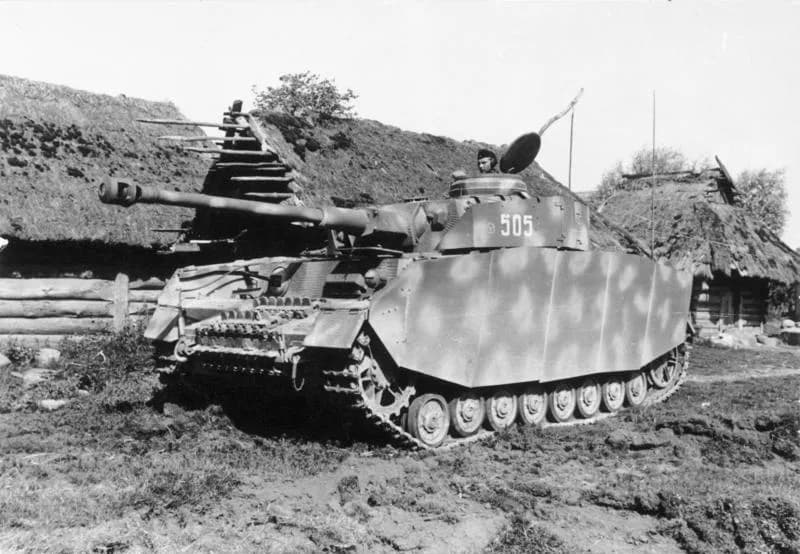
Panzer IV
The Panzerkampfwagen IV was the most produced German medium tank of World War II, with over 8,500 built. Originally designed as an infantry support tank, it evolved into the backbone of the Panzer divisions on every front. It is the only German tank in production from 1939 to 1945.
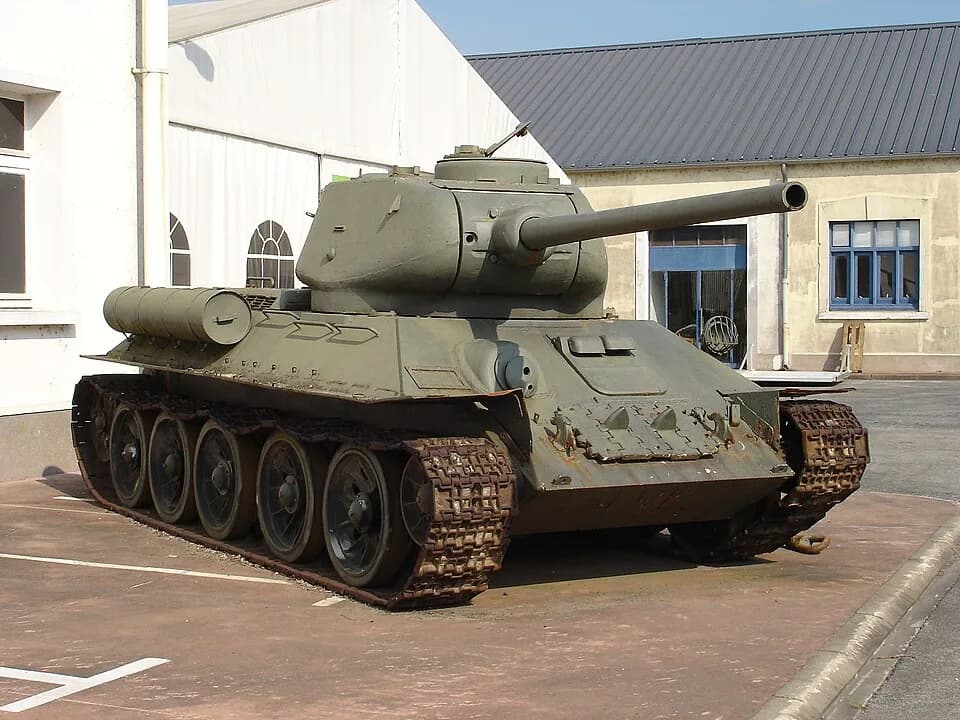
T-34
The T-34 is widely considered the best medium tank of World War II and one of the most influential in military history. Produced in over 84,000 units, its combination of sloped armor, mobility and firepower shocked the Germans in 1941 and shifted the balance of power on the Eastern Front.
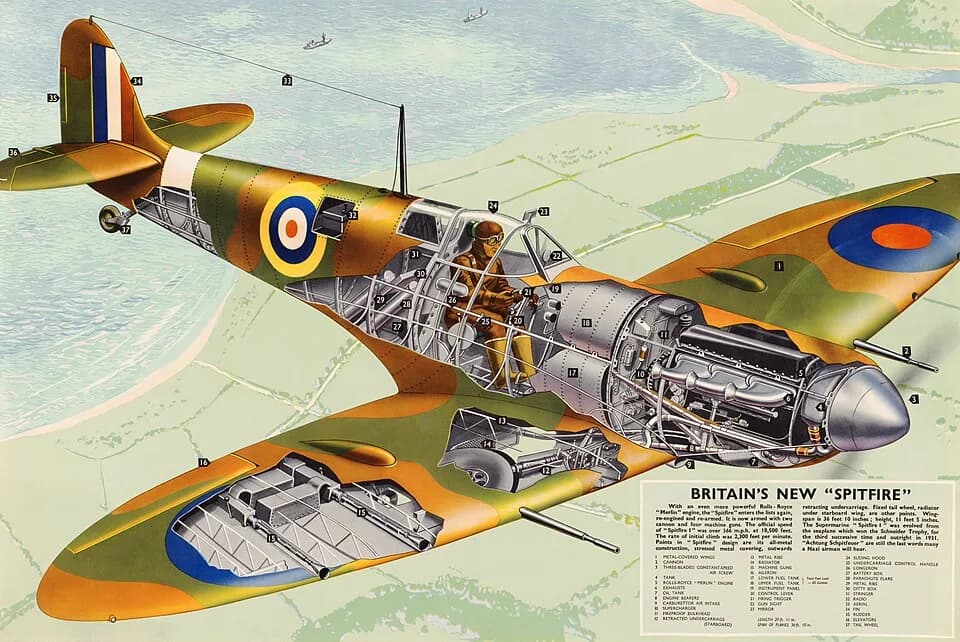
Supermarine Spitfire
The Supermarine Spitfire is the iconic fighter aircraft of the Royal Air Force and a symbol of British resistance during the Battle of Britain. Designed by R.J. Mitchell, its combination of elliptical wings, Rolls-Royce Merlin engine and exceptional agility made it one of the finest fighters of the war.
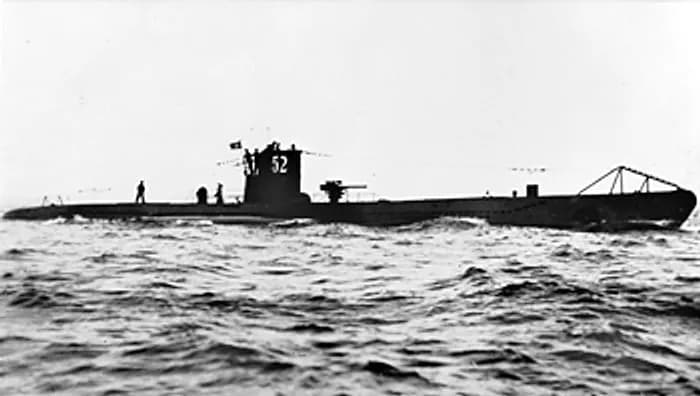
U-Boat Type VII
The Type VII U-boat is the most produced submarine in history with 703 built. The backbone of the Kriegsmarine during the Battle of the Atlantic, these vessels nearly severed the vital supply lines between America and Britain, threatening Great Britain's very survival.
