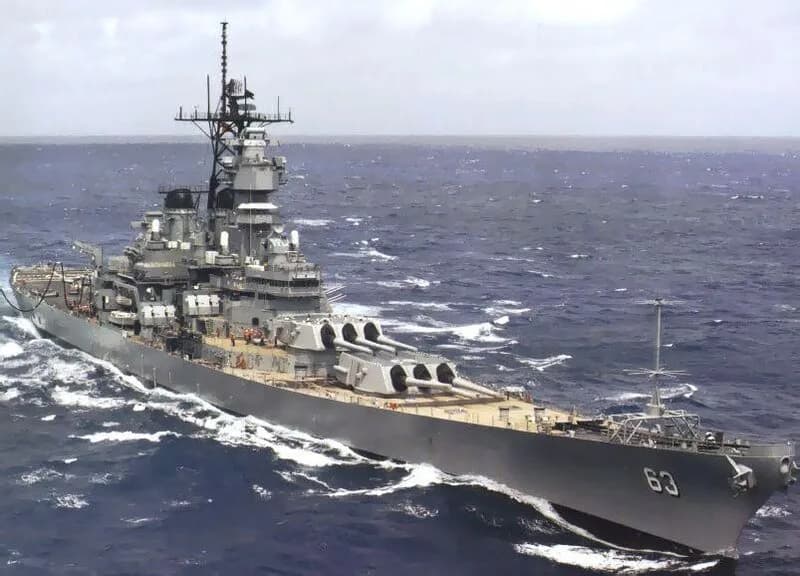
The USS Missouri (BB-63) is an Iowa-class battleship of the United States Navy, famous for hosting the Japanese surrender ceremony on September 2, 1945, officially ending World War II. Armed with nine 16-inch guns, it represents the pinnacle of battleship construction.
The USS Missouri was the third of four Iowa-class battleships, designed from 1938 to counter the growing threat of the Imperial Japanese Navy. The Iowa class represented the culmination of decades of American battleship development, combining massive firepower, significant armor protection, and high speed through an elongated, streamlined hull. Missouri's keel was laid on January 6, 1941, at the New York Navy Yard (Brooklyn Navy Yard). The ship was launched on January 29, 1944, sponsored by Margaret Truman, daughter of Senator (and future President) Harry S. Truman of Missouri. Commissioning took place on June 11, 1944, under Captain William Callaghan's command. Construction mobilized thousands of workers and cost approximately $100 million in contemporary dollars. The Missouri was the last battleship ever commissioned by the US Navy, although her sister ship Wisconsin entered service after her. The choice of the name 'Missouri' proved prophetic: the ship bearing the name of the future President Truman's state would be the one on which the war officially ended.
The Missouri displaced 58,000 tons at full load with a length of 270.4m and a beam of 32.9m. Her four General Electric steam turbines, fed by eight Babcock & Wilcox boilers, developed 212,000 shaft horsepower, driving the ship to a maximum speed of 33 knots (61 km/h) — a remarkable performance for a vessel of this size. The main armament comprised nine Mark 7 16-inch (406mm) guns in three triple turrets, capable of firing 1,225 kg shells to a range of 38.7 km. Secondary armament included twenty 5-inch (127mm) guns in ten twin mounts, eighty Bofors 40mm anti-aircraft guns, and forty-nine Oerlikon 20mm guns. The main armor belt reached 307mm, the armored deck 190mm, and the main turret face 432mm. The crew numbered approximately 2,700 men. Range reached 15,000 nautical miles at 15 knots. The Missouri also embarked three Vought OS2U Kingfisher floatplanes for reconnaissance.
The Missouri joined the Pacific Fleet in January 1945 and participated in the war's final major operations. In February-March 1945, she supported the landings at Iwo Jima with her 16-inch guns, bombarding fortified Japanese positions. In April 1945, during the Battle of Okinawa, a kamikaze aircraft struck the Missouri on the starboard side at the main deck level — damage was minor and the ship remained fully operational. Captain Callaghan ordered that the Japanese pilot receive a military funeral with full honors, a remarkable act of respect during wartime. The Missouri then participated in the bombardment of the Japanese coastline in July-August 1945, shelling industrial facilities around Tokyo Bay. On September 2, 1945, in Tokyo Bay, the Missouri hosted the Japanese surrender ceremony. General Douglas MacArthur, Supreme Commander of the Allied Powers, presided over the ceremony. Japanese Foreign Minister Mamoru Shigemitsu and General Yoshijirō Umezu signed the instrument of surrender on a table set up on the ship's deck, witnessed by representatives of nine Allied nations.
The Iowa class comprised four battleships: Iowa (BB-61), New Jersey (BB-62), Missouri (BB-63), and Wisconsin (BB-64). Two additional ships, Illinois (BB-65) and Kentucky (BB-66), were ordered but never completed. All four ships were identical in their main characteristics, but each had a distinct operational history. The Missouri was the only one to host the surrender ceremony. After World War II, the Missouri was the only Iowa kept in active service, participating in the Korean War (1950-1953) where she bombarded North Korean and Chinese positions. Decommissioned in 1955, she was reactivated by President Reagan in 1984 as part of the 600-ship Navy program, modernized with Tomahawk cruise missiles and Harpoon anti-ship missiles. The Missouri participated in the Gulf War (1991), firing 28 Tomahawk missiles at Iraqi targets and bombarding positions in Kuwait. Finally decommissioned in 1992, she was converted into a museum ship at Pearl Harbor in 1999, symbolically anchored near the USS Arizona Memorial.
The USS Missouri holds a unique place in world history as the site where World War II officially ended. The photograph of General MacArthur standing before the Japanese representatives on the Missouri's deck is one of the most iconic images of the 20th century. The choice of the Missouri for the ceremony was a political gesture by President Truman toward his home state, but it conferred upon the ship an unmatched historical stature. The Missouri symbolizes American naval power at its zenith: at the time of the surrender, the US Navy was the greatest naval force in history, with more than 6,000 ships. However, the Missouri also represents the end of an era: World War II demonstrated that the battleship was surpassed by the aircraft carrier as the navy's capital ship. Pearl Harbor, Midway, and the Philippine Sea proved that naval air power now dominated the oceans. Today, the Missouri museum at Pearl Harbor receives more than 500,000 visitors annually. Its position facing the Arizona Memorial creates a powerful symbol: the place where the war began for America faces the place where it ended.
On September 2, 1945, in Tokyo Bay, USS Missouri (BB-63) hosted the Japanese surrender ceremony, officially ending World War II. General Douglas MacArthur, Supreme Commander of the Allied Powers, presided over the ceremony. Japanese Foreign Minister Mamoru Shigemitsu and General Yoshijirō Umezu signed the instrument of surrender on the battleship's deck before representatives of nine Allied nations.
USS Missouri was armed with nine Mark 7 16-inch (406mm) guns in three triple turrets. These guns fired 1,225 kg shells to a maximum range of 38.7 km. The ship displaced 58,000 tons at full load with a length of 270.4m. Her four General Electric turbines developed 212,000 horsepower, giving her a maximum speed of 33 knots (61 km/h).
USS Missouri was converted into a museum ship at Pearl Harbor in 1999 and symbolically anchored near the USS Arizona Memorial, sunk during the Japanese attack on December 7, 1941. This arrangement creates a powerful symbol: the place where the war began for America faces the place where it officially ended. The Missouri museum receives more than 500,000 visitors annually.
Information cross-checked against Wikipedia and reference historical works.
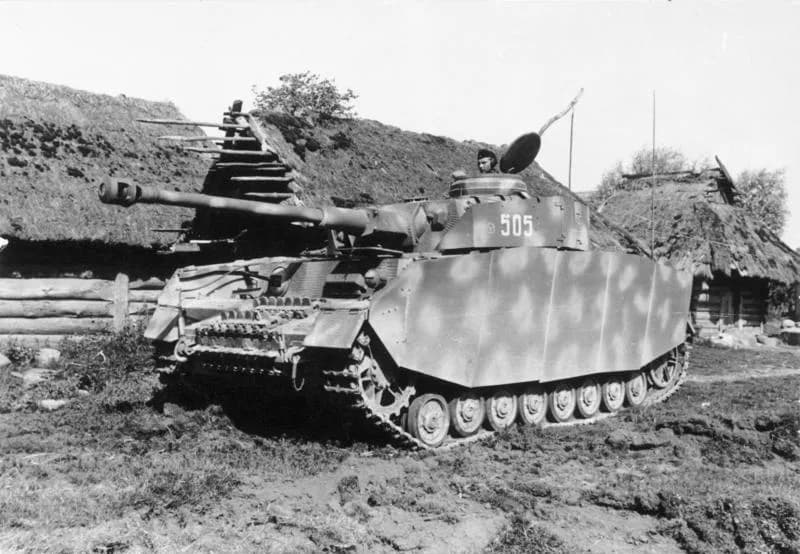
Panzer IV
The Panzerkampfwagen IV was the most produced German medium tank of World War II, with over 8,500 built. Originally designed as an infantry support tank, it evolved into the backbone of the Panzer divisions on every front. It is the only German tank in production from 1939 to 1945.
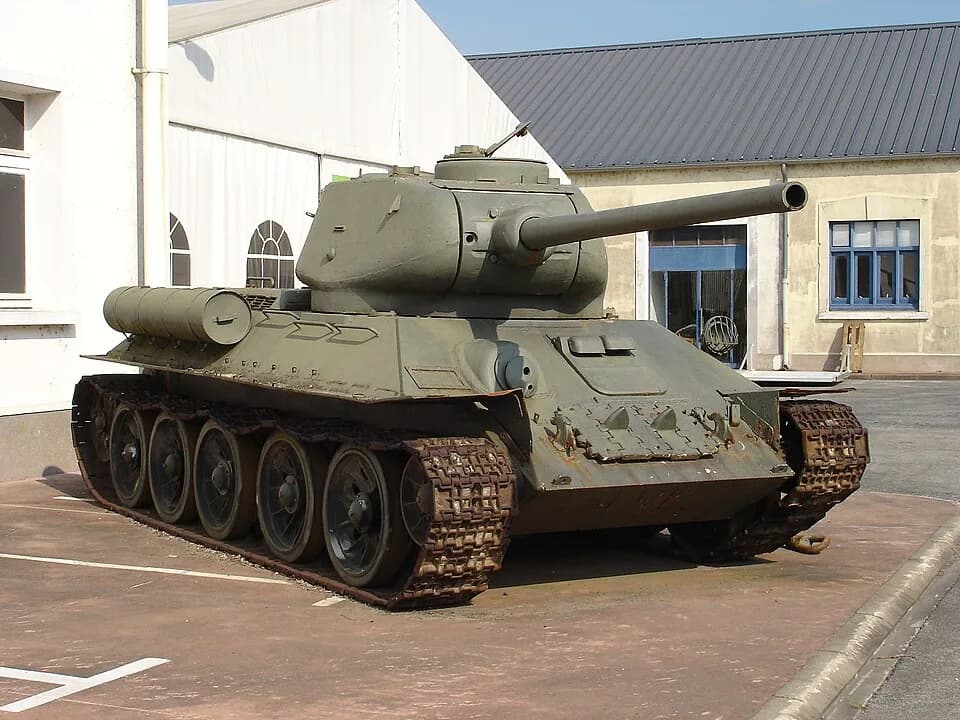
T-34
The T-34 is widely considered the best medium tank of World War II and one of the most influential in military history. Produced in over 84,000 units, its combination of sloped armor, mobility and firepower shocked the Germans in 1941 and shifted the balance of power on the Eastern Front.
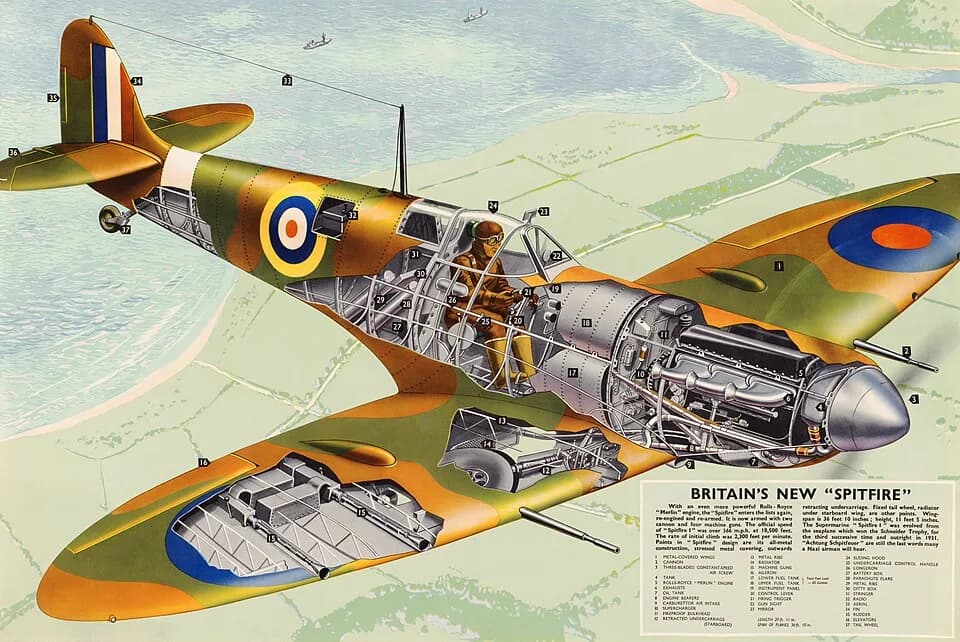
Supermarine Spitfire
The Supermarine Spitfire is the iconic fighter aircraft of the Royal Air Force and a symbol of British resistance during the Battle of Britain. Designed by R.J. Mitchell, its combination of elliptical wings, Rolls-Royce Merlin engine and exceptional agility made it one of the finest fighters of the war.
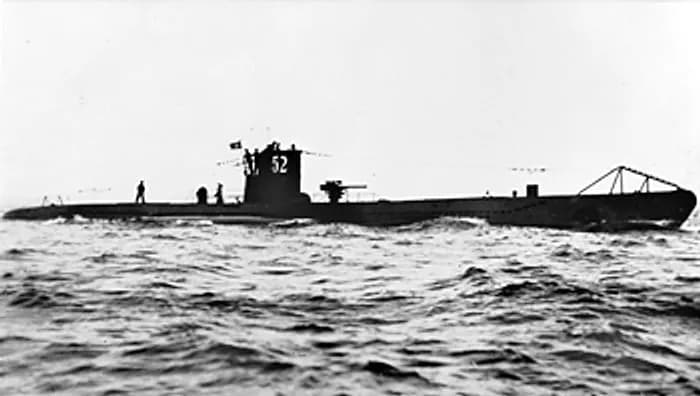
U-Boat Type VII
The Type VII U-boat is the most produced submarine in history with 703 built. The backbone of the Kriegsmarine during the Battle of the Atlantic, these vessels nearly severed the vital supply lines between America and Britain, threatening Great Britain's very survival.
