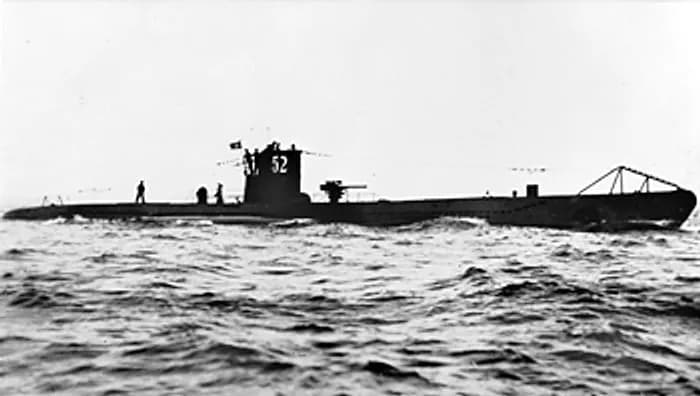
The Type VII U-boat is the most produced submarine in history with 703 built. The backbone of the Kriegsmarine during the Battle of the Atlantic, these vessels nearly severed the vital supply lines between America and Britain, threatening Great Britain's very survival.
German U-boat development secretly resumed after World War I, in violation of the Treaty of Versailles. Germany maintained submarine construction expertise through design offices in the Netherlands and Finland. The Type VII, designed by engineers at the IvS bureau in The Hague, was based on the Type UB III from World War I. The first Type VIIA entered service in 1936. The Type VIIB brought increased range and stern torpedo tubes. The Type VIIC, the most produced version (568 units), standardized production from 1940. Submarines were built at numerous shipyards: Blohm & Voss in Hamburg, Deutsche Werke in Kiel, Bremer Vulkan, and others. Admiral Karl Dönitz, commander of the submarine fleet and architect of the 'wolfpack' strategy (Rudeltaktik), pushed for massive production from the war's outset, but Hitler favored battleships and cruisers. It was only in 1943 that U-boat production reached its peak — ironically at the moment the Battle of the Atlantic was turning in the Allies' favor.
The Type VIIC measured 67.1m long with a displacement of 769 tons surfaced and 871 tons submerged. Two MAN diesel engines of 1,400 horsepower each propelled the submarine at 17.7 knots (32.7 km/h) on the surface. Two SSW electric motors of 375 horsepower provided 7.6 knots (14 km/h) submerged. Range: 8,500 nautical miles at 10 knots on the surface. Maximum operational depth: 230m (estimated crush depth: 250-295m). Armament comprised five torpedo tubes (four forward, one aft) with 14 G7 torpedoes, plus an 88mm deck gun and 20mm anti-aircraft guns. The crew of 44 to 52 men lived in dreadful conditions: space was tiny, humidity constant, air foul, and hygiene virtually nonexistent. Patrols typically lasted 8 to 12 weeks. The mortality rate of German submariners was the highest of any service branch: 75% of the 40,000 men who served on U-boats did not return.
The Battle of the Atlantic (1939-1945), the war's longest campaign, was dominated by Type VII U-boats. Dönitz deployed his wolfpack tactics: one U-boat spotted an Allied convoy, alerted command by radio, and several submarines converged to attack at night on the surface. The period from June 1940 to March 1941 was called by submariners the 'Happy Time' (Glückliche Zeit): poorly protected convoys were decimated. In 1942, after the United States entered the war, U-boats devastated the American coast during Operation Drumbeat (Paukenschlag), sinking 609 ships in six months in American waters. Allied losses peaked in March 1943 with 627,000 tons sunk. But the turning point was brutal: in May 1943 ('Black May'), 43 U-boats were sunk in a single month. Long-range air escort (B-24 Liberator), centimetric radar, the Enigma machine cracked by Ultra, and hunter-killer groups reversed the advantage. Dönitz temporarily withdrew his forces from the North Atlantic.
The Type VII came in several sub-variants. The Type VIIA (10 units) was the original model carrying 11 torpedoes. The Type VIIB (24 units) added a fifth stern torpedo tube and fuel tanks in the ballast tanks, nearly doubling range. The Type VIIC (568 units) was the mass-production version with slightly reinforced armor. The Type VIIC/41 (91 units) offered increased diving depth thanks to higher-quality steel. The Type VIIC/42, planned with an even stronger hull, was cancelled in 1943. The Type VIIF (4 units) was a torpedo transport to resupply U-boats at sea. Facing mounting losses, the Germans equipped Type VIIs with schnorkels (retractable tubes allowing diesel operation at periscope depth) from 1944, reducing vulnerability to radar. The Type XXI 'Elektroboot,' designed to replace the Type VII with more powerful batteries and superior submerged speed, arrived too late to influence the war.
Type VII U-boats sank over 14 million tons of Allied and merchant shipping — approximately 2,800 vessels — seriously threatening the Allied war effort. Churchill would confide after the war that the U-boat threat was 'the only thing that really frightened me.' Had the Battle of the Atlantic been lost, Britain would have been starved and the Normandy landings made impossible. The cost was, however, astronomical for Germany: 783 U-boats were sunk and 30,000 submariners killed out of 40,000. The Battle of the Atlantic illustrates the constant technological struggle between attackers and defenders: acoustic torpedoes versus decoys, schnorkel versus radar, wolfpacks versus air escort. Strategically, it demonstrates that a conventionally inferior naval power can use submarine warfare to threaten the communication lines of a more powerful adversary — a lesson still relevant for contemporary naval warfare.
703 Type VII U-boats were built, including 568 of the VIIC model. Together, Type VII U-boats sank over 14 million tons of Allied and merchant shipping — approximately 2,800 vessels — directly threatening the United Kingdom's ability to continue the war. Churchill confided after the war that the U-boat threat was 'the only thing that really frightened me.'
The 'Happy Time' (Glückliche Zeit) refers to the period from June 1940 to March 1941, then a second phase in 1942, when U-boats decimated poorly protected Allied convoys with minimal losses. In 1942, Operation Drumbeat sank 609 ships in six months in American waters. The brutal turning point came in May 1943 ('Black May'): 43 U-boats sunk in a single month by long-range air escort, centimetric radar, and Enigma decryption.
The mortality rate of German submariners was the highest of any service branch: 75% of the 40,000 men who served on U-boats did not return. In total, 783 U-boats were sunk and approximately 30,000 submariners killed. Patrols typically lasted 8 to 12 weeks under dreadful conditions: tiny space, constant humidity, and virtually nonexistent hygiene.
Information cross-checked against Wikipedia and reference historical works.
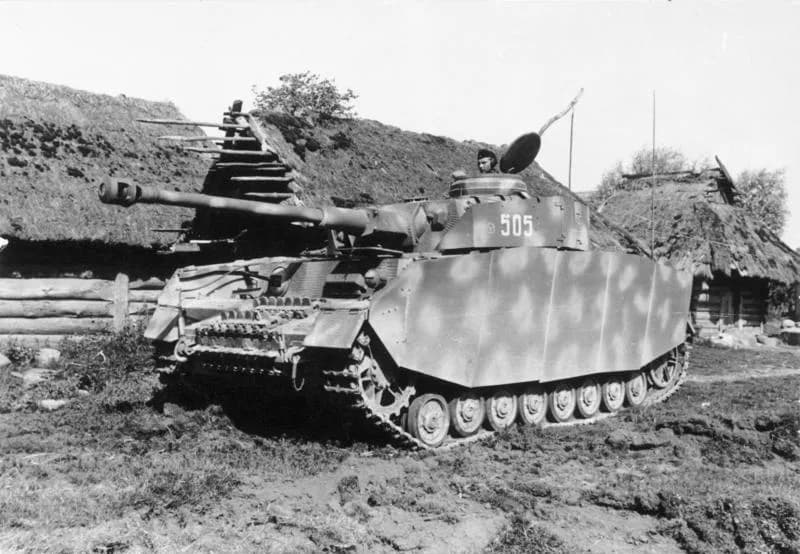
Panzer IV
The Panzerkampfwagen IV was the most produced German medium tank of World War II, with over 8,500 built. Originally designed as an infantry support tank, it evolved into the backbone of the Panzer divisions on every front. It is the only German tank in production from 1939 to 1945.
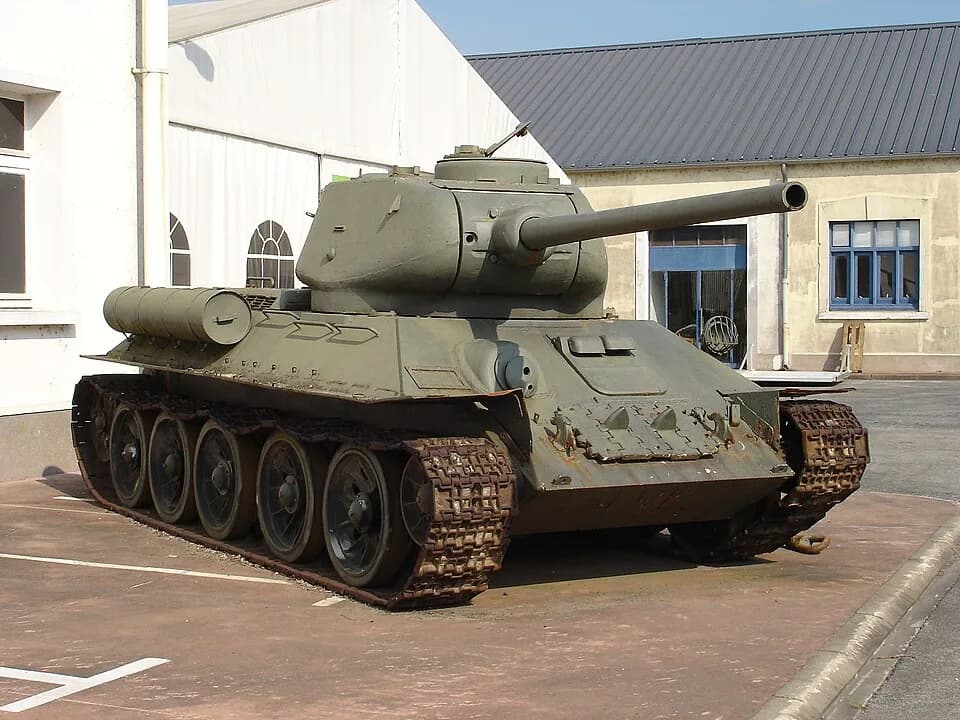
T-34
The T-34 is widely considered the best medium tank of World War II and one of the most influential in military history. Produced in over 84,000 units, its combination of sloped armor, mobility and firepower shocked the Germans in 1941 and shifted the balance of power on the Eastern Front.
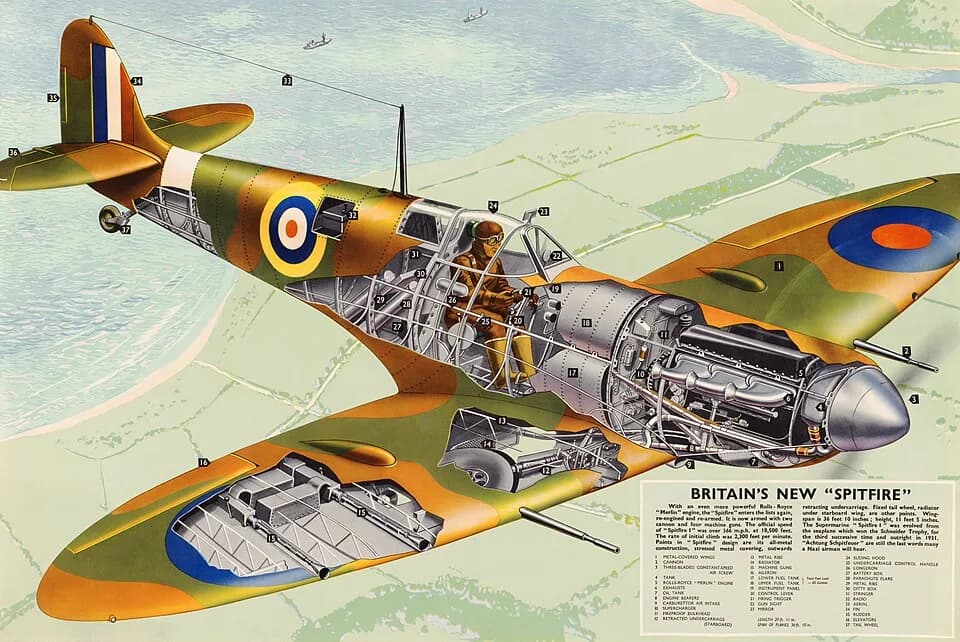
Supermarine Spitfire
The Supermarine Spitfire is the iconic fighter aircraft of the Royal Air Force and a symbol of British resistance during the Battle of Britain. Designed by R.J. Mitchell, its combination of elliptical wings, Rolls-Royce Merlin engine and exceptional agility made it one of the finest fighters of the war.
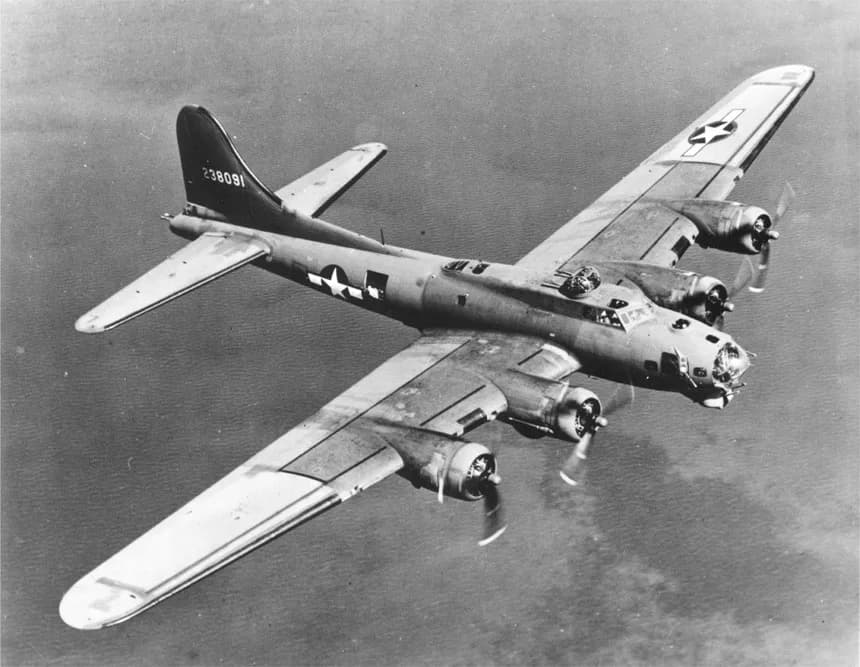
B-17 Flying Fortress
The Boeing B-17 Flying Fortress is the iconic heavy bomber of the US Army Air Forces in Europe. With its 13 machine guns and ability to absorb considerable damage, it symbolized the strategic bombing campaign that devastated German industry and cities.
