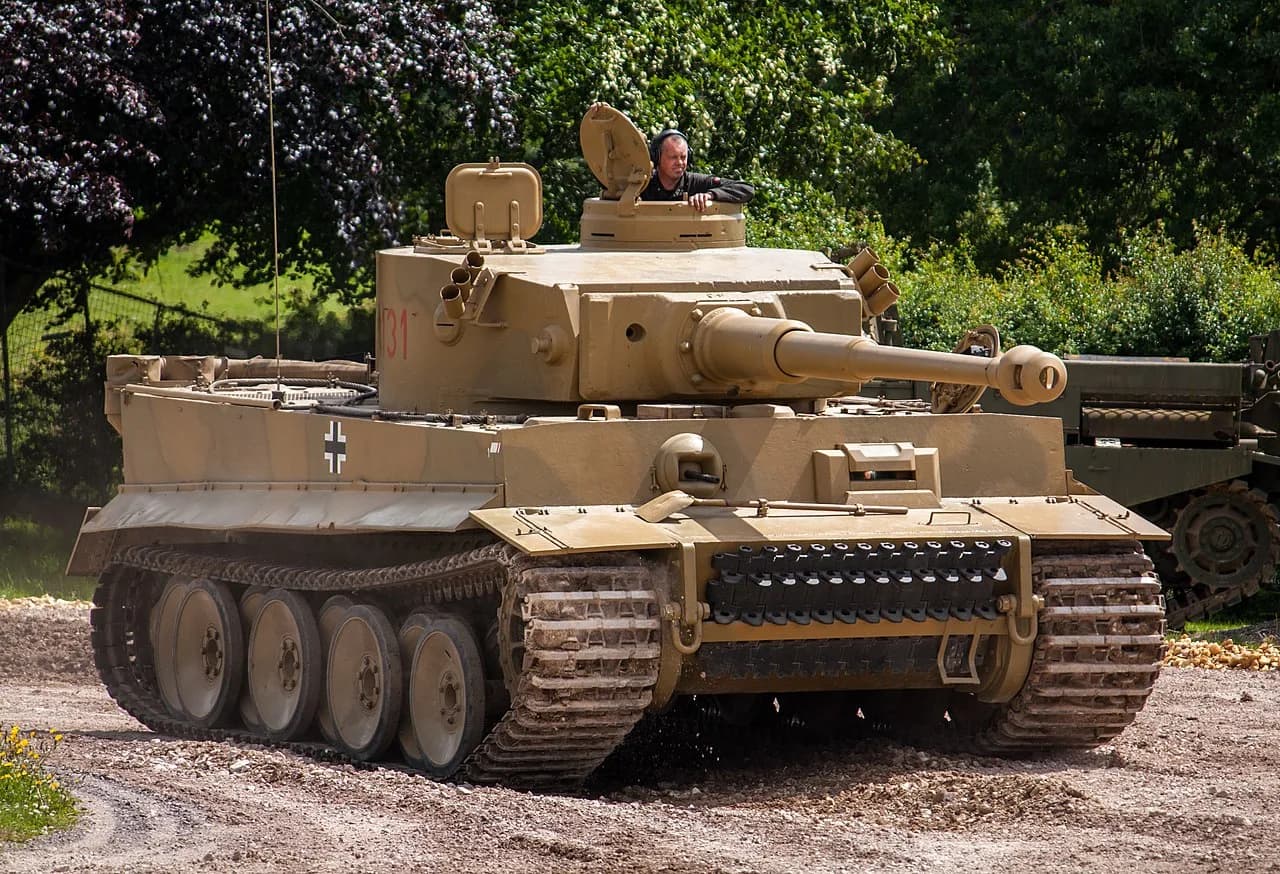
The Panzerkampfwagen VI Tiger Ausf. E is the most feared heavy tank of World War II. Armed with the legendary 88mm gun and protected by massive armor, only 1,347 were produced, yet their psychological and tactical impact on the Allies was vastly disproportionate to their numbers.
Development of a German heavy tank dates back to 1937, but it was the encounter with Soviet T-34 and KV-1 tanks during Operation Barbarossa in 1941 that accelerated the program. On May 26, 1941, at a meeting at the Berghof, Hitler ordered the design of a heavy tank capable of outclassing any enemy armor. Two firms competed: Henschel and Porsche. The Henschel design (VK 45.01(H)) combined Henschel's chassis, engine, and transmission with the turret and gun designed by Krupp AG Essen. The prototype was presented to Hitler for his birthday on April 20, 1942. The 88mm KwK 36 L/56 gun, derived from the formidable Flak 88 anti-aircraft gun, was chosen for its ability to destroy any Allied tank at long range. Production began in August 1942 at Henschel in Kassel. The cost was astronomical: 250,000 Reichsmarks per unit and approximately 300,000 man-hours of labor — nearly double a Panther. This manufacturing complexity limited production to a maximum of 104 units per month (reached in April 1944), far from meeting front-line needs.
The Tiger I weighed 57 tons, making it one of the heaviest tanks of the war. Its Maybach HL 230 TRM P45 12-cylinder engine developed 700 horsepower, providing a maximum speed of 38 km/h on road — acceptable for its mass. The five-man crew comprised the tank commander, gunner, loader, driver, and radio operator/hull gunner. The 8.8cm KwK 36 L/56 gun, derived from the famous anti-aircraft gun, could penetrate 120mm of armor at 1,000 meters with PzGr 39 armor-piercing rounds, enabling it to destroy any Allied tank well beyond return-fire range. Secondary armament included two MG 34 7.92mm machine guns. Frontal armor reached 102mm on the hull and up to 120mm on the turret — in high-quality welded steel. Unlike the T-34 and Panther, the armor was not sloped, but its raw thickness more than compensated. The Zeiss TZF 9b gun sight offered exceptional accuracy, allowing hits at over 3,000 meters. The main drawback was its enormous fuel consumption and recurring mechanical problems, notably with the transmission and sprocket system.
The Tiger I first saw combat on August 29, 1942 near Mga, southeast of Leningrad, with schwere Panzer-Abteilung 502. This first engagement was a failure: three of four Tigers broke down in the muddy terrain, their tracks clogged and transmissions failed. The Red Army even captured an intact Tiger, allowing the Soviets to study its weaknesses. In North Africa, Tigers of the 501st division distinguished themselves in Tunisia in early 1943, where their armor resisted the guns of Shermans and British Churchills. It was on the Eastern Front that the Tiger acquired its terrifying reputation: at Kursk in July 1943, the schwere Panzer-Abteilungen inflicted considerable losses on Soviet armor. The destruction ratio was impressive — between 10:1 and 19:1 depending on the unit. The Tiger of SS-Hauptsturmführer Michael Wittmann, who destroyed 14 tanks and 15 vehicles in minutes at Villers-Bocage on June 13, 1944, entered legend. However, mechanical reliability remained the Achilles' heel: on the Eastern Front, it was not uncommon for half the Tigers in a unit to be immobilized by breakdowns.
The Tiger I had relatively few variants compared to the Panzer IV. The Fahrschulpanzer VI was a training version running on compressed gas, with or without turret. A 'tropicalized' variant (Tp) equipped with the Feifel air filtration system was deployed in North Africa to handle fine sand, but this modification was abandoned in spring 1943. The Sturmtiger (Sturmmörserwagen 606/4), while based on a different chassis, used Tiger components and mounted a 380mm rocket mortar for urban combat — only 18 were produced. The true successor was the Tiger II (King Tiger), which combined the Tiger I's armor thickness with the Panther's slope and mounted the even more powerful KwK 43 L/71 88mm gun. With 492 units produced between 1944 and 1945, the Tiger II was the heaviest tank to enter mass production (68 tons). The Jagdtiger, a tank destroyer on the Tiger II chassis armed with a 128mm gun, was the most heavily armed armored vehicle of the war.
The Tiger I's impact far exceeded its numerical contribution. With only 1,347 units produced against over 50,000 Shermans and 84,000 T-34s, the Tiger could not change the course of the war. Yet its psychological effect was devastating. The Allies developed 'Tiger-phobia': in combat reports, every German tank encountered became a Tiger, even when it was a simple Panzer IV. General Montgomery banned reports mentioning Tiger superiority to avoid demoralizing his troops. In Normandy, this near-hysteria reached its peak — Sherman crews knew they could only penetrate the Tiger's frontal armor at less than 200 meters, while the 88mm could destroy them at 2,000 meters. Strategically, the Tiger illustrates the German dilemma between quality and quantity. Its complexity and prohibitive cost absorbed industrial resources that could have produced three Panzer IVs or two Panthers for each Tiger. The Tiger's legacy is that of an engineering masterpiece that could not compensate through individual quality for the Allies' overwhelming numerical superiority.
Only 1,347 Tiger Is were produced between August 1942 and August 1944, versus over 50,000 Shermans and 84,000 T-34s. The cost was astronomical: 250,000 Reichsmarks and approximately 300,000 man-hours per unit, nearly double a Panther. Manufacturing complexity limited production to 104 units per month at most. These resources could have produced three Panzer IVs or two Panthers for each Tiger.
The 8.8cm KwK 36 L/56 gun, derived from the formidable Flak 88 anti-aircraft gun, could penetrate 120mm of armor at 1,000 meters with PzGr 39 armor-piercing rounds. The Zeiss TZF 9b gun sight enabled hits at over 3,000 meters. A Sherman could only penetrate the Tiger's frontal armor at under 200 meters, while the 88mm could destroy it at 2,000 meters — a decisive tactical advantage.
The Tiger I first saw combat on August 29, 1942, near Mga, southeast of Leningrad, with schwere Panzer-Abteilung 502. This first engagement was a failure: three of the four Tigers broke down in muddy terrain, their tracks clogging and transmissions failing. The Red Army even captured an intact Tiger, allowing the Soviets to analyze its mechanical weaknesses.
Information cross-checked against Wikipedia and reference historical works.
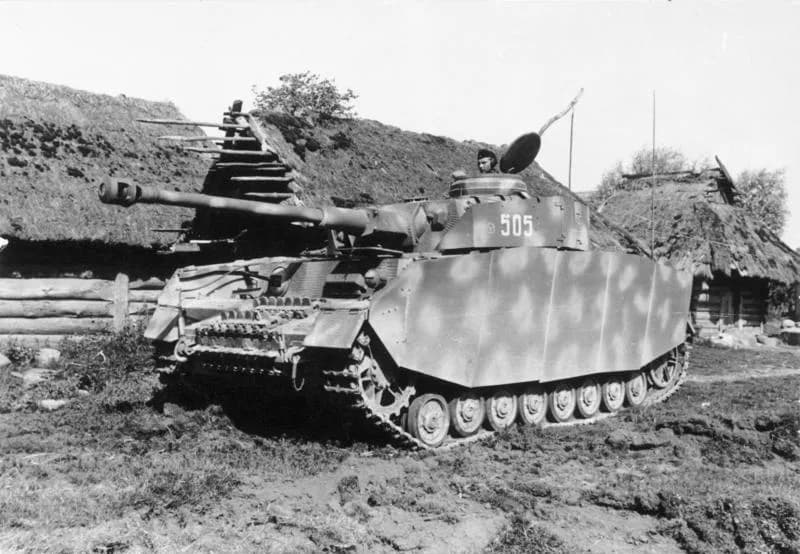
Panzer IV
The Panzerkampfwagen IV was the most produced German medium tank of World War II, with over 8,500 built. Originally designed as an infantry support tank, it evolved into the backbone of the Panzer divisions on every front. It is the only German tank in production from 1939 to 1945.
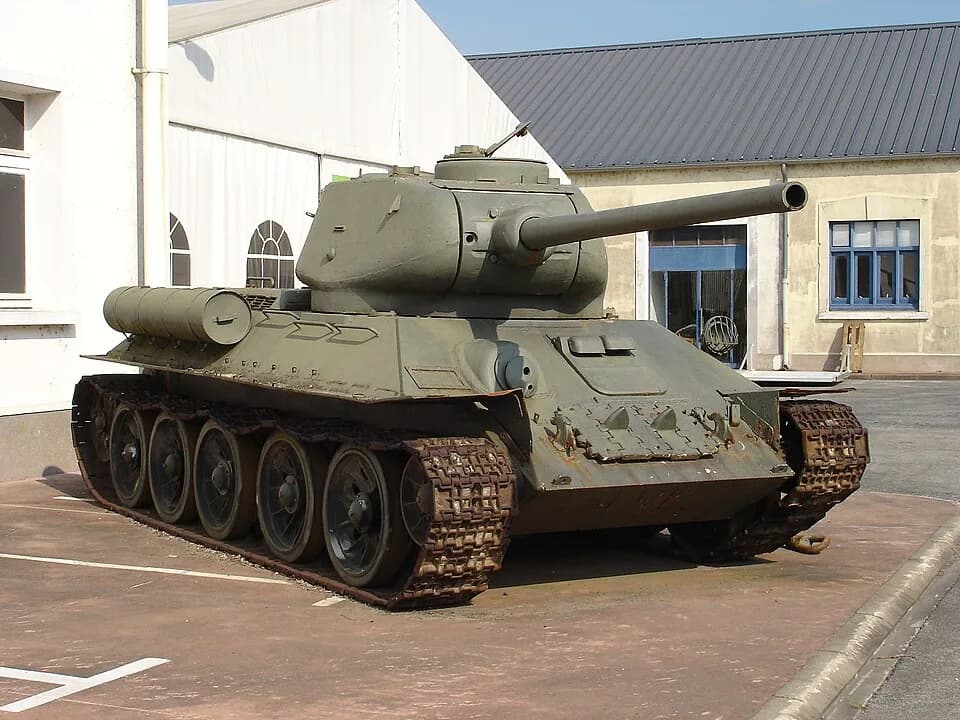
T-34
The T-34 is widely considered the best medium tank of World War II and one of the most influential in military history. Produced in over 84,000 units, its combination of sloped armor, mobility and firepower shocked the Germans in 1941 and shifted the balance of power on the Eastern Front.
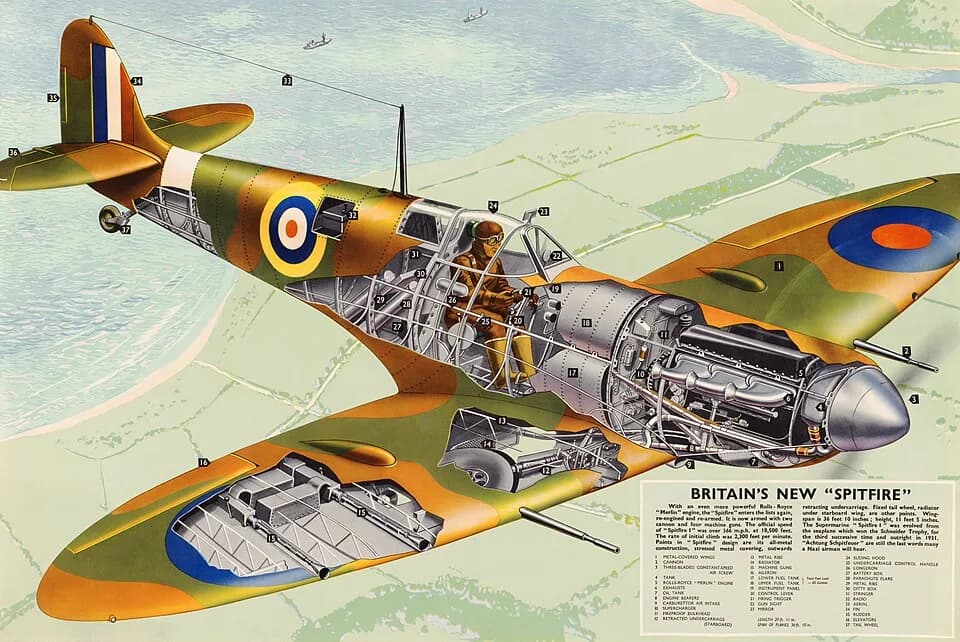
Supermarine Spitfire
The Supermarine Spitfire is the iconic fighter aircraft of the Royal Air Force and a symbol of British resistance during the Battle of Britain. Designed by R.J. Mitchell, its combination of elliptical wings, Rolls-Royce Merlin engine and exceptional agility made it one of the finest fighters of the war.
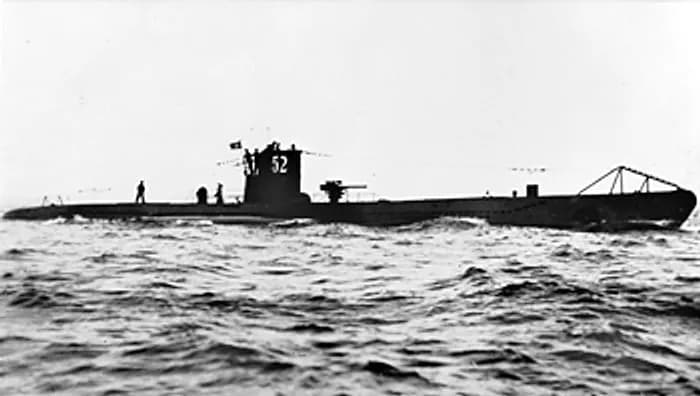
U-Boat Type VII
The Type VII U-boat is the most produced submarine in history with 703 built. The backbone of the Kriegsmarine during the Battle of the Atlantic, these vessels nearly severed the vital supply lines between America and Britain, threatening Great Britain's very survival.
