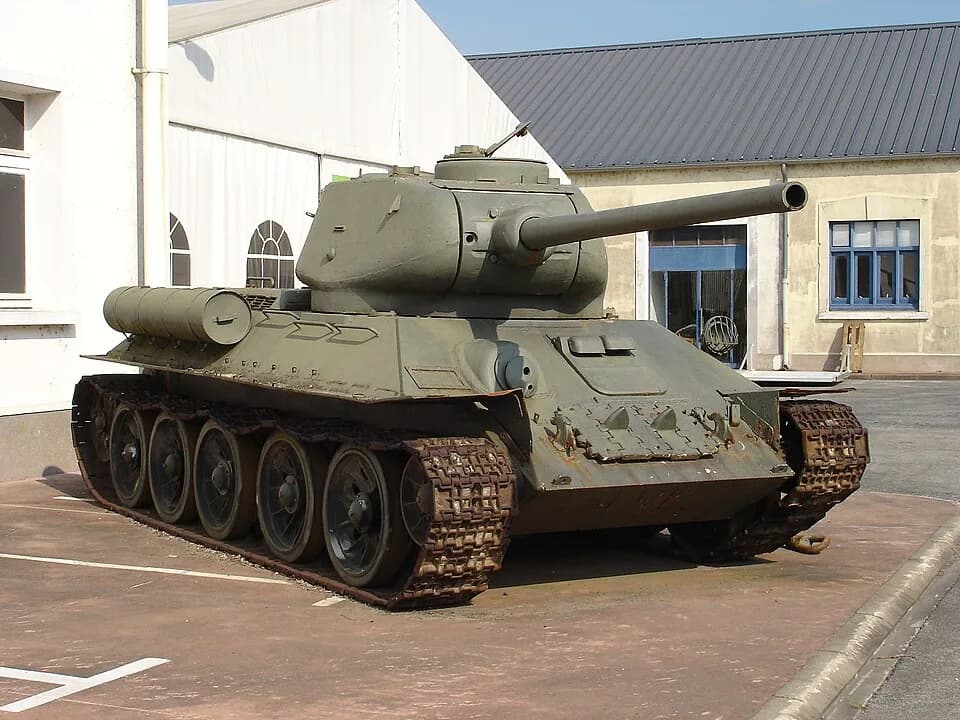
The T-34 is widely considered the best medium tank of World War II and one of the most influential in military history. Produced in over 84,000 units, its combination of sloped armor, mobility and firepower shocked the Germans in 1941 and shifted the balance of power on the Eastern Front.
The T-34 was born from Soviet experience gained during border clashes with Japan at Khalkhin Gol (1939) and the Winter War against Finland (1939-1940). Engineer Mikhail Koshkin, from the Kharkov factory design bureau, conceived a revolutionary tank integrating three major innovations: sloped armor at 60° that effectively doubled thickness against projectiles, a V-2 diesel engine producing 500 horsepower (when most tanks used flammable gasoline), and wide tracks offering superior mobility in mud and snow. The first prototype (A-32) was tested in 1939. Koshkin pushed so hard for production that he personally drove a T-34 from Kharkov to Moscow (750 km) to present it to Stalin — an effort that cost him his life (he died of pneumonia in September 1940). Serial production began in 1940 at Factory No. 183 in Kharkov, then was transferred to Nizhny Tagil in the Urals after the German invasion. The first model (T-34/76) was armed with a 76.2mm gun.
The T-34/85 (1944 version) weighed 32 tons. Its V-2-34 12-cylinder diesel engine developed 500 horsepower, offering a power-to-weight ratio of 15.6 hp/t — superior to most contemporary tanks. Maximum speed: 55 km/h on road, 30 km/h off-road. Range: 300 km on road. The hull's 45mm frontal armor sloped at 60° offered protection equivalent to 90mm of vertical armor. The new three-man turret of the T-34/85 mounted the ZIS-S-53 85mm gun, capable of penetrating 100mm of armor at 1,000m, threatening all German tanks except the Tiger I frontally. The crew increased from four to five thanks to the enlarged turret, adding a dedicated gunner. The 500mm-wide tracks exerted ground pressure of only 0.83 kg/cm², giving exceptional mobility in Russian mud and snow. Diesel fuel is less flammable than gasoline and offers better range — a crucial advantage for vast Soviet offensives.
The appearance of the T-34 on the battlefield in summer 1941 shocked the Germans: their standard anti-tank guns (37mm and 50mm) could not penetrate its sloped armor. General Guderian reported that his troops were 'helpless' against the new Soviet tank. However, early versions suffered critical flaws: two-man turret without radio for most, poor optics, and commander also serving as gunner. These weaknesses, combined with the Red Army's chaos in 1941, limited the T-34's initial impact. From 1943 onward, the T-34 became truly devastating: crews were better trained, radios became standard, and massive production allowed numerically overwhelming the German Panzers. At Kursk, thousands of T-34s faced Tigers and Panthers. The T-34/85, introduced in 1944, corrected the main weaknesses with its three-man turret and 85mm gun. During Operation Bagration (summer 1944), Soviet mechanized corps equipped with T-34s broke through German lines and advanced 600 km in five weeks.
The T-34 had two main versions: the T-34/76 (1940-1944, 76.2mm gun) and the T-34/85 (1944-1945, 85mm gun with new turret). Among specialized variants, the OT-34 was a flamethrower tank with an ATO-42 flamethrower replacing the hull machine gun. The T-34 served as the basis for the SU-85, a self-propelled tank destroyer armed with the 85mm gun, then the SU-100 with a 100mm gun capable of destroying any German tank. The Soviets also produced mine-clearing tanks and bridge-layers on the T-34 chassis. The T-34's design simplicity allowed production under extreme conditions: factories evacuated to the Urals produced T-34s at a staggering pace — sometimes rolling directly from the assembly line into combat. In 1943, the Nizhny Tagil factory produced a T-34 every 30 minutes. The Germans captured hundreds of T-34s and returned some to service under the designation T-34(r), a testament to the tank's quality.
The T-34 is arguably the most important tank of World War II. With 84,070 units produced (all versions combined), it is the second most produced tank in history after its successor, the T-54/55. Its impact was threefold. Technically, it forced the Germans to completely rethink their armored program: the Panther was essentially a direct response to the T-34, borrowing its sloped armor and wide tracks. Strategically, the Soviet ability to mass-produce T-34s, even after losing western factories, proved a decisive factor in the war. The Soviet production philosophy — sacrificing finish quality for volume — was the opposite of the German approach, and proved more effective in a war of attrition. Historically, the T-34 demonstrated that a good compromise between armor, mobility, and firepower, produced in massive quantities, surpasses individually superior but too rare and too complex tanks. After the war, the T-34 equipped armies of dozens of countries and fought in Korea, Vietnam, and the Middle East.
This article draws on historical works, military archives and recognized academic publications.
The T-34 was produced in 84,070 units across all versions, the second most produced tank in history after the T-54/55. Its superiority rested on 60°-sloped frontal armor equivalent to 90mm of protection, a 500-horsepower V-2 diesel engine, 500mm-wide tracks for Russian mud and snow, and great ease of manufacture allowing Soviet forces to numerically overwhelm the German Panzers.
The T-34's appearance on the Eastern Front in summer 1941 caused profound shock: the standard German 37mm and 50mm anti-tank guns could not penetrate its sloped armor. General Guderian reported his troops were 'helpless' against the new Soviet tank. The Germans had to use their 88mm anti-aircraft guns or attack T-34s from the flanks and rear to destroy them.
The T-34 was designed by engineer Mikhail Koshkin from the Kharkov factory design bureau. To convince Stalin to authorize production, he personally drove a T-34 from Kharkov to Moscow (750 km) to present it. This exhausting effort cost him his life: Koshkin died of pneumonia in September 1940, without seeing his tank enter serial production.
Information cross-checked against Wikipedia and reference historical works.
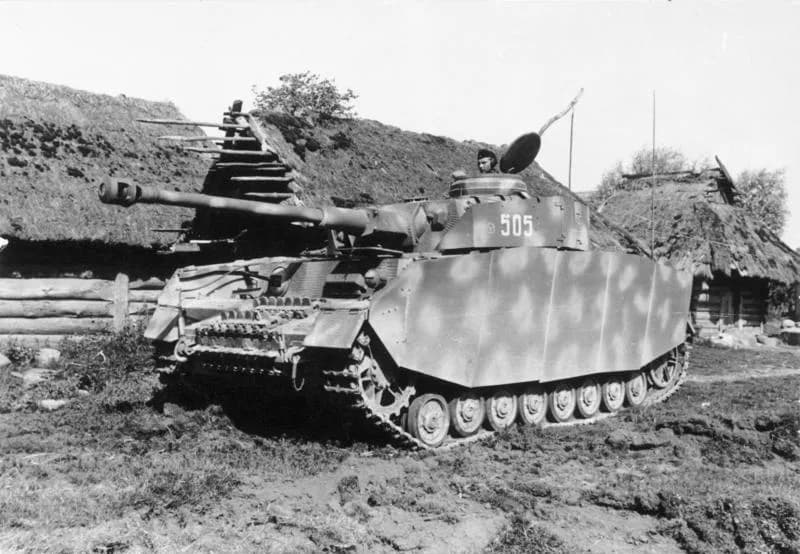
Panzer IV
The Panzerkampfwagen IV was the most produced German medium tank of World War II, with over 8,500 built. Originally designed as an infantry support tank, it evolved into the backbone of the Panzer divisions on every front. It is the only German tank in production from 1939 to 1945.
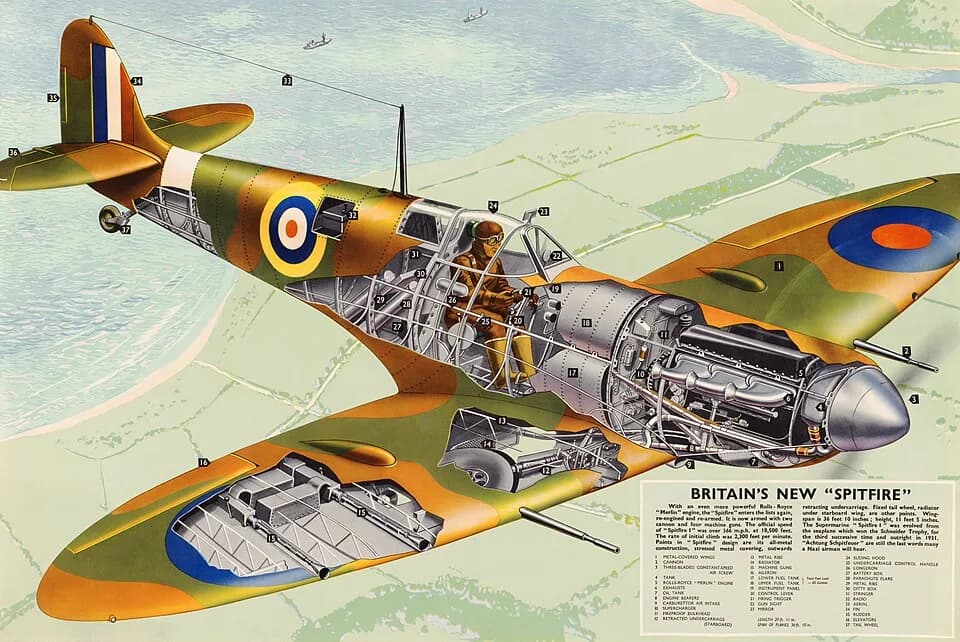
Supermarine Spitfire
The Supermarine Spitfire is the iconic fighter aircraft of the Royal Air Force and a symbol of British resistance during the Battle of Britain. Designed by R.J. Mitchell, its combination of elliptical wings, Rolls-Royce Merlin engine and exceptional agility made it one of the finest fighters of the war.
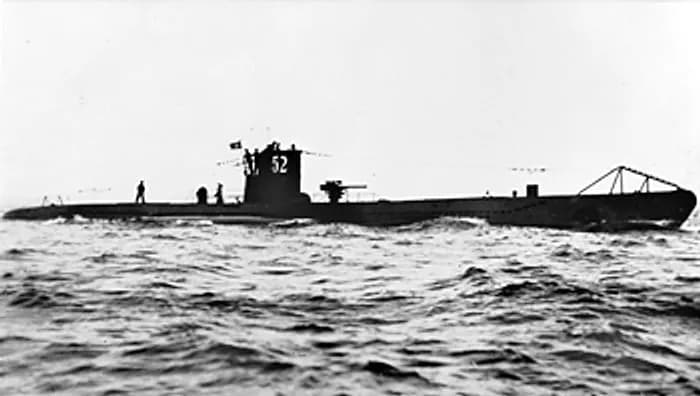
U-Boat Type VII
The Type VII U-boat is the most produced submarine in history with 703 built. The backbone of the Kriegsmarine during the Battle of the Atlantic, these vessels nearly severed the vital supply lines between America and Britain, threatening Great Britain's very survival.
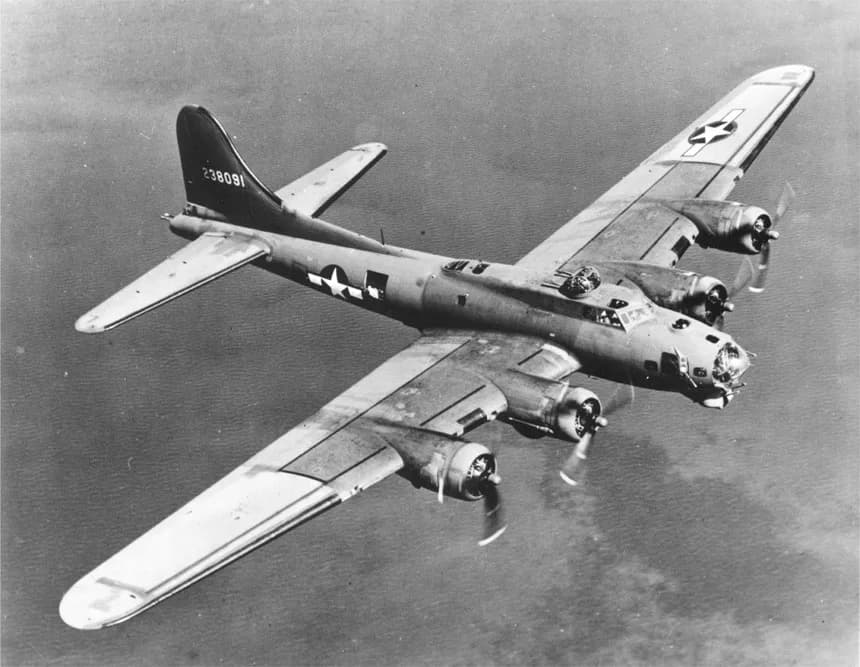
B-17 Flying Fortress
The Boeing B-17 Flying Fortress is the iconic heavy bomber of the US Army Air Forces in Europe. With its 13 machine guns and ability to absorb considerable damage, it symbolized the strategic bombing campaign that devastated German industry and cities.
