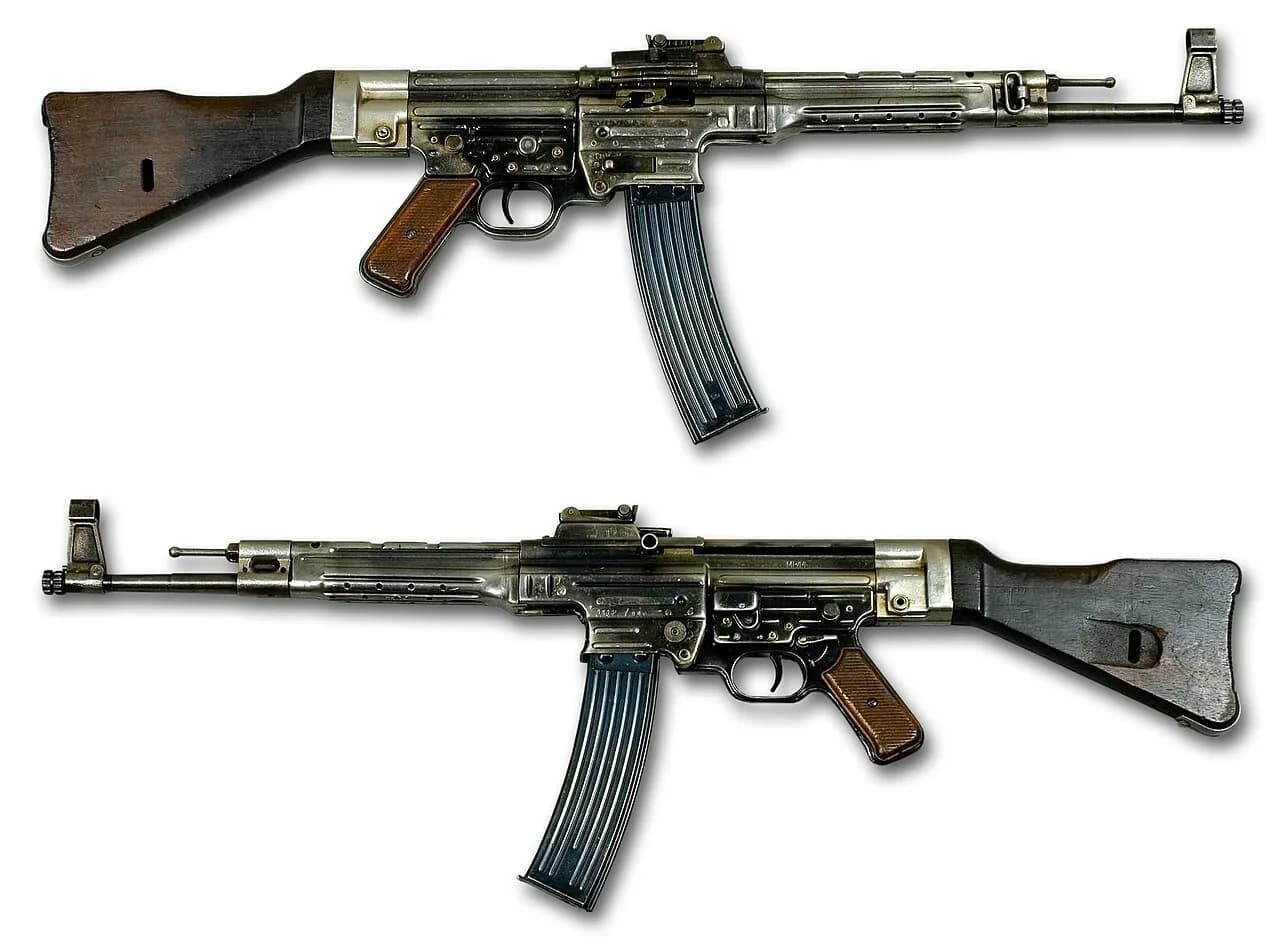
The Sturmgewehr 44 is the first assault rifle in military history. Designed by Hugo Schmeisser, it introduced the revolutionary concept of a selective-fire weapon using an intermediate cartridge, establishing the template followed by the AK-47, M16, and all modern assault rifles.
The development of the StG 44 is a story of innovation against bureaucratic obstruction. The concept was born from the observation that most infantry combat takes place at less than 300 meters — making full-power bolt-action rifles unnecessarily cumbersome. The Polte firm developed the intermediate 7.92×33 mm Kurz cartridge, shorter and less powerful than the standard 7.92×57 mm Mauser, but perfectly suited to actual combat distances. Hugo Schmeisser, at C.G. Haenel in Suhl, designed a selective-fire weapon around this cartridge. The first prototypes were combat-tested in November 1942 with enthusiastic results. But Hitler ordered the project cancelled, preferring to concentrate resources on proven weapons. To circumvent this order, manufacturers used cover designations: MP 42, then MP 43, then MP 44 — the 'MP' (Maschinenpistole, submachine gun) designation concealing the weapon's revolutionary nature. In March 1943, Hitler authorized continuation following favorable front-line reports. It was not until July 1944 that he renamed the weapon 'Sturmgewehr 44' (assault rifle 44), simultaneously coining the term 'assault rifle.' Total production reached 424,000 units across four factories.
The StG 44 fires the intermediate 7.92×33 mm Kurz cartridge at a cyclic rate of 540 to 600 rounds per minute in automatic fire. The fire selector allows switching from semi-automatic (single shot) to burst fire, offering unprecedented tactical flexibility. The weapon measures 94 cm long with a 42 cm barrel and weighs 5.2 kg loaded. Muzzle velocity reaches 685 m/s. Effective range is 300 meters in automatic fire and 600 meters in semi-automatic, with a maximum range of 800 meters. The detachable curved magazine holds 30 rounds, although soldiers were advised to load only 25 to preserve the spring. The gas-operated mechanism with tilting bolt locking is reliable and relatively simple. The Kurz cartridge produces noticeably less recoil than full-power calibers, allowing controllable automatic fire from the shoulder — the fundamental characteristic that distinguishes the assault rifle from the battle rifle. Construction extensively uses stamped sheet metal to facilitate mass production, an approach similar to that of the MG 42.
The StG 44 was primarily deployed on the Eastern Front, where close-quarters combat in urban ruins and forests highlighted its capabilities. German soldiers immediately appreciated the increased volume of fire compared to the bolt-action Kar 98k: an infantryman armed with an StG 44 possessed the firepower of an entire sub-squad. The weapon was particularly effective in urban combat, where its relative compactness and selective fire allowed rapid response to threats at short and medium range. Units equipped with the StG 44 reported a significant increase in combat effectiveness. However, late and limited production (424,000 units for an army of millions) meant the StG 44 only ever equipped a fraction of the troops. Logistics also posed problems: the Kurz cartridge was not interchangeable with standard ammunition, creating an additional supply chain. Despite these limitations, units that received the StG 44 generally refused to give it back, testifying to its perceived combat superiority.
The StG 44 had several notable variants. The MP 43/1 was a version with attachment points for grenade launchers and optical sights. The most famous variant is the Krummlauf ('curved barrel'), a notable accessory developed from urban combat experience on the Eastern Front. It consists of a barrel curved at 30° or 45° attached to the end of the standard barrel, allowing the shooter to fire around corners without exposing themselves. While functional, the Krummlauf wore out barrels very quickly (approximately 300 rounds for the 30° version and 160 rounds for the 45° version) and was produced only in small quantities. The Vampir was a Zielgerät 1229 infrared night-vision system mounted on the StG 44, one of the first night combat devices in history — the shooter carried a battery pack in a backpack. Prototypes of an StG 45 with a simplified roller-locking mechanism were under development at war's end but never series-produced. This mechanism would later be adopted by the Spanish CETME rifle and then the postwar German HK G3.
The Sturmgewehr 44 is considered the most important advance in small arms design since the invention of smokeless powder. Its conceptual impact is immense: it established the three fundamental criteria of the assault rifle that still define the category today — intermediate cartridge, selective fire, and high-capacity detachable magazine. The question of its direct influence on Mikhail Kalashnikov's AK-47 is debated: the two weapons share a similar silhouette and the intermediate cartridge concept, but their internal mechanisms differ. Kalashnikov himself denied being inspired by the StG 44, although the Soviets captured and studied the weapon. What is certain is that the StG 44 demonstrated the viability of the assault rifle concept, and every army in the world subsequently adopted this type of weapon. The American M16 (1964), French FAMAS (1978), British SA80 (1985), and dozens of others follow the principles established by the StG 44. Despite its 424,000 units — insufficient to change the war's course — its conceptual legacy is eternal.
The Sturmgewehr 44, designed by Hugo Schmeisser at C.G. Haenel in Suhl, is the first assault rifle in history. It introduced three fundamental principles: the intermediate 7.92×33mm Kurz cartridge (less powerful than full-power war calibers but ideal under 300 meters), selective fire (semi-auto or burst), and a 30-round detachable magazine. These criteria still define all modern assault rifles, from the AK-47 to the M16.
Only 424,000 StG 44s were produced in four factories between 1943 and 1945, versus over 50,000 Shermans and 84,000 T-34s. Such late and limited production equipped only a fraction of German infantry. The Kurz cartridge also created a separate logistics chain incompatible with standard ammunition, further complicating supply to units.
Hitler initially ordered the project cancelled, preferring to concentrate resources on proven weapons. To circumvent this order, manufacturers used deceptive cover names: MP 42, MP 43, then MP 44 — designating the weapon as a submachine gun (Maschinenpistole) to conceal its revolutionary nature. It was not until July 1944 that Hitler renamed it 'Sturmgewehr 44,' simultaneously coining the term 'assault rifle.'
Information cross-checked against Wikipedia and reference historical works.
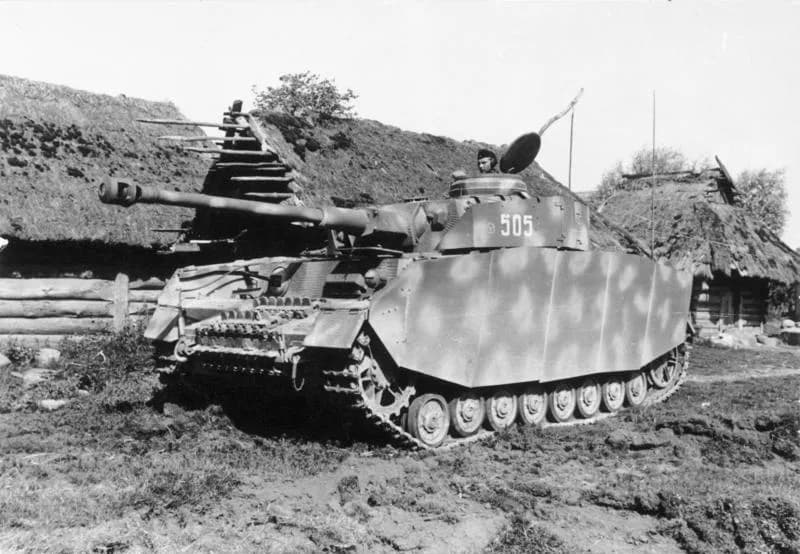
Panzer IV
The Panzerkampfwagen IV was the most produced German medium tank of World War II, with over 8,500 built. Originally designed as an infantry support tank, it evolved into the backbone of the Panzer divisions on every front. It is the only German tank in production from 1939 to 1945.
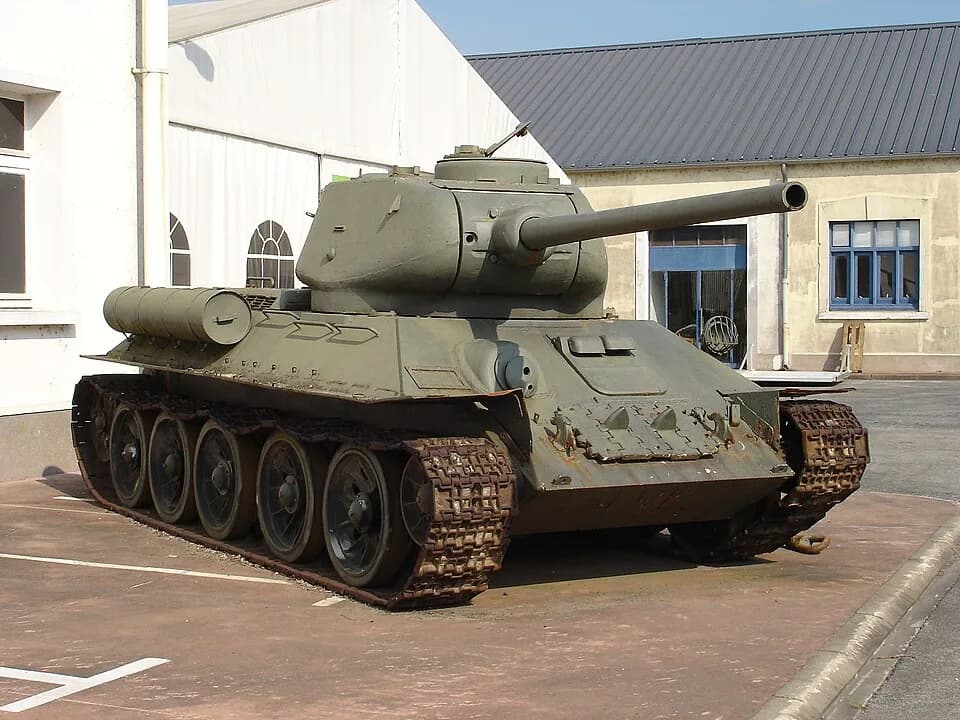
T-34
The T-34 is widely considered the best medium tank of World War II and one of the most influential in military history. Produced in over 84,000 units, its combination of sloped armor, mobility and firepower shocked the Germans in 1941 and shifted the balance of power on the Eastern Front.
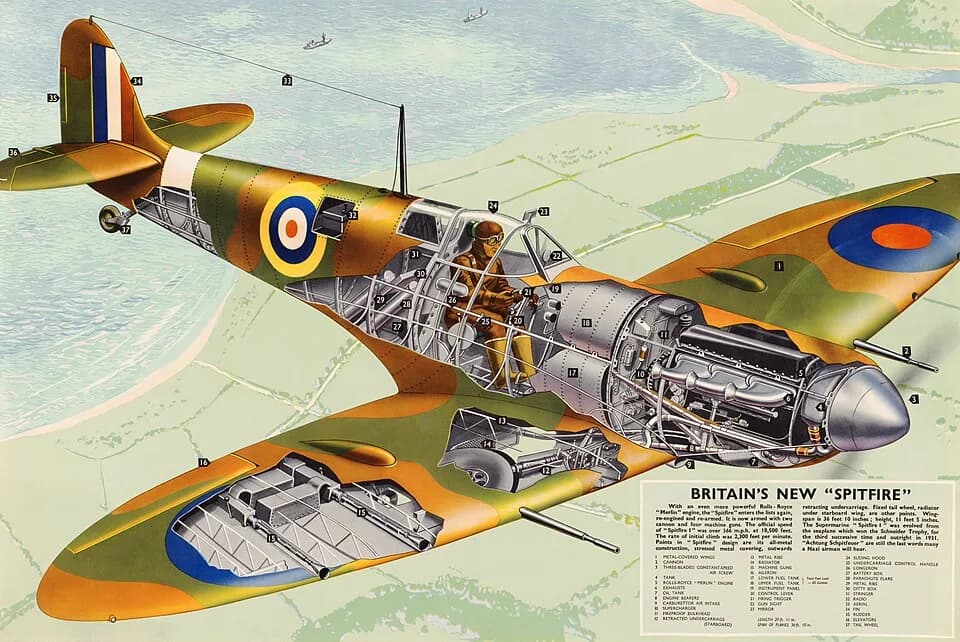
Supermarine Spitfire
The Supermarine Spitfire is the iconic fighter aircraft of the Royal Air Force and a symbol of British resistance during the Battle of Britain. Designed by R.J. Mitchell, its combination of elliptical wings, Rolls-Royce Merlin engine and exceptional agility made it one of the finest fighters of the war.
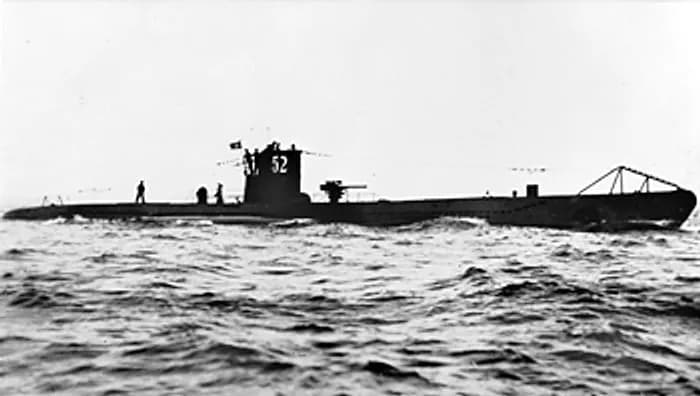
U-Boat Type VII
The Type VII U-boat is the most produced submarine in history with 703 built. The backbone of the Kriegsmarine during the Battle of the Atlantic, these vessels nearly severed the vital supply lines between America and Britain, threatening Great Britain's very survival.
