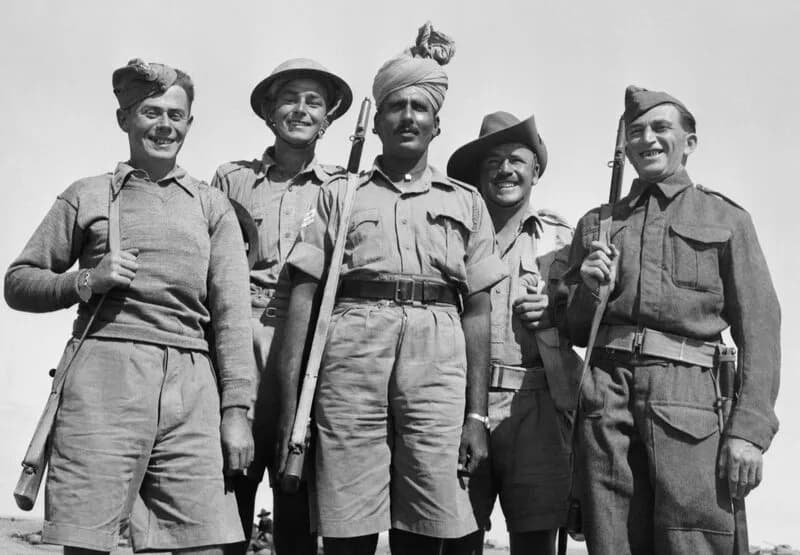
The Siege of Tobruk was one of the most tenacious defensive stands of the North African campaign, where the predominantly Australian Allied garrison held out for 240 days against Rommel's Afrika Korps, blocking his advance toward Egypt and the Suez Canal.
The Siege of Tobruk occurred within the tumultuous context of the North African campaign, a secondary theater of operations but strategically vital for control of the Mediterranean and access to Middle Eastern oil. In February 1941, British forces under General Wavell had inflicted a crushing defeat on the Italians during Operation Compass, capturing over 130,000 prisoners and seizing Cyrenaica, including the port of Tobruk. However, Hitler decided to send reinforcements to Africa to prevent the total collapse of his Italian ally. General Erwin Rommel, commanding the Deutsches Afrika Korps freshly arrived in Libya in February 1941, immediately launched an audacious counteroffensive that caught the British by surprise. Despite orders from Berlin to remain on the defensive, Rommel exploited the weakness of British forces, depleted by troop transfers to Greece, to reconquer Cyrenaica within weeks. Tobruk, a deep-water port essential for supply, became the key objective. The town was defended by a perimeter of Italian fortifications built before the war, comprising concrete casemates, anti-tank ditches, and minefields. The garrison, initially composed of the Australian 9th Division under General Leslie Morshead, supplemented by British troops and artillery, numbered approximately 24,000 men. Morshead, a determined and methodical officer, organized an active defense based on aggressive patrols and night raids, refusing to adopt a passive posture. British command in Cairo considered holding Tobruk essential to blocking Rommel's advance and protecting Egypt.
The siege began on April 10, 1941, when Rommel's advance encircled Tobruk, isolating the garrison by land. Rommel immediately attempted to take the town by storm, launching a first attack on April 13 with elements of the German 5th Light Division. The Australian defenders, alerted by their forward patrols, repelled the attack with heavy losses to the attackers, destroying several tanks. A second major attempt occurred from April 30 to May 4, when Rommel committed larger forces, including elements of the 15th Panzer Division. The Germans managed to breach the defensive perimeter to the southwest, creating a bulge known as the 'Salient,' but Australian counterattacks prevented exploitation of this breach. Fighting in the Salient was of terrible intensity, both sides contesting every meter of ground in a dusty desert landscape. After these failures, Rommel adopted a siege strategy, counting on hunger and exhaustion to reduce the garrison. However, the Royal Navy, despite constant bombardment from the Luftwaffe and Regia Aeronautica, maintained a vital maritime supply route. Destroyers and sloops ran the 'Tobruk Run,' navigating at night to deliver ammunition, supplies, and reinforcements, and evacuate wounded. The defenders adopted an aggressive combat style that earned them the nickname 'Rats of Tobruk,' a pejorative term used by Lord Haw-Haw's propaganda that the Australians adopted with pride. Night patrols, ambushes, and raids kept the besiegers under permanent pressure. In September and October, Australian troops were gradually relieved by the British 70th Division and the Polish Carpathian Brigade, a delicate operation conducted by sea. The siege ended on November 27, 1941, when Operation Crusader, the British offensive launched on November 18, succeeded in breaking the encirclement and establishing a junction with the garrison.
The forces engaged in the Siege of Tobruk evolved considerably over the 240 days of encirclement. On the Allied side, the initial garrison was dominated by the Australian 9th Division under General Leslie Morshead, comprising the 20th, 24th, and 26th Infantry Brigades, totaling approximately 14,000 Australians. Added to these were the 18th Brigade of the 7th Australian Division, elements of the British 3rd Armoured Brigade with Cruiser and Matilda tanks, several Royal Artillery regiments, and support units. The total garrison numbered approximately 24,000 men at the siege's peak. The Polish Independent Carpathian Brigade under General Stanisław Kopański, approximately 5,000 strong, joined the garrison in August. In September-October, the gradual relief replaced the Australians with the British 70th Infantry Division and other units. The Royal Navy played a crucial role in maintaining the supply line, losing several ships in the operation. On the Axis side, the besieging forces comprised Rommel's Afrika Korps with the 5th Light Division (renamed 21st Panzer Division) and the 15th Panzer Division, as well as several Italian infantry divisions, including the Bologna and Brescia divisions. In total, Axis forces around Tobruk numbered approximately 35,000 men. The Luftwaffe provided regular air support with Stuka dive bombers and Messerschmitt fighters, while the Regia Aeronautica also contributed to the bombing. Axis artillery, though numerically superior, was effectively countered by the garrison's artillery, whose observers had the advantage of defensive terrain.
The Siege of Tobruk had significant strategic consequences for the North African campaign. By immobilizing a substantial portion of the Afrika Korps for 240 days, the Tobruk garrison prevented Rommel from concentrating his full strength for an advance on Egypt and the Suez Canal. The port of Tobruk, remaining in Allied hands, deprived Rommel of a port facility essential for shortening his supply lines, already stretched over 1,500 kilometers from Tripoli. This logistical constraint constantly limited the Afrika Korps' offensive capability and contributed to its later difficulties. Losses were significant but unequal. The Allied garrison lost approximately 3,000 men (killed, wounded, and prisoners) during the siege, while Axis forces lost approximately 8,000 men in their unsuccessful attempts to take the town. The Royal Navy lost 34 ships sunk or damaged in supply operations, testifying to the high cost of maintaining the garrison. Morally, Tobruk's resistance was a powerful symbol of Allied determination at a time when news from the front was almost uniformly bad. In Australia, the 'Rats of Tobruk' became national heroes, and their tenacity reinforced national pride and confidence in Australian military capabilities. The successful defense of Tobruk also demonstrated that Axis forces were not invincible in North Africa and that the combination of obstinate defense and maritime supply could withstand Rommel's war of movement.
The legacy of the Siege of Tobruk remains vibrant, particularly in Australia where it holds a central place in national military memory. The expression 'Rats of Tobruk' became a symbol of endurance and courage, and the Rats of Tobruk Association, founded after the war, perpetuated the memory of the garrison for decades. Memorials to the Rats of Tobruk were erected throughout Australia, the most notable being in Canberra. The last Australian survivor of the siege passed away in the 2020s, but their memory remains deeply embedded in Australian military culture, alongside the ANZACs of Gallipoli. In Poland, the participation of the Carpathian Brigade in the siege is commemorated as an example of Free Polish forces' combat on all fronts of World War II. For Libya, Tobruk remains a place laden with history, featuring a Commonwealth War Cemetery maintained by the Commonwealth War Graves Commission. In terms of military art, the Siege of Tobruk is studied as a successful example of defending an isolated position supplied by sea, foreshadowing modern logistical challenges. The active defense strategy adopted by Morshead, combining fortifications, aggressive patrols, and raids, is considered a model of dynamic defense. The siege also illustrates the vital importance of maritime supply in situations of land encirclement and the crucial role that a besieged garrison can play in tying down superior enemy forces, a principle that remains fundamental in contemporary military doctrine.
The Siege of Tobruk lasted 240 days, from April 10 to November 27, 1941. The garrison of approximately 24,000 men was dominated by the Australian 9th Division under General Leslie Morshead, supplemented by British troops, armored elements, and from August, the Polish Independent Carpathian Brigade under General Stanisław Kopański. The Royal Navy maintained vital maritime supply despite constant bombardment.
Tobruk was the only deep-water port in the region, essential for shortening the Afrika Korps' supply lines already stretched over 1,500 kilometers from Tripoli. As long as Tobruk remained in Allied hands, Rommel could not concentrate his full strength to advance toward Egypt and the Suez Canal. This permanent logistical constraint continuously limited the Afrika Korps' offensive capabilities.
The nickname 'Rats of Tobruk' was first used pejoratively by Nazi propagandist Lord Haw-Haw to mock the defenders sheltering in their fortifications. Australian soldiers adopted the term with pride. Their aggressive combat style — night patrols, ambushes, constant raids against the besiegers — forced the Afrika Korps to abandon two major assaults in April-May 1941 with heavy losses.
Information cross-checked against Wikipedia and reference historical works.
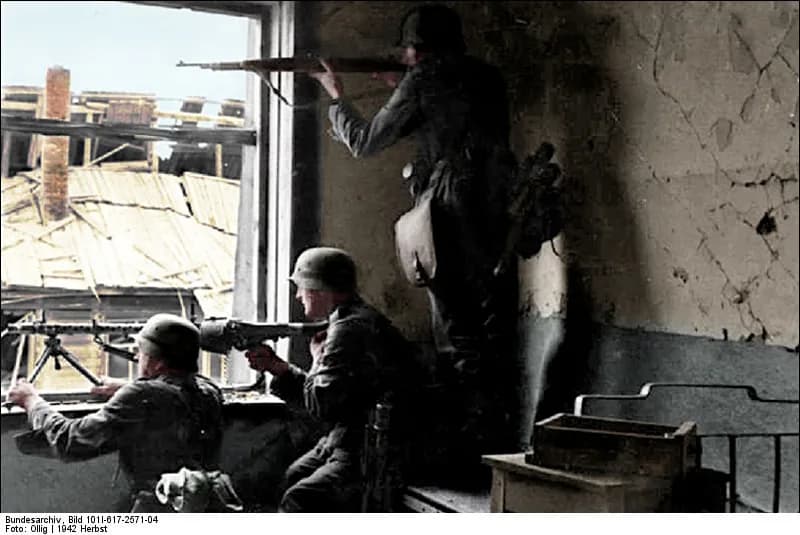
Battle of Stalingrad
The Battle of Stalingrad was among the deadliest clashes of World War II, pitting German and Soviet forces against each other in devastating urban combat that marked a decisive turning point on the Eastern Front. From 23 August 1942 to 2 February 1943, Operation Uranus encircled the German Sixth Army, whose roughly 91,000 survivors surrendered.
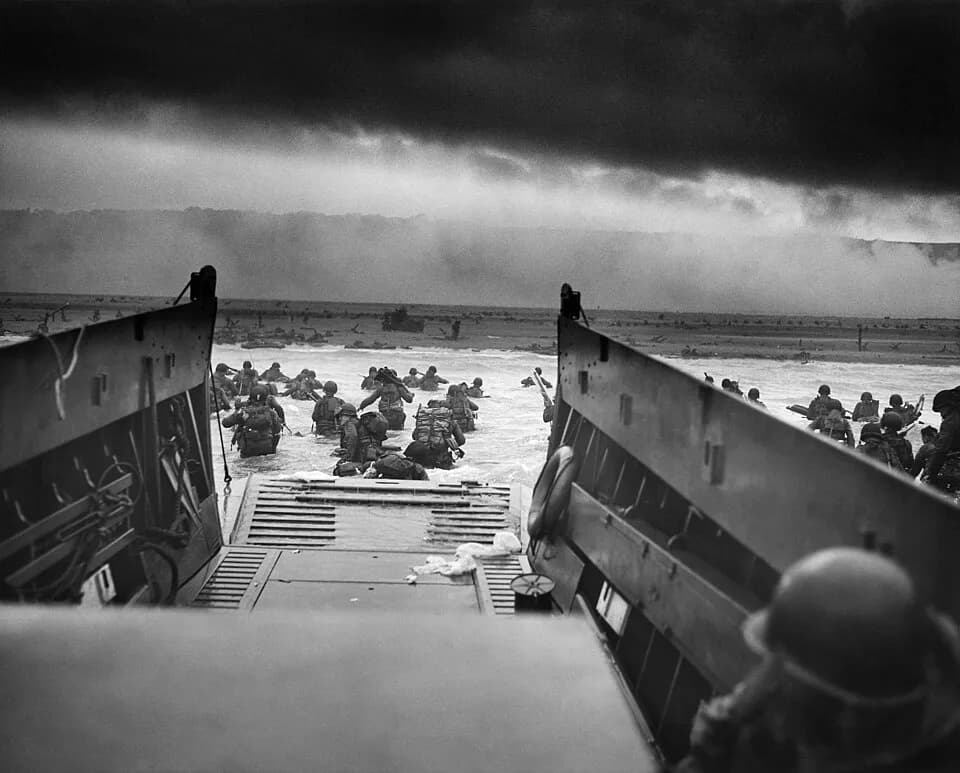
Normandy Landings
The Normandy landings, the largest amphibious operation in history, opened a second front in Western Europe on 6 June 1944, hastening the liberation of France and the defeat of Nazi Germany. Nearly 7,000 vessels put 156,000 men ashore on five beaches in a single day, under air cover and after months of deception meant to mislead the Wehrmacht.
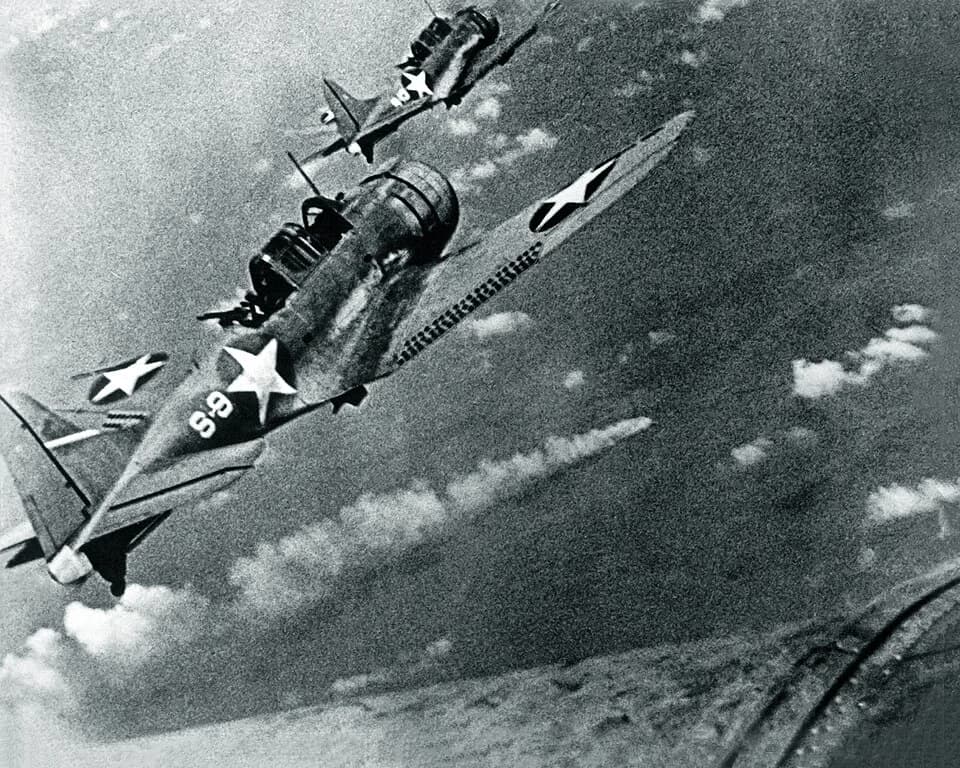
Battle of Midway
The Battle of Midway was the decisive turning point of the Pacific war, where the American navy inflicted a catastrophic defeat on the Japanese fleet by sinking four aircraft carriers, reversing the naval balance. From 4 to 7 June 1942, the decryption of Japanese communications allowed Admiral Nimitz to ambush a fleet that outnumbered his own.
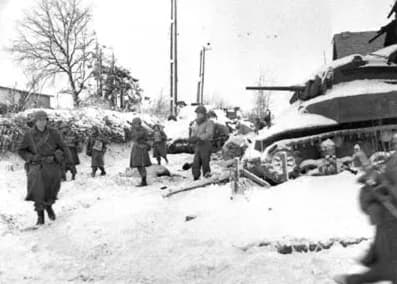
Battle of the Bulge
The Battle of the Bulge was the last major German offensive on the western front, a desperate attempt to break through Allied lines in the Belgian forests that failed against American resistance. Launched on 16 December 1944 under overcast skies that grounded Allied aircraft, it was broken by late January 1945.
