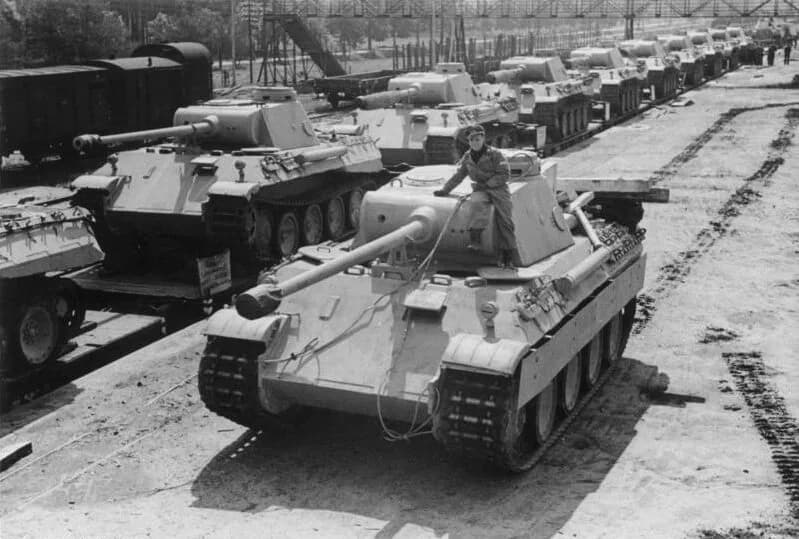
The Panzerkampfwagen V Panther is widely regarded as the best German medium tank of World War II. Designed as a direct response to the Soviet T-34, it combined sloped armor, a devastating 75mm L/70 gun, and remarkable mobility, becoming the backbone of German armored forces from 1943 onward.
Development of the Panther began in November 1941, when the first reports from the Eastern Front revealed the superiority of the Soviet T-34 over all German tanks in service. The shock was so great that a special commission was sent to Russia to study captured T-34s. Two manufacturers, Daimler-Benz and MAN (Maschinenfabrik Augsburg-Nürnberg), received specifications for a new 30-35 ton tank incorporating the T-34's lessons: sloped armor, wide tracks, and a powerful gun. Daimler-Benz proposed a design closely resembling the T-34 with a forward turret and diesel engine, but MAN's project, featuring a conventional center turret and a Maybach gasoline engine, was selected in May 1942. The VK 30.02 prototype was tested in autumn 1942 and serial production began in January 1943 at MAN, Daimler-Benz, and MNH factories. Hitler insisted the Panther be ready for the Kursk offensive in July 1943, forcing a rushed deployment. The tank was officially designated Panzerkampfwagen V Panther Ausführung D, then simply Panther from February 1944 when Hitler ordered the Roman numeral dropped. The pressure for rapid production led to numerous reliability problems during early engagements.
The Panther Ausf. G, the definitive and most produced version (approximately 2,960 units), weighed 44.8 tons with a length of 8.86m including the gun. Its Maybach HL 230 P30 V12 engine producing 700 horsepower gave it a maximum speed of 46 km/h on road and 24 km/h off-road, with a range of 250 km. The five-man crew comprised the tank commander, gunner, loader, driver, and radio operator/hull machine gunner. The main armament was the formidable KwK 42 L/70 75mm gun, whose muzzle velocity of 925 m/s could penetrate 120mm of armor at 1,000 meters — superior to the Tiger I's 88mm gun at that range. Secondary armament included two MG 34 7.92mm machine guns. The hull's frontal armor reached 80mm sloped at 55°, offering protection equivalent to 140mm of vertical armor. The turret featured 110mm frontal armor. The torsion bar suspension with interleaved double road wheels provided an extremely smooth ride but complicated maintenance. The Panther featured exceptional Zeiss TZF 12a optics, giving a considerable advantage in long-range engagements.
The Panther's baptism of fire came at the Battle of Kursk in July 1943, and it was a logistical disaster. Of the 200 Panthers committed, the majority broke down before even reaching the front line: failing transmissions, overheating engines, fuel leaks causing fires. Only about forty remained operational after one week. However, the Panthers that did fight demonstrated devastating firepower. The teething problems were gradually corrected, and by autumn 1943, the Panther became a formidable opponent. In Normandy (June-August 1944), Panthers in the bocage inflicted terrible losses on Allied Shermans, outclassing them in firepower and protection. The exchange ratio is estimated at five Shermans for one Panther in frontal combat. On the Eastern Front, Panthers excelled in long-range defensive engagements, using their accurate gun and superior optics to destroy T-34s and Lend-Lease Shermans well beyond return fire range. During the Battle of the Bulge (December 1944), some Panthers were even disguised as American M10 tank destroyers for Skorzeny's Operation Greif.
The Panther had three main production versions: the Ausf. D (first version, January-September 1943, approximately 842 units), the Ausf. A (August 1943-May 1944, approximately 2,000 units, with improved turret and commander's cupola), and the Ausf. G (March 1944-April 1945, approximately 2,960 units, with redesigned hull and reinforced side armor). The Jagdpanther, considered by many as the best tank destroyer of the war, mounted the PaK 43 88mm L/71 gun in a fixed superstructure on the Panther chassis. Approximately 415 Jagdpanthers were produced. The Bergepanther was an armored recovery vehicle designed to tow broken-down heavy tanks. The Befehlspanther was a command version with additional radios. A Flakpanther anti-aircraft project was considered but never mass-produced. The Panther II, an improved version with reinforced armor and components interchangeable with the Tiger II, was cancelled in 1944. The Panther chassis also served as the basis for the E-50 concept, a standardized medium tank from the E-series that never progressed beyond the drawing board.
With approximately 6,000 units produced between 1943 and 1945, the Panther is often considered the best compromise between firepower, protection, and mobility of World War II. Its KwK 42 L/70 gun is unanimously recognized as the finest 75mm tank gun ever designed, and its sloped armor directly influenced the design of all postwar tanks. The Allies, facing the Panther, accelerated the development of more powerful tanks: the Americans mounted a 76mm then 90mm gun on the Sherman, while the British deployed the Sherman Firefly with the 17-pounder gun. After the war, France recovered Panthers and used them until 1949 in the 503rd Tank Regiment, making France the last country to operate the Panther. The Panther's technical legacy is directly reflected in the French AMX-50 tank and influenced the design of the British Centurion and the American M48 Patton. However, the Panther also illustrates the limitations of the German philosophy of over-engineering: too complex, too costly, and too mechanically fragile to be produced in sufficient quantities to face the tide of T-34s and Shermans.
The Panther's combat debut at Kursk in July 1943 was a logistical disaster. Of the 200 Panthers committed, the majority broke down before reaching the front line (failing transmissions, overheating engines, fires). Only about forty remained operational after one week. These teething problems were gradually corrected, and by autumn 1943, the Panther became a formidable opponent. In Normandy, the exchange ratio is estimated at five Shermans for one Panther.
The Panther Ausf. G was armed with the KwK 42 L/70 75mm gun, whose muzzle velocity of 925 m/s could penetrate 120mm of armor at 1,000 meters — superior to the Tiger I's 88mm gun at that range. This gun is unanimously recognized as the finest 75mm tank gun ever designed. Zeiss TZF 12a optics gave a considerable advantage in long-range engagements. The hull's frontal armor reached 80mm sloped at 55°, equivalent to 140mm of vertical armor.
France was the last country to operate the Panther: it recovered captured tanks and used them in the 503rd Tank Regiment until 1949. Approximately 6,000 Panthers were produced between 1943 and 1945. The Panther's technical legacy is directly reflected in the French AMX-50 tank and influenced the designs of the British Centurion and American M48 Patton.
Information cross-checked against Wikipedia and reference historical works.
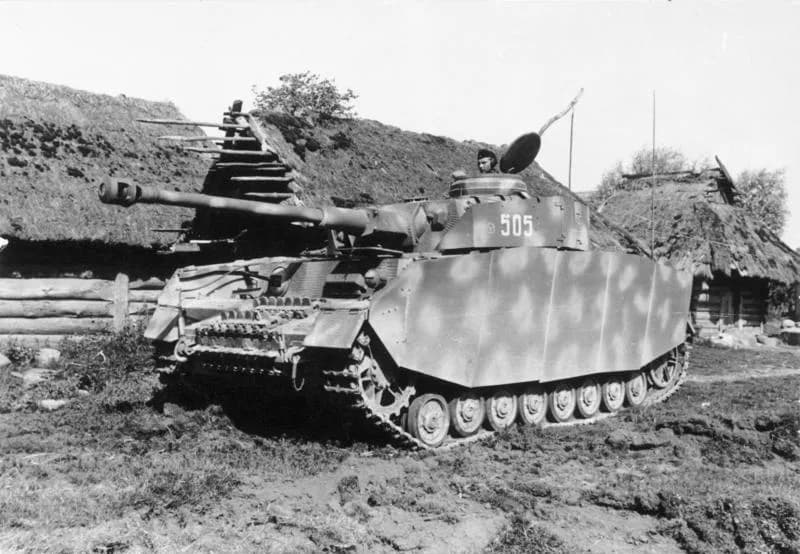
Panzer IV
The Panzerkampfwagen IV was the most produced German medium tank of World War II, with over 8,500 built. Originally designed as an infantry support tank, it evolved into the backbone of the Panzer divisions on every front. It is the only German tank in production from 1939 to 1945.
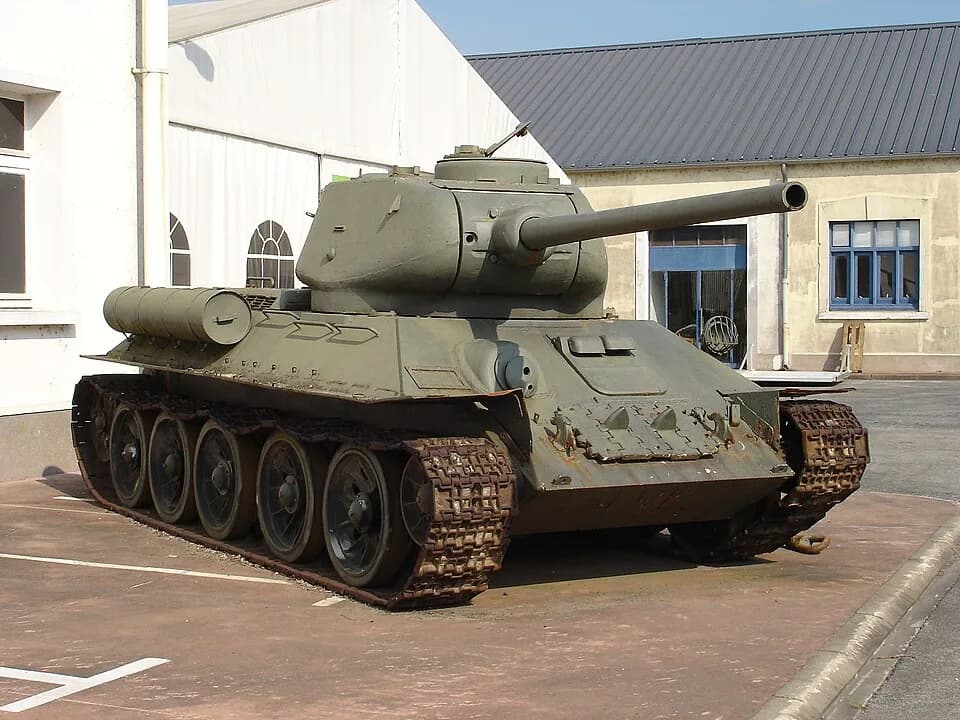
T-34
The T-34 is widely considered the best medium tank of World War II and one of the most influential in military history. Produced in over 84,000 units, its combination of sloped armor, mobility and firepower shocked the Germans in 1941 and shifted the balance of power on the Eastern Front.
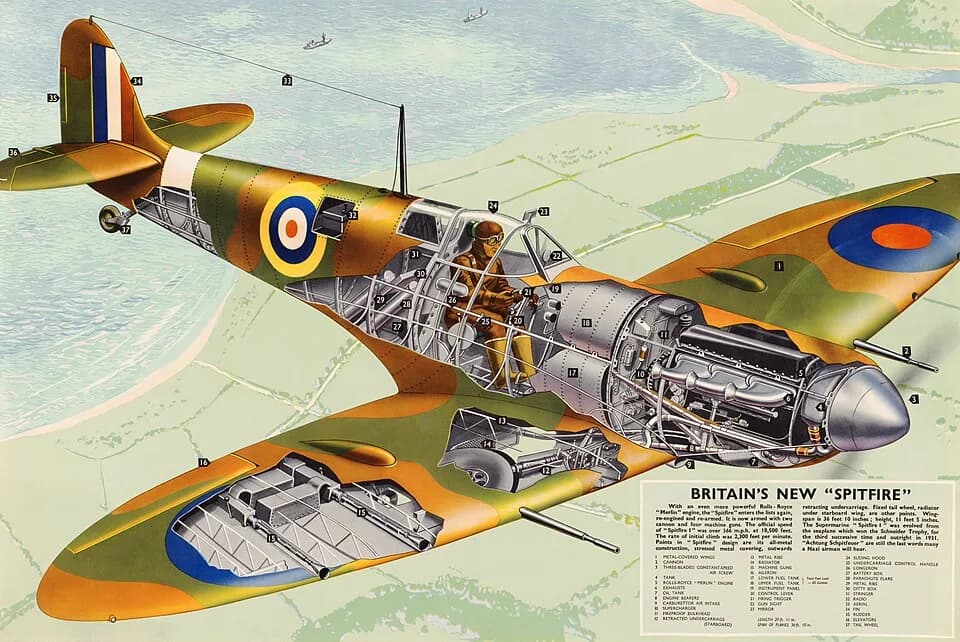
Supermarine Spitfire
The Supermarine Spitfire is the iconic fighter aircraft of the Royal Air Force and a symbol of British resistance during the Battle of Britain. Designed by R.J. Mitchell, its combination of elliptical wings, Rolls-Royce Merlin engine and exceptional agility made it one of the finest fighters of the war.
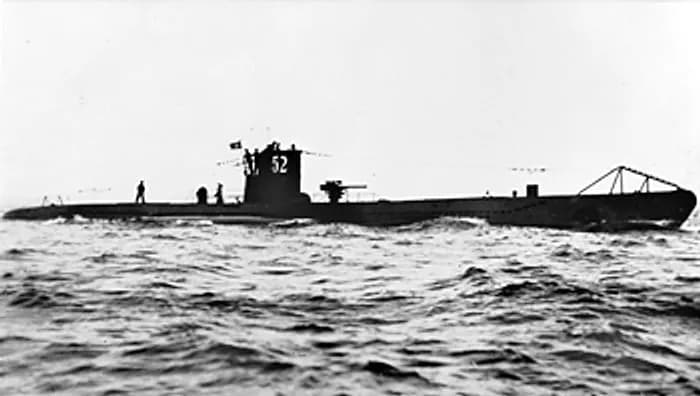
U-Boat Type VII
The Type VII U-boat is the most produced submarine in history with 703 built. The backbone of the Kriegsmarine during the Battle of the Atlantic, these vessels nearly severed the vital supply lines between America and Britain, threatening Great Britain's very survival.
