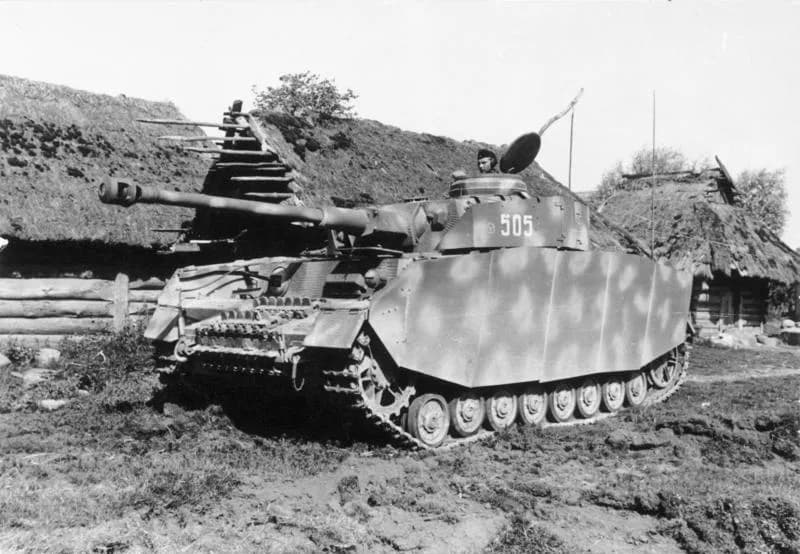
The Panzerkampfwagen IV was the most produced German medium tank of World War II, with over 8,500 built. Originally designed as an infantry support tank, it evolved into the backbone of the Panzer divisions on every front. It is the only German tank in production from 1939 to 1945.
Development of the Panzer IV began in 1934 under the codename 'Begleitwagen' (escort vehicle). Krupp won the production contract over Rheinmetall-Borsig. The specifications called for an 18-ton tank armed with a short 75mm gun capable of firing high-explosive shells to neutralize fortified infantry positions, while the Panzer III, armed with a 37mm then 50mm anti-tank gun, was intended to fight enemy armor. The first examples (Ausführung A) entered service in 1937 with 14.5mm armor and the short KwK 37 L/24 75mm gun. Versions B, C, and D brought minor improvements to armor and engine. Version E of 1940 standardized production with frontal armor reinforced to 50mm. The turning point came after the 1941 Russian campaign, when Panzers encountered the Soviet T-34 whose sloped armor resisted existing German guns. The urgency to outmatch the T-34 led to re-equipping the Panzer IV with the long KwK 40 L/43 then L/48 75mm gun, radically transforming its anti-tank capabilities.
The Panzer IV Ausf. H, the most produced version (approximately 3,800 units), weighed 25 tons with a length of 7.02m (including gun). Its Maybach HL 120 TRM 12-cylinder engine developed 300 horsepower, providing a maximum speed of 38 km/h on road and 16 km/h off-road. Range reached 210 km on road. The five-man crew comprised the tank commander, gunner, loader, driver, and radio operator/hull machine gunner. The KwK 40 L/48 75mm gun could penetrate 85mm of armor at 1,000 meters, sufficient to destroy T-34s and Shermans at combat range. Secondary armament included two MG 34 7.92mm machine guns. Turret frontal armor reached 50mm with additional Schürzen plates of 5mm on the sides to protect against Soviet anti-tank rifles. The leaf spring suspension and 400mm tracks provided adequate mobility on most terrain, although the tank was heavy for its engine power.
The Panzer IV fought on every front of the war. In Poland (1939) and France (1940), the initial short-gun versions served effectively in infantry support. In North Africa, under Rommel's command, Panzer IVs distinguished themselves in desert battles from Tobruk to El Alamein. It was on the Eastern Front that the tank played its most crucial role: the long-gun versions rebalanced the force ratio against the T-34 from 1942 onward. At Kursk (July 1943), Panzer IVs constituted the bulk of German armored forces, with Tigers and Panthers still in insufficient numbers. On the Western Front after D-Day, Panzer IVs faced Shermans and Cromwells in the Norman bocage. The tank was appreciated by its crews for its mechanical reliability, ease of maintenance, and exceptional Zeiss gun optics. Its main weaknesses were insufficient side armor and a tall silhouette making it an easy target. Despite the arrival of the Panther in 1943, the Panzer IV remained in production until March 1945 as it was cheaper and more reliable.
The Panzer IV chassis served as the basis for numerous specialized variants. The Jagdpanzer IV, a low-profile tank destroyer armed with a 75mm L/48 then L/70 gun, was a formidable defensive weapon. The StuG IV mounted the StuG III's assault gun on the Panzer IV chassis. The Wirbelwind and Ostwind were self-propelled anti-aircraft guns (four 20mm guns for the former, one 37mm for the latter). The Brummbär (Sturmpanzer IV) carried a 150mm howitzer for urban combat. The Nashorn used a hybrid Panzer III/IV chassis to mount the fearsome PaK 43 88mm anti-tank gun. The Hummel carried a 150mm howitzer for self-propelled artillery. Finally, the Panzer IV/70(V) and (A) mounted the Panther's L/70 gun in a fixed superstructure. In total, more than ten major variants were produced, demonstrating the chassis's versatility and the German philosophy of adapting existing platforms.
The Panzer IV was the true workhorse of the Wehrmacht's armored forces. With 8,553 units produced (plus approximately 4,000 variants on its chassis), it outnumbered the Tiger (1,347) and Panther (6,000) combined. Its exceptional longevity — in service from 1939 to 1945 — testifies to the robustness of its original design and capacity for evolution. While the Tiger and Panther suffered chronic reliability problems (the Panther had a 50% breakdown rate during its deployment at Kursk), the Panzer IV remained a tank crews could depend on. After the war, several countries continued using the Panzer IV: Syria employed Panzer IVs in the 1948 and 1967 wars against Israel, and some were used by Bulgaria until 1954. The Panzer IV's legacy illustrates a fundamental principle of mechanized warfare: reliability, availability, and mass production capability are often more important than individual technological superiority.
This article draws on historical works, military archives and recognized academic publications.
The Panzerkampfwagen IV was produced in 8,553 units between 1937 and March 1945, plus approximately 4,000 variants on its chassis (Jagdpanzer IV, StuG IV, Hummel, Nashorn). It outnumbered the Tiger (1,347) and Panther (6,000) combined. After the war, Syria used it in the 1948 and 1967 wars against Israel, and Bulgaria kept it in service until 1954.
The encounter with the Soviet T-34 tank during the 1941 Russian campaign revealed that the Panzer IV's short KwK 37 L/24 75mm gun could not penetrate the T-34's sloped armor. This urgency led to rearming with the long KwK 40 L/43 then L/48 75mm gun, capable of penetrating 85mm of armor at 1,000 meters. The Ausf. H version with this gun became the backbone of the Panzer divisions from 1943 onward.
The Panzer IV Ausf. H weighed 25 tons with 50mm frontal armor, while the Tiger I weighed 57 tons with 100mm frontal. The Panzer IV was less powerful but far more reliable, cheaper, and faster to produce. Where the Panther showed a 50% breakdown rate at Kursk in July 1943, the Panzer IV remained operational. Its Maybach HL 120 TRM 300-horsepower engine gave 38 km/h on road and 210 km range.
Information cross-checked against Wikipedia and reference historical works.
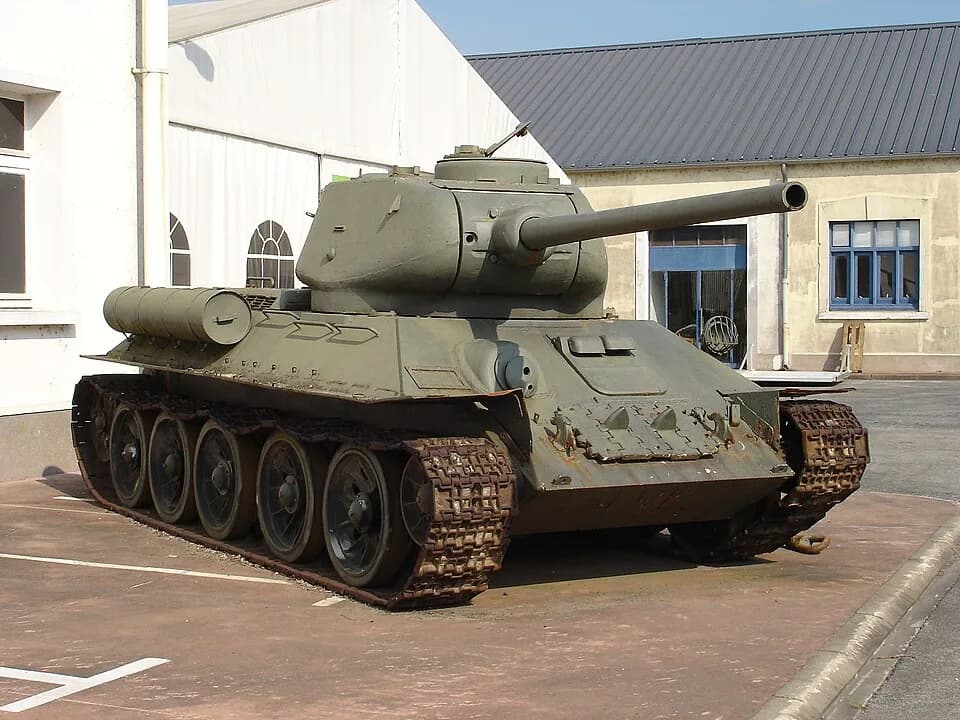
T-34
The T-34 is widely considered the best medium tank of World War II and one of the most influential in military history. Produced in over 84,000 units, its combination of sloped armor, mobility and firepower shocked the Germans in 1941 and shifted the balance of power on the Eastern Front.
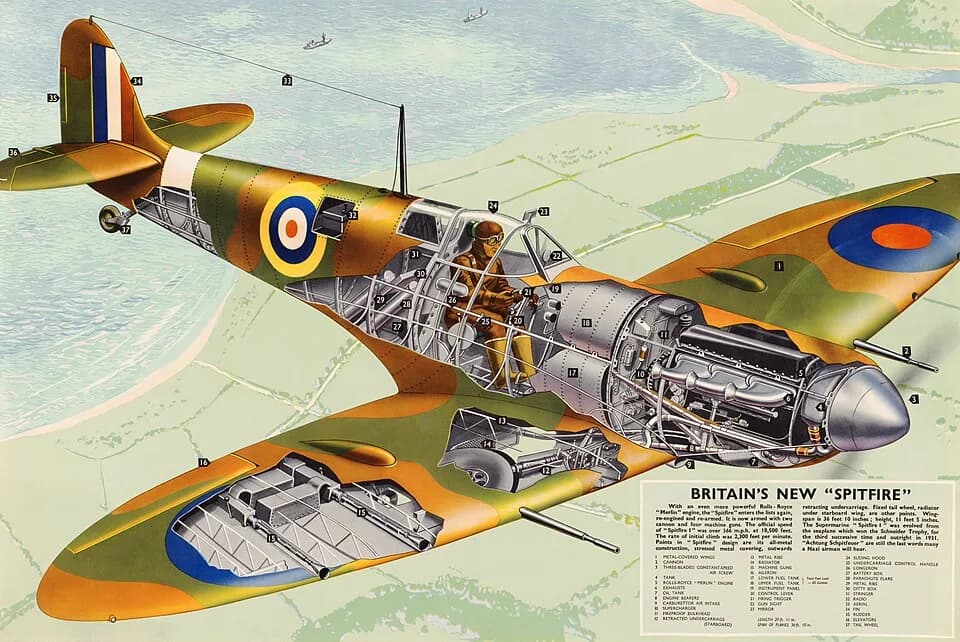
Supermarine Spitfire
The Supermarine Spitfire is the iconic fighter aircraft of the Royal Air Force and a symbol of British resistance during the Battle of Britain. Designed by R.J. Mitchell, its combination of elliptical wings, Rolls-Royce Merlin engine and exceptional agility made it one of the finest fighters of the war.
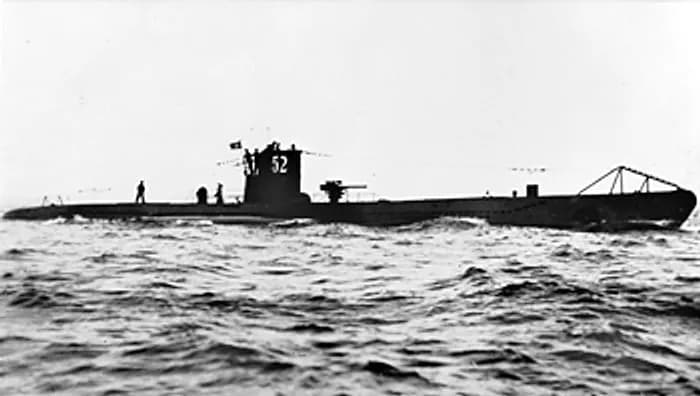
U-Boat Type VII
The Type VII U-boat is the most produced submarine in history with 703 built. The backbone of the Kriegsmarine during the Battle of the Atlantic, these vessels nearly severed the vital supply lines between America and Britain, threatening Great Britain's very survival.
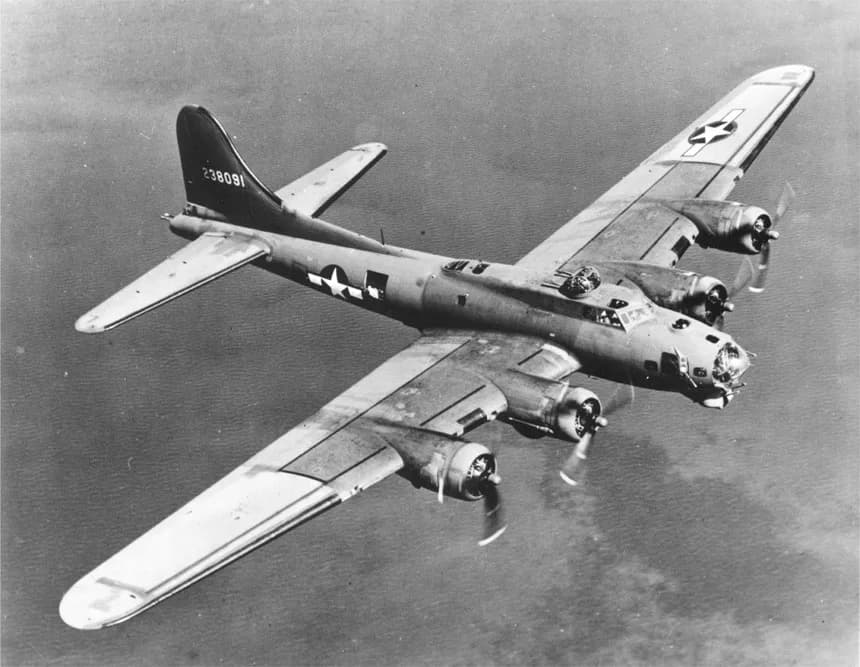
B-17 Flying Fortress
The Boeing B-17 Flying Fortress is the iconic heavy bomber of the US Army Air Forces in Europe. With its 13 machine guns and ability to absorb considerable damage, it symbolized the strategic bombing campaign that devastated German industry and cities.
