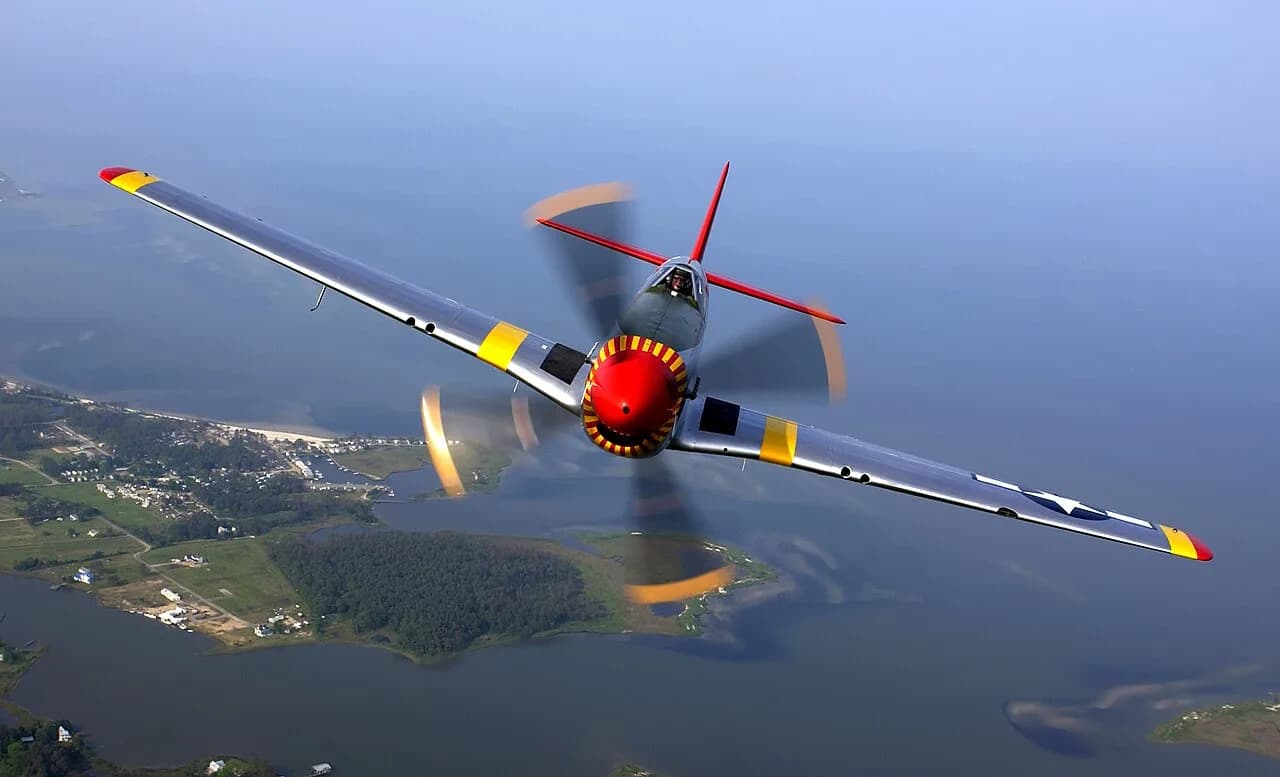
The North American P-51 Mustang is widely considered the finest propeller-driven fighter of World War II. Its revolutionary combination of speed, range and maneuverability, thanks to the Rolls-Royce Merlin engine, transformed the air war in Europe by enabling bomber escort all the way to Berlin.
The P-51 Mustang was born from an urgent British order in April 1940: the RAF desperately needed modern fighters. J.H. 'Dutch' Kindelberger, chief engineer at North American Aviation, proposed an entirely new fighter rather than producing the P-40 Warhawk under license. The NA-73X prototype was designed and built in just 102 days — a remarkable engineering feat. It flew for the first time on October 26, 1940. The aircraft incorporated revolutionary laminar flow wings that considerably reduced drag, and an ingenious ventral radiator system that transformed cooling resistance into additional thrust (Meredith effect). Initially equipped with the Allison V-1710 engine, the Mustang excelled at low altitude but lost performance above 4,500 meters. The transformation came in 1942 when the British suggested installing the two-stage supercharged Rolls-Royce Merlin 65 engine. The result was spectacular: speed jumped from 615 to over 700 km/h and high-altitude performance became exceptional. Packard produced the Merlin under license in the United States (V-1650), and the P-51B entered production in 1943. In total, over 15,000 Mustangs were built.
The P-51D, the definitive and most produced version, was powered by a Packard V-1650-7 (Merlin 66) producing 1,490 horsepower. Maximum speed: 703 km/h at 7,600 meters — faster than any production German fighter except the jet Me 262. Service ceiling: 12,800m. Range was the Mustang's revolutionary characteristic: 1,530 km in internal configuration, extendable to over 2,650 km with two 416-liter drop tanks — sufficient to escort B-17s from England to Berlin and back. Armament comprised six Browning M2 12.7mm machine guns with 1,880 total rounds, plus the ability to carry two 454 kg bombs or ten 127mm HVAR rockets. The P-51D's bubble canopy offered panoramic 360° visibility, a crucial advantage in air combat. The K-14 gyroscopic gunsight, introduced in 1944, automatically calculated firing deflection, considerably improving accuracy. The aircraft weighed 3,465 kg empty and 5,490 kg at maximum load.
The P-51 Mustang literally transformed the air war in Europe. Before its arrival, the American strategic bombing campaign was on the brink of failure: in October 1943, bomber loss rates reached 9.1% per mission, an unsustainable pace. The arrival of Merlin-powered P-51Bs with the 8th Air Force in winter 1943-1944 changed everything. By February 1944, bomber loss rates dropped to 3.5%. 'Big Week' (February 20-25, 1944) saw Mustangs escorting massive bomber formations against the German aircraft industry. General Jimmy Doolittle then ordered escort fighters to stop staying glued to bombers and instead aggressively 'hunt' German aircraft — a decision that bled the Luftwaffe of its experienced pilots. By late 1944, 14 of 15 fighter groups of the 8th Air Force flew Mustangs. P-51s shot down nearly 5,000 enemy aircraft in aerial combat in Europe — nearly 50% of all American air-to-air victories on that theater. In the Pacific, based at Iwo Jima from March 1945, Mustangs escorted B-29 Superfortresses against Japan.
The Mustang underwent remarkable evolution in just a few years. The Mustang I (NA-73) was the original British version with Allison engine, effective in reconnaissance and low-altitude ground attack. The A-36 Apache was a dive bomber variant with dive brakes, produced in over 500 units. The P-51A was the first USAAF version, still with an Allison engine. The P-51B was the first Merlin-powered version, entering service late 1943 — the decisive turning point. The P-51C was essentially identical to the B but produced at a different factory (Dallas instead of Inglewood). The P-51D, with its bubble canopy and six machine guns, was the most produced and most iconic version. The P-51K was a P-51D with an Aeroproducts propeller instead of Hamilton Standard. The P-51H was the ultimate version, lighter and faster (784 km/h), but arrived too late to fight. The F-6D and F-6K were photographic reconnaissance versions. In total, approximately 13,300 Merlin-powered Mustangs were produced in the United States.
The P-51 Mustang is widely considered the aircraft that won the air war in Europe. Hermann Göring, head of the Luftwaffe, reportedly said that 'when I saw Mustangs over Berlin, I knew the war was lost.' This quote, though probably apocryphal, captures a strategic reality: the arrival of an escort fighter capable of accompanying bombers anywhere over the Reich broke the Luftwaffe's ability to defend Germany. The Mustang's story is also one of successful Anglo-American collaboration: an American aircraft with a British engine, combining the best of both industries. The Mustang's cost-effectiveness ratio was remarkable: at approximately $51,000 per unit (1945), it was one of the cheapest fighters to produce while being the highest-performing. After the war, the Mustang fought in Korea (1950-1953) and remained in service with several air forces until the 1980s. Today, hundreds of restored P-51s still fly, and the aircraft remains one of the most prized warbirds in the world.
The P-51 Mustang transformed the air war by enabling, for the first time, bomber escort to Berlin and back, thanks to its 2,650 km range with drop tanks. Before its arrival, bomber loss rates reached 9.1% per mission in October 1943. With the arrival of Merlin-powered P-51Bs in winter 1943-1944, this rate dropped to 3.5%. Hermann Göring reportedly said that seeing Mustangs over Berlin told him the war was lost.
The P-51D Mustang was powered by a Packard V-1650-7 (Rolls-Royce Merlin 66 license) producing 1,490 horsepower, reaching 703 km/h at 7,600 meters — faster than any German production fighter except the jet Me 262. The NA-73X prototype was built in just 102 days in 1940. Over 15,000 Mustangs were produced in total, including approximately 13,300 Merlin-powered versions.
P-51 Mustangs shot down nearly 5,000 enemy aircraft in aerial combat in Europe — approximately 50% of all American air-to-air victories in that theater. In the Pacific, based at Iwo Jima from March 1945, Mustangs escorted B-29 Superfortresses against Japan. After the war, the P-51 fought in Korea (1950-1953) and remained in service with several air forces until the 1980s.
Information cross-checked against Wikipedia and reference historical works.
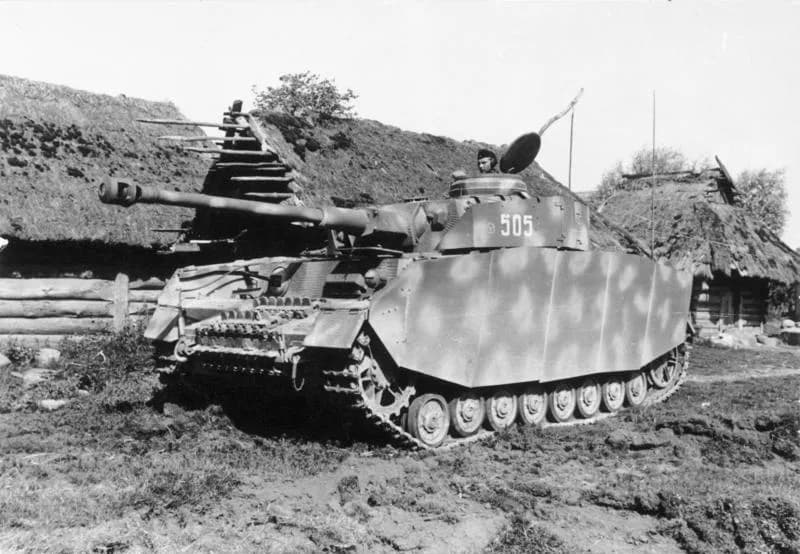
Panzer IV
The Panzerkampfwagen IV was the most produced German medium tank of World War II, with over 8,500 built. Originally designed as an infantry support tank, it evolved into the backbone of the Panzer divisions on every front. It is the only German tank in production from 1939 to 1945.
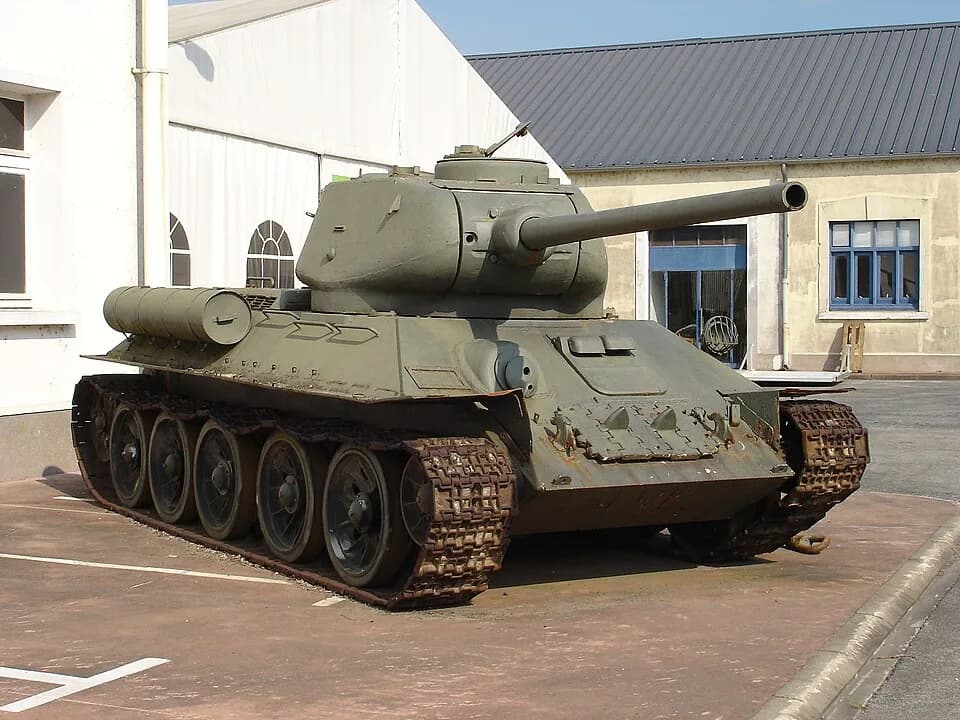
T-34
The T-34 is widely considered the best medium tank of World War II and one of the most influential in military history. Produced in over 84,000 units, its combination of sloped armor, mobility and firepower shocked the Germans in 1941 and shifted the balance of power on the Eastern Front.
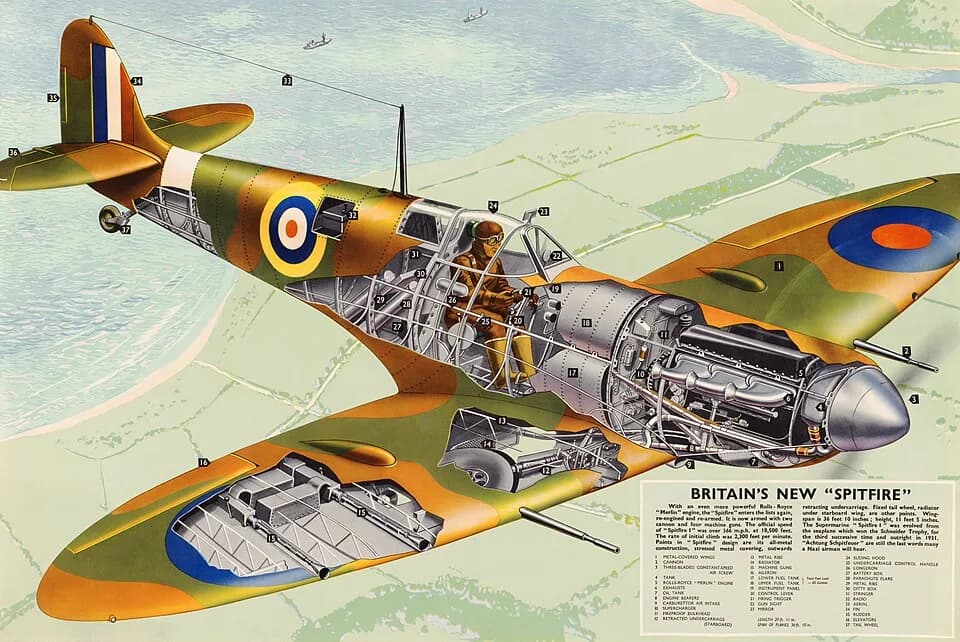
Supermarine Spitfire
The Supermarine Spitfire is the iconic fighter aircraft of the Royal Air Force and a symbol of British resistance during the Battle of Britain. Designed by R.J. Mitchell, its combination of elliptical wings, Rolls-Royce Merlin engine and exceptional agility made it one of the finest fighters of the war.
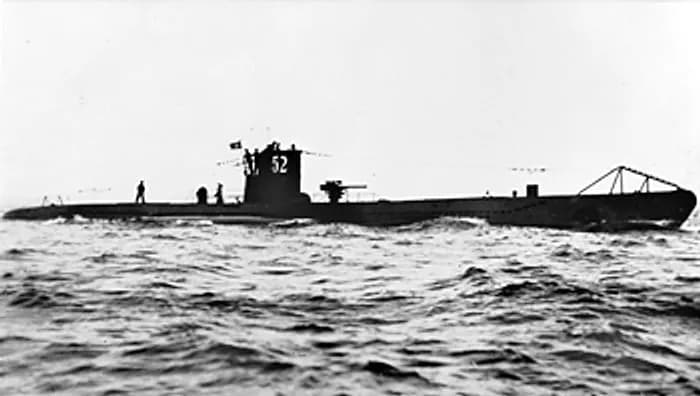
U-Boat Type VII
The Type VII U-boat is the most produced submarine in history with 703 built. The backbone of the Kriegsmarine during the Battle of the Atlantic, these vessels nearly severed the vital supply lines between America and Britain, threatening Great Britain's very survival.
