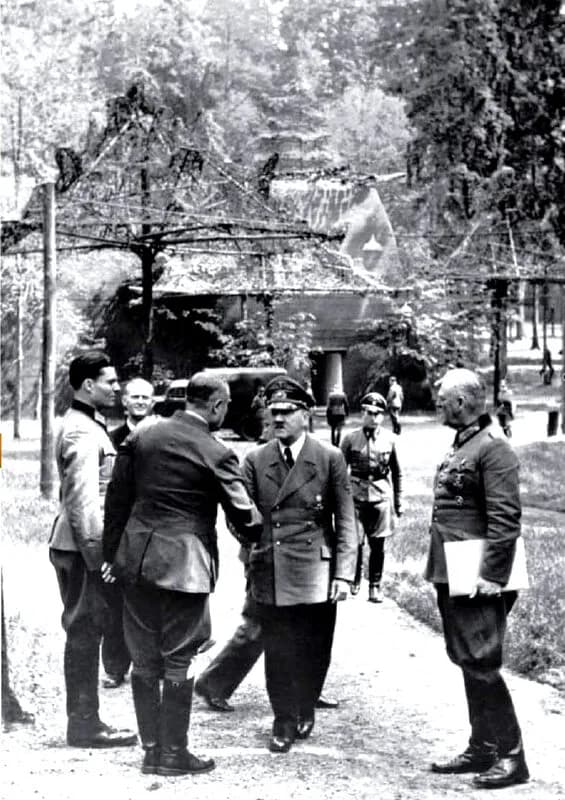
Operation Valkyrie refers to the assassination attempt on Adolf Hitler on July 20, 1944, by Colonel Claus von Stauffenberg and a group of German military resisters. The plot's failure led to a bloody repression that eliminated the last opponents of the Nazi regime within the Wehrmacht.
As early as 1938, German officers opposed to Nazism began contemplating a coup d'état against Hitler. General Ludwig Beck, former Chief of Staff, and Admiral Wilhelm Canaris, head of the Abwehr, were among the first conspirators. Several assassination attempts failed before 1944, including the failed attack on March 13, 1943, when a bomb placed in Hitler's aircraft failed to detonate due to the cold. By 1944, Germany's military situation was desperate: the Normandy landings succeeded on June 6, the Soviet Bagration offensive destroyed Army Group Center, and defeat was inevitable. Colonel Claus Schenk von Stauffenberg, a Bavarian aristocrat severely wounded in Tunisia (he had lost an eye, his right hand, and two fingers of his left hand), took the lead of the conspiracy. The plan was to assassinate Hitler, then use the Valkyrie plan — an existing contingency plan to mobilize the reserve army in case of internal disturbances — to seize control of Berlin and negotiate a separate peace with the Western Allies.
The planning of the July 20 plot involved dozens of high-ranking officers spread throughout the Wehrmacht. General Friedrich Olbricht, head of the General Army Office, and Colonel Mertz von Quirnheim secretly modified the Valkyrie plan to serve as cover for the coup. General Erich Fellgiebel, head of Wehrmacht communications, was to cut communications from the Wolfsschanze (Wolf's Lair, Hitler's headquarters in East Prussia) immediately after the explosion. In Berlin, General Erich Hoepner was to take command of the reserve army, while Field Marshal Erwin von Witzleben was designated as the future commander-in-chief of the Wehrmacht. Stauffenberg, as deputy to the commander of the reserve army, had regular access to Hitler's military conferences, making him the ideal man to plant the bomb. The explosive device was a packet of British plastic explosive with a silent chemical detonator. Stauffenberg practiced arming the bomb with his three remaining fingers, a maneuver that had to be executed in just a few minutes in the headquarters bathroom before the conference.
On July 20, 1944, Stauffenberg arrived at the Wolf's Lair for a military conference. He excused himself to go to the bathroom where he armed one of two prepared explosive charges. Interrupted by an assistant, he only had time to arm one of the two charges, halving the explosion's power. He placed the briefcase containing the bomb under the conference table, near Hitler, then excused himself and left the building. At 12:42, the bomb exploded, blowing apart the wooden barracks. Stauffenberg, seeing the explosion and projected debris, was convinced Hitler was dead. He passed through the Wolf's Lair's three checkpoints thanks to his composure and flew to Berlin to activate the Valkyrie plan. But Hitler survived, protected by the heavy oak leg of the conference table and by the fact that Colonel Brandt had moved the briefcase further from Hitler. Four officers were killed and several others severely wounded, but Hitler suffered only superficial injuries: perforated eardrums, bruised arm, and shredded trousers.
The attack's failure triggered repression of unprecedented brutality. In Berlin, the coup collapsed when Hitler's survival was confirmed. Stauffenberg, Olbricht, Mertz von Quirnheim, and Lieutenant von Haeften were arrested and shot in the Bendlerblock courtyard that same night. Hitler ordered a hunt for conspirators that extended far beyond the circle of plotters. The Gestapo arrested approximately 7,000 people. The Volksgerichtshof (People's Court), presided over by the fanatical Roland Freisler, condemned the accused in humiliating show trials. The condemned were executed by hanging with piano wire, a slow and atrocious death filmed on Hitler's orders. Among the most prominent victims were Field Marshal Erwin von Witzleben, General Erich Hoepner, and Admiral Canaris. Field Marshal Rommel, suspected of sympathy with the conspirators, was forced to commit suicide on October 14, 1944. In total, approximately 200 people were executed and numerous families were arrested under the principle of Sippenhaft (collective family responsibility).
Operation Valkyrie and the July 20, 1944 plot hold a central place in postwar German memory. Long considered traitors by a portion of the postwar German population, the conspirators have been gradually rehabilitated and are today honored as heroes of German resistance to Nazism. The Bendlerblock in Berlin, site of Stauffenberg's execution, has become the German Resistance Memorial Center (Gedenkstätte Deutscher Widerstand). Every July 20, official ceremonies commemorate the plot's victims, with participation from the Federal President and the Bundeswehr, one of whose main barracks bears Stauffenberg's name. The plot has inspired numerous cultural works, including the film Valkyrie (2008) with Tom Cruise in the role of Stauffenberg. Historically, the plot's failure had tragic consequences: the war continued for nine additional months, causing millions of additional deaths, and Hitler, now even more paranoid, interfered even more destructively in military operations, accelerating Germany's final collapse.
Colonel Claus Schenk von Stauffenberg was a Bavarian aristocrat severely wounded in Tunisia (he lost an eye, his right hand, and two fingers of his left). Lead conspirator, he placed a British plastic explosive briefcase under the conference table at the Wolf's Lair (East Prussia) on July 20, 1944. The bomb exploded at 12:42, killing four officers. Hitler survived, protected by the heavy oak leg of the conference table.
Hitler survived for several reasons: Stauffenberg, interrupted in the bathroom, had time to arm only one of the two planned explosive charges, halving the explosion's power. Colonel Brandt then moved the briefcase further from Hitler. The wooden barracks of the Wolf's Lair, unlike a concrete bunker, allowed the blast to dissipate. Hitler suffered only perforated eardrums, a bruised arm, and shredded trousers.
The failure triggered unprecedented repression: the Gestapo arrested approximately 7,000 people. Judge Freisler's Volksgerichtshof condemned the accused in humiliating show trials. The condemned were hanged with piano wire on Hitler's orders. Approximately 200 people were executed, including Field Marshal von Witzleben and Rommel (forced suicide on October 14, 1944). Stauffenberg and co-conspirators Olbricht, Mertz, and von Haeften were shot that same night in the Bendlerblock courtyard in Berlin.
Information cross-checked against Wikipedia and reference historical works.
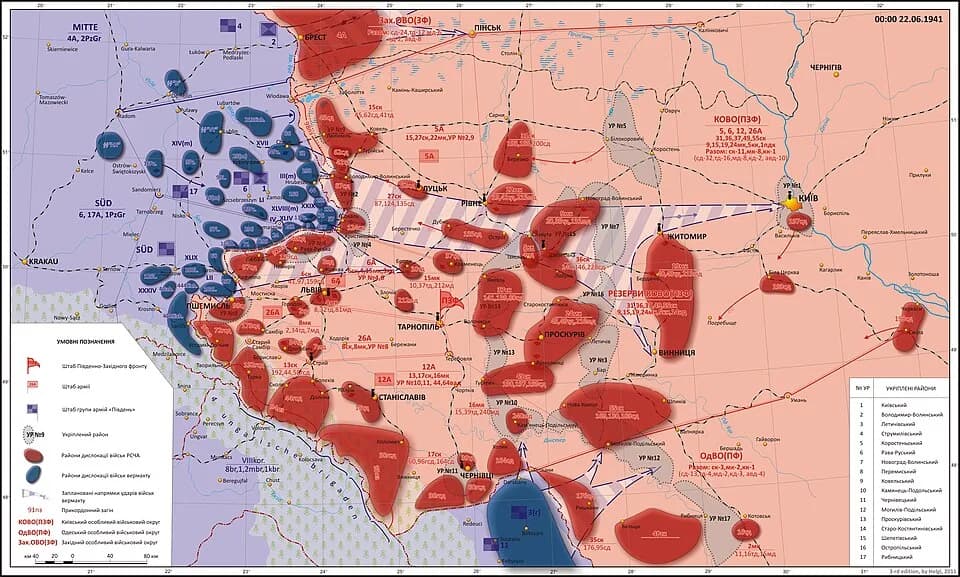
Operation Barbarossa
Operation Barbarossa was Nazi Germany's invasion of the Soviet Union, the largest military operation in history. With 3.8 million soldiers engaged, it opened the Eastern Front and was Hitler's fatal strategic error that led to the destruction of the Third Reich.
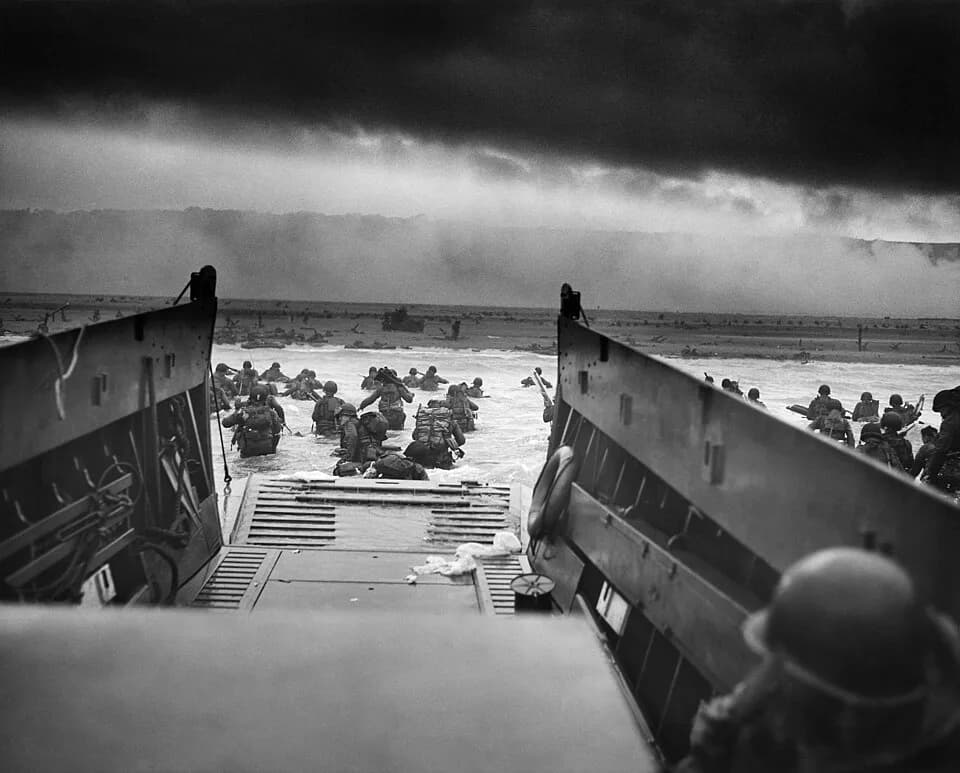
Operation Overlord
Operation Overlord was the code name for the Battle of Normandy, the largest amphibious operation in history. From the D-Day landings to the liberation of Paris, this 80-day campaign opened the second front in Europe and marked the beginning of the end for Nazi Germany.
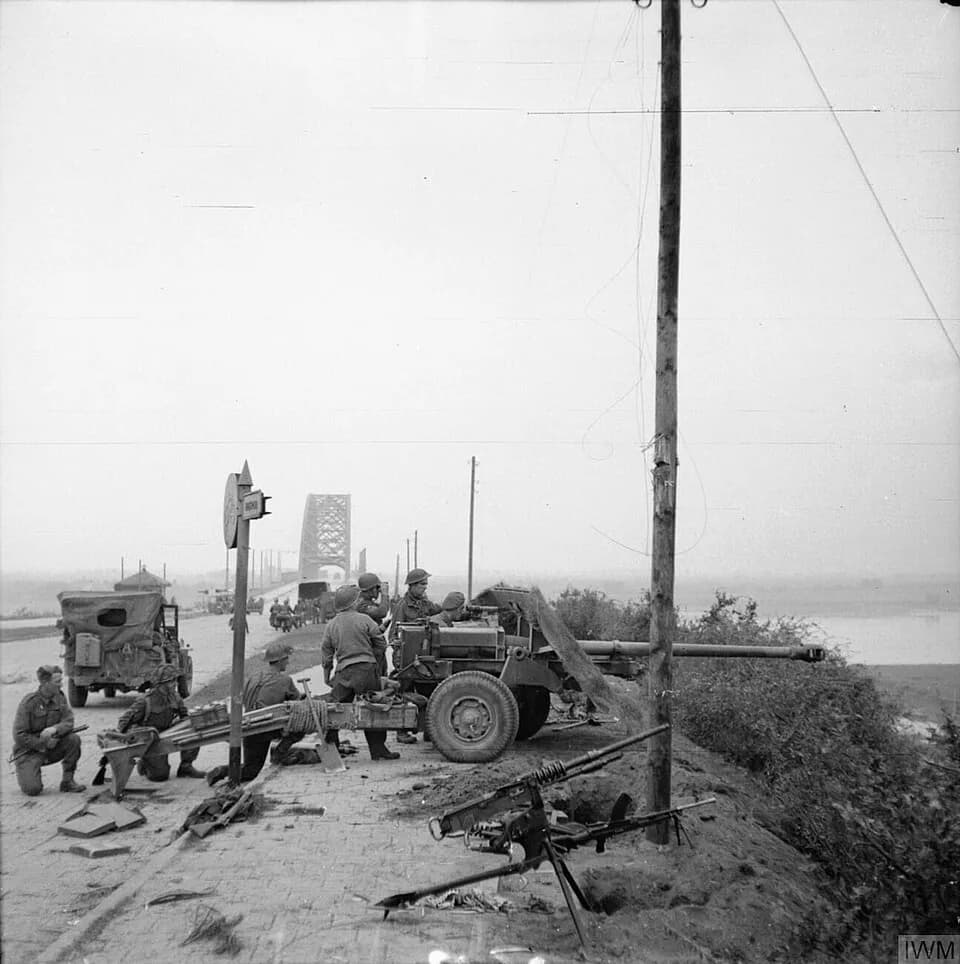
Operation Market Garden
Operation Market Garden was the largest airborne operation in history, aiming to capture a series of bridges in the Netherlands to allow Allied armor to bypass the Siegfried Line and invade Germany. Its failure at Arnhem prolonged the war by several months.
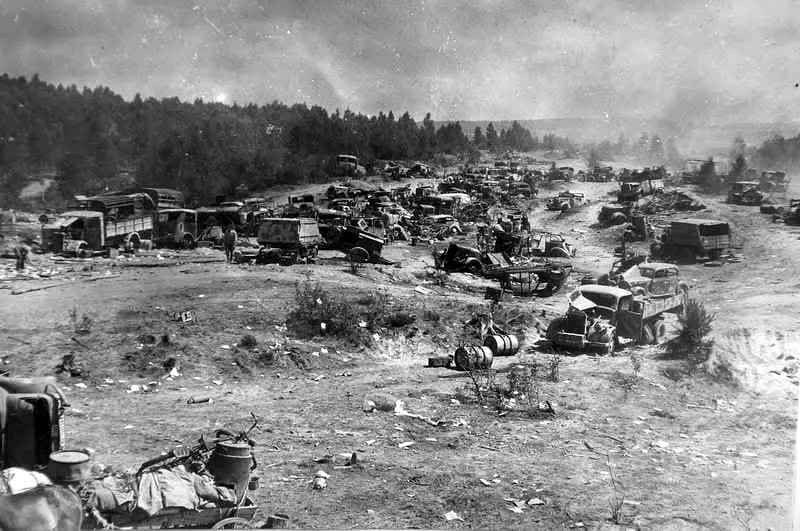
Operation Bagration
Operation Bagration was the Soviet offensive that destroyed the German Army Group Center in Belarus during the summer of 1944. More devastating than Stalingrad, it annihilated 28 German divisions and advanced 600 km in two months, liberating Belarus and reaching the gates of Warsaw.
