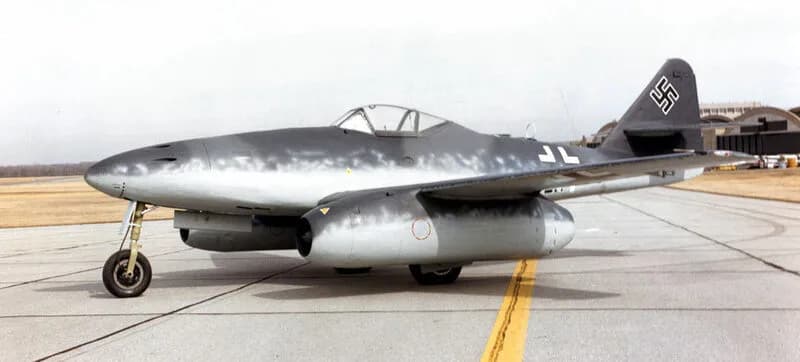
The Messerschmitt Me 262 Schwalbe (Swallow) was the first operational jet fighter in history. With a top speed of 870 km/h, it outclassed all Allied propeller-driven fighters, but its late arrival and limited production of approximately 1,400 units prevented it from reversing the course of the air war.
Development of the Me 262 began as early as 1938, when the Messerschmitt design bureau started working on a fighter powered by experimental BMW turbojet engines. The first prototype, the Me 262 V1, made its initial flight on April 18, 1941, but equipped with a conventional piston engine because the jets were not yet ready. The first fully jet-powered flight took place on July 18, 1942, with Junkers Jumo 004A engines. However, development was delayed by numerous technical problems, particularly the reliability of the Jumo 004 engines, whose lifespan did not exceed 25 flight hours due to the shortage of heat-resistant metals such as nickel and chromium, which were allocated by priority to other uses. Allied bombings of factories added considerable delays. Engineer Willy Messerschmitt and his team had to constantly improvise with substitute materials, replacing strategic alloys with ordinary steel in the turbine blades.
The Messerschmitt Me 262A-1a Schwalbe was powered by two Junkers Jumo 004B-1 turbojet engines, each producing 8.8 kN of thrust. Its maximum speed reached 870 km/h at 6,000 meters altitude, approximately 150 km/h faster than the P-51 Mustang, the best Allied fighter. The aircraft measured 10.6 meters in length with a wingspan of 12.6 meters and weighed 6,400 kg loaded. Its primary armament consisted of four MK 108 30mm cannons mounted in the nose, capable of destroying a heavy bomber with only three or four shells. The operational ceiling reached 11,450 meters and range was approximately 1,050 km. The aircraft featured a tricycle landing gear, an innovation for the time. The cockpit was pressurized and equipped with a Revi 16B gunsight. Despite its revolutionary speed performance, the Me 262 suffered from slow acceleration, inferior maneuverability at low speeds, and extremely fragile engines requiring meticulous maintenance.
The operational use of the Me 262 was marked by Hitler's interference, as he insisted it be converted into a fast bomber (Sturmvogel) rather than a fighter, delaying its deployment by several crucial months. The first jet fighter group, Kommando Nowotny led by ace Walter Nowotny, entered service in October 1944. Me 262 pilots developed speed-based attack tactics: they dived through bomber formations at high speed, fired a brief burst from their devastating 30mm cannons, then climbed out of range before escort fighters could react. Jagdverband 44, an elite unit commanded by Adolf Galland, gathered some of the Luftwaffe's best aces. Despite spectacular individual successes, the Me 262 could not compensate for the Allies' overwhelming numerical superiority. Allied pilots quickly learned to attack Me 262s during takeoff and landing, their most vulnerable moments, and mounted permanent patrols above known jet airfields.
Several variants of the Me 262 were developed for different missions. The Me 262A-1a Schwalbe was the standard fighter version with its four 30mm cannons. The Me 262A-2a Sturmvogel was the fast bomber variant demanded by Hitler, capable of carrying two 250 kg bombs or one 500 kg bomb under the fuselage. The Me 262B-1a was a two-seat trainer, while the Me 262B-2a was a two-seat night fighter equipped with FuG 218 Neptun radar. The Me 262A-1a/U4, nicknamed 'Pulkzerstörer' (formation destroyer), mounted an enormous BK 5 50mm cannon to destroy bombers at long range. Photographic reconnaissance versions were also produced. Toward the end of the war, even more advanced projects were under study, including the Me 262 HG III with pronounced swept wings aiming at speeds of 1,100 km/h. Of the approximately 1,400 Me 262s built, only around 300 were simultaneously operational due to shortages of fuel, spare parts, and trained pilots.
The Messerschmitt Me 262 revolutionized military aviation by irrefutably demonstrating the superiority of the jet engine over the piston engine. Its psychological impact on Allied bomber crews was considerable, even though material damage remained limited by the small number of aircraft engaged. After the war, the victorious powers rushed to capture Me 262s, their designers, and Jumo 004 engine technology. The United States, Soviet Union, France, and United Kingdom carefully studied captured aircraft, accelerating the development of their own jet fighters. The Soviet MiG-9 and the American F-86 Sabre directly benefited from Me 262 technology. The swept-wing design, tested on late variants, became the standard for jet aviation in the 1950s. Today, several Me 262 replicas fly around the world, and the few surviving original examples are displayed in the world's greatest aviation museums. The Me 262 remains the symbol of German technical genius that arrived too late to change the outcome of an already lost war.
The Messerschmitt Me 262 Schwalbe reached 870 km/h at 6,000 meters altitude, approximately 150 km/h faster than the P-51 Mustang, the best Allied propeller fighter. Its four MK 108 30mm cannons could destroy a heavy bomber with only three or four shells. Despite this superiority, its Junkers Jumo 004B engines lasted no more than 25 flight hours due to shortages of heat-resistant metals.
Hitler insisted the Me 262 be converted into a fast bomber (Sturmvogel variant), capable of carrying two 250 kg bombs or one 500 kg bomb, rather than a pure fighter. This decision delayed its deployment by several crucial months. The first jet fighter group, Kommando Nowotny, only entered service in October 1944. Of approximately 1,400 Me 262s built, only around 300 were simultaneously operational.
After Germany's surrender, the United States, USSR, France, and United Kingdom captured Me 262s and studied their technology. The Soviet MiG-9 and American F-86 Sabre directly benefited from the Jumo 004 engine technology. The swept-wing design tested on late variants became the standard for jet aviation in the 1950s. Czechoslovakia produced the Me 262 under license until 1948 as the Avia S-199.
Information cross-checked against Wikipedia and reference historical works.
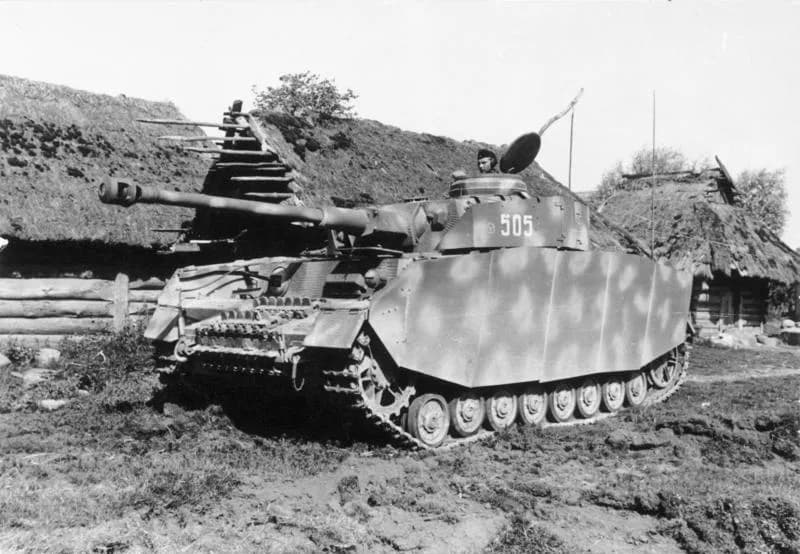
Panzer IV
The Panzerkampfwagen IV was the most produced German medium tank of World War II, with over 8,500 built. Originally designed as an infantry support tank, it evolved into the backbone of the Panzer divisions on every front. It is the only German tank in production from 1939 to 1945.
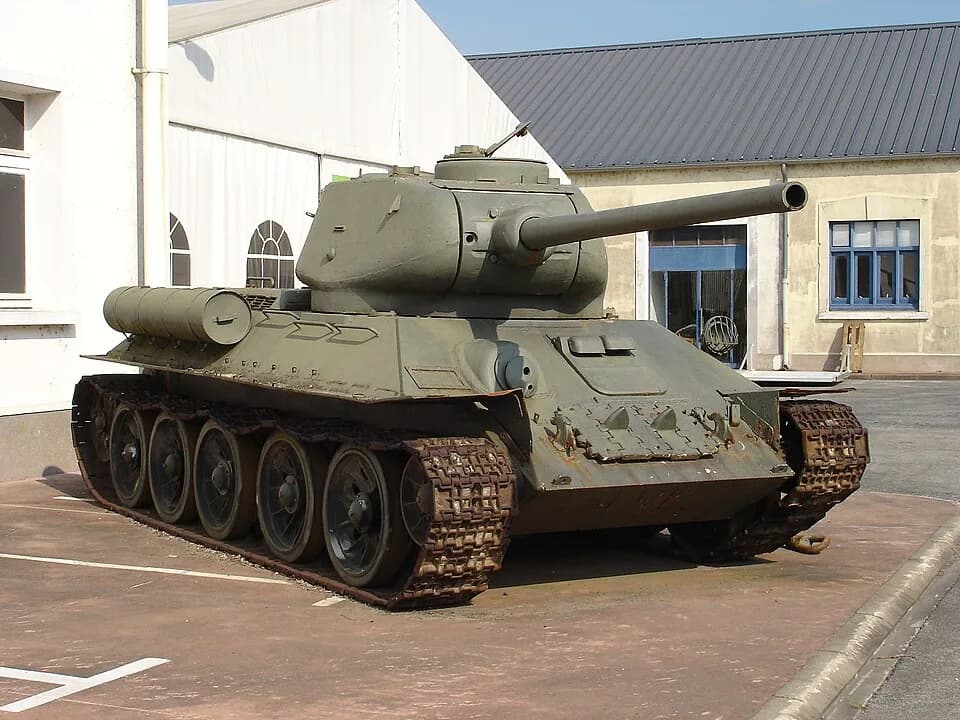
T-34
The T-34 is widely considered the best medium tank of World War II and one of the most influential in military history. Produced in over 84,000 units, its combination of sloped armor, mobility and firepower shocked the Germans in 1941 and shifted the balance of power on the Eastern Front.
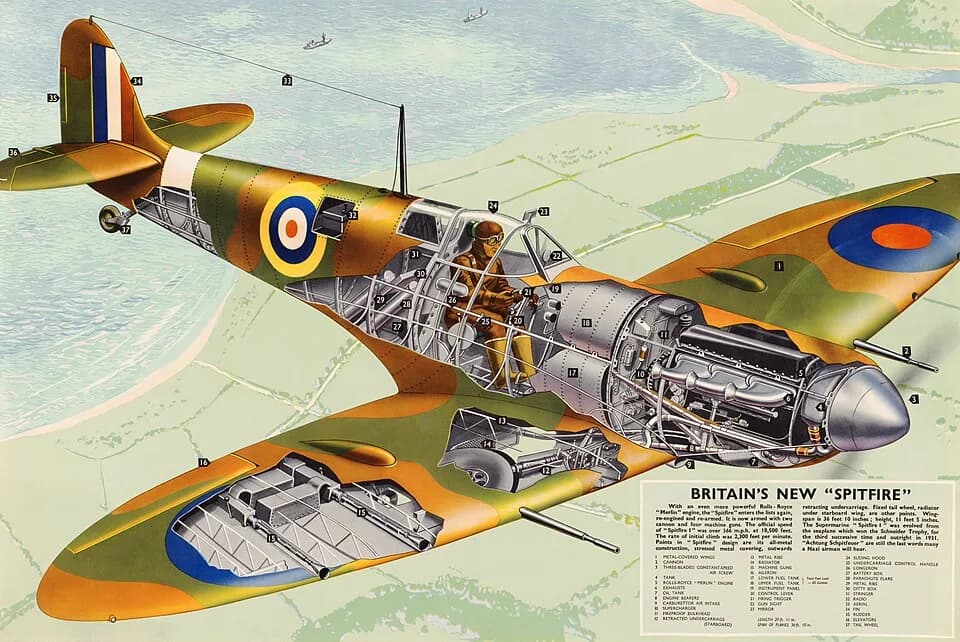
Supermarine Spitfire
The Supermarine Spitfire is the iconic fighter aircraft of the Royal Air Force and a symbol of British resistance during the Battle of Britain. Designed by R.J. Mitchell, its combination of elliptical wings, Rolls-Royce Merlin engine and exceptional agility made it one of the finest fighters of the war.
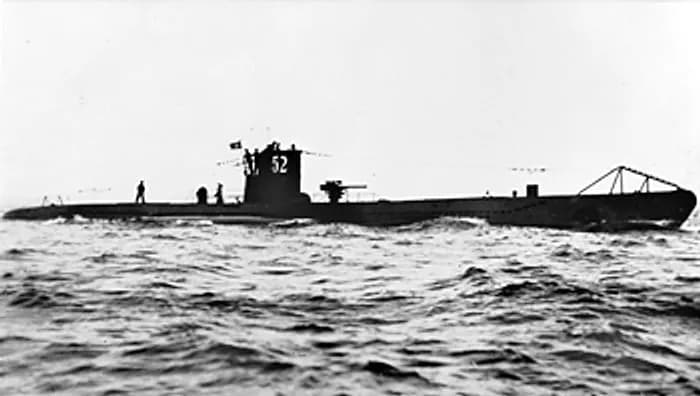
U-Boat Type VII
The Type VII U-boat is the most produced submarine in history with 703 built. The backbone of the Kriegsmarine during the Battle of the Atlantic, these vessels nearly severed the vital supply lines between America and Britain, threatening Great Britain's very survival.
