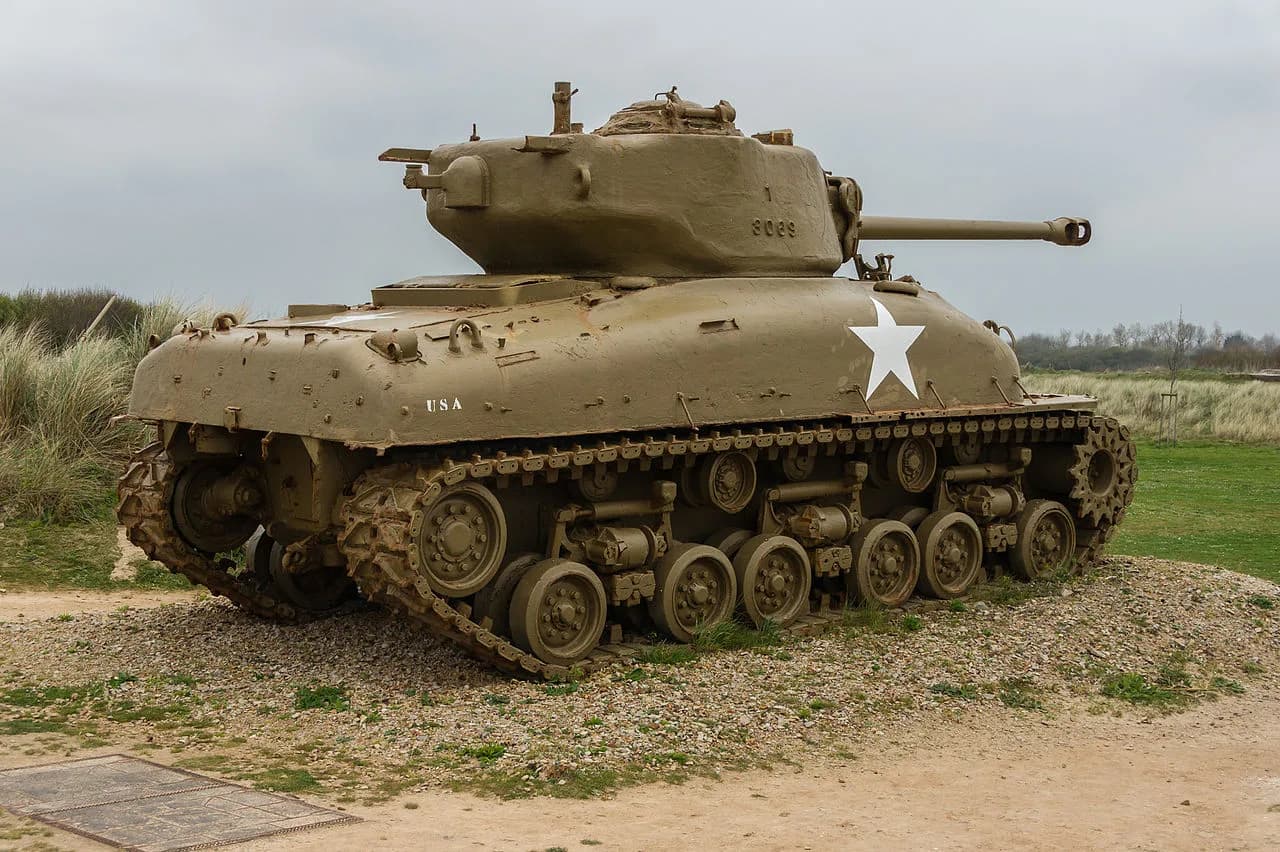
The M4 Sherman is the most recognisable Allied medium tank of World War II. Produced in over 49,000 units, its mechanical reliability, ease of production and versatility offset its shortcomings in armour and firepower against German heavy tanks. Allied doctrine relied on numbers rather than on individual superiority.
The M4 Sherman was born from the limitations of the M3 Lee, an interim tank whose main 75mm gun was mounted in a side sponson — a temporary solution unsuited to modern combat. On August 31, 1940, the Ordnance Department submitted specifications for a new medium tank with a traversing turret. On April 18, 1941, the US Army's armored committee selected the T6 design, a modified M3 hull with a new 360° turret mounting the 75mm gun. The prototype was completed on September 2, 1941 and standardized as the M4. The design philosophy prioritized reliability, ease of mass production, and component standardization over individual technological superiority. Eleven factories produced the Sherman simultaneously, including plants in Detroit, Chrysler, and Fisher Body. Production reached a staggering pace: the United States produced more Shermans in 1943 alone than Germany produced tanks in the entire war. The Lend-Lease program distributed thousands of Shermans to the United Kingdom, USSR, Free France, and China.
The M4A3(76)W, the US Army's main version in 1944-1945, weighed approximately 33 tons. Its Ford GAA V8 500-horsepower engine provided a maximum speed of 42 km/h on road. Range: 160 to 240 km depending on terrain. The five-man crew comprised the commander, gunner, loader, driver, and co-driver/hull gunner. The 76mm M1 gun replaced the original 75mm, offering better penetration against German armor — sufficient against the Panzer IV but still inadequate against the Tiger I frontally. Secondary armament included two 7.62mm Browning M1919 machine guns and a 12.7mm Browning M2 on the turret roof. Hull frontal armor reached 51 to 76mm depending on variant. The VVSS (Vertical Volute Spring Suspension) was replaced on late versions by the HVSS (Horizontal Volute Spring Suspension), considerably improving off-road mobility. The Sherman's main weakness was its tendency to catch fire when hit, earning it the nickname 'Ronson' (after the lighter) among the British and 'Tommy Cooker' among the Germans.
The Sherman first saw combat in October 1942 during the Second Battle of El Alamein with the British 8th Army. At that time, it outclassed the Panzer III and early short-gun Panzer IVs. The situation deteriorated in 1943-1944 when Sherman crews faced Tigers, Panthers, and long-gun Panzer IVs, whose rounds penetrated Sherman armor well beyond return-fire range. In Normandy, American crews developed compensating tactics: attacking in numbers (typically five Shermans against one Tiger), maneuvering to hit more vulnerable flanks, and using artillery and air support. 'Rhino tanks' — Shermans fitted with metal teeth welded to the front to cut through bocage hedgerows — were a crucial battlefield innovation. In the Pacific, the Sherman dominated light Japanese tanks and served effectively in infantry support. The Sherman's mechanical reliability was its greatest asset: where Panthers broke down every other mission, Shermans kept rolling and were easily repaired, maintaining offensive pressure.
The Sherman existed in over 35 variants and sub-variants. The M4A1 had a cast hull, the M4A2 was primarily supplied to the Marines and USSR, the M4A3 was the Army's preferred version, and the M4A4 was favored by the British (7,499 produced). The M4A3E2 'Jumbo' was an assault tank with frontal armor reinforced to 178mm, capable of withstanding 88mm rounds. The M4A3(76)W HVSS, nicknamed 'Easy Eight,' combined the 76mm gun, wet ammunition stowage (W for wet, reducing fires), and the new HVSS suspension. The M4A3(105) mounted a 105mm howitzer for infantry support. The British Sherman Firefly, armed with the powerful 17-pounder anti-tank gun, was the only Sherman capable of destroying a Tiger frontally at reasonable range. The T34 Calliope mounted 60 rocket launcher tubes above the turret. Mine-clearing (Crab with flails) and amphibious (DD with flotation skirts) variants played a crucial role on D-Day.
The M4 Sherman is the most important tank of the Western Allied forces. With 49,324 units produced in 11 factories, it far surpassed the combined production of all German tanks. Thousands were distributed via Lend-Lease: the USSR received approximately 4,100 and appreciated them for their reliability and comfort superior to T-34s, although Soviet tankers criticized their armor. The Sherman's philosophy — a 'good enough' tank produced in massive quantities with simplified logistics — proved decisive in a war of industrial attrition. This approach is often compared to the German dilemma of producing technically superior but numerically insufficient tanks. The debate over the Sherman's adequacy rages to this day: some historians call it a 'death trap' with inadequate armor, while others argue that its reliability and availability saved more lives than the additional armor of a broken-down tank. After the war, the Sherman fought in Korea, the Middle East (Israel used it until the 1970s) and remained in service with several armies into the 1980s.
The M4 Sherman was produced in 49,324 units across 11 simultaneous factories, including Chrysler, Fisher Body, and Detroit plants. The United States produced more Shermans in 1943 alone than Germany produced tanks in the entire war. Thousands were distributed via Lend-Lease: the USSR received approximately 4,100, the United Kingdom 7,499 (M4A4 version), and Free France a significant number.
The M4 Sherman was nicknamed 'Ronson' (after the lighter) by the British and 'Tommy Cooker' by the Germans due to its tendency to catch fire when hit. This weakness came from ammunition stored in the hull. The M4A3(76)W version introduced wet ammunition stowage (W for wet), reducing fire risk. The M4A3E2 'Jumbo' variant reinforced frontal armor to 178mm.
The British Sherman Firefly, armed with the powerful 17-pounder (76.2mm) anti-tank gun, was the only Sherman capable of destroying a Tiger I frontally at reasonable range. Produced only in the United Kingdom, it was integrated into squadrons at a ratio of one Firefly per four standard Shermans. In Normandy, Panther and Tiger crews prioritized destroying Fireflies, recognizable by their long gun barrel.
Information cross-checked against Wikipedia and reference historical works.
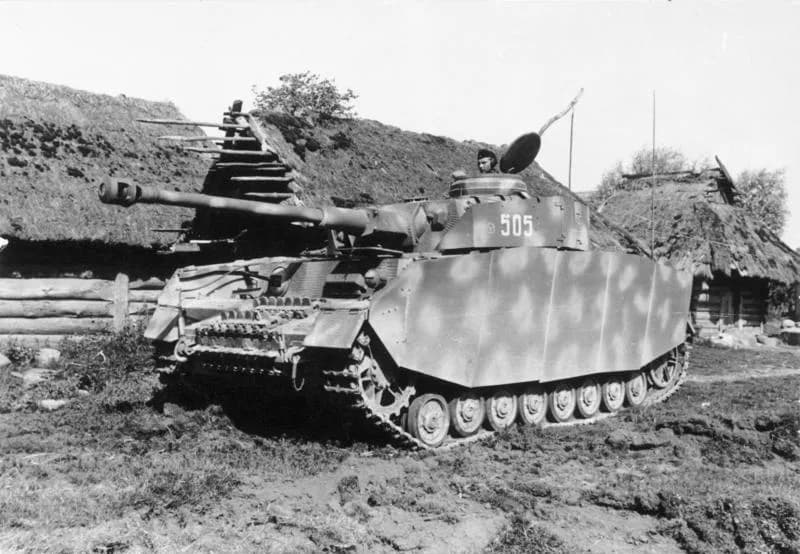
Panzer IV
The Panzerkampfwagen IV was the most produced German medium tank of World War II, with over 8,500 built. Originally designed as an infantry support tank, it evolved into the backbone of the Panzer divisions on every front. It is the only German tank in production from 1939 to 1945.
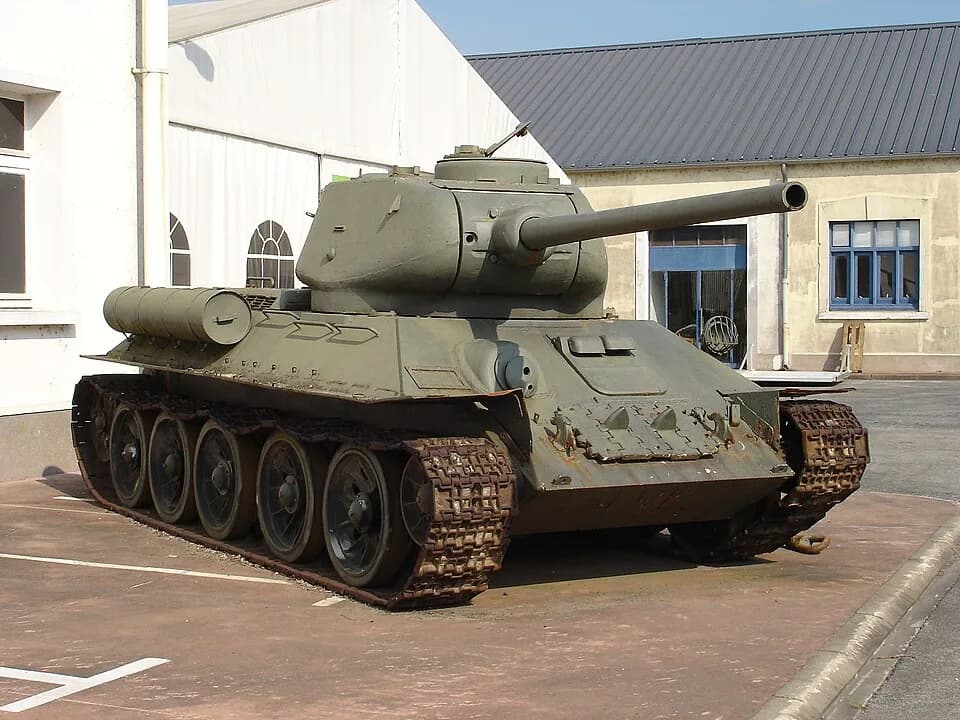
T-34
The T-34 is widely considered the best medium tank of World War II and one of the most influential in military history. Produced in over 84,000 units, its combination of sloped armor, mobility and firepower shocked the Germans in 1941 and shifted the balance of power on the Eastern Front.
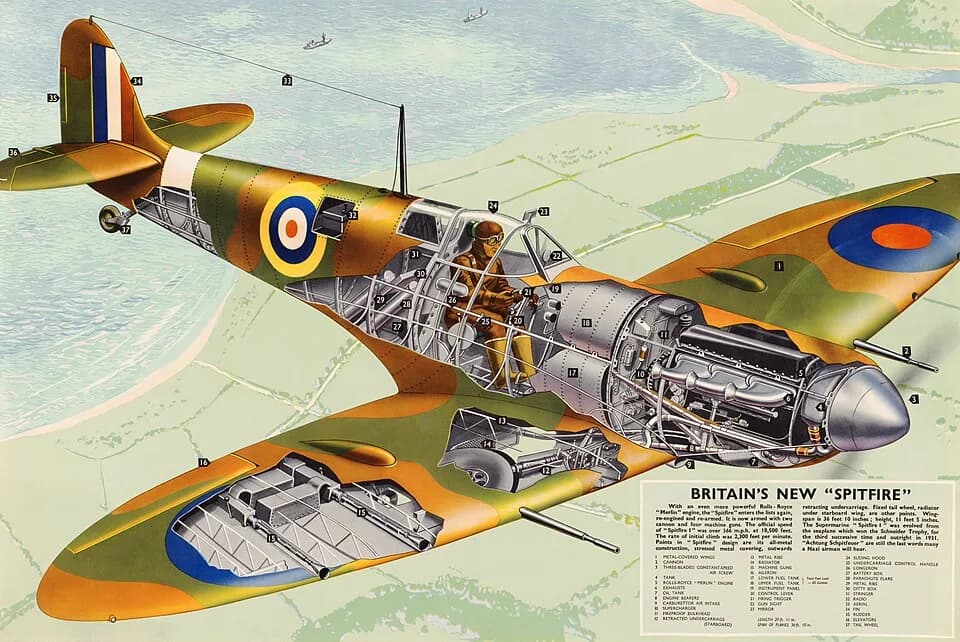
Supermarine Spitfire
The Supermarine Spitfire is the iconic fighter aircraft of the Royal Air Force and a symbol of British resistance during the Battle of Britain. Designed by R.J. Mitchell, its combination of elliptical wings, Rolls-Royce Merlin engine and exceptional agility made it one of the finest fighters of the war.
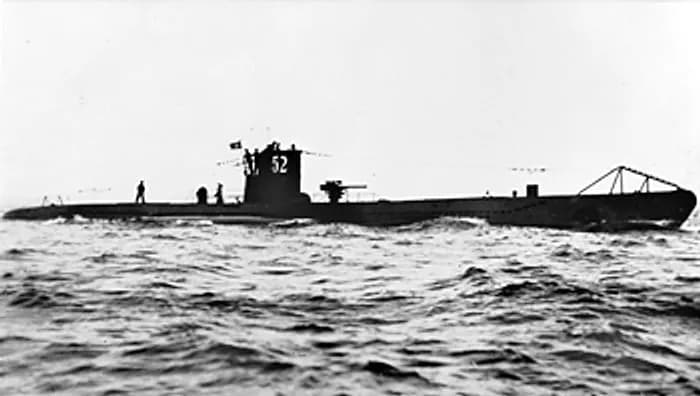
U-Boat Type VII
The Type VII U-boat is the most produced submarine in history with 703 built. The backbone of the Kriegsmarine during the Battle of the Atlantic, these vessels nearly severed the vital supply lines between America and Britain, threatening Great Britain's very survival.
