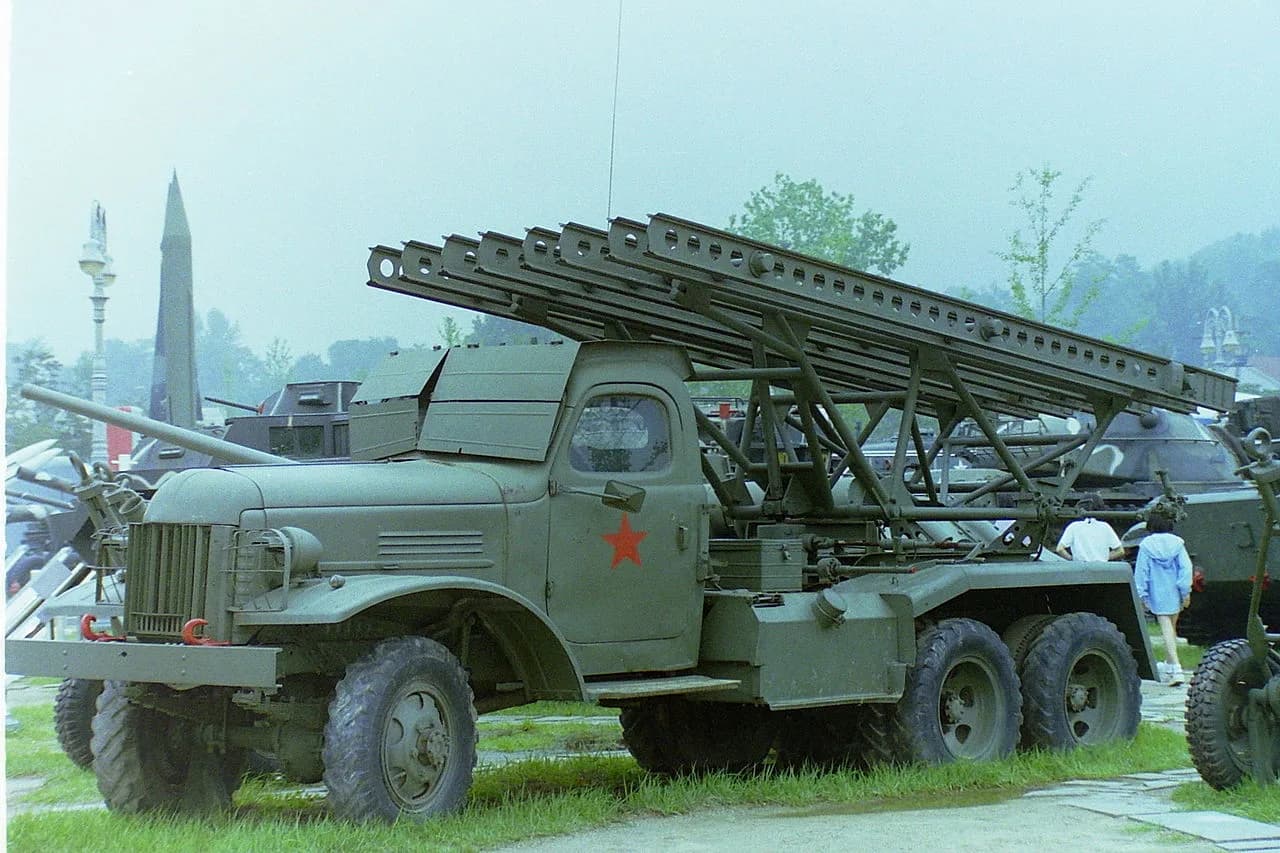
The BM-13 Katyusha multiple rocket launcher is one of the most devastating weapons of World War II. Nicknamed 'Stalin's Organ' by the Germans for the terrifying sound of its salvos, it could saturate an area of 400,000 m² in under 10 seconds with over 10,000 units produced.
The development of the Soviet multiple rocket launcher dates back to Nikolai Tikhomirov's research on powder propellants at the Gas Dynamics Laboratory in the 1920s, with a first test firing in March 1928. In June 1938, the Jet Propulsion Research Institute (RNII) was authorized to develop multiple ground-based rocket launchers. Engineer I. Gvay's team in Chelyabinsk completed the BM-13 prototype in August 1939, using M-13 rockets of 132 mm originally designed for aircraft. Early designs mounted the rockets laterally on the truck's flanks, but this configuration proved unstable. V.N. Galkovskiy proposed a longitudinal rail mounting, leading to the definitive BM-13 design. Large-scale tests in late 1938 (233 rockets of various types) demonstrated satisfactory accuracy at 5,500 meters. The BM-13-16 (16 launch rails) was authorized for production in 1940, but the German invasion of June 1941 caught the USSR with only about forty launchers built. Production accelerated drastically: by 1943, the BM-13N was standardized on the American Studebaker US6 chassis supplied via Lend-Lease, and over 1,800 examples of this version were manufactured.
The standard M-13 rocket measures 80 cm long with a diameter of 132 mm and weighs 42 kg, including 4.9 kg of explosive. Maximum range reaches 8,500 meters. The BM-13-16, the most widespread configuration, carries 16 rockets on I-beam rails. A full salvo is fired in 7 to 10 seconds — an incredibly short time that concentrates massive firepower on the target before any possibility of counterfire or shelter. A battery of four launchers delivers 1.4 tons of explosives in a single salvo, covering an area of 400,000 m² — equivalent to the firepower of 72 conventional howitzers (18 batteries). The primary chassis was the Soviet ZiS-6 truck (6×6), then the American Studebaker US6 from 1943, offering excellent cross-country mobility. The Katyusha's major tactical advantage was its ability to deliver devastating fire then change position within minutes, before enemy artillery could perform counter-battery fire. Individual rocket accuracy was poor, but area saturation more than compensated for this deficiency.
The Katyusha's first combat use occurred on July 14, 1941, when Captain I. Flyorov's experimental battery opened fire on the Orsha railway junction and a German infantry formation at Rudnya, near Smolensk. The effect was immediate: German troops panicked and fled before the deluge of fire and the terrifying sound of the rockets. The success was such that Soviet high command ordered mass production. By mid-1942, Katyushas were deployed on all fronts. The Germans nicknamed the weapon 'Stalinorgel' (Stalin's Organ) because of the characteristic wailing of the rockets in flight. The psychological effect was considerable: the sound of Katyushas alone was sometimes enough to break enemy troop morale. Over 500 batteries were engaged on the Eastern Front. The largest concentrations of Katyushas were used during Operation Bagration (summer 1944), the East Prussian offensive, and the Battle of Berlin, where the heavy M-30 variants flattened blockhouses and urban fortifications. In total, 12 million rockets were manufactured during the war, and nearly 520 batteries were in service at war's end.
The Katyusha system came in several families. The BM-8 was the light version using 82 mm rockets, mounted on trucks (BM-8-36) or on turretless light tank chassis like the T-40 or T-60 (BM-8-24), developed in August 1941. The BM-13 was the standard version with 132 mm rockets: the original BM-13-16 carried 16 rockets on a ZiS-6 truck, while the BM-13N (1943) was standardized on the Studebaker US6 with over 1,800 units produced. A limited version on the STZ-5 artillery tractor was also manufactured. The BM-31-12 was the heavy version with 12 rockets of 300 mm, offering massive destructive power. The M-30, developed in 1942, used heavy rockets with bulbous warheads launched from ground-placed 'rama' frames rather than self-propelled vehicles. The experimental KV-1K concept attempted to mount launchers on a KV-1 heavy tank but was not series-produced. After the war, the system evolved into platforms on the ZIL-151 with improved mobility.
The Katyusha BM-13 was the first operational multiple launch rocket system (MLRS) in history and established the concept that dominates modern artillery. Its impact was manifold. Militarily, it demonstrated that a relatively simple and inexpensive weapon could deliver firepower superior to conventional artillery: a Katyusha launcher could be manufactured in light industrial workshops, without the heavy machinery needed to forge cannon barrels. This ease of production was crucial for the USSR, whose industry was partly destroyed by the German invasion. Tactically, the Katyusha revolutionized Soviet artillery doctrine by introducing the concept of 'saturation fire' — submerging an area under a deluge of explosives rather than targeting precise objectives. This approach became central to the great Soviet offensives of 1943–1945. The Katyusha became one of the most powerful symbols of Soviet victory and Russian military identity. Its legacy lives on in all modern MLRS systems, from the BM-21 Grad to the American M270 and HIMARS, which apply the same principles of mobile and massive fire that the Katyusha inaugurated in 1941.
In Hearts of Iron IV, the Katyusha BM-13 is represented as a Rocket Artillery battalion, available for the USSR from 1941 via the 'Rocket Artillery I' technology. Recommended division template: 9 infantry battalions + 3 conventional artillery + 1 rocket support battalion. It excels under the 'Hammer and Anvil' doctrine: rockets breach defensive lines while armor exploits the gap. The Soviet national bonus 'Guards Artillery' reduces the IC cost of rocket units by 10%. In competitive multiplayer, Katyusha spam is feared for saturating urban positions during summer offensives.
The Katyusha BM-13 first saw combat on July 14, 1941, when Captain Flyorov's experimental battery opened fire on the Orsha railway junction and a German infantry formation at Rudnya, near Smolensk. The psychological effect was immediate: German troops panicked before the deluge of fire and the terrifying sound of the 132mm M-13 rockets.
A battery of four BM-13-16 launchers delivered 1.4 tons of explosives in a single salvo, saturating an area of 400,000 m² in 7 to 10 seconds. This equalled the firepower of 72 conventional howitzers (18 batteries). In total, 12 million rockets were manufactured during the war and nearly 520 batteries were in service by 1945.
The Germans nicknamed the Katyusha BM-13 'Stalinorgel' (Stalin's Organ) because of the characteristic wailing sound of the rockets in flight. This sound, produced by 16 M-13 132mm rockets fired in rapid sequence, was so terrifying that the psychological effect alone sometimes broke troop morale. The BM-13 is thus one of the first examples of a weapon with deliberate psychological effect.
Information cross-checked against Wikipedia and reference historical works.
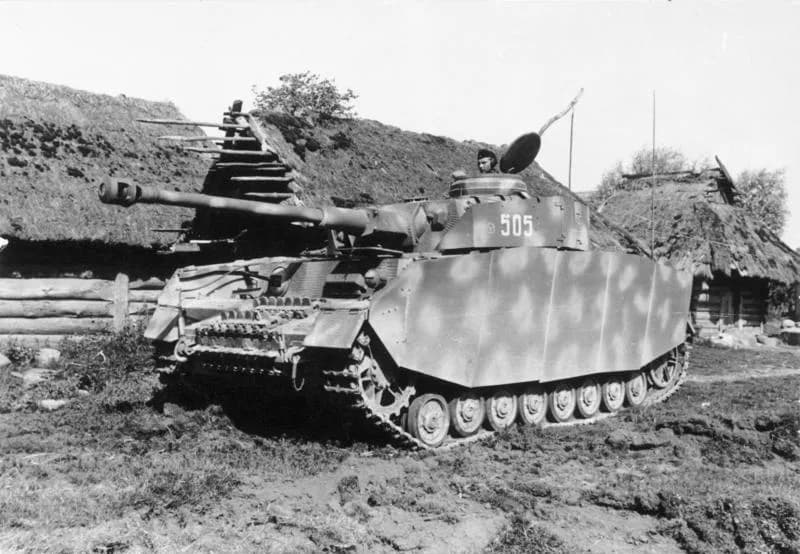
Panzer IV
The Panzerkampfwagen IV was the most produced German medium tank of World War II, with over 8,500 built. Originally designed as an infantry support tank, it evolved into the backbone of the Panzer divisions on every front. It is the only German tank in production from 1939 to 1945.
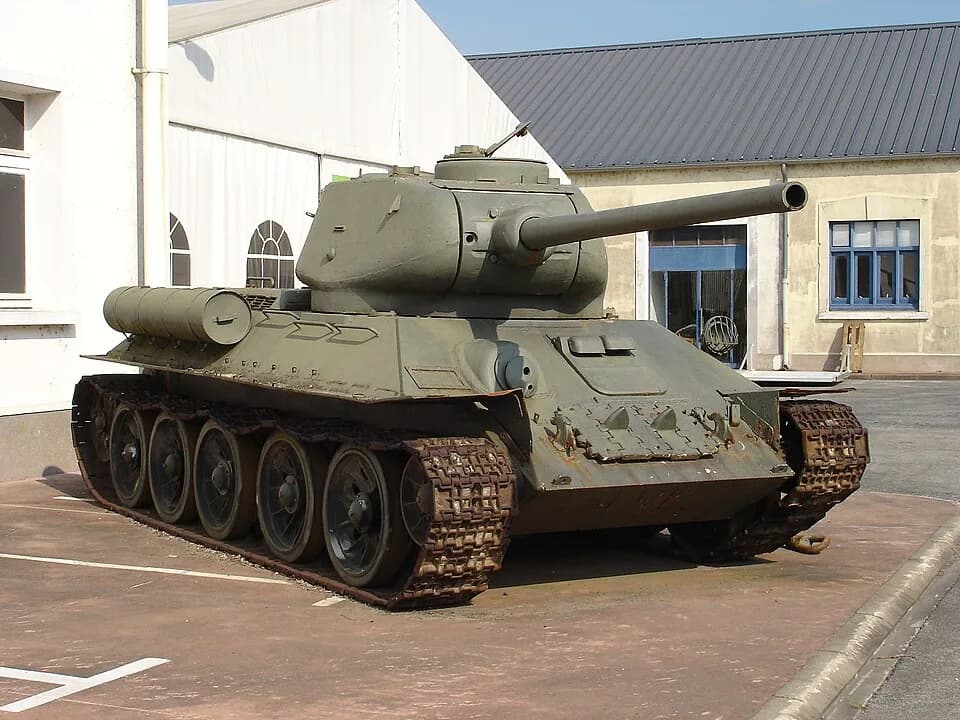
T-34
The T-34 is widely considered the best medium tank of World War II and one of the most influential in military history. Produced in over 84,000 units, its combination of sloped armor, mobility and firepower shocked the Germans in 1941 and shifted the balance of power on the Eastern Front.
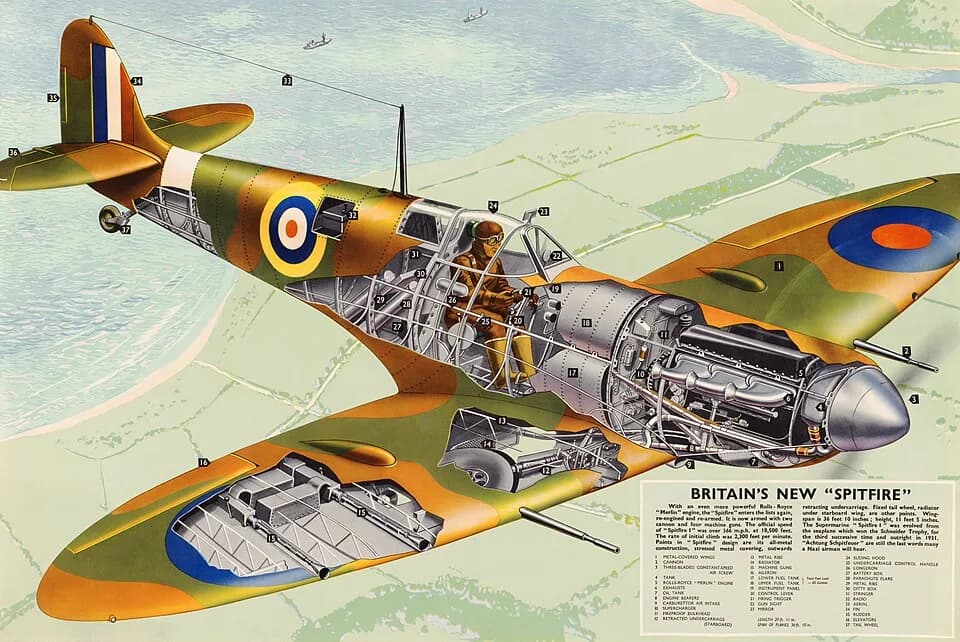
Supermarine Spitfire
The Supermarine Spitfire is the iconic fighter aircraft of the Royal Air Force and a symbol of British resistance during the Battle of Britain. Designed by R.J. Mitchell, its combination of elliptical wings, Rolls-Royce Merlin engine and exceptional agility made it one of the finest fighters of the war.
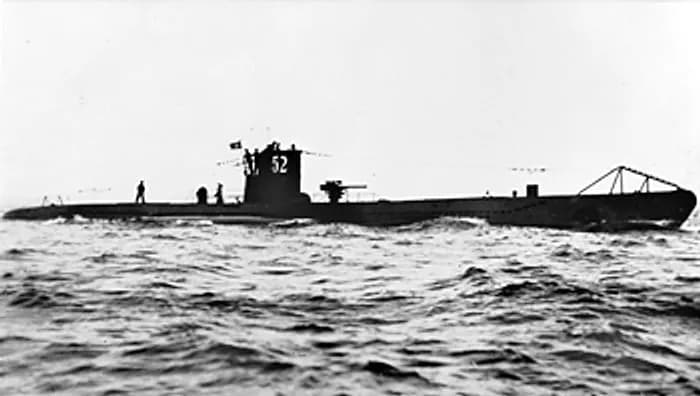
U-Boat Type VII
The Type VII U-boat is the most produced submarine in history with 703 built. The backbone of the Kriegsmarine during the Battle of the Atlantic, these vessels nearly severed the vital supply lines between America and Britain, threatening Great Britain's very survival.
