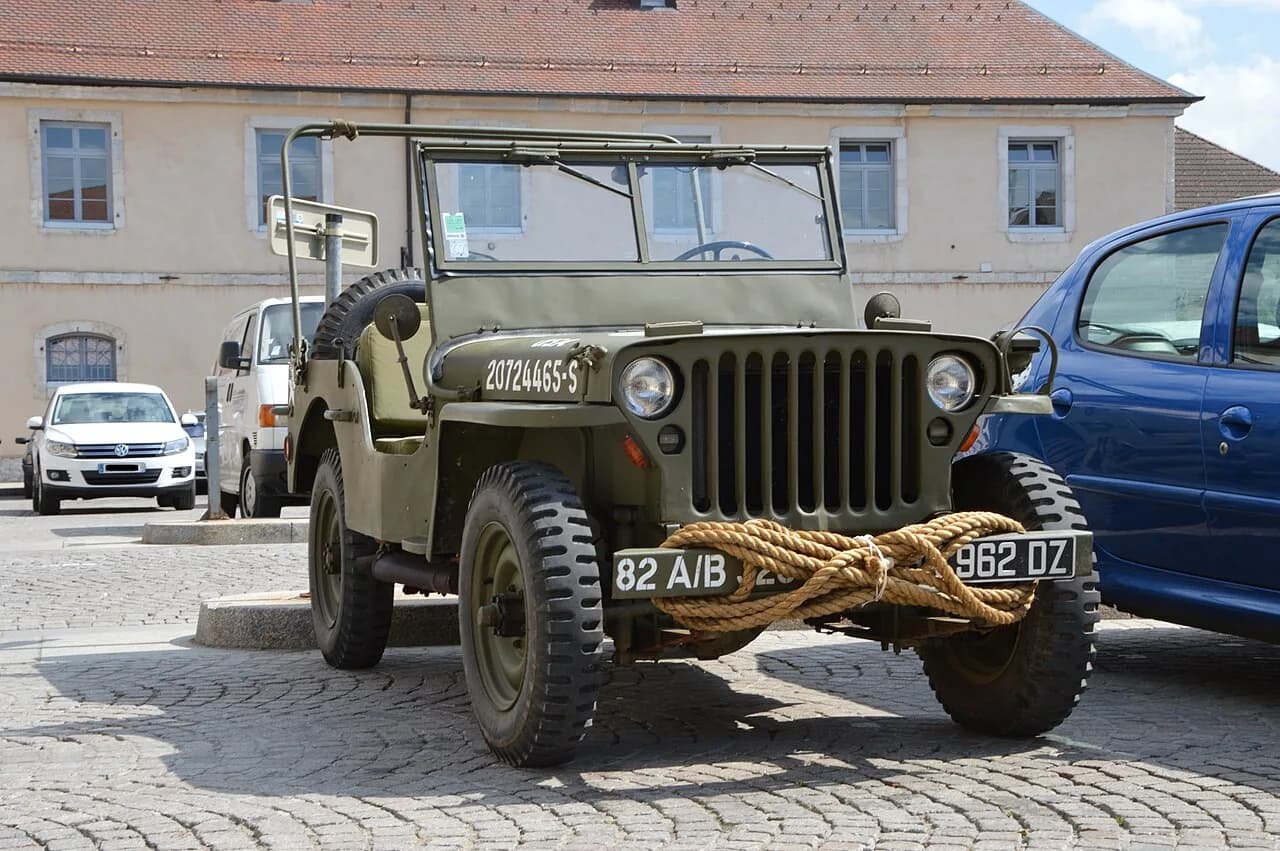
The Willys MB Jeep is the most iconic utility vehicle of World War II. Produced in over 640,000 units, this versatile little 4×4 served as transport, reconnaissance vehicle, ambulance and weapons platform on every front, becoming a symbol of Allied mobility.
In June 1940, the US Army solicited bids from 135 automobile manufacturers for a light 1/4-ton four-wheel-drive reconnaissance vehicle. Only three companies responded: Bantam, Willys-Overland, and Ford. Between January and July 1941, each firm produced prototypes: the Bantam BRC-40 (approximately 2,605 units), the Willys MA (approximately 1,555 units), and the Ford GP (approximately 4,458 units). Willys-Overland won the primary contract thanks to its L134 'Go-Devil' engine producing 60 horsepower — significantly superior to the competitors' 40-horsepower engines — as well as its lower cost, lower silhouette, and the preferences of test soldiers. The design evolved from the MA to the MB by incorporating the best features of all three prototypes, notably Ford's front end with the flat hood and recessed headlights. In early October 1941, as Willys could not meet demand alone, Ford received a government contract to produce over 30,000 units according to Willys' plans and patents, under the designation GPW (G for government, P for 1/4 ton, W for Willys design). Ford invested $4 million to retool its factories to manufacture the Go-Devil engine under license. The first GPW rolled off the line on January 2, 1942.
The Willys MB Jeep is powered by the L134 'Go-Devil' inline 4-cylinder 2.2-liter engine producing 60 horsepower and 142 Nm of torque. Maximum speed: 105 km/h. Range: 460 to 480 km. The permanent four-wheel-drive transmission with a two-speed transfer case (high and low) provides exceptional off-road mobility. The vehicle weighs 1,113 kg empty with a length of 335 cm, width of 157 cm, and wheelbase of 203 cm. Despite its small size, the Jeep can carry a driver, three passengers and their equipment, or be configured to mount a .50 caliber Browning M2 or .30 caliber M1919 machine gun. The 22 cm ground clearance and generous approach angles allow it to negotiate obstacles impressive for a vehicle of its size. Mechanical simplicity is a major asset: the Jeep can be repaired with basic tools by minimally trained mechanics, and parts are interchangeable between Willys MB and Ford GPW models.
The Willys MB Jeep served on absolutely every theater of operations in World War II. In Europe, it was omnipresent from the Normandy landings (where its compactness allowed it to be loaded into transport gliders) to the German surrender. In North Africa, it served as a desert patrol vehicle. In the Pacific, it accompanied the Marines from island to island. On the Eastern Front, approximately 50,000 Jeeps were supplied to the USSR via Lend-Lease, where they played a critical role in maintaining Soviet command structures. The Jeep's roles were virtually unlimited: personnel transport, cargo carrier, reconnaissance vehicle, weapons platform (machine guns, rocket launchers), patrol vehicle, stretcher-bearing ambulance, command vehicle for officers, light artillery tractor, artillery observer, and even electrical power source for field communications. The Jeep represented approximately 25% of all American motorized support vehicles produced during the war.
The two main production variants are the Willys MB (361,339 units) and the Ford GPW (277,896 units), essentially identical except for manufacturing markings. The first MBs (25,808 units, November 1941 to March 1942) had a distinctive welded flat-bar grille, later replaced by the stamped slotted grille designed by Ford — lighter, cheaper, and easier to produce. Parts are largely interchangeable between MB and GPW. Specialized kits were developed to adapt the Jeep to different environments: a winter kit for extreme cold operations, a desert kit for heat and sand, and a deep-water fording kit enabling crossing of one-meter-deep fords. In the field, units modified their Jeeps creatively: mounting improvised armor, installing miniature bulldozer blades, adding Bazooka rocket launcher mounts. The amphibious Ford GPA ('Seep') attempted to add flotation capability, but with limited success — most were sent to the USSR.
General George C. Marshall, US Army Chief of Staff, called the Jeep 'America's greatest contribution to modern warfare.' Eisenhower ranked it among the weapons that won the war, alongside the C-47 transport and the amphibious DUKW. With 640,000 units built to a standardized design, the Jeep was the first four-wheel-drive vehicle mass-produced in six-figure numbers. In 1991, the American Society of Mechanical Engineers designated it an 'International Historic Mechanical Engineering Landmark.' The postwar impact was equally transformative: in 1945, the CJ-2A (Civilian Jeep) was introduced as the first civilian model, retaining the MB's basic engineering with practical additions (tailgate, side-mounted spare tire, improved comfort). By the late 1950s, nearly one million civilian Jeeps had been produced. The Jeep directly inspired the Toyota Land Cruiser, the Land Rover Series I, and countless military and civilian 4×4s worldwide, essentially creating the recreational and utility off-road vehicle category that would become the SUV market. Jeep's 'Go Anywhere. Do Anything.' philosophy traces its origins to this little 1941 MB.
In total, over 640,000 Jeeps were produced: 361,339 Willys MB units and 277,896 Ford GPW units, essentially identical. Willys-Overland won the initial contract thanks to its L134 'Go-Devil' engine producing 60 horsepower, superior to competitors' 40 horsepower. Ford then received a government contract to produce the same vehicles according to Willys' plans. Parts were largely interchangeable between the two models.
The Willys MB Jeep weighed 1,113 kg empty with a maximum speed of 105 km/h and a range of 460 to 480 km. Its permanent four-wheel drive with a two-speed transfer case and 22 cm ground clearance gave it exceptional off-road mobility. Its mechanical simplicity allowed quick repairs with basic tools by minimally trained mechanics, a major advantage in combat conditions.
The Willys MB Jeep was the first four-wheel-drive vehicle mass-produced on a large scale. In 1945, the CJ-2A (Civilian Jeep) was introduced as the first civilian model. By the late 1950s, nearly one million civilian Jeeps had been produced. The Jeep directly inspired the Toyota Land Cruiser, the Land Rover Series I, and countless military and civilian 4×4s, creating the recreational off-road vehicle category that would become the global SUV market.
Information cross-checked against Wikipedia and reference historical works.
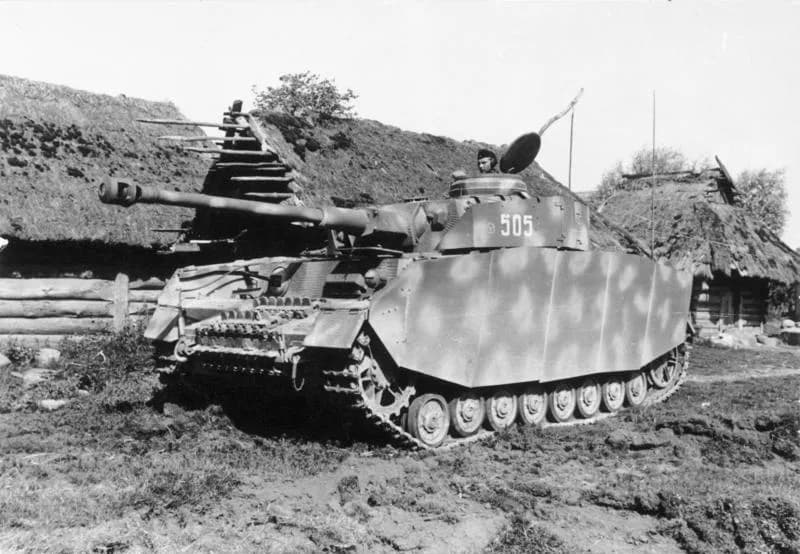
Panzer IV
The Panzerkampfwagen IV was the most produced German medium tank of World War II, with over 8,500 built. Originally designed as an infantry support tank, it evolved into the backbone of the Panzer divisions on every front. It is the only German tank in production from 1939 to 1945.
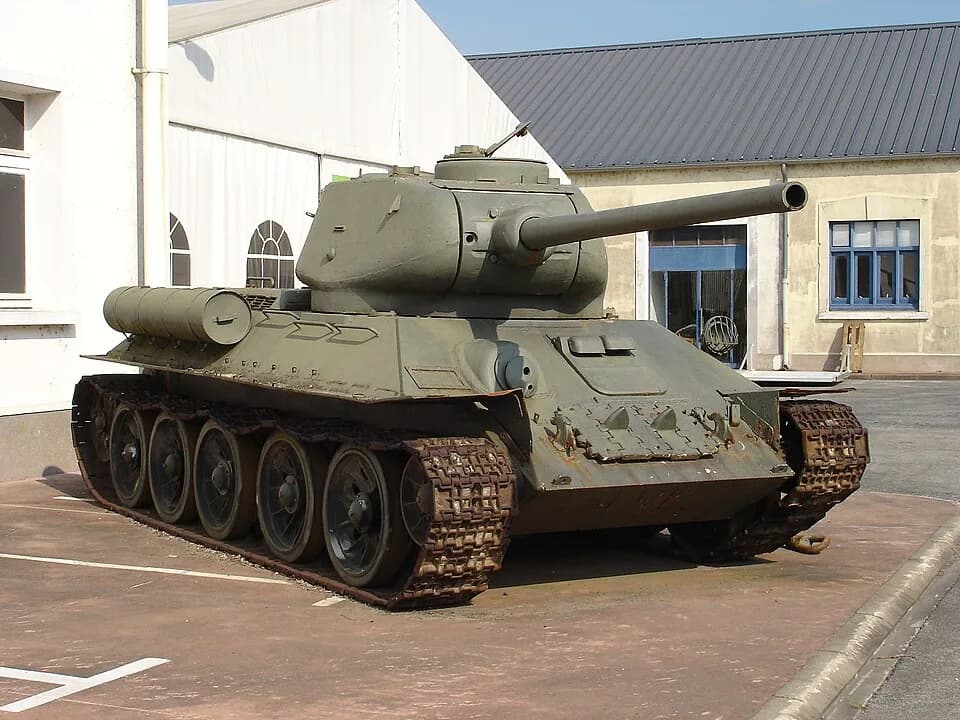
T-34
The T-34 is widely considered the best medium tank of World War II and one of the most influential in military history. Produced in over 84,000 units, its combination of sloped armor, mobility and firepower shocked the Germans in 1941 and shifted the balance of power on the Eastern Front.
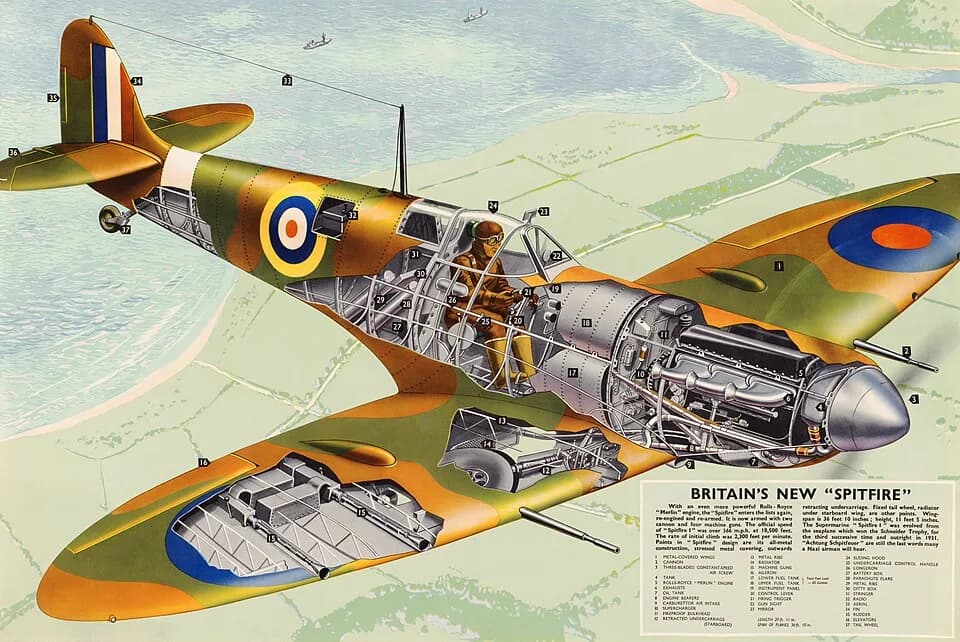
Supermarine Spitfire
The Supermarine Spitfire is the iconic fighter aircraft of the Royal Air Force and a symbol of British resistance during the Battle of Britain. Designed by R.J. Mitchell, its combination of elliptical wings, Rolls-Royce Merlin engine and exceptional agility made it one of the finest fighters of the war.
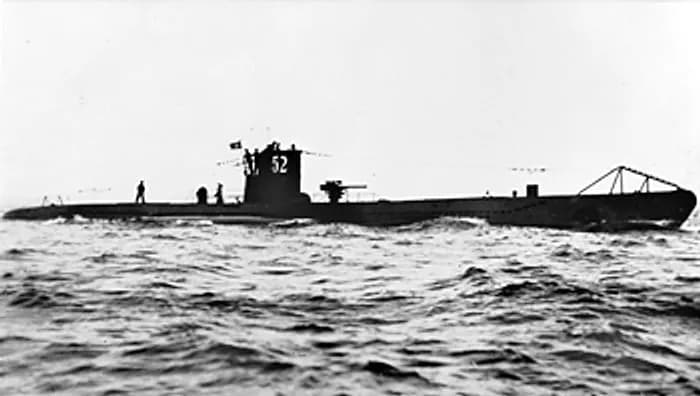
U-Boat Type VII
The Type VII U-boat is the most produced submarine in history with 703 built. The backbone of the Kriegsmarine during the Battle of the Atlantic, these vessels nearly severed the vital supply lines between America and Britain, threatening Great Britain's very survival.
