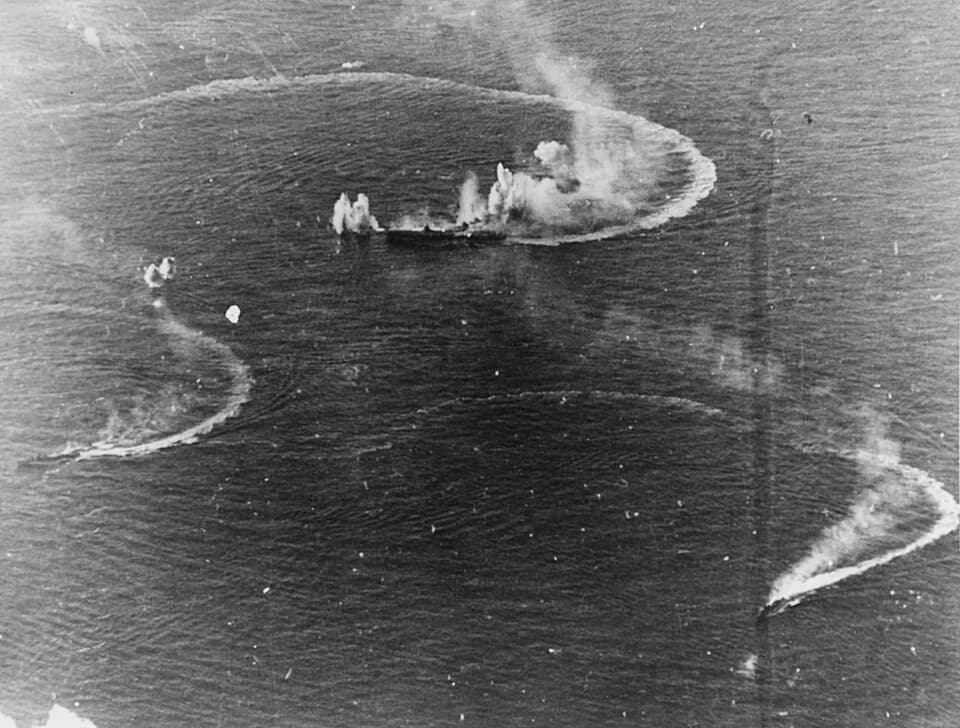
The Empire of Japan, led by Emperor Hirohito and the militarists in power, waged a war of expansion across Asia and the Pacific from 1937 to 1945, before surrendering after the atomic bombings of Hiroshima and Nagasaki in August 1945. Its Co-Prosperity Sphere project presented that conquest as a liberation of Asia from Western colonial powers.
The Empire of Japan engaged in World War II through successive stages, well before the conflict became truly global. Japanese aggression in Asia began as early as 1931 with the invasion of Manchuria, a Chinese territory transformed into a puppet state under the name Manchukuo. This act of aggression, which violated the principles of the League of Nations, marked the beginning of Japanese military expansionism that would plunge Asia and the Pacific into a devastating war. Japan left the League of Nations in 1933, signaling its rejection of the established international order. The Second Sino-Japanese War erupted on a large scale in July 1937, after the Marco Polo Bridge Incident near Beijing. The Imperial Japanese Army invaded eastern China with a brutality that shocked the entire world. The Nanjing Massacre in December 1937, during which tens of thousands, possibly hundreds of thousands of Chinese civilians and prisoners of war were massacred, raped, and tortured, constituted one of the most atrocious war crimes of the conflict. The war in China quickly bogged down into an attritional conflict that Japan could never decisively resolve, absorbing considerable military resources without achieving the hoped-for victory. The signing of the Tripartite Pact with Nazi Germany and Fascist Italy in September 1940 formalized the Axis alliance and anchored Japan in the revisionist powers' camp. The collapse of France and the Netherlands in Europe opened prospects for expansion in Southeast Asia, where French Indochina and the Dutch East Indies abounded in natural resources, notably the oil, rubber, and tin that Japan desperately needed. The occupation of French Indochina in September 1940, with the Vichy regime's assent, provoked an American oil embargo that accelerated the march toward war with the United States. The surprise attack on Pearl Harbor on December 7, 1941, launched a coordinated offensive of staggering scope. Simultaneously, Japanese forces attacked the Philippines, Malaya, Hong Kong, Burma, the Dutch East Indies, and dozens of other objectives across Asia and the Pacific. In just six months, Japan conquered a colonial empire of considerable extent, stretching from India's borders to the central Pacific islands. The fall of Singapore in February 1942, with the surrender of over 80,000 British and Commonwealth soldiers, was described by Churchill as the worst disaster in British military history. The turning point of the Pacific war came at the Battle of Midway in June 1942, when the American navy destroyed four Japanese aircraft carriers, inflicting on Japan an irreplaceable loss of ships and experienced pilots. From that date, Japan was progressively put on the defensive. The Guadalcanal campaign, from August 1942 to February 1943, confirmed the trend reversal. American island-hopping offensives in the central Pacific and the reconquest of the Philippines in 1944-1945 inexorably brought Allied forces closer to the Japanese homeland. The war's final years were marked by increasingly desperate and fanatical Japanese resistance. Kamikaze attacks, launched on a large scale from October 1944, sent thousands of young Japanese pilots to deliberately crash into Allied ships. The battles of Iwo Jima and Okinawa in 1945 caused appalling casualties on both sides and foreshadowed the astronomical cost that an invasion of the Japanese mainland would have entailed. American firebombing of Japanese cities, notably the devastating Tokyo raid of March 10, 1945, which killed approximately 100,000 people, failed to break the militarist leaders' will. It was the atomic bombings of Hiroshima on August 6 and Nagasaki on August 9, 1945, combined with the Soviet declaration of war on August 8, that precipitated Emperor Hirohito's decision to accept unconditional surrender, announced on August 15, 1945.
The Imperial Japanese armed forces constituted a formidable military machine that dominated Asia and the western Pacific during the war's early years. The Imperial Japanese Army and Navy, though rivals, together formed a fighting force of a determination and ferocity rarely matched in military history. The Bushido code, the traditional warrior ethic of the samurai, had been reinterpreted and intensified by Japanese militarism to create a military culture that valued supreme sacrifice and considered surrender the ultimate dishonor. The Imperial Japanese Army, the Rikugun, numbered approximately 5.5 million men at its peak. Organized into area armies, armies, divisions, and regiments, it was characterized by enduring, disciplined infantry capable of fighting under the most difficult conditions. Japanese soldiers were renowned for their frugality, physical endurance, and ability to operate with minimal logistical support. In the jungles of Burma, Malaya, and the Philippines, Japanese infantry demonstrated jungle-fighting qualities that surprised and often surpassed Western forces. The Type 97 Chi-Ha medium tank and other Japanese armor, though light and under-armed by Western standards, proved effective in Southeast Asian campaigns where terrain limited the use of heavy vehicles. The Imperial Japanese Navy, the Kaigun, was the world's third-largest navy at the war's start and possessed some of the most powerful ships ever built. The Yamato-class battleships, with their 460mm guns, were the largest and most powerful warships in history. The Japanese carrier air force was superbly trained and equipped with first-rate aircraft, notably the Mitsubishi A6M Zero fighter, which dominated Pacific skies early in the war thanks to its exceptional maneuverability and long range. Japanese pilots, trained to extremely rigorous standards of excellence, were individually among the world's best in 1941. However, Japanese armed forces suffered from structural weaknesses that became fatal as the war lengthened. The rivalry between army and navy, which functioned as virtually independent organizations, prevented effective strategic coordination. Japanese industrial doctrine never matched American mass production, and the loss of experienced pilots and sailors in the great naval battles of 1942 could not be compensated by a training program that was too slow and too rigid. The Japanese logistical system, already insufficient, was progressively strangled by American submarine warfare that sank an increasing proportion of the Japanese merchant marine. Kamikaze tactics, adopted from the Battle of Leyte Gulf in October 1944, represented the ultimate expression of the sacrifice culture that permeated Japanese armed forces. Thousands of young pilots, often insufficiently trained, were sent to their deaths in suicide attacks against the Allied fleet. While these attacks caused significant damage, they could not reverse the war's course and only accelerated the exhaustion of Japanese air resources. Kaiten, human torpedoes, and Shinyo, explosive boats piloted by suicide volunteers, also illustrated this logic of desperate sacrifice. The treatment of prisoners of war by Japanese forces constitutes one of the darkest aspects of Japan's World War II military history. The Bataan Death March, during which thousands of American and Filipino prisoners died of exhaustion, disease, and brutality; the Burma-Siam Death Railway built with forced prisoner-of-war labor; and the appalling conditions in Japanese prisoner camps testified to systematic disregard for the Geneva Conventions. The mortality rate among Western prisoners of war held by Japan reached approximately 27%, compared to approximately 4% for those held by Germany.
The Empire of Japan's economy during World War II was characterized by a fundamental paradox: remarkable industrial power for an Asian country of the era, but vastly insufficient to sustain a prolonged conflict against the United States, the world's greatest industrial power. This fundamental economic imbalance, which Japanese leaders had underestimated or chosen to ignore, largely determined the conflict's outcome in the Pacific. Before the war, Japan had achieved impressive industrialization since the Meiji Restoration of 1868. In fewer than seventy years, the country had transformed from an agrarian feudal society into a modern industrial power capable of building battleships, aircraft carriers, and world-class combat aircraft. However, this industrialization remained fragile due to Japan's near-total dependence on imports of essential raw materials. Japan produced only 7% of the oil it needed and also depended on imports for iron, rubber, aluminum, and many other strategic raw materials. This vulnerability was precisely the factor that drove Japan to embark on the conquest of Southeast Asia. The oil embargo imposed by the United States in July 1941, in response to Japan's occupation of French Indochina, placed Japan before an existential choice. With oil reserves estimated at eighteen months of normal consumption, the country had either to accept renouncing its expansionist ambitions and submit to American demands, or seize by force the oil fields of the Dutch East Indies. The choice of war, despite the disproportion of economic forces, rested on the hope that a series of rapid and decisive victories would force the Americans to negotiate a compromise peace. Japanese war industrial production peaked in 1944, with the manufacture of approximately 28,000 aircraft, a remarkable figure but far below the approximately 100,000 aircraft produced by the United States that same year. Japanese shipbuilding, though technically excellent, could not compensate for losses inflicted by American submarines and aviation. Japan built 15 aircraft carriers during the war, compared to 141 for the United States. Production of tanks, artillery, and motorized vehicles was also vastly insufficient relative to needs, with the Japanese army remaining heavily dependent on foot infantry and animal transport. Japan's total economic mobilization imposed considerable sacrifices on the civilian population. Rationing, in place since the war in China began in 1937, became increasingly severe as the American submarine war strangled supplies. The daily food ration fell to near-starvation levels in the war's final months. Forced labor of occupied territory populations, notably Koreans and Chinese employed in Japanese mines and factories, constituted a pillar of the war economy, under conditions of brutality that caused the deaths of hundreds of thousands of workers. The zaibatsu system, the great industrial and financial conglomerates such as Mitsubishi, Mitsui, Sumitomo, and Yasuda, dominated Japanese war production. These conglomerates, closely linked to military and political power, controlled most of heavy industry, shipbuilding, and arms production. Their collaboration with the militarist regime was total, and they profited extensively from plundering occupied territories and exploiting forced labor. After the war, American occupation authorities attempted to dismantle the zaibatsu, but many reconstituted themselves in new forms and became the keiretsu that dominated the postwar Japanese economic miracle.
The Empire of Japan's political system during World War II was a constitutional monarchy in theory, but in practice functioned as a military dictatorship in which army and navy factions exercised preponderant power over national politics. Emperor Hirohito, though theoretically invested with divine and absolute authority under the Meiji Constitution, reigned more than he governed, while actual decisions were made by military leaders and successive prime ministers who navigated between rival power factions. The rise of Japanese militarism in the 1930s had progressively eroded the parliamentary government structures established during the Taisho era. Political assassinations, notably that of Prime Minister Inukai Tsuyoshi in 1932 by young naval officers, had terrorized the civilian political class and paved the way for military domination. The concept of kokutai, the national essence founded on the emperor's divine lineage, became the regime's ideological pillar, justifying imperial expansion and absolute individual submission to the state. The Kempeitai, the secret military police, monitored and suppressed all dissent with brutality comparable to the Nazi Gestapo. Prime Minister Tojo Hideki, who led the government from October 1941 to July 1944, embodied Japanese militarist power during the war's critical phase. A former head of the Kwantung military police in Manchuria, Tojo combined the functions of prime minister, war minister, and army chief of staff, concentrating considerable power. However, his authority was not absolute, and he constantly had to contend with rival factions in the navy, supreme command, and imperial court. The fall of Saipan in July 1944, which put the Japanese homeland within range of American bombers, caused Tojo's fall and his replacement by more moderate governments that secretly began considering the possibility of a negotiated peace. Emperor Hirohito's role in conducting the war remains one of the most debated subjects in World War II historiography. The official postwar position, supported by American occupation authorities who wished to preserve the monarchy as a stability factor, presented the emperor as a passive constitutional monarch manipulated by militarists. However, more recent historical research suggests that Hirohito played a more active role than previously thought, approving major strategic decisions and being regularly informed of military operations' progress. His decisive intervention to accept surrender in August 1945, against the wishes of part of the military, was nevertheless the most significant moment of his reign. Imperial Japanese propaganda created a war narrative founded on Japan's sacred mission to liberate Asia from Western domination and establish the Greater East Asia Co-Prosperity Sphere. This concept, which promised colonized Asian peoples freedom and prosperity under Japan's benevolent leadership, actually masked brutal colonial exploitation. Japanese media, entirely state-controlled, reported only victories and systematically concealed defeats, keeping the population ignorant of the actual situation until the war's final months. The decision to accept surrender in August 1945 provoked a major political crisis within the Japanese government. The Supreme War Council was divided between peace advocates, led by Foreign Minister Togo Shigenori, and militarists who advocated resistance to the end, hoping to inflict such losses on invaders that they would obtain more favorable peace terms. Emperor Hirohito's personal intervention, during two extraordinary imperial conferences, settled the debate in favor of accepting the Potsdam Declaration. An attempted coup by fanatical officers, who tried to seize the recording of the emperor's surrender speech, narrowly failed on the night of August 14-15, 1945.
The Empire of Japan's balance sheet in World War II is that of a national catastrophe of unprecedented magnitude that radically transformed the country and all of East Asia. The war initiated by Japan to establish an Asian empire resulted in the Empire's own destruction, the foreign occupation of the country for the first time in its history, and a fundamental political, social, and economic transformation imposed by the victors. Japanese human losses were considerable. Approximately 2.1 million Japanese military personnel perished during the conflict, plus between 500,000 and 800,000 civilians, primarily victims of the firebombing and atomic bombing of Japanese cities. Bombing of Tokyo, Osaka, Nagoya, Kobe, and dozens of other cities destroyed approximately 40% of Japan's total urban area. The atomic bombings of Hiroshima and Nagasaki killed between 129,000 and 226,000 people, many of whom died from radiation effects in subsequent months and years. Beyond Japanese figures, victims of Japanese aggression were incomparably more numerous: China lost between 15 and 20 million people, and other occupied Asian nations suffered losses numbering in the millions. Japan's material destruction was immense. Allied bombing destroyed approximately 2.5 million dwellings, leaving millions of Japanese homeless. Industrial infrastructure was largely annihilated, the merchant fleet almost totally sunk, and the transport network severely damaged. By war's end, Japanese industrial production had fallen to approximately 10% of its prewar level. Famine threatened, and only food aid provided by American occupation forces prevented a humanitarian catastrophe in the immediate postwar period. The American occupation of Japan, under General Douglas MacArthur's command as Supreme Commander of the Allied Powers, lasted from 1945 to 1952 and fundamentally transformed the country. A new constitution, largely drafted by Americans and promulgated in 1947, renounced the right of war, reduced the emperor to a state symbol without political power, and established a democratic parliamentary regime with guaranteed fundamental rights, including women's suffrage. Armed forces were dissolved, war criminals tried by the International Military Tribunal for the Far East, zaibatsu theoretically dismantled, and a radical land reform redistributed land to peasants. The Tokyo Tribunal, which sat from 1946 to 1948, tried 25 principal defendants for war crimes, crimes against peace, and crimes against humanity. Seven defendants were sentenced to death and hanged, including General Tojo. However, the American decision to exempt Emperor Hirohito from all prosecution, motivated by political considerations of country stabilization, remained controversial. Similarly, Unit 731, which had conducted atrocious biological and chemical experiments on prisoners of war and Chinese civilians, was largely spared in exchange for sharing its research with the Americans. Paradoxically, Japan's total defeat laid the foundations for its spectacular rebirth. Freed from the burden of militarism and imperialism, benefiting from American military protection and substantial economic aid, Japan focused on reconstruction and economic development. The Japanese economic miracle of the 1950s through 1980s transformed the country into the world's second economic power, demonstrating that the path to prosperity lay through trade and industry rather than military conquest. Article 9 of the Japanese constitution, which renounces war, became a symbol of postwar Japanese pacifism, though its interpretation has been the subject of recurring political debates to this day.
Emperor Hirohito announced the surrender on August 15, 1945, after the atomic bombings of Hiroshima (August 6) and Nagasaki (August 9), and the Soviet declaration of war on August 8. The official ceremony took place on September 2, 1945, aboard the USS Missouri in Tokyo Bay. An attempted coup by fanatical officers wanting to prevent broadcast of the surrender speech narrowly failed on the night of August 14-15.
Japan produced only 7% of the oil it needed and depended on imports for iron, rubber, and aluminum. In 1944, its aircraft production reached 28,000 units — remarkable, but well below the 100,000 American aircraft that same year. Japan built 15 aircraft carriers during the war compared to 141 for the United States. American submarine warfare gradually strangled the Japanese merchant marine, making defeat inevitable.
Bushido, the warrior ethic of the samurai, had been reinterpreted by Japanese militarism to valorize absolute sacrifice and consider surrender the supreme dishonor. This culture explains the kamikaze attacks launched on a large scale from October 1944, the battles of Iwo Jima and Okinawa where defenders chose mass death, and the 27% mortality rate among Allied prisoners in Japanese captivity, compared to 4% for those held by Germany.
Information cross-checked against Wikipedia and reference historical works.
Nazi Germany
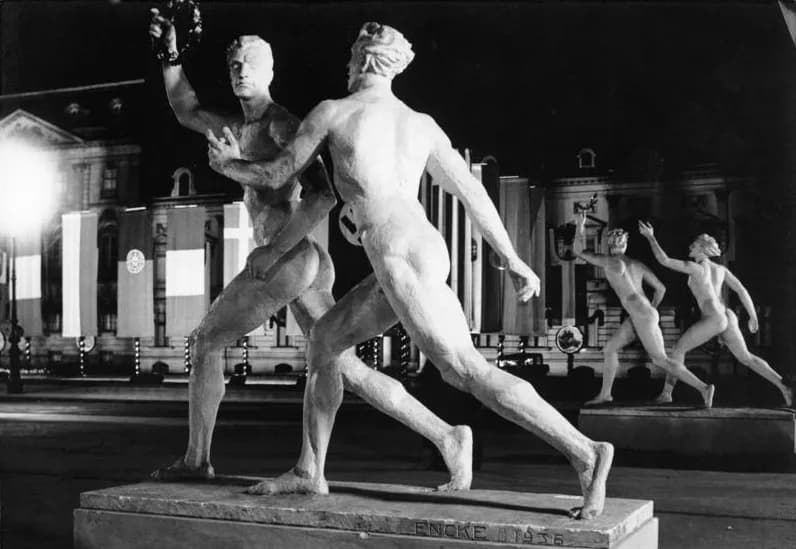
The Third Reich, led by Adolf Hitler from 1933 to 1945, plunged the world into World War II and perpetrated the Holocaust, causing tens of millions of deaths before its unconditional surrender in May 1945. Born of Hitler's appointment as chancellor on 30 January 1933, the regime dismantled the Weimar Republic within months and turned Germany into a one-party state.
Soviet Union
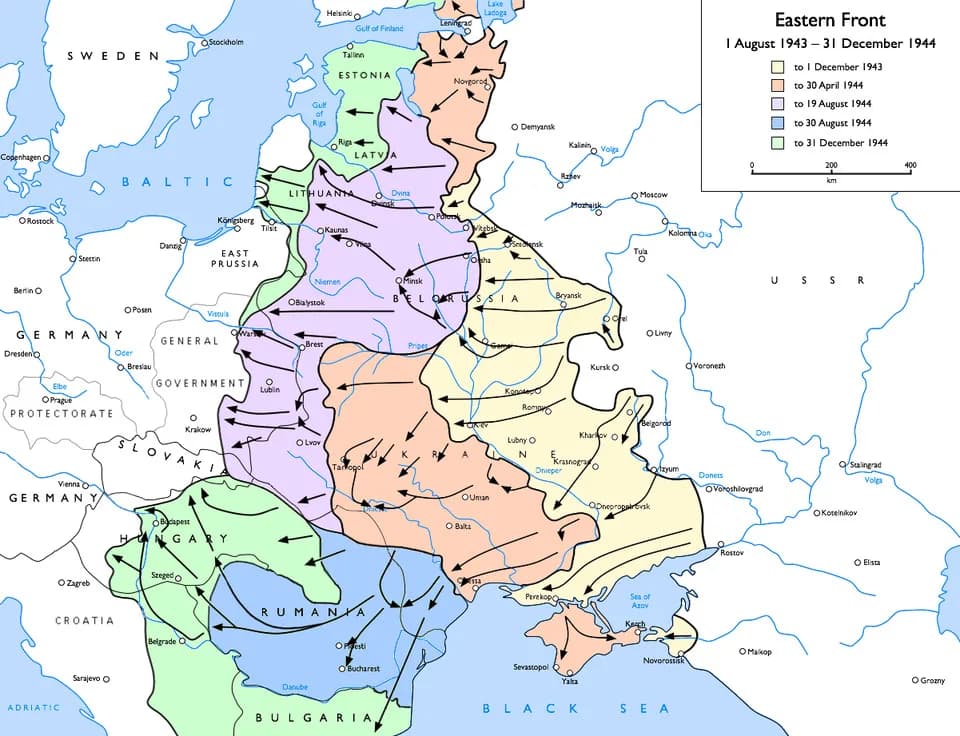
The Union of Soviet Socialist Republics, led by Joseph Stalin during World War II, played a decisive role in the defeat of Nazi Germany at the cost of 27 million dead, the heaviest losses of the entire conflict. Its factories were moved beyond the Urals in 1941 to keep producing.
United States
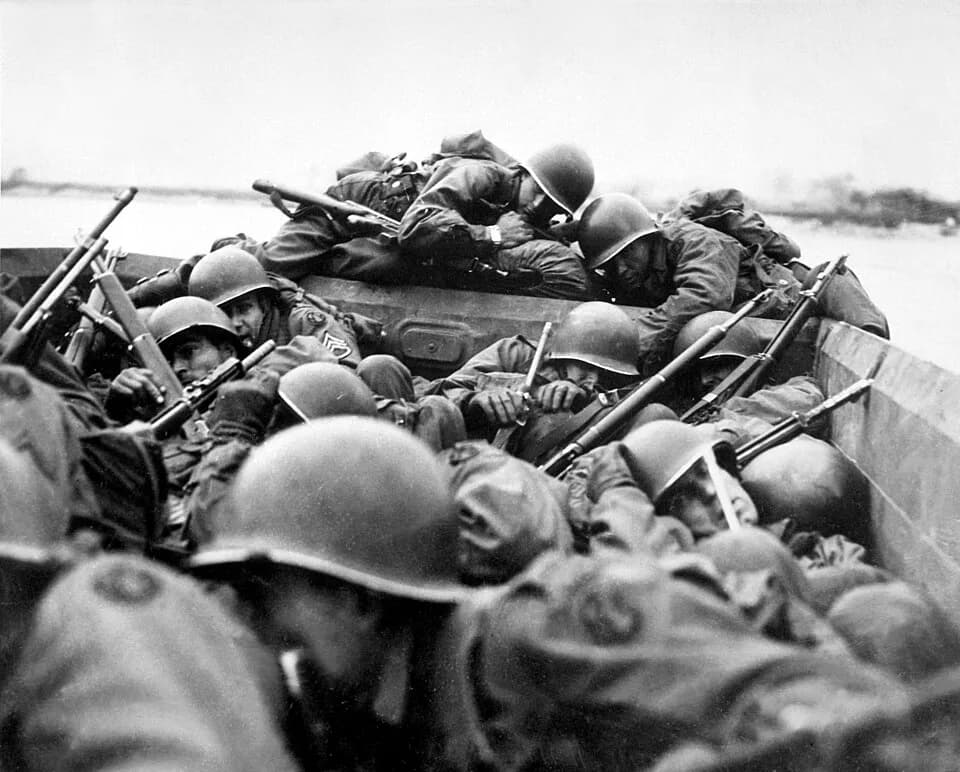
The United States, drawn into the war after the attack on Pearl Harbor on 7 December 1941, became the arsenal of democracy and the decisive industrial and military power that helped the Allies to victory on both theatres of operations. Its war production alone exceeded that of all the Axis powers combined.
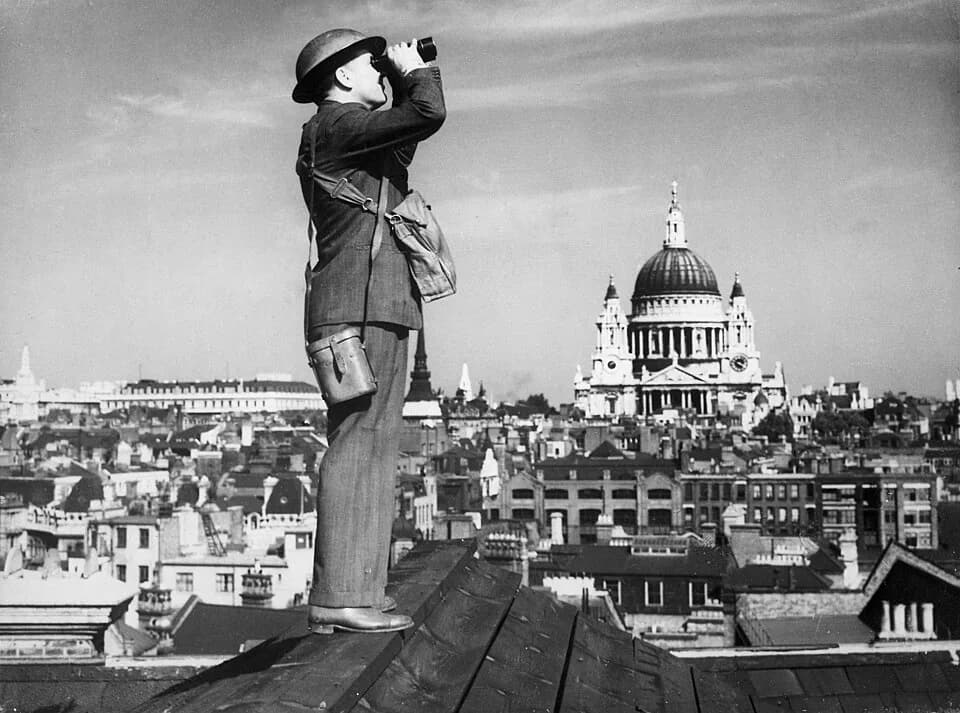
United Kingdom
The United Kingdom of Great Britain and Northern Ireland, led by Winston Churchill from May 1940, was the only major European power to fight Nazi Germany without interruption from September 1939 to May 1945. For a year after the fall of France, it stood alone against the Axis in Europe.
