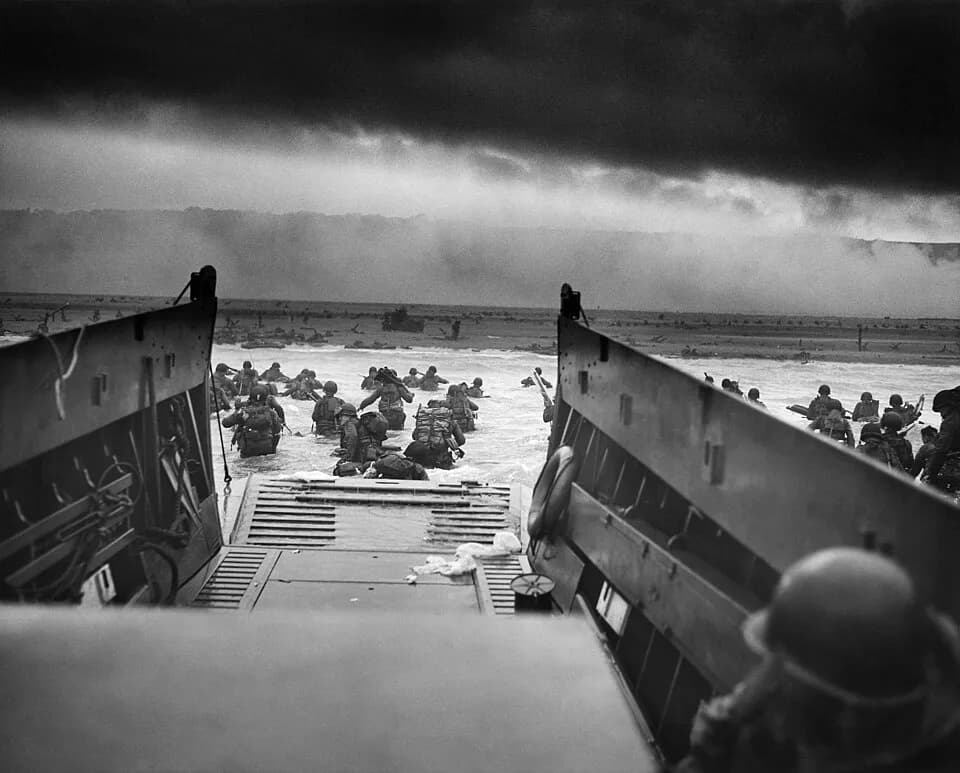
The Normandy landings, the largest amphibious operation in history, opened a second front in Western Europe on 6 June 1944, hastening the liberation of France and the defeat of Nazi Germany. Nearly 7,000 vessels put 156,000 men ashore on five beaches in a single day, under air cover and after months of deception meant to mislead the Wehrmacht.
The Normandy landings, also known as D-Day, took place within a strategic context that had evolved considerably since the war's beginning. From 1942, Joseph Stalin insistently demanded the opening of a second front in Western Europe to relieve the pressure exerted by the Wehrmacht on the Eastern Front, where the Soviet Union bore the bulk of the ground war against Germany. The Western Allies, led by the United Kingdom and the United States, had initially prioritized operations in North Africa in 1942 and then Italy in 1943, considering that a direct invasion of France required meticulous preparation and overwhelming superiority. Planning for Operation Overlord, the invasion's code name, truly began in early 1943 at the Casablanca Conference and was accelerated at the Tehran Conference in November 1943. American General Dwight D. Eisenhower was appointed Supreme Commander of the Allied Expeditionary Forces in December 1943. The choice of Normandy as the landing site resulted from thorough analysis. The Pas-de-Calais, the narrowest point of the English Channel, was the most obvious choice but also the most heavily defended. Normandy offered practicable beaches, relative proximity to English ports, and less concentrated German defenses. The Germans, under the command of Field Marshal Gerd von Rundstedt and Field Marshal Erwin Rommel for Army Group B, had constructed the Atlantic Wall, a system of coastal fortifications stretching from Norway to Spain. However, these defenses were uneven, with the most fortified points at the Pas-de-Calais. The Allies implemented a massive deception operation, codenamed Operation Fortitude, which created a fictitious army group under the apparent command of General George S. Patton, intended to convince the Germans that the main attack would come at the Pas-de-Calais. This ruse worked remarkably well and kept significant German reserves away from Normandy even after the landings began.
The landings of June 6, 1944, began in the early hours of darkness with airborne operations. The 82nd and 101st American Airborne Divisions were dropped in the Cotentin Peninsula to secure the flanks and beach exits, while the British 6th Airborne Division jumped east of the Orne to protect the left flank and seize strategic bridges, including the famous Pegasus Bridge. The drops occurred in difficult conditions, with scattered landings caused by wind and low clouds, but the paratroopers generally succeeded in reaching their objectives despite initial disorganization. At dawn, an armada of more than 5,000 ships and landing craft approached the Norman coast on an 80-kilometer front. Five beaches were assigned to the assault forces. To the west, Utah Beach was taken by the American 4th Infantry Division with relatively light casualties thanks to a current that carried the boats to a less defended sector. Omaha Beach, however, was the scene of the bloodiest fighting of the day. The American 1st and 29th Infantry Divisions encountered powerful defenses held by the German 352nd Infantry Division, well entrenched on the heights overlooking the beach. For several hours, American soldiers were pinned down under devastating fire, and command briefly considered abandoning the beach. It was only through the individual courage of small groups of soldiers and the support of destroyers that dangerously approached the coast that the situation was reversed. Gold Beach was attacked by the British 50th Infantry Division, Juno Beach by the Canadian 3rd Infantry Division, and Sword Beach by the British 3rd Infantry Division. These three beaches were taken with significant but lesser casualties than at Omaha. By the end of this historic day, approximately 156,000 Allied soldiers had landed in Normandy, establishing beachheads on all beaches despite estimated losses of between 10,000 and 12,000 men, including approximately 4,400 killed.
The forces committed to the Normandy landings were unprecedented in the history of amphibious operations. On the Allied side, the operation mobilized the combined resources of more than a dozen nations, though American, British, and Canadian forces constituted the principal core. The naval force comprised approximately 6,939 vessels of all categories, including 1,213 warships, 4,126 landing craft and boats, and 736 support and auxiliary vessels. This armada was placed under the command of British Admiral Bertram Ramsay. Allied air forces had approximately 11,590 aircraft available, including heavy bombers, fighters, transport planes, and gliders. Allied air supremacy was total, with the Luftwaffe capable of only a few dozen sorties on D-Day. Ground forces comprised five assault divisions for the first wave, three airborne divisions, and dozens of additional divisions planned for reinforcement in the following days and weeks. In total, approximately 156,000 men landed on June 6, and more than 875,000 Allied soldiers were in Normandy by the end of June. On the German side, the Atlantic Wall in Normandy was defended by units of varying quality. The 716th Infantry Division, partly composed of garrison troops and Eastern volunteers, held a large portion of the coastal front. The 352nd Infantry Division, a higher-quality unit, defended the Omaha Beach sector. The 21st Panzer Division, the only panzer division in immediate proximity to the beaches, had approximately 127 tanks but did not receive orders to counterattack until late in the day. The SS Panzer divisions, including the 12th SS Panzer Division Hitlerjugend and the Panzer Lehr Division, constituted the strategic reserves but were held back on Hitler's direct orders, who maintained personal control over their commitment. This decision considerably delayed the German reaction and was one of the key factors in Allied success.
The consequences of the Normandy landings were profound and decisive for the outcome of World War II in Europe. The establishment of a solid second front in western France forced Germany to fight simultaneously on two major fronts, a strategic situation that German military planning had always sought to avoid. In the weeks following June 6, the Allies consolidated their beachheads despite fierce German resistance, particularly in the Norman bocage where the terrain favored defense. The Battle of Normandy lasted until late August 1944, with the destruction of the Falaise Pocket that trapped a large portion of German forces in the west. German losses for the entire Normandy campaign amounted to approximately 200,000 killed and wounded and 200,000 prisoners. Allied losses were also considerable, with approximately 225,000 casualties including 37,000 ground forces killed, plus approximately 16,000 Allied airmen killed during the air campaign. The liberation of Paris on August 25, 1944, followed by the rapid liberation of most of France and Belgium, radically transformed the strategic situation in Europe. The Normandy landings also accelerated the disintegration of the Vichy regime and enabled the restoration of French sovereignty under General de Gaulle's provisional government. On the international political level, the invasion's success strengthened the alliance between the Western powers and the Soviet Union, while laying the groundwork for future zones of influence in postwar Europe. France, through its participation in the landings and liberation fighting, obtained a permanent seat on the United Nations Security Council and an occupation zone in Germany. For the French population of Normandy, however, liberation came at a terrible cost with approximately 20,000 Norman civilians killed in Allied bombing and ground combat, a tragic price for recovered freedom.
The legacy of the Normandy landings is immense and continues to resonate in the collective world consciousness. June 6, 1944, is universally recognized as one of the most important moments of the twentieth century, a symbol of the courage, sacrifice, and determination of democracies against tyranny. Normandy has become a site of international pilgrimage, with millions of visitors each year coming to pay their respects on the landing beaches, military cemeteries, and memorial museums. The American Cemetery at Colleville-sur-Mer, overlooking Omaha Beach with its 9,387 perfectly aligned white crosses and Stars of David, is one of the most moving memorial sites in the world. British, Canadian, German, and Polish cemeteries also dot the Norman landscape, testifying to the price paid by all nations involved. Anniversary ceremonies, particularly decennial commemorations, attract heads of state from around the world and serve as moments of reconciliation and reaffirmation of the values of peace and freedom. The 70th and 75th anniversaries in 2014 and 2019 were among the last attended by surviving veterans, making these events particularly poignant. Militarily, the Normandy landings remain the reference amphibious operation, studied in all military academies worldwide. The logistical planning, joint and international coordination, and technical innovations such as the artificial Mulberry harbors and the PLUTO undersea pipeline remain models of military engineering. D-Day has also profoundly influenced popular culture, inspiring countless films such as The Longest Day in 1962 and Steven Spielberg's Saving Private Ryan in 1998, whose opening scene on Omaha Beach is considered one of the most realistic depictions of war ever filmed. Television series such as Band of Brothers have helped perpetuate the memory of these ordinary combatants who became extraordinary heroes.
This article draws on historical works, military archives and recognized academic publications.
Approximately 156,000 Allied soldiers landed on June 6, 1944, across five beaches: Utah, Omaha, Gold, Juno, and Sword. Allied casualties that day are estimated at between 10,000 and 12,000 men, including approximately 4,400 killed. The bloodiest fighting took place at Omaha Beach, defended by the German 352nd Infantry Division, where American soldiers were pinned down under fire for several hours.
Operation Fortitude was an Allied deception plan that created a fictitious army group, FUSAG, under the apparent command of General George S. Patton. Its objective was to convince the Germans that the main attack would come at the Pas-de-Calais rather than Normandy. This ruse worked remarkably well, keeping significant German armored reserves away from Normandy even after the landings began on June 6, 1944.
The Battle of Normandy, which continued until late August 1944, claimed the lives of approximately 20,000 Norman civilians killed in Allied bombing and ground combat. Entire cities were destroyed, notably Caen and Saint-Lô. Allied casualties for the entire Normandy campaign totaled approximately 225,000, compared to approximately 200,000 killed or wounded and 200,000 prisoners on the German side.
Information cross-checked against Wikipedia and reference historical works.
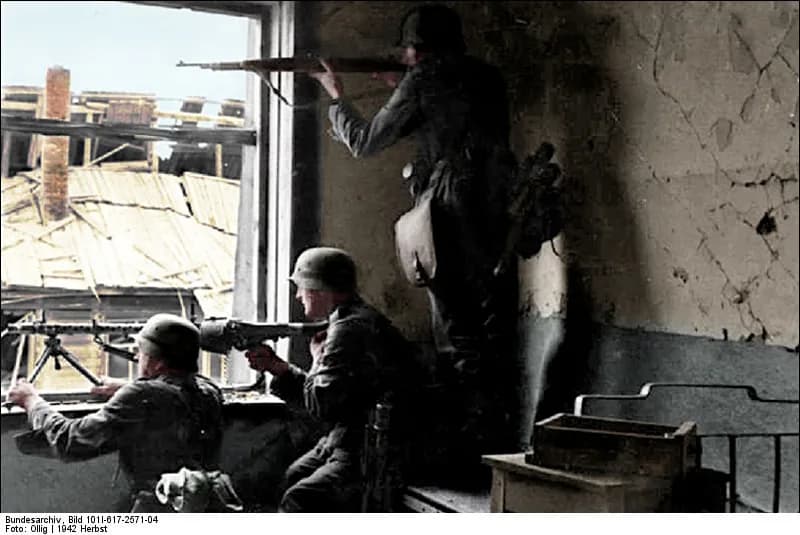
Battle of Stalingrad
The Battle of Stalingrad was among the deadliest clashes of World War II, pitting German and Soviet forces against each other in devastating urban combat that marked a decisive turning point on the Eastern Front. From 23 August 1942 to 2 February 1943, Operation Uranus encircled the German Sixth Army, whose roughly 91,000 survivors surrendered.
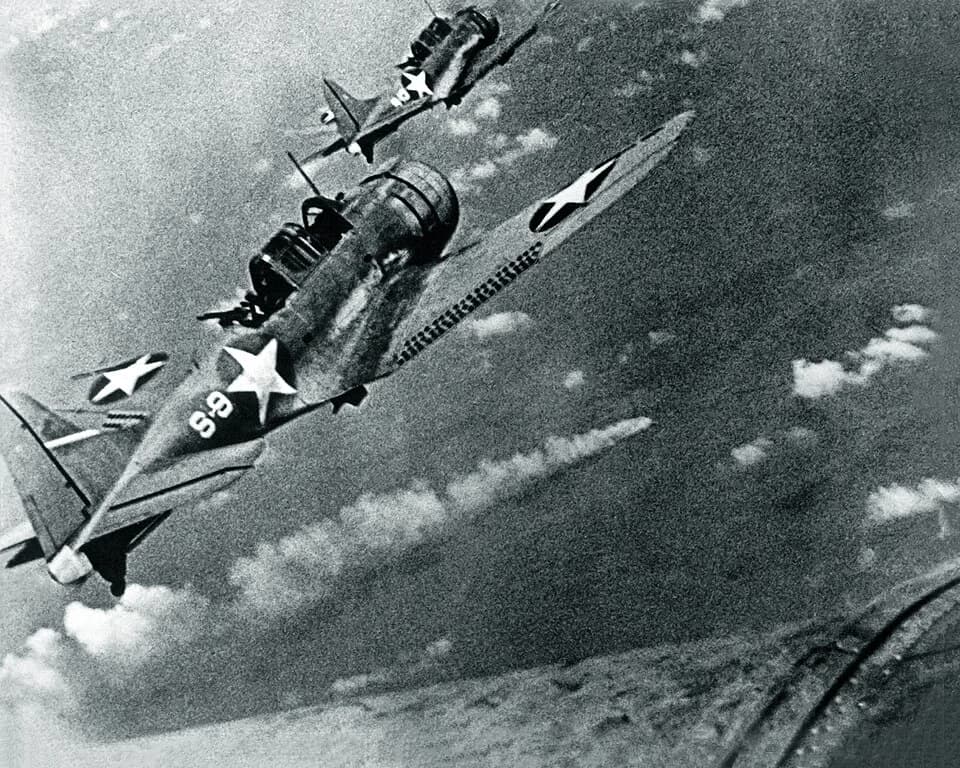
Battle of Midway
The Battle of Midway was the decisive turning point of the Pacific war, where the American navy inflicted a catastrophic defeat on the Japanese fleet by sinking four aircraft carriers, reversing the naval balance. From 4 to 7 June 1942, the decryption of Japanese communications allowed Admiral Nimitz to ambush a fleet that outnumbered his own.
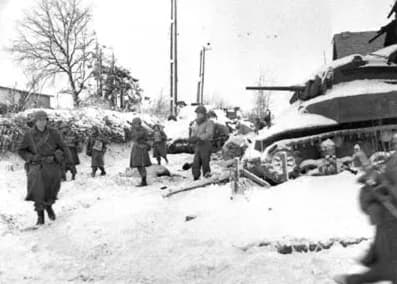
Battle of the Bulge
The Battle of the Bulge was the last major German offensive on the western front, a desperate attempt to break through Allied lines in the Belgian forests that failed against American resistance. Launched on 16 December 1944 under overcast skies that grounded Allied aircraft, it was broken by late January 1945.
Battle of Berlin
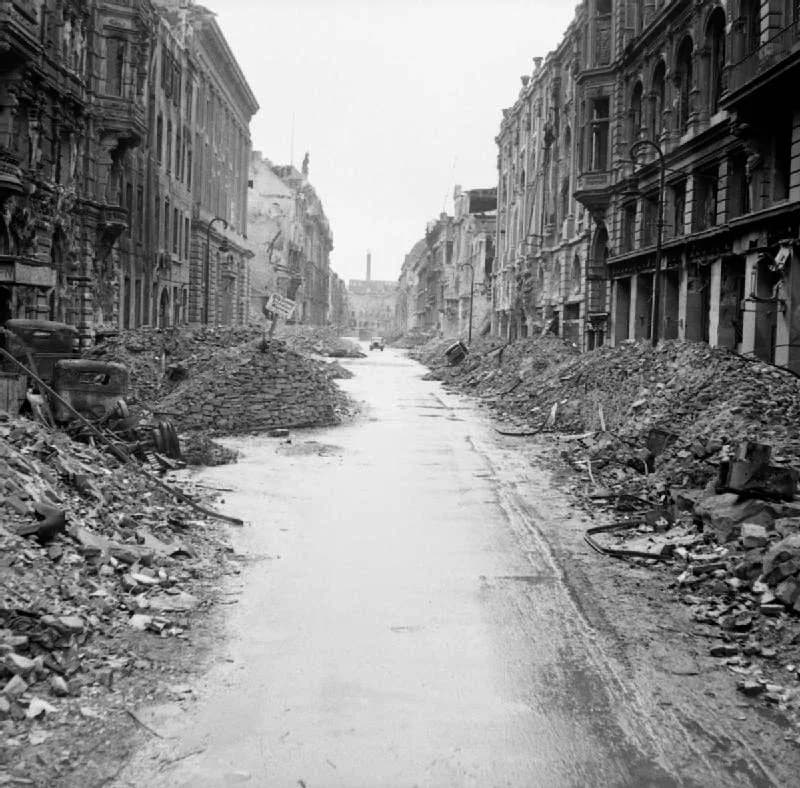
The Battle of Berlin was the final Soviet assault on the capital of the Third Reich, a massive operation involving over two million soldiers that ended the war in Europe with the fall of the Nazi regime. From 16 April to 2 May 1945, the Red Army encircled and then reduced the city street by street; Hitler took his own life in his bunker on 30 April.
