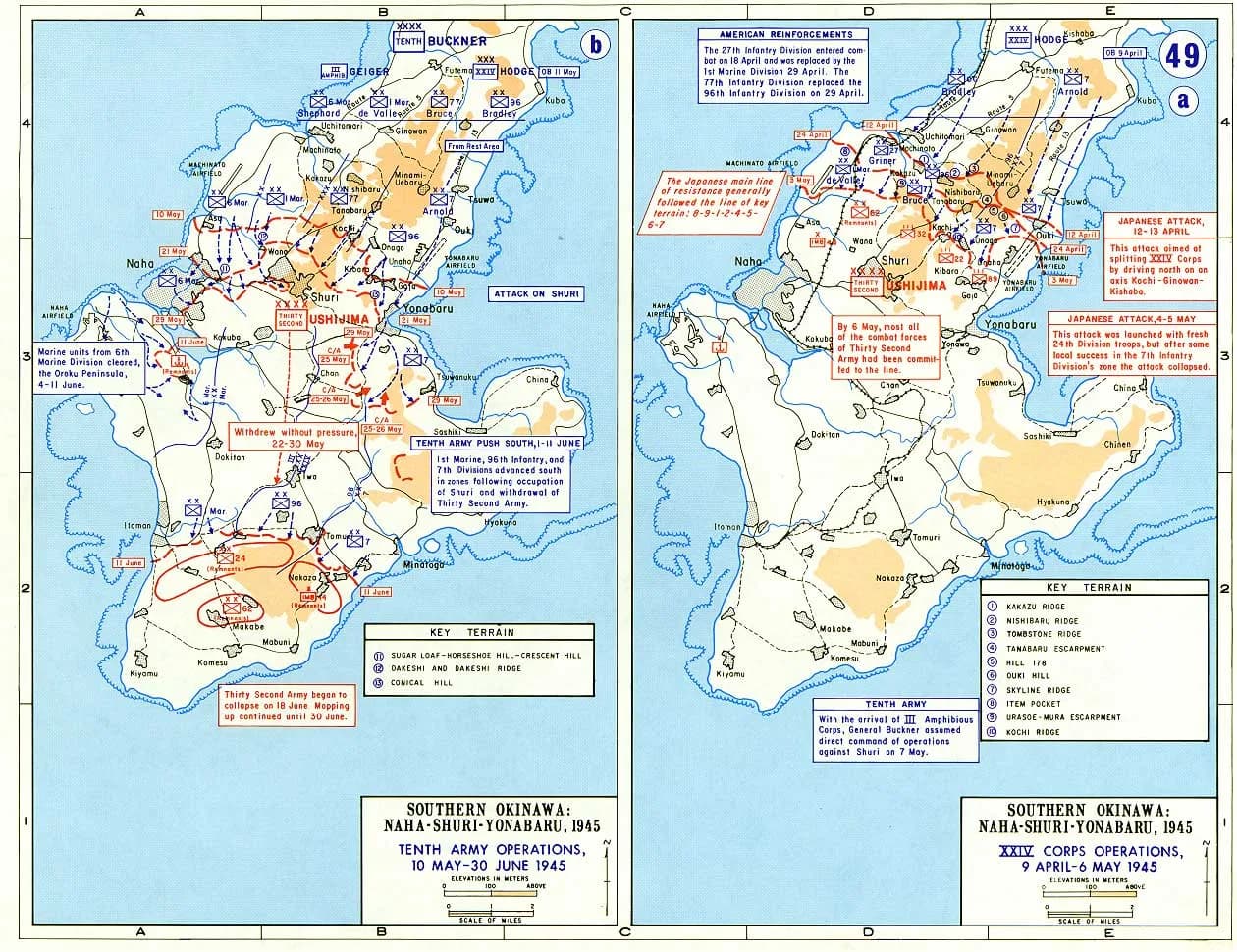
The Battle of Okinawa was the largest amphibious operation of the Pacific theatre and one of the deadliest of the whole of World War II, with massive losses among combatants on both sides and the civilian population. From 1 April to 22 June 1945, its human cost weighed directly on the American decision to use the atomic bomb.
By the spring of 1945, Allied forces were inexorably closing in on the Japanese home islands. The fall of Iwo Jima in March had demonstrated the ferocity of Japanese resistance, but American high command considered capturing Okinawa an essential step before invading Japan proper. Okinawa, the largest island in the Ryūkyū archipelago, lay only 550 kilometers from Kyūshū, Japan's southernmost main island, and offered natural harbors and vast flat terrain ideal for air bases. Operation Iceberg, as the invasion was codenamed, was to provide the Allies with a launching platform for Operation Downfall, the planned invasion of mainland Japan. Lieutenant General Mitsuru Ushijima, commanding the Japanese 32nd Army, had been ordered to defend Okinawa as long as possible to delay the American advance. As at Iwo Jima, Ushijima abandoned traditional suicidal charges and prepared a defense-in-depth system utilizing the rugged terrain of the island's southern part, its natural caves, and elaborate fortifications known as the Shuri Line.
The forces committed to Okinawa were titanic. Operation Iceberg mobilized the largest invasion force ever assembled in the Pacific. The US Tenth Army, commanded by Lieutenant General Simon Bolivar Buckner Jr., comprised the XXIV Army Corps with four Army infantry divisions and the III Amphibious Corps with two Marine divisions, approximately 183,000 soldiers and Marines in the initial wave. In total, over 500,000 American military personnel participated in the operation, supported by a fleet of more than 1,300 ships including battleships, aircraft carriers, and hundreds of landing craft. Admiral Marc Mitscher's Task Force 58 provided air cover with its fast carriers. On the Japanese side, Lieutenant General Ushijima's 32nd Army had approximately 77,000 regular soldiers, reinforced by 20,000 Okinawan militia members forcibly conscripted, including high school students enrolled in auxiliary units. The Imperial Japanese Navy launched Operation Ten-Gō, sending the giant battleship Yamato on a suicide mission toward Okinawa, accompanied by a light cruiser and eight destroyers.
On April 1, 1945, Easter Sunday and April Fool's Day, American troops landed on Hagushi beaches on Okinawa's west coast. To everyone's astonishment, the beaches were virtually deserted: Ushijima had deliberately abandoned the north of the island and the coastal areas to concentrate his defenses on the fortified lines in the south. For the first few days, the advance northward was rapid, but when troops reached the Shuri Line in the south, they encountered fierce resistance. For weeks, the Americans had to conquer ridge by ridge, hill by hill, with each position defended to the last man. Names like Sugar Loaf Hill, Hacksaw Ridge, and Shuri Castle became synonymous with carnage. At sea, Japanese kamikazes launched ten massive attacks, called kikusui, totaling nearly 1,900 suicide sorties. These attacks sank 36 American ships and damaged 368 others, killing approximately 4,900 sailors. The battleship Yamato was intercepted and sunk on April 7 by American carrier aircraft before reaching Okinawa. General Buckner himself was killed by an artillery shell on June 18, becoming the highest-ranking American officer killed in combat during the Pacific War.
The turning point of the Battle of Okinawa came in late May 1945, when the torrential monsoon rains transformed the battlefield into a hellish quagmire but paradoxically allowed the Americans to bypass the most heavily fortified Japanese positions. Ushijima's decision to order a general counterattack on May 4, against the advice of his chief of staff Isamu Chō, proved disastrous for the Japanese. In three days of fighting, the Japanese 32nd Army lost over 5,000 men without gaining an inch of ground, squandering precious reserves that could have prolonged resistance by several weeks. This failed counterattack significantly weakened the Shuri Line. By late May, the Americans managed to envelop Shuri Castle on both flanks, forcing Ushijima to abandon his strongest position and retreat to the island's southern tip. This withdrawal, though orderly, marked the beginning of the end for the Japanese garrison. Japanese troops, now deprived of their best fortifications, were gradually pushed into an ever-shrinking pocket at Okinawa's southern tip.
The consequences of the Battle of Okinawa were devastating and directly influenced the war's conclusion. American casualties amounted to approximately 12,500 killed and 38,900 wounded for ground forces, plus nearly 4,900 sailors killed by kamikazes. On the Japanese side, approximately 77,000 soldiers were killed and 7,000 captured. General Ushijima and his chief of staff Chō committed ritual suicide on June 22. The most tragic toll was among Okinawan civilians: between 40,000 and 150,000 civilians perished, victims of bombardments, combat, forced suicides encouraged by Japanese propaganda, and massacres. These massive civilian casualties constituted one of the greatest tragedies of the Pacific War. Strategically, the horrific cost of Okinawa considerably strengthened the arguments for using the atomic bomb. Military planners estimated that invading mainland Japan could cost between 250,000 and one million American casualties. This projection, directly extrapolated from losses at Okinawa and Iwo Jima, weighed heavily in President Truman's decision to authorize the atomic bombings of Hiroshima and Nagasaki in August 1945.
The Battle of Okinawa (April 1 - June 22, 1945) cost approximately 12,500 American killed and 38,900 wounded, plus 4,900 sailors killed by kamikazes. On the Japanese side, 77,000 soldiers were killed and 7,000 captured. The most tragic toll fell on Okinawan civilians: between 40,000 and 150,000 dead. The massive casualties resulted from General Ushijima's defense-in-depth system and nearly 1,900 kamikaze sorties that sank 36 American ships.
The giant Japanese battleship Yamato was sent on a suicide mission (Operation Ten-Gō) toward Okinawa on April 6, 1945, accompanied by a light cruiser and eight destroyers, without air cover. American carrier aircraft intercepted and sank it on April 7, 1945, before it reached the island, with the loss of 2,498 of the 2,700 crew members. This mission illustrated the ultimate helplessness of the Imperial Japanese Navy in 1945.
The horrific cost of Okinawa, with its 12,500 American soldiers killed and up to 150,000 civilians dead, directly influenced planning for the invasion of mainland Japan. American military strategists projected between 250,000 and one million American casualties for such an operation. This projection, extrapolated from losses at Okinawa and Iwo Jima, weighed heavily in President Truman's decision to authorize the atomic bombings of Hiroshima (August 6, 1945) and Nagasaki (August 9, 1945).
Information cross-checked against Wikipedia and reference historical works.
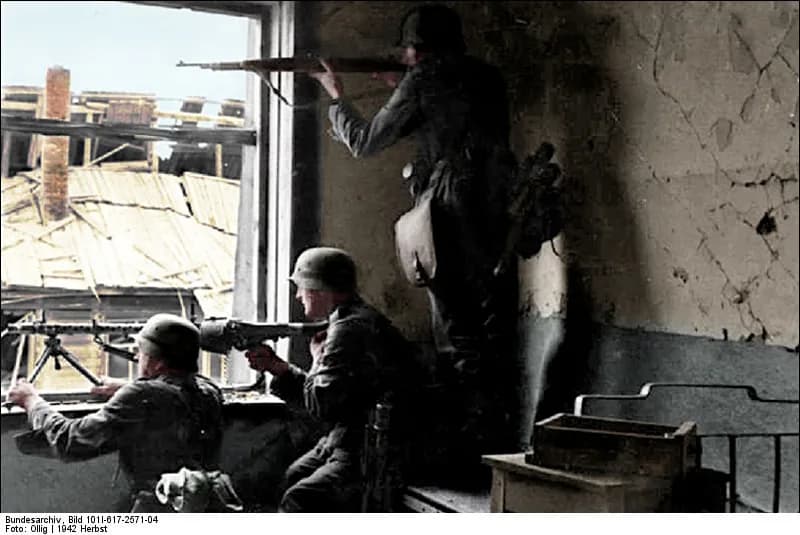
Battle of Stalingrad
The Battle of Stalingrad was among the deadliest clashes of World War II, pitting German and Soviet forces against each other in devastating urban combat that marked a decisive turning point on the Eastern Front. From 23 August 1942 to 2 February 1943, Operation Uranus encircled the German Sixth Army, whose roughly 91,000 survivors surrendered.
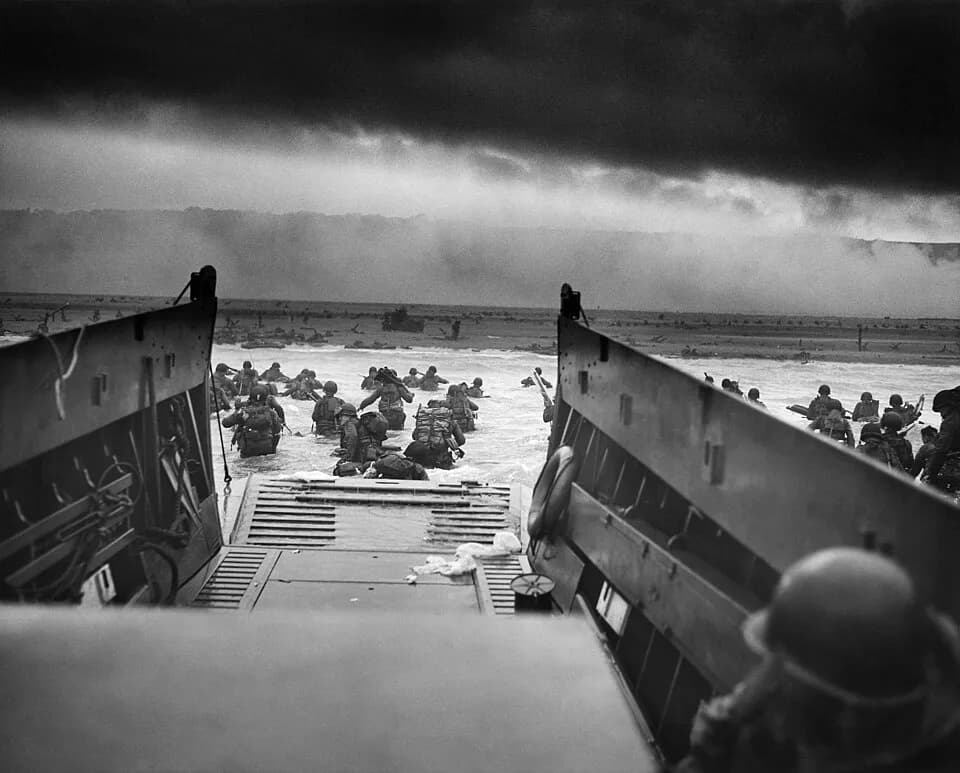
Normandy Landings
The Normandy landings, the largest amphibious operation in history, opened a second front in Western Europe on 6 June 1944, hastening the liberation of France and the defeat of Nazi Germany. Nearly 7,000 vessels put 156,000 men ashore on five beaches in a single day, under air cover and after months of deception meant to mislead the Wehrmacht.
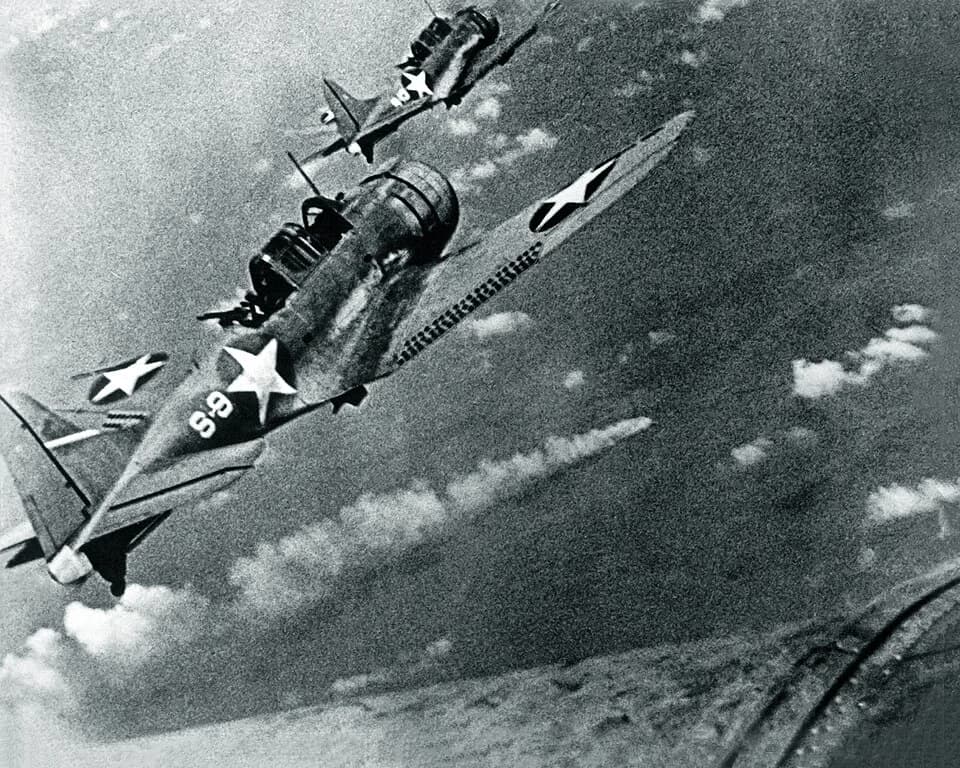
Battle of Midway
The Battle of Midway was the decisive turning point of the Pacific war, where the American navy inflicted a catastrophic defeat on the Japanese fleet by sinking four aircraft carriers, reversing the naval balance. From 4 to 7 June 1942, the decryption of Japanese communications allowed Admiral Nimitz to ambush a fleet that outnumbered his own.
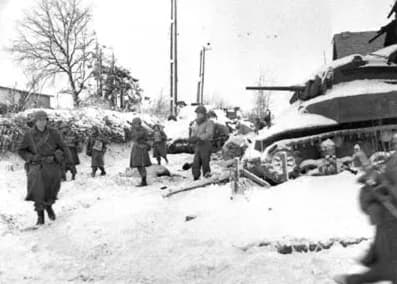
Battle of the Bulge
The Battle of the Bulge was the last major German offensive on the western front, a desperate attempt to break through Allied lines in the Belgian forests that failed against American resistance. Launched on 16 December 1944 under overcast skies that grounded Allied aircraft, it was broken by late January 1945.
