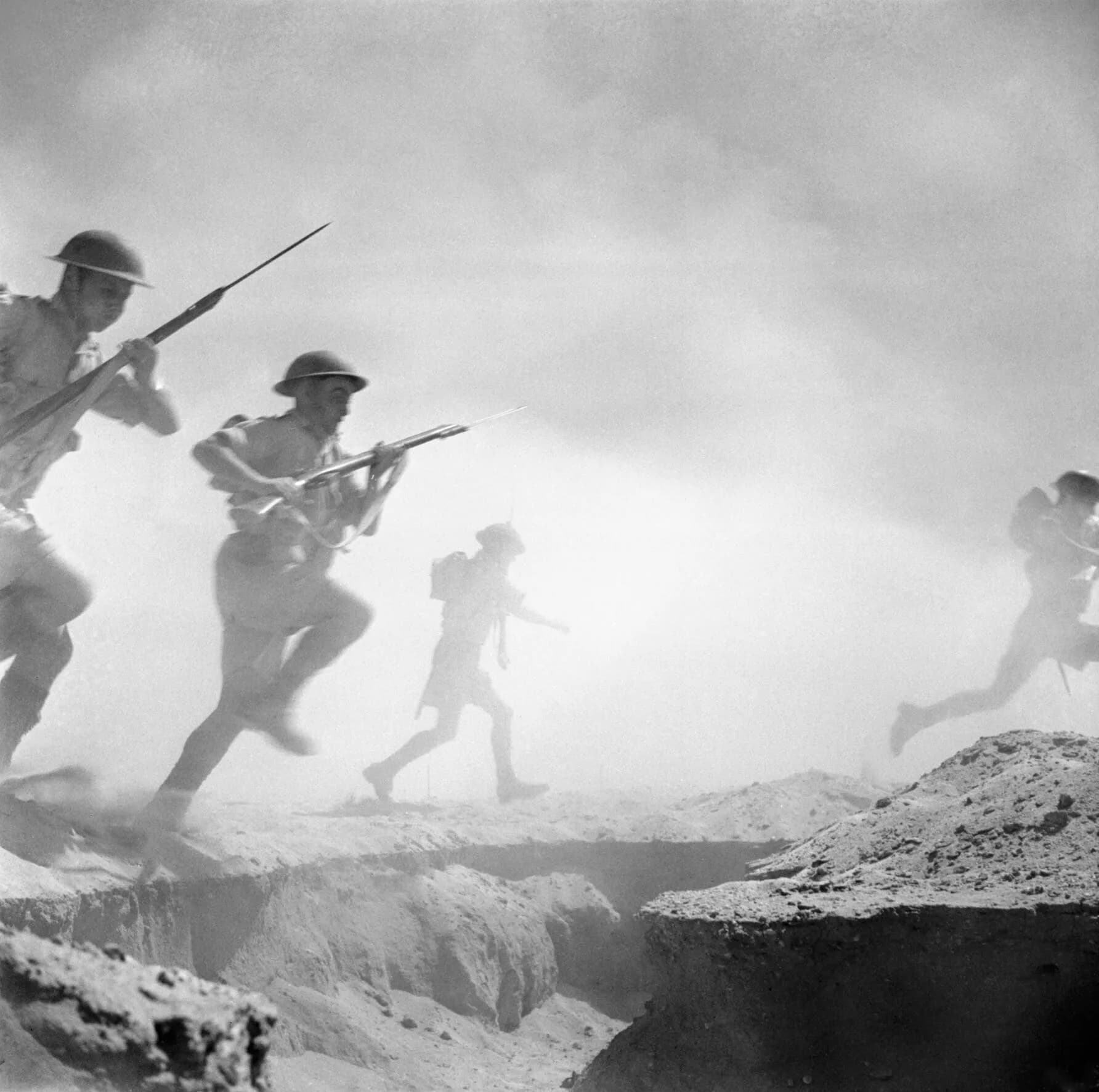
The Battle of Monte Cassino was a series of four Allied assaults against German defensive positions on the Gustav Line in central Italy. Marked by the controversial destruction of the ancient Benedictine monastery, it ended with the decisive breakthrough by the French Expeditionary Corps.
After the fall of Sicily in August 1943 and the Allied landings on the Italian mainland in September, the Italian campaign quickly bogged down against the fierce resistance of German forces commanded by Field Marshal Albert Kesselring. He had ordered the construction of a series of defensive lines crossing the Italian peninsula from east to west, exploiting the mountainous terrain particularly favorable to defense. The most formidable of these fortifications was the Gustav Line, stretching from the mouth of the Garigliano River on the Tyrrhenian coast to Ortona on the Adriatic coast. The key point of this line was the Benedictine monastery of Monte Cassino, founded by Saint Benedict of Nursia in 529, perched at 520 meters altitude on a rocky promontory overlooking the Liri Valley. This valley constituted the natural route to Rome, a major strategic objective for the Allies. General Harold Alexander, commanding the Allied 15th Army Group, had to break through this barrier to advance toward the Italian capital. The German forces of the 10th Army, under General Heinrich von Vietinghoff, had transformed the terrain into a nearly impregnable fortress with minefields, camouflaged firing positions, reinforced concrete bunkers, and interconnected trench networks. The winter of 1943-1944, particularly harsh, made combat conditions even more grueling for the attackers. The question of the monastery itself became a major moral and strategic dilemma: the Germans claimed not to be occupying it militarily, but its commanding position offered an undeniable observation advantage.
The battle unfolded in four distinct assaults between January and May 1944. The first assault, launched on January 17, 1944 by the US II Corps and the French Expeditionary Corps under General Juin, attempted to cross the Rapido and Garigliano rivers. The 36th Texas Infantry Division suffered disaster trying to cross the Rapido under murderous fire, losing nearly 2,000 men in two days. French troops, including North African tirailleurs, managed to establish bridgeheads on the Garigliano but could not exploit their success due to lack of reinforcements. The second assault began on February 15 after the controversial decision to bomb the monastery. Over 250 bombers dropped 453 tons of bombs on the abbey, reducing it to rubble. Ironically, the debris provided German paratroopers of the 1st Parachute Division with excellent defensive positions. New Zealand and Indian troops launched in the assault were repelled with heavy losses. The third assault in March 1944 saw the New Zealand II Corps attempt to take the town of Cassino after massive bombardment. Despite fierce fighting in the ruins, German defenders held firm. The fourth and final assault, Operation Diadem, was launched on May 11, 1944 with considerable forces. The French Expeditionary Corps under General Juin achieved the decisive breakthrough by crossing the Aurunci Mountains, outflanking German defenses through terrain deemed impassable. The Moroccan Goumiers, seasoned mountain warriors, scaled rocky slopes at night and surprised the defenders. On May 18, Polish soldiers of General Anders' II Corps finally planted their flag on the monastery ruins.
The forces engaged at Monte Cassino were multinational and considerable. On the Allied side, the US Fifth Army under General Mark Clark and the British Eighth Army under General Oliver Leese constituted the two main formations. The French Expeditionary Corps, commanded by General Alphonse Juin, comprised four divisions: the 2nd Moroccan Infantry Division, the 3rd Algerian Infantry Division, the 4th Moroccan Mountain Division, and the 1st Free French Division. These units included the famous Moroccan Goumiers, organized into tabors, mountain warriors of formidable effectiveness in rugged terrain. The Polish II Corps under General Władysław Anders, composed of Poles who had survived Soviet camps and joined the Allies via Iran, played a crucial role in the final assault. New Zealand, Indian, British, South African, and Canadian troops also participated in the fighting. In total, Allied forces engaged during Operation Diadem numbered approximately 240,000 men. On the German side, defense relied primarily on the XIV Panzer Corps and the LI Mountain Corps. The 1st Parachute Division, considered one of the Wehrmacht's finest units, defended the monastery with exceptional tenacity. The 90th Panzergrenadier Division and the 44th Infantry Division held other sectors of the Gustav Line. German forces in the sector numbered approximately 80,000 men, benefiting from terrain naturally favorable to defense. Total Allied casualties for the four battles amounted to approximately 55,000 men, while the Germans lost approximately 20,000 killed and wounded.
The fall of Monte Cassino finally opened the road to Rome for Allied forces. On June 4, 1944, American troops of the Fifth Army entered the Eternal City, making Rome the first Axis capital to be liberated. However, this victory was overshadowed two days later by the Normandy landings on June 6, which monopolized world attention. General Clark's decision to direct his forces toward Rome rather than cutting off the retreat of the German 10th Army, as Alexander's plan intended, allowed Kesselring to withdraw in good order to the Gothic Line, prolonging the Italian campaign by several months. The destruction of the monastery remained one of the war's major controversies. Postwar investigations confirmed that the Germans had not used the monastery itself as a military position, although they occupied the surrounding slopes. The bombing, decided under pressure from New Zealand command, proved not only unnecessary but counterproductive, as the ruins provided German paratroopers with better defensive positions than the intact building. The decisive role of the French Expeditionary Corps was long underestimated in Anglo-Saxon historiography. The breakthrough achieved by General Juin's troops through the Aurunci Mountains, considered impassable by the Germans, demonstrated the exceptional valor of North African soldiers and the Goumiers. The considerable human losses of the four battles — approximately 75,000 total casualties for both sides — made Monte Cassino one of the deadliest battlefields of the Western European campaign.
The legacy of Monte Cassino is multifaceted and profound. The Benedictine monastery, founded in 529 and already destroyed and rebuilt three times throughout its history, was entirely reconstructed after the war according to original plans, thanks to international funding. Reconsecrated in 1964, it today welcomes thousands of visitors and pilgrims, testimony to spiritual resilience in the face of destruction. The military cemeteries around Monte Cassino are among the most moving in Europe. The Polish cemetery, situated on the very slopes of the monastery, holds the graves of 1,052 soldiers of the Polish II Corps. The Commonwealth cemetery, the German cemetery, and the French cemetery recall the multinational character of the battle. In Poland, Monte Cassino holds a special place in national memory, symbolizing the sacrifice of Polish soldiers who fought far from their occupied homeland. The song 'Czerwone maki na Monte Cassino' (The Red Poppies on Monte Cassino), composed during the battle, remains one of the most popular Polish patriotic songs. In France, General Juin's breakthrough is considered one of the most brilliant feats of arms by the French army during World War II, although the memory of atrocities committed by some Goumiers against the Italian civilian population — the marocchinate — tarnishes this legacy. In terms of military doctrine, Monte Cassino illustrates the challenges of mountain warfare, the limitations of air power against fortified positions, and the irreplaceable value of troops adapted to the terrain.
The Benedictine monastery of Monte Cassino, perched at 520 meters on a rocky promontory overlooking the Liri Valley, formed the pivot of the German Gustav Line. Field Marshal Kesselring's 1st Parachute Division defended this naturally impregnable terrain. Three assaults (January, February, March 1944) were repulsed with heavy losses. Only during Operation Diadem on May 11, 1944, did General Juin's French Expeditionary Corps break through by crossing the Aurunci Mountains.
On May 18, 1944, Polish soldiers of General Władysław Anders' II Corps, composed of Poles who had survived Soviet camps, planted their national flag on the monastery ruins. These soldiers had fought fiercely since Operation Diadem began on May 11. The Polish cemetery on the monastery slopes today holds the graves of 1,052 soldiers of the Polish II Corps.
Postwar investigations confirmed that the Germans had not militarily occupied the monastery itself, though they held the surrounding slopes. On February 15, 1944, over 250 bombers dropped 453 tons of bombs on the abbey. The decision proved counterproductive: the rubble offered German paratroopers better defensive positions than the intact building. The monastery was entirely rebuilt according to original plans after the war and reconsecrated in 1964.
Information cross-checked against Wikipedia and reference historical works.
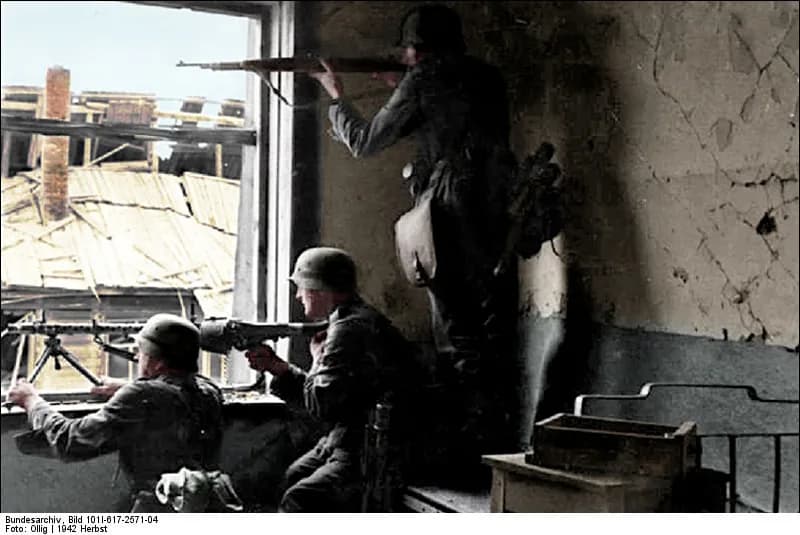
Battle of Stalingrad
The Battle of Stalingrad was among the deadliest clashes of World War II, pitting German and Soviet forces against each other in devastating urban combat that marked a decisive turning point on the Eastern Front. From 23 August 1942 to 2 February 1943, Operation Uranus encircled the German Sixth Army, whose roughly 91,000 survivors surrendered.
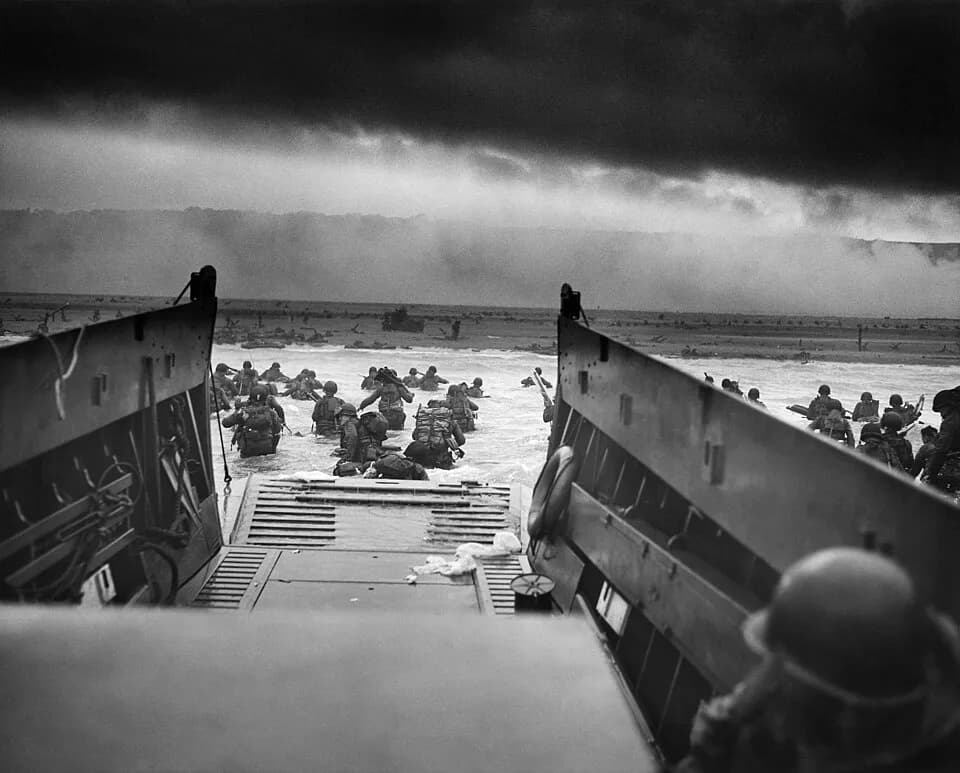
Normandy Landings
The Normandy landings, the largest amphibious operation in history, opened a second front in Western Europe on 6 June 1944, hastening the liberation of France and the defeat of Nazi Germany. Nearly 7,000 vessels put 156,000 men ashore on five beaches in a single day, under air cover and after months of deception meant to mislead the Wehrmacht.
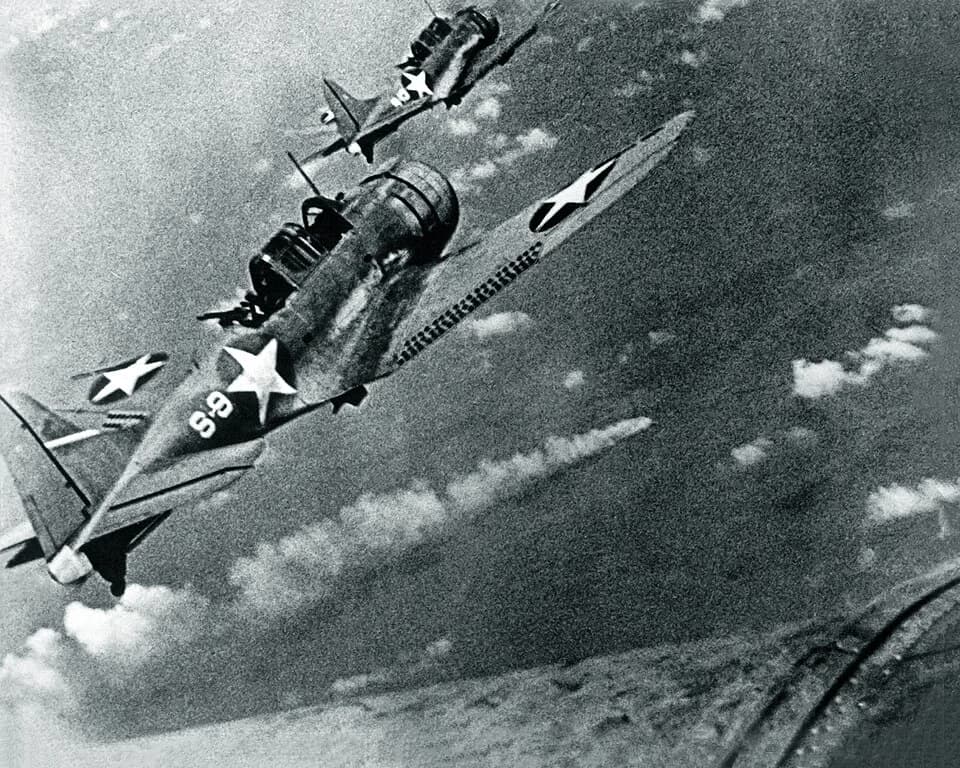
Battle of Midway
The Battle of Midway was the decisive turning point of the Pacific war, where the American navy inflicted a catastrophic defeat on the Japanese fleet by sinking four aircraft carriers, reversing the naval balance. From 4 to 7 June 1942, the decryption of Japanese communications allowed Admiral Nimitz to ambush a fleet that outnumbered his own.
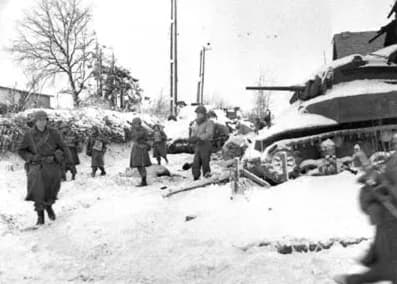
Battle of the Bulge
The Battle of the Bulge was the last major German offensive on the western front, a desperate attempt to break through Allied lines in the Belgian forests that failed against American resistance. Launched on 16 December 1944 under overcast skies that grounded Allied aircraft, it was broken by late January 1945.
