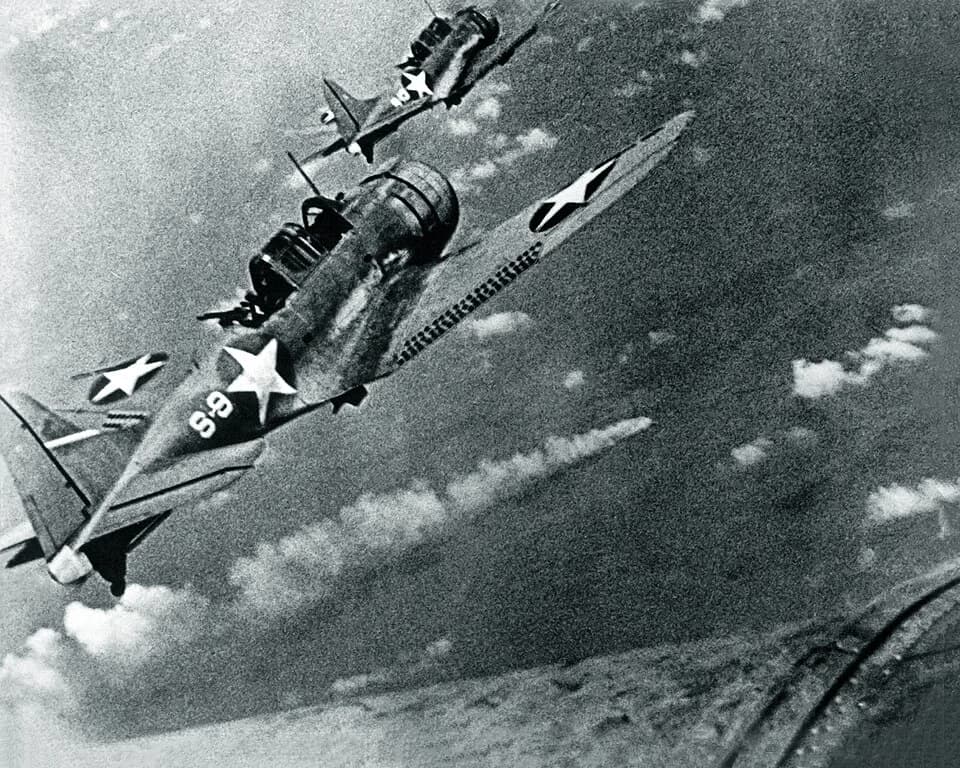
The Battle of the Philippine Sea was the largest carrier battle in history, pitting the American and Japanese fleets against each other off the Mariana Islands. Nicknamed the 'Great Marianas Turkey Shoot' by American pilots, it annihilated Japanese naval aviation and sank three Japanese aircraft carriers.
The Battle of the Philippine Sea occurred within the framework of the American offensive in the central Pacific, aimed at capturing the Mariana Islands — Saipan, Tinian, and Guam — to establish air bases within bombing range of Japan. By June 1944, the Pacific War had tipped in the Allies' favor. American victories at Midway in June 1942, Guadalcanal in February 1943, and in the Gilbert and Marshall Islands had progressively pushed back the Japanese defensive perimeter. Admiral Raymond Spruance commanded the US Fifth Fleet, the most powerful naval formation ever assembled, including Vice Admiral Marc Mitscher's Task Force 58 with 15 aircraft carriers (7 fleet carriers and 8 light carriers) embarking approximately 900 aircraft. The fleet also included 7 battleships, 21 cruisers, and 69 destroyers, protecting transports carrying a landing force of 127,000 Marines and soldiers destined to invade Saipan. On the Japanese side, Admiral Jisaburō Ozawa commanded the 1st Mobile Fleet with 9 carriers (5 fleet and 4 light) embarking approximately 450 aircraft, supported by 5 battleships, 13 cruisers, and 28 destroyers. The Japanese plan, codenamed Operation A-Gō, counted on combining carrier aviation with land-based aircraft on the Marianas and Carolines to compensate for Japanese numerical inferiority. Ozawa also hoped to exploit the superior range of his aircraft, which could attack the Americans at over 500 kilometers, beyond the range of American aircraft. However, the quality of Japanese pilots had dramatically declined since Midway, as experienced aces had been killed and replaced by insufficiently trained aviators.
The battle began on June 19, 1944, when Japanese forces launched four waves of massive air attacks against the American fleet. Ozawa committed approximately 370 aircraft in these raids, hoping to overwhelm American defenses through numbers. However, American pilots, superbly trained and flying Grumman F6F Hellcat fighters technologically superior to Japanese Zeros, inflicted an unprecedented aerial massacre. American radars detected the attack waves at great distance, allowing Hellcats to launch and take position before the attackers arrived. The first Japanese wave of 69 aircraft was intercepted 90 kilometers from the fleet: 42 were shot down. The second wave of 128 aircraft suffered even more catastrophic losses, with 97 aircraft destroyed. The third and fourth waves met a similar fate. In total, the Japanese lost approximately 315 aircraft and their crews on this day that American pilots nicknamed the 'Great Marianas Turkey Shoot.' Simultaneously, American submarines USS Albacore and USS Cavalla torpedoed and sank two Japanese carriers: the Taihō, Ozawa's brand-new flagship and Japan's largest carrier, and the Shōkaku, a veteran of Pearl Harbor. On June 20, Mitscher launched a long-range air strike of 216 aircraft against the retreating Japanese fleet, sinking the carrier Hiyō and damaging several other ships. The nighttime return of American pilots, low on fuel, was dramatic: Mitscher made the bold decision to turn on all the fleet's searchlights to guide his pilots home, at the risk of submarine attacks. Despite this measure, 80 aircraft were lost during landing or ditching due to fuel exhaustion, though most crews were rescued.
The Battle of the Philippine Sea pitted the two most powerful carrier fleets in the world in a confrontation where American superiority was overwhelming. Admiral Spruance's US Fifth Fleet constituted the largest naval force ever assembled. Task Force 58, the fleet's combat core, comprised four carrier groups: TG 58.1 under Rear Admiral Clark with four carriers, TG 58.2 under Rear Admiral Montgomery, TG 58.3 under Rear Admiral Reeves, and TG 58.4 under Rear Admiral Harrill. The 15 carriers embarked approximately 900 aircraft, including over 470 F6F Hellcat fighters, SB2C Helldiver dive bombers, and TBF Avenger torpedo bombers. Vice Admiral Willis Lee's battle line aligned 7 modern battleships capable of providing considerable anti-aircraft firepower. In total, the American force numbered over 200 ships and approximately 28,000 aviators and sailors embarked on the carriers alone. On the Japanese side, Ozawa's 1st Mobile Fleet fielded 9 carriers embarking approximately 450 aircraft. Japanese air groups comprised Zero A6M5 fighters, Yokosuka D4Y Suisei dive bombers, and Nakajima B6N Tenzan torpedo bombers. However, the majority of Japanese pilots had fewer than 200 flight hours, compared to over 500 hours for their American counterparts. Ozawa also counted on approximately 500 land-based aircraft on Guam, Tinian, and other islands, but most were destroyed on the ground by preemptive American strikes before the battle. Japanese losses were catastrophic: approximately 476 aircraft destroyed (carrier-based and land-based), 3 carriers sunk, and over 400 aviators killed, effectively annihilating Japanese naval aviation as a combat force.
The consequences of the Battle of the Philippine Sea were decisive for the outcome of the Pacific War. The annihilation of Japanese naval aviation deprived the Imperial Navy of its offensive air capability, rendering its surviving carriers useless for lack of pilots and aircraft to equip them. At the Battle of Leyte Gulf in October 1944, Japanese carriers were used as decoys, a suicide mission that illustrated their uselessness as a combat force. The loss of three carriers, including the Taihō and veteran Shōkaku, further reduced the Japanese fleet at a time when Japanese industry was unable to compensate for these losses. The American victory secured the landings on Saipan, Tinian, and Guam, whose conquest provided American forces with air bases within range of the Japanese homeland. B-29 Superfortress bombers, operating from Tinian, began strategic raids on Japanese cities in November 1944, culminating in the firebombing of Tokyo and the dropping of atomic bombs on Hiroshima and Nagasaki. The fall of Saipan also had major political repercussions in Japan: Prime Minister Hideki Tōjō was forced to resign in July 1944, implicitly acknowledging that the war was lost. Despite this overwhelming victory, Admiral Spruance was criticized by some officers for prioritizing protection of the landing force over aggressive pursuit of the Japanese fleet, which could have allowed even more complete destruction of enemy naval forces.
The Battle of the Philippine Sea holds a major place in world naval history and remains studied in military academies as the ultimate example of carrier superiority. The expression 'Great Marianas Turkey Shoot' entered military vocabulary to describe a unilateral and overwhelming air victory. The battle definitively demonstrated that the aircraft carrier had supplanted the battleship as the capital ship of modern naval warfare, a transition begun at Pearl Harbor and confirmed at Midway. The technological superiority of the F6F Hellcat, designed specifically to outclass the Japanese Zero, and the effectiveness of American radars in early detection of enemy raids are enduring lessons on the importance of technological innovation in warfare. The debate between Spruance, advocate of a cautious approach, and proponents of aggressive pursuit in the Halsey mold continues to fuel discussions on the balance between force protection and seeking total destruction of the enemy. This strategic dilemma remains relevant in contemporary naval doctrine. The submariners of the Albacore and Cavalla, whose torpedoes sank two carriers, illustrated the growing role of submarines in naval warfare, a role that would only expand in subsequent decades. In Japan, the battle is commemorated as the moment when hope of a defensive victory, pushing the Americans back far enough to negotiate a favorable peace, definitively vanished. The irreplaceable loss of experienced pilots pushed Japanese command toward kamikaze tactics, the last resort of a cornered navy that could no longer fight by conventional methods.
On June 19, 1944, American pilots under Vice Admiral Marc Mitscher shot down approximately 315 Japanese aircraft in a single day across the four attack waves launched by Admiral Jisaburō Ozawa. Grumman F6F Hellcats, superior to Japanese Zeros, intercepted the raids 90 kilometers from the fleet. Japanese pilots, insufficiently trained (fewer than 200 flight hours), were decimated. This disparity led American airmen to compare the interceptions to shooting turkeys.
Three Japanese carriers were sunk: the Taihō (Ozawa's flagship) and Shōkaku (a Pearl Harbor veteran) were torpedoed by submarines USS Albacore and USS Cavalla on June 19, 1944, and the Hiyō was sunk during the American air strike on June 20. In total, Japanese aviation lost approximately 476 aircraft and over 400 aviators, annihilating the Imperial naval air force as a combat force for the rest of the war.
The fall of Saipan, secured thanks to the naval victory of June 19-20, 1944, forced Japanese Prime Minister Hideki Tōjō to resign in July 1944, implicitly acknowledging that the war was lost. The conquest of the Marianas allowed B-29 Superfortresses to operate from Tinian starting November 1944, leading to the firebombing of Tokyo and the dropping of atomic bombs on Hiroshima and Nagasaki in August 1945.
Information cross-checked against Wikipedia and reference historical works.
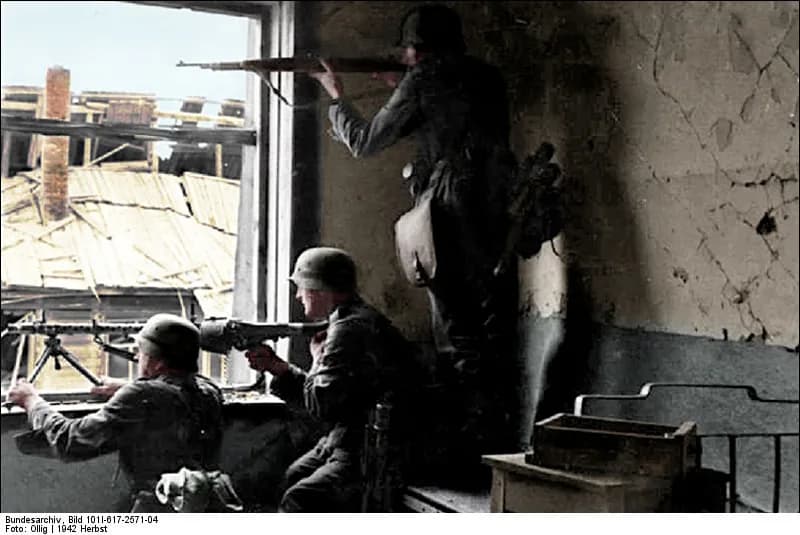
Battle of Stalingrad
The Battle of Stalingrad was among the deadliest clashes of World War II, pitting German and Soviet forces against each other in devastating urban combat that marked a decisive turning point on the Eastern Front. From 23 August 1942 to 2 February 1943, Operation Uranus encircled the German Sixth Army, whose roughly 91,000 survivors surrendered.
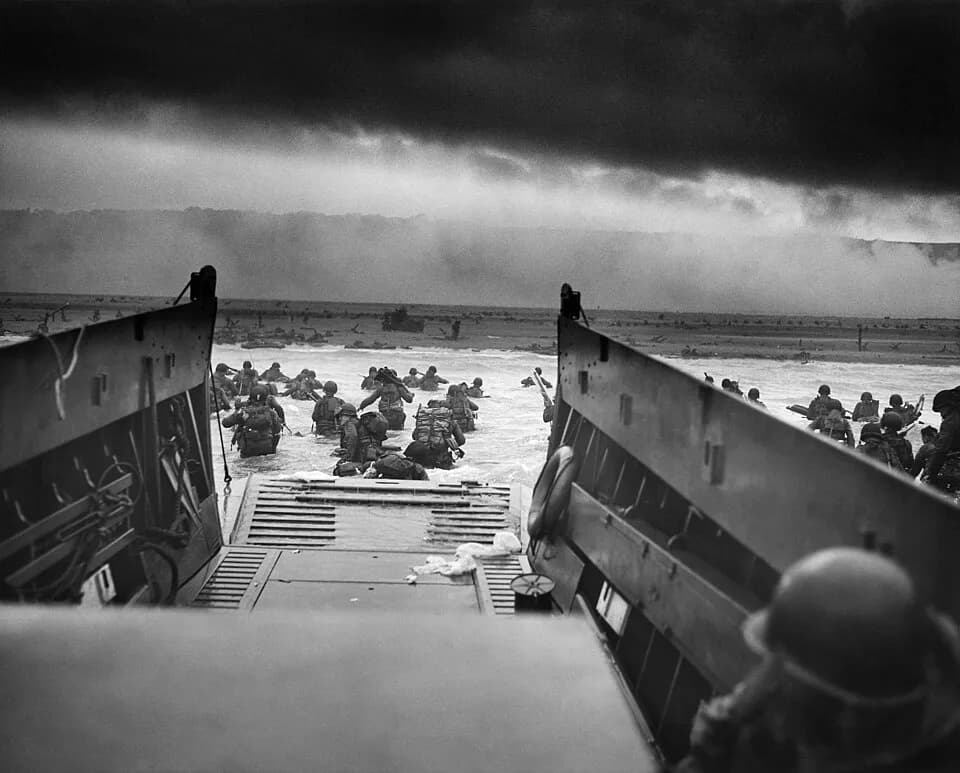
Normandy Landings
The Normandy landings, the largest amphibious operation in history, opened a second front in Western Europe on 6 June 1944, hastening the liberation of France and the defeat of Nazi Germany. Nearly 7,000 vessels put 156,000 men ashore on five beaches in a single day, under air cover and after months of deception meant to mislead the Wehrmacht.
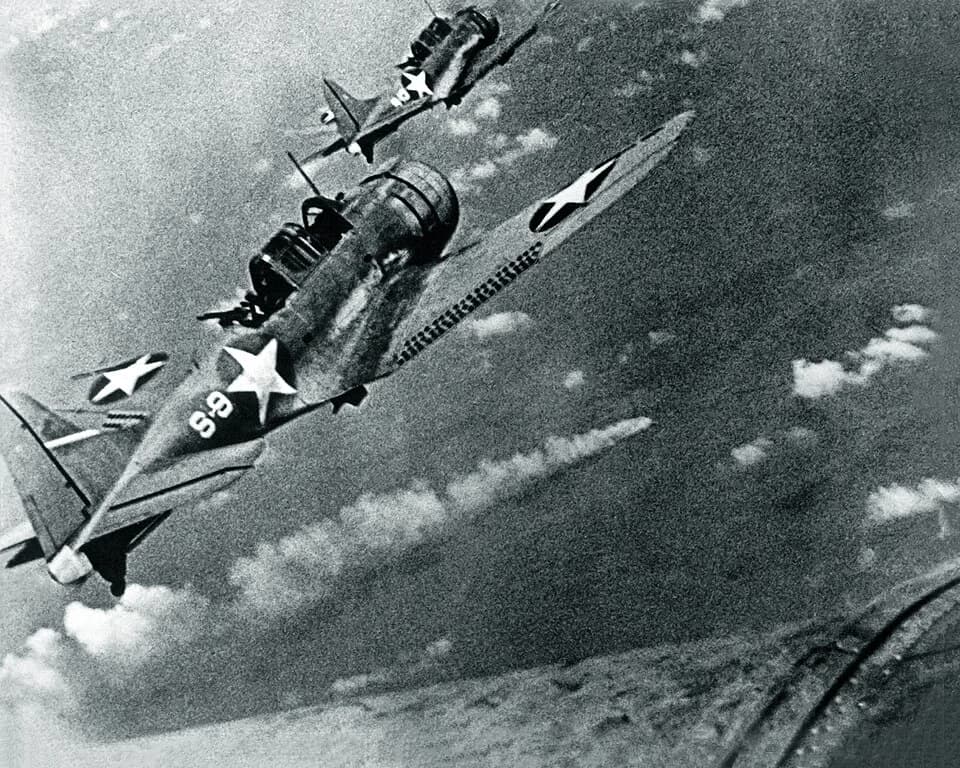
Battle of Midway
The Battle of Midway was the decisive turning point of the Pacific war, where the American navy inflicted a catastrophic defeat on the Japanese fleet by sinking four aircraft carriers, reversing the naval balance. From 4 to 7 June 1942, the decryption of Japanese communications allowed Admiral Nimitz to ambush a fleet that outnumbered his own.
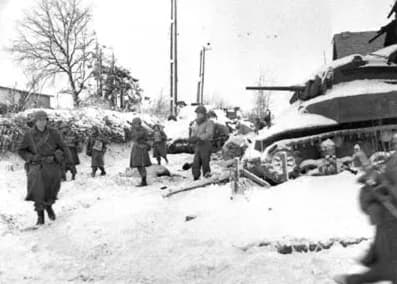
Battle of the Bulge
The Battle of the Bulge was the last major German offensive on the western front, a desperate attempt to break through Allied lines in the Belgian forests that failed against American resistance. Launched on 16 December 1944 under overcast skies that grounded Allied aircraft, it was broken by late January 1945.
