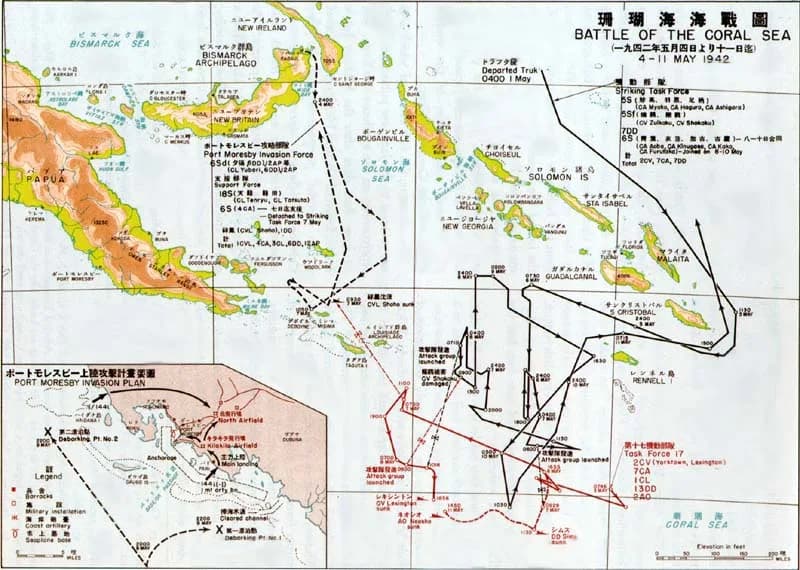
The Battle of the Coral Sea was the first naval battle in history where the opposing ships never directly sighted each other. Fought exclusively by carrier-based aircraft, it halted the Japanese advance toward Australia and marked a turning point in the Pacific War.
In early 1942, Imperial Japan continued its lightning expansion across the Pacific. After the fall of Singapore, the Dutch East Indies, and Burma, Japanese strategists planned Operation MO to capture Port Moresby in New Guinea and Tulagi in the Solomon Islands. Capturing Port Moresby would have given Japan air control over the Torres Strait and directly threatened Australia, the principal American ally in the South Pacific. The Americans, thanks to the decryption of the Japanese naval code JN-25 by cryptanalysts at Station HYPO in Hawaii, were informed of Japanese plans. Admiral Chester Nimitz, commander of the Pacific Fleet, dispatched the aircraft carriers USS Lexington and USS Yorktown under the command of Admiral Frank Jack Fletcher to intercept the Japanese invasion force. It was the first time two carrier fleets would confront each other in naval history, inaugurating a new era of maritime warfare where airpower replaced the naval gun as the decisive weapon.
The battle began on May 4, 1942, when Yorktown aircraft attacked Japanese forces landing at Tulagi, sinking a destroyer and damaging several ships. The following days saw both fleets searching for each other across the vast Coral Sea. On May 7, the Americans located and sank the light carrier Shoho in just ten minutes, a lightning achievement. That same day, the Japanese mistakenly sank the oiler USS Neosho and destroyer USS Sims, having confused them with a carrier. On May 8, the two main fleets finally clashed. Japanese aircraft from carriers Shokaku and Zuikaku struck the USS Lexington with two torpedoes and several bombs. Despite the crew's efforts to save the ship, gasoline vapors caused catastrophic internal explosions and the Lexington had to be abandoned and scuttled. The Yorktown was also hit by a bomb. In return, American aircraft severely damaged the Shokaku, which had to withdraw. Japanese air losses were so heavy that the Zuikaku no longer had enough aircraft to operate effectively.
On the Allied side, Task Force 17 comprised the aircraft carriers USS Yorktown and USS Lexington, eight heavy cruisers (including the Australian HMAS Australia and HMAS Hobart), and eleven destroyers. The two carriers embarked a total of 128 aircraft: F4F Wildcat fighters, SBD Dauntless dive bombers, and TBD Devastator torpedo bombers. Admiral Fletcher commanded the overall force, while Rear Admiral Aubrey Fitch directed air operations. On the Japanese side, Vice Admiral Takagi's striking force fielded the fleet carriers Shokaku and Zuikaku (Pearl Harbor veterans), the light carrier Shoho, and an invasion force comprising troop transports escorted by cruisers and destroyers. The Japanese carriers embarked 127 aircraft: A6M Zero fighters, Aichi D3A Val dive bombers, and Nakajima B5N Kate torpedo bombers. Japanese pilot quality was still superior at this stage of the war, but the American intelligence advantage through JN-25 decryption more than compensated for this difference.
Tactically, the Battle of the Coral Sea was a Japanese victory: the Americans lost a fleet carrier (the Lexington), a destroyer, and an oiler, versus a light carrier (the Shoho) on the Japanese side. However, strategically, the battle was a decisive Allied victory. Operation MO was cancelled: the Japanese abandoned the seaborne invasion of Port Moresby, saving Australia from a direct threat. More importantly, the damage inflicted on the Shokaku and the aircrew losses of the Zuikaku prevented these two veteran carriers from participating in the Battle of Midway one month later, depriving Admiral Yamamoto of his best ships and crews at the critical moment. Had all six Japanese carriers been assembled at Midway instead of four, the outcome of that pivotal battle could have been radically different. The Battle of the Coral Sea also demonstrated that the era of battleships was over: henceforth, naval battles would be fought through carrier aviation, with ships never directly sighting each other.
The Battle of the Coral Sea holds a special place in naval history and in Australian memory. For Australia, this battle is perceived as the moment when the threat of Japanese invasion was averted, and Coral Sea Remembrance Day is commemorated annually. In military history, it marks the first entirely carrier-based naval battle, a fundamental paradigm shift that relegated battleships to support roles. Tactical lessons drawn by both sides directly influenced the Battle of Midway: the Americans improved coordination between fighters and bombers, while the Japanese lost irreplaceable pilots in a war of attrition they could not afford. The wreck of the USS Lexington was discovered in 2018 by Paul Allen's team at 3,000 meters depth, with its aircraft still intact on the seafloor. This discovery revived interest in a battle often overshadowed by Midway in American popular memory. The battle remains a classic example of the importance of intelligence in modern warfare.
The Battle of the Coral Sea (May 4-8, 1942) was the first in history where opposing ships never directly sighted each other: all combat was fought exclusively by carrier-based aircraft. The carriers USS Yorktown and USS Lexington faced Japanese carriers Shokaku and Zuikaku without the surface fleets ever engaging. This battle inaugurated a new era of naval warfare.
Tactically, Japan won the battle: the Americans lost the carrier USS Lexington, a destroyer, and an oiler, against only the Japanese light carrier Shoho, sunk in ten minutes on May 7, 1942. Strategically, however, the Allies won: the seaborne invasion of Port Moresby was cancelled, saving Australia from a direct threat. The damaged Shokaku and aviator losses from the Zuikaku prevented both veteran carriers from participating in the Battle of Midway one month later.
American cryptanalysts at Station HYPO in Hawaii had deciphered the Japanese naval code JN-25, revealing Operation MO aimed at capturing Port Moresby in New Guinea and Tulagi in the Solomon Islands. Admiral Chester Nimitz, commander of the Pacific Fleet, was thus able to send Admiral Frank Jack Fletcher with carriers Lexington and Yorktown to intercept the invasion force. This intelligence advantage compensated for the superior quality of Japanese pilots.
Information cross-checked against Wikipedia and reference historical works.
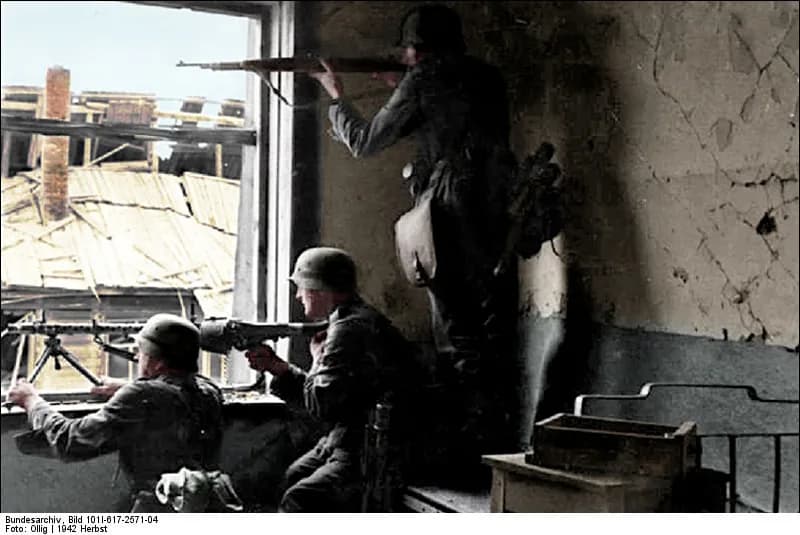
Battle of Stalingrad
The Battle of Stalingrad was among the deadliest clashes of World War II, pitting German and Soviet forces against each other in devastating urban combat that marked a decisive turning point on the Eastern Front. From 23 August 1942 to 2 February 1943, Operation Uranus encircled the German Sixth Army, whose roughly 91,000 survivors surrendered.
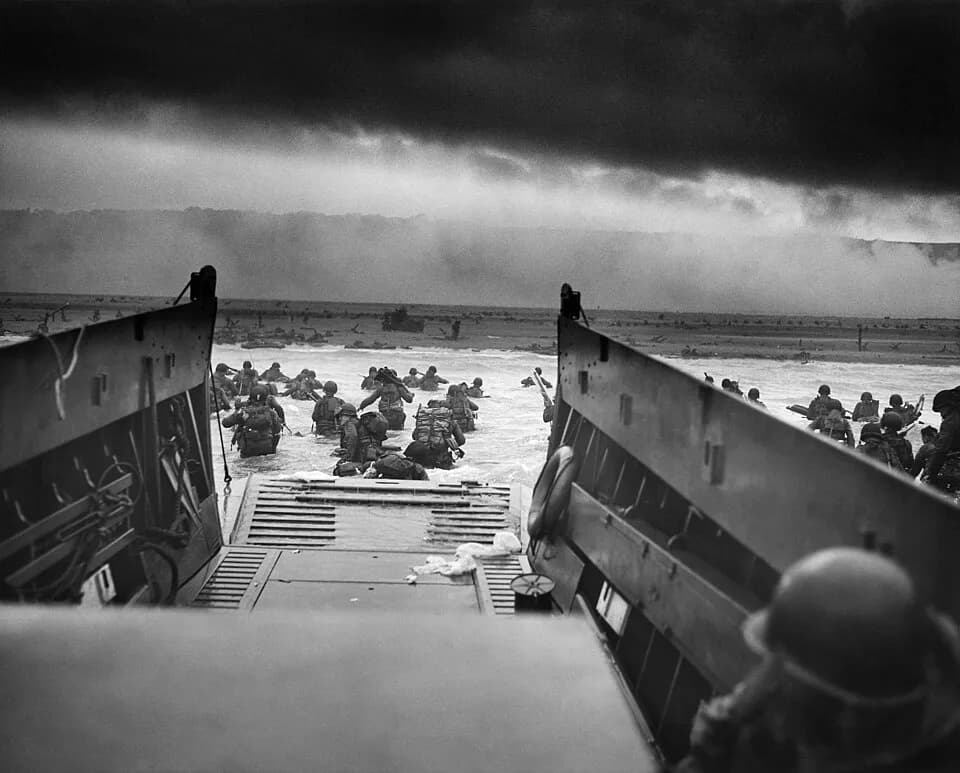
Normandy Landings
The Normandy landings, the largest amphibious operation in history, opened a second front in Western Europe on 6 June 1944, hastening the liberation of France and the defeat of Nazi Germany. Nearly 7,000 vessels put 156,000 men ashore on five beaches in a single day, under air cover and after months of deception meant to mislead the Wehrmacht.
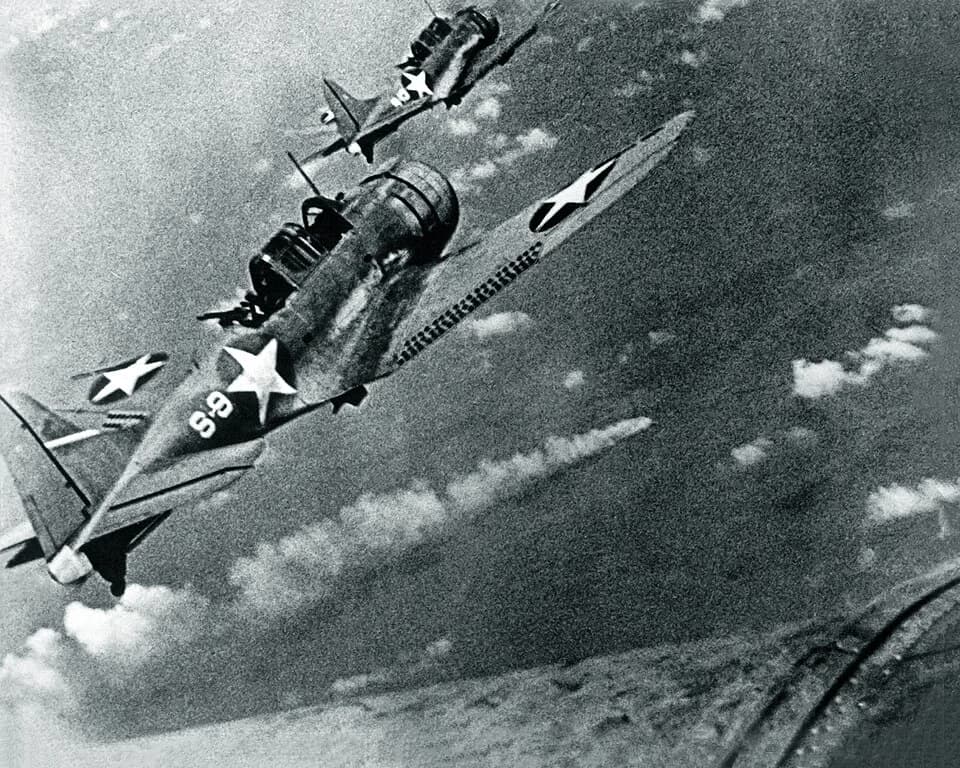
Battle of Midway
The Battle of Midway was the decisive turning point of the Pacific war, where the American navy inflicted a catastrophic defeat on the Japanese fleet by sinking four aircraft carriers, reversing the naval balance. From 4 to 7 June 1942, the decryption of Japanese communications allowed Admiral Nimitz to ambush a fleet that outnumbered his own.
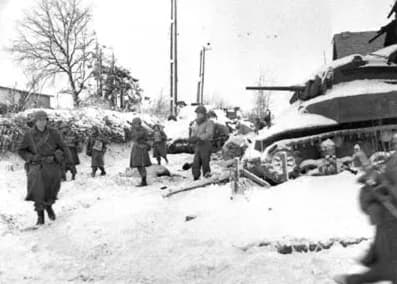
Battle of the Bulge
The Battle of the Bulge was the last major German offensive on the western front, a desperate attempt to break through Allied lines in the Belgian forests that failed against American resistance. Launched on 16 December 1944 under overcast skies that grounded Allied aircraft, it was broken by late January 1945.
