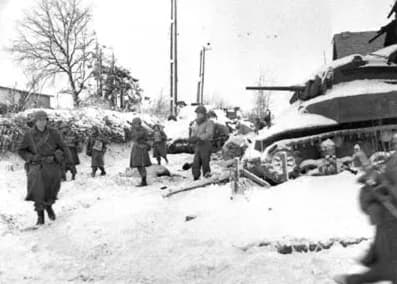
The Battle of the Bulge was the last major German offensive on the western front, a desperate attempt to break through Allied lines in the Belgian forests that failed against American resistance. Launched on 16 December 1944 under overcast skies that grounded Allied aircraft, it was broken by late January 1945.
The Battle of the Bulge, named for the salient created in Allied lines, was the result of a bold and desperate strategic decision by Adolf Hitler in autumn 1944. Following the success of the Normandy landings and the rapid liberation of France and Belgium during the summer, the Western Allies had advanced to the borders of Germany. However, their advance had slowed considerably in autumn, partly due to lengthening supply lines, the failure of Operation Market Garden in the Netherlands in September, and growing resistance from German forces defending their own territory. Hitler, refusing to accept the inevitability of defeat, conceived the plan for Operation Wacht am Rhein, a surprise offensive through the Belgian Ardennes forests aimed at breaking through Allied lines, crossing the Meuse, and seizing the vital port of Antwerp. The objective was to cut the Allied forces in two, separating the British armies in the north from the American armies in the south, and forcing the Western Allies to negotiate a separate peace. This plan deliberately echoed the Ardennes breakthrough of May 1940 that had led to France's defeat. Hitler chose the Ardennes because this sector was considered a quiet front, held by inexperienced or combat-worn American divisions. The forested and hilly terrain, while difficult for armored operations, offered natural cover against Allied air reconnaissance. Hitler also counted on winter weather to neutralize Allied air superiority. German generals, notably Field Marshal Gerd von Rundstedt and General Hasso von Manteuffel, expressed serious reservations about the plan's feasibility, considering the objectives too ambitious for available forces. Rundstedt proposed a more limited offensive, nicknamed the small solution, but Hitler categorically rejected any modification to his grandiose plan. The offensive's preparation was conducted in the greatest secrecy, with draconian security measures that succeeded in deceiving Allied intelligence services.
The German offensive began on December 16, 1944, at 5:30 AM with a massive artillery barrage along a 130-kilometer front in the Ardennes. Three German armies, totaling approximately 250,000 men, struck American positions in thick winter fog that grounded Allied aircraft. General Sepp Dietrich's Sixth SS Panzer Army attacked in the north, General Hasso von Manteuffel's Fifth Panzer Army in the center, and General Erich Brandenberger's Seventh Army in the south to protect the flank. The surprise was total. American divisions holding the Ardennes front, notably the 99th and 106th Infantry Divisions, were overwhelmed by the assault. The 106th Infantry Division suffered one of the worst American defeats of the war in Europe when two of its three regiments were encircled and forced to surrender in the Schnee Eifel, with approximately 8,000 prisoners. However, American resistance stiffened rapidly at several key points. At Elsenborn Ridge in the north, the 99th and 2nd Infantry Divisions held their positions despite repeated attacks, preventing the Sixth SS Panzer Army from breaking through to vital road networks. To the south, the town of Bastogne, a crucial road junction, became the symbol of American resistance. The 101st Airborne Division, commanded by General Anthony McAuliffe, was encircled in Bastogne by German forces but refused to surrender. When the Germans sent an ultimatum demanding capitulation, McAuliffe responded with his famous Nuts, which became a symbol of American determination. General Eisenhower reacted quickly to the crisis by ordering the transfer of General George S. Patton's Third Army, then engaged in Lorraine, northward to relieve Bastogne. Patton accomplished one of the war's most remarkable logistical feats by pivoting his army 90 degrees and covering more than 160 kilometers in a few days under difficult winter conditions. On December 26, the lead elements of Patton's Fourth Armored Division broke the siege of Bastogne. Simultaneously, improving weather from December 23 allowed Allied air forces to resume operations, devastating German armored columns deprived of air cover.
The forces engaged in the Battle of the Bulge were considerable and reflected Germany's last major attempt to reverse the situation on the Western Front. On the German side, Hitler had assembled his final strategic reserves for this offensive. The Sixth SS Panzer Army, spearhead of the northern attack, comprised four SS Panzer divisions, including the 1st SS Panzer Division Leibstandarte Adolf Hitler and the 12th SS Panzer Division Hitlerjugend, plus several Volksgrenadier infantry divisions. The Fifth Panzer Army, charged with the main breakthrough in the center, had three panzer divisions and four infantry divisions. The Seventh Army, providing southern cover, comprised four infantry divisions. In total, the initial German order of battle included approximately 250,000 men, 600 tanks and assault guns, and approximately 1,600 artillery pieces. Among the most feared units was Kampfgruppe Peiper, commanded by SS-Obersturmbannfuhrer Joachim Peiper, an armored formation of the Leibstandarte SS that was to lead the deep penetration. This unit was responsible for the Malmedy massacre on December 17, during which 84 American prisoners of war were executed, a war crime that galvanized American resistance. Germany also deployed special commandos under Otto Skorzeny's orders, disguised as American soldiers with captured vehicles and uniforms, tasked with sowing confusion behind the lines. On the American side, the Ardennes front was initially held by approximately 80,000 men from the US First Army, distributed in divisions considered to be in rest sectors. General Eisenhower rapidly mobilized massive reinforcements, bringing Allied forces engaged to more than 600,000 men at the battle's peak. Patton's Third Army to the south and elements of the Ninth Army and Montgomery's British Second Army to the north converged on the salient. Elite airborne divisions were rushed into the battle, notably the 101st Airborne at Bastogne and the 82nd Airborne at Elsenborn Ridge. Allied air superiority, once the weather cleared, proved devastating for the Germans.
The consequences of the Battle of the Bulge were significant for the final months of the war in Europe. Militarily, the German offensive completely failed in its strategic objectives. Far from reaching Antwerp, the maximum penetration did not exceed approximately 100 kilometers in depth, and the salient was progressively reduced by Allied counterattacks during January 1945. Germany's last strategic reserve had been spent in vain, leaving the Western Front terribly weakened against the final Allied offensive. Losses were heavy on both sides. The Americans suffered approximately 89,000 casualties, including approximately 19,000 killed, 47,500 wounded, and 23,000 captured or missing. It was the costliest battle of the entire war for the American Army in Europe. British losses amounted to approximately 1,400 men. On the German side, losses are estimated between 80,000 and 100,000 men, including killed, wounded, and prisoners, plus the destruction of hundreds of irreplaceable tanks, armored vehicles, and artillery pieces at this stage of the war. Fuel losses were also catastrophic for Germany, whose oil reserves were already critically low. The offensive had consumed a considerable share of remaining stocks without reaching the Allied fuel depots the Germans had hoped to capture. Strategically, the Battle of the Bulge delayed the Allied offensive toward the Rhine by approximately six weeks. Some historians have debated whether this delay indirectly allowed the Soviet Union to advance deeper into Eastern Europe before the junction with the Western Allies, thus influencing Cold War geography. The battle also had repercussions on relations between Allied commanders. Eisenhower's decision to temporarily place American forces north of the salient under Field Marshal Montgomery's command created lasting tensions between American and British officers, especially as Montgomery publicly claimed a disproportionate share of credit for the victory.
The legacy of the Battle of the Bulge remains deeply rooted in American and Belgian collective memory. For the United States, this battle represents one of the most dramatic and heroic episodes of their participation in World War II. The siege of Bastogne and McAuliffe's legendary response have become iconic symbols of American resilience in the face of adversity. The Bastogne War Museum, inaugurated in 2014, and the Mardasson Memorial, erected in 1950 in the shape of an American five-pointed star, attract tens of thousands of visitors each year. The forests of the Belgian and Luxembourgish Ardennes are dotted with military cemeteries, monuments, and remnants of fighting that testify to the battle's intensity. The American Cemetery at Henri-Chapelle and the Luxembourg Cemetery at Hamm, where General Patton is buried, are among the most visited. For Belgium and Luxembourg, the Battle of the Bulge is an integral part of the national memory of liberation. Civilians in Ardennes villages paid a heavy price, both from destruction and from atrocities committed, such as the massacres at Stavelot and Baugnez. Annual December 16 commemorations and historical reenactments keep the memory of these events alive. In military history, the Battle of the Bulge is studied as a classic example of the limits of a surprise offensive when not supported by sufficient resources and when opposing air superiority reasserts itself. It also illustrates the importance of defensive force resilience and adaptability, with the American Army's ability to absorb a devastating initial shock and quickly organize an effective response considered one of the most remarkable examples of military recovery of the twentieth century. Patton's logistical feat of pivoting an entire army in the middle of winter to relieve Bastogne continues to be taught in military academies as a model of decisive command and operational flexibility.
This article draws on historical works, military archives and recognized academic publications.
Hitler aimed to break through Allied lines in the Belgian Ardennes, cross the Meuse, and seize the port of Antwerp, cutting British armies in the north from American armies in the south. The objective was to force the Western Allies to negotiate a separate peace. The offensive (Operation Wacht am Rhein), launched December 16, 1944, committed 250,000 men and 600 tanks — Germany's last strategic reserve.
Bastogne, a crucial road junction in the Ardennes, was encircled by German forces. The US 101st Airborne Division under General Anthony McAuliffe held firm. When the Germans sent a surrender ultimatum, McAuliffe famously replied 'Nuts!' On December 26, 1944, Patton's 4th Armored Division broke the siege. This resistance symbolized American determination in the face of Germany's last major offensive.
The Battle of the Bulge (December 16, 1944 - January 25, 1945) was the costliest battle of the entire war for the US Army in Europe: approximately 89,000 casualties, including 19,000 killed, 47,500 wounded, and 23,000 captured or missing. On the German side, losses are estimated at 80,000 to 100,000 men, plus the destruction of hundreds of irreplaceable tanks. Germany spent its last strategic reserves in vain.
Information cross-checked against Wikipedia and reference historical works.
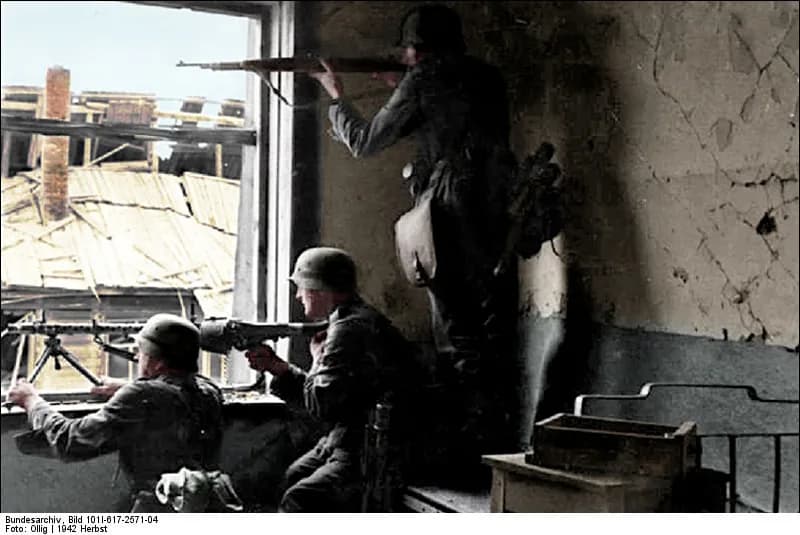
Battle of Stalingrad
The Battle of Stalingrad was among the deadliest clashes of World War II, pitting German and Soviet forces against each other in devastating urban combat that marked a decisive turning point on the Eastern Front. From 23 August 1942 to 2 February 1943, Operation Uranus encircled the German Sixth Army, whose roughly 91,000 survivors surrendered.
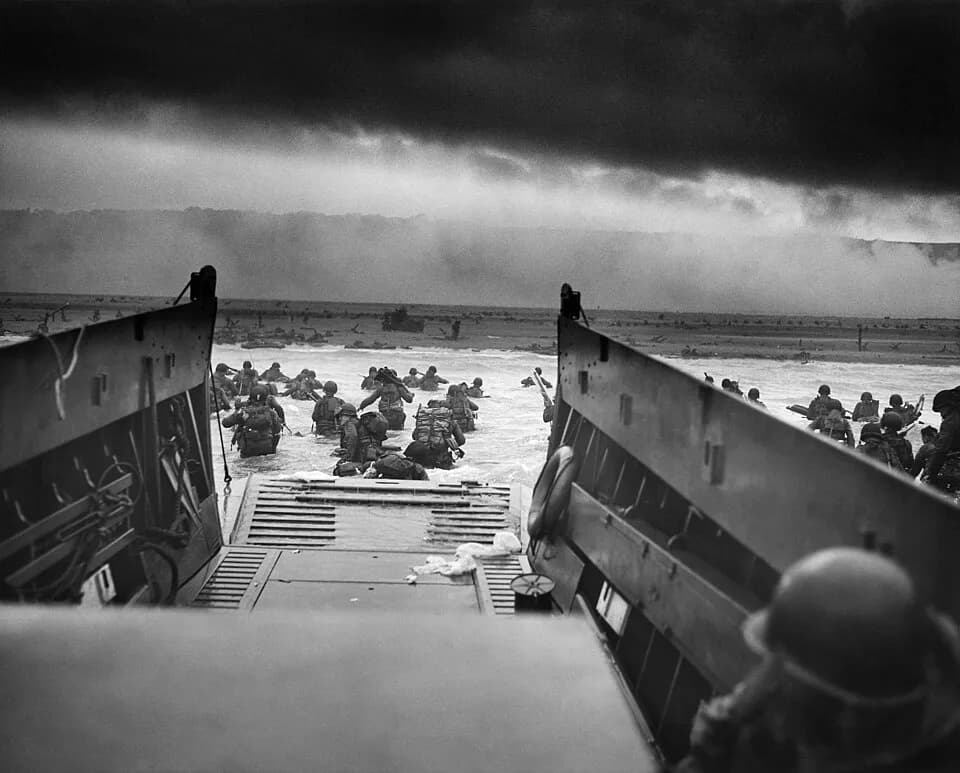
Normandy Landings
The Normandy landings, the largest amphibious operation in history, opened a second front in Western Europe on 6 June 1944, hastening the liberation of France and the defeat of Nazi Germany. Nearly 7,000 vessels put 156,000 men ashore on five beaches in a single day, under air cover and after months of deception meant to mislead the Wehrmacht.
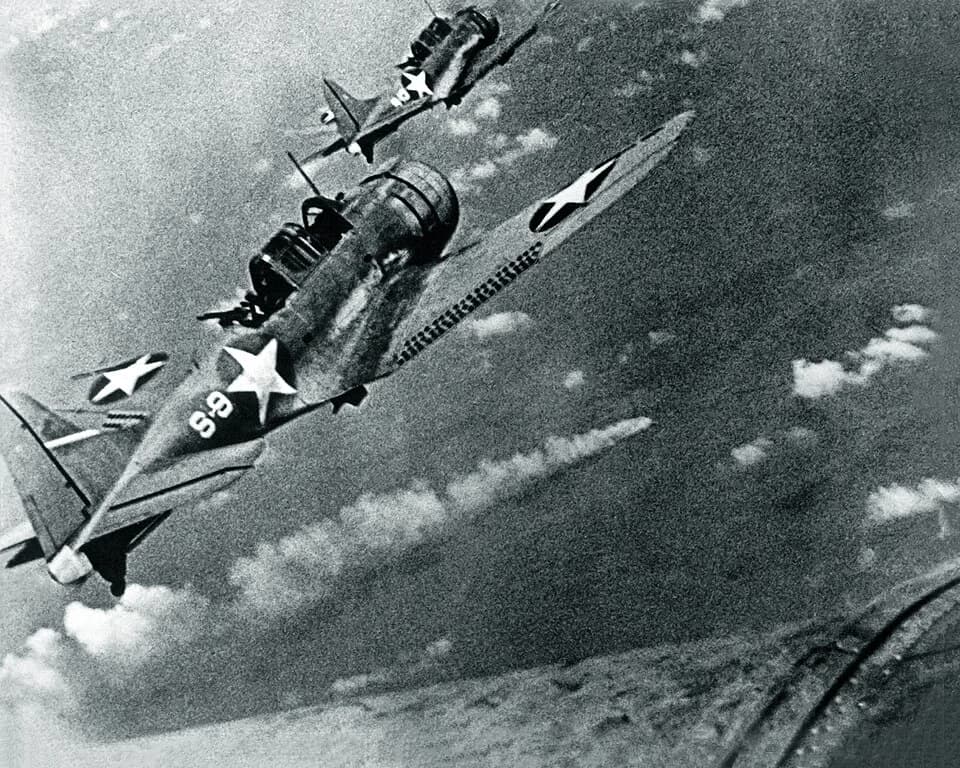
Battle of Midway
The Battle of Midway was the decisive turning point of the Pacific war, where the American navy inflicted a catastrophic defeat on the Japanese fleet by sinking four aircraft carriers, reversing the naval balance. From 4 to 7 June 1942, the decryption of Japanese communications allowed Admiral Nimitz to ambush a fleet that outnumbered his own.
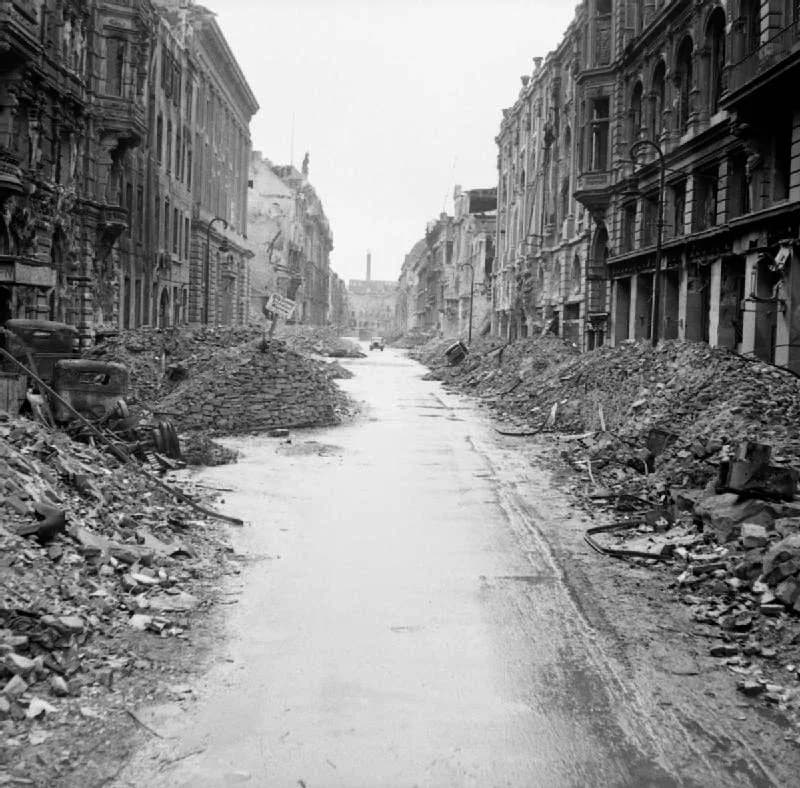
Battle of Berlin
The Battle of Berlin was the final Soviet assault on the capital of the Third Reich, a massive operation involving over two million soldiers that ended the war in Europe with the fall of the Nazi regime. From 16 April to 2 May 1945, the Red Army encircled and then reduced the city street by street; Hitler took his own life in his bunker on 30 April.
