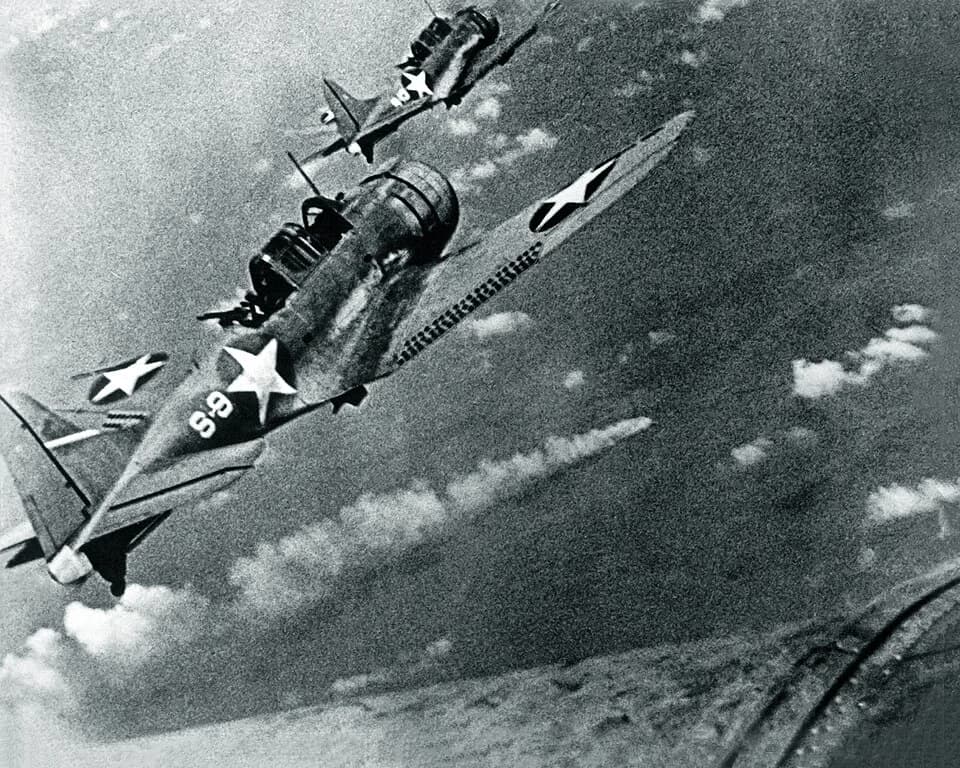
The Battle of Midway was the decisive turning point of the Pacific war, where the American navy inflicted a catastrophic defeat on the Japanese fleet by sinking four aircraft carriers, reversing the naval balance. From 4 to 7 June 1942, the decryption of Japanese communications allowed Admiral Nimitz to ambush a fleet that outnumbered his own.
The Battle of Midway took place six months after the Japanese attack on Pearl Harbor, in a context where Imperial Japan still dominated the Pacific theater. Since December 1941, Japanese forces had conquered with stunning speed a vast empire stretching from the borders of India to the islands of the central Pacific, encompassing the Philippines, the Dutch East Indies, Malaya, Burma, and countless archipelagos. Admiral Isoroku Yamamoto, commander of the Japanese Combined Fleet and architect of the Pearl Harbor attack, was however aware that time was working against Japan. American industrial power, once fully mobilized, would inevitably surpass Japanese production capabilities. Yamamoto therefore devised a bold plan to lure the American Pacific Fleet into a trap near Midway Atoll, located approximately 2,100 kilometers northwest of Hawaii. The objective was twofold: capture Midway for use as an advanced base and, above all, destroy the American aircraft carriers that had escaped the Pearl Harbor attack. The Japanese plan included a diversionary attack against the Aleutian Islands in Alaska to divide American forces, followed by the main assault on Midway. However, the Japanese were unaware of a decisive advantage the Americans possessed: the cryptanalysts of Station HYPO at Pearl Harbor, led by Commander Joseph Rochefort, had succeeded in partially breaking the Japanese naval code JN-25. This intelligence breakthrough allowed Admiral Chester Nimitz, commander of the Pacific Fleet, to know the broad outlines of the Japanese plan, including the date and target of the attack. Nimitz was thus able to concentrate his limited forces at the right place and time, transforming what was meant to be a Japanese trap into an American ambush. The Americans had three aircraft carriers available: the Enterprise, Hornet, and Yorktown, the latter having been hastily repaired after the Battle of the Coral Sea in just 72 hours instead of the estimated three months.
The Battle of Midway began on June 4, 1942, at first light, when the four Japanese carriers of Vice Admiral Chuichi Nagumo's strike force launched a first wave of 108 aircraft against Midway Atoll. Japanese bombers and fighters inflicted considerable damage on the island's installations, but the American garrison put up vigorous resistance with its antiaircraft artillery. Aircraft based on Midway, including TBF Avenger torpedo bombers, B-26 Marauders, and Army SBD Dauntless dive bombers, launched counterattacks against the Japanese fleet but suffered heavy losses without scoring significant hits. Then came the critical moment of the battle. Nagumo, having learned of the presence of American ships nearby, faced a fatal dilemma. His aircraft had been rearmed with bombs for a second strike against Midway, and he now had to rearm them with torpedoes to attack enemy ships. This rearming process took precious time and left the flight decks cluttered with munitions and fuel. Meanwhile, the American carriers had launched their own air groups. The first attacks by torpedo squadrons were disastrous for the Americans. Torpedo Squadron 8 from the Hornet was almost completely annihilated, with 29 of 30 crews lost, without hitting a single Japanese ship. Torpedo squadrons from the Enterprise and Yorktown suffered similar losses. However, these sacrificial attacks had a crucial effect in drawing Japanese Zero fighters down to low altitude and disrupting defensive formations. At 10:22, in a spectacular five-minute reversal that changed the course of the war, SBD Dauntless dive bombers from the Enterprise and Yorktown dove on the Japanese carriers with almost no opposition. Within minutes, the Akagi, Kaga, and Soryu were hit by bombs that triggered catastrophic fires among the munitions and fuel cluttering their decks. The three ships were transformed into floating infernos and eventually sank. The fourth Japanese carrier, the Hiryu, launched counterattacks that severely damaged the Yorktown, but was itself sunk in the late afternoon by Enterprise aircraft.
The forces engaged at the Battle of Midway reflected the scale of the strategic stakes this confrontation represented in the Pacific. On the Japanese side, Admiral Yamamoto had deployed virtually the entire Combined Fleet in an operation of considerable scope. The main strike force, commanded by Vice Admiral Nagumo, comprised four fleet carriers: the Akagi, Kaga, Soryu, and Hiryu, the same ships that had struck Pearl Harbor six months earlier. These carriers embarked a total of approximately 248 aircraft, flown by crews among the most experienced in the world, veterans of the China and Pacific campaigns. The invasion force included transports escorted by heavy cruisers and destroyers, carrying approximately 5,000 troops intended to land on the atoll. In support was the main body of the fleet with the giant battleship Yamato, Yamamoto's flagship, accompanied by several other battleships, cruisers, and destroyers. In total, the Japanese force comprised more than 200 ships and submarines. However, this power was dispersed across a vast ocean space, which prevented the different components from supporting each other during the battle. On the American side, forces were markedly inferior in number but benefited from the intelligence advantage. Admiral Nimitz deployed two carrier task forces. Task Force 16, commanded by Rear Admiral Raymond Spruance, included the carriers Enterprise and Hornet with their embarked air groups. Task Force 17, commanded by Rear Admiral Frank Jack Fletcher, had the carrier Yorktown. The three American carriers embarked approximately 233 aircraft in total. The Midway garrison added approximately 120 additional aircraft of various types. The total American naval force comprised approximately 25 surface ships and more than a dozen submarines positioned as a surveillance screen. American numerical inferiority was compensated by knowledge of enemy intentions and crew determination.
The consequences of the Battle of Midway were profound and lasting, fundamentally transforming the balance of power in the Pacific. The loss of four fleet carriers, the Akagi, Kaga, Soryu, and Hiryu, represented a devastating blow to the Imperial Japanese Navy. These ships constituted the core of the strike force that had dominated the Pacific during the first six months of the war. Beyond the ships themselves, it was the loss of approximately 292 aircraft and, above all, more than 100 highly trained pilots and aircrew that proved irreparable. The Japanese pilot training system, elitist and slow, could not replace these losses as quickly as the more pragmatic and industrialized American system. The loss of a heavy cruiser, the Mikuma, added to the toll. On the American side, losses included the carrier Yorktown, sunk on June 7 by a Japanese submarine while being towed, a destroyer, 147 aircraft, and approximately 307 men. While significant, these losses were markedly less than Japan's and could be compensated by America's formidable industrial capacity. Strategically, Midway ended Japanese expansion in the central Pacific and transferred strategic initiative to the Americans. Japan shifted from an offensive to a defensive posture from which it never recovered. The Japanese Navy was never again capable of launching a major carrier offensive. Psychologically, the Midway victory considerably boosted American morale, still wounded by Pearl Harbor and the fall of the Philippines. It demonstrated that the Japanese Navy, considered invincible, could be decisively defeated. In Japan, authorities attempted to conceal the extent of the defeat from the public, going so far as to isolate survivors and censor all information about the battle. This culture of secrecy contributed to preventing Japan from learning the necessary lessons from its defeat.
The legacy of the Battle of Midway is considerable in world naval and military history. This battle is universally recognized as the turning point of the Pacific War, the moment when the tide changed direction irreversibly. Military historians consider it one of the most important naval battles in history, alongside Trafalgar and Tsushima, but with a unique characteristic: it was the first major naval battle in which the opposing fleets never saw each other directly, with all combat conducted entirely by embarked air groups. In this regard, Midway definitively established the aircraft carrier as the capital ship of modern navies, relegating the battleship to the role of auxiliary weapon. In terms of intelligence, Midway constitutes one of the most famous examples of the decisive impact of enemy communications decryption on a battle's outcome. The work of Joseph Rochefort's team at Station HYPO has become a classic case study in military intelligence education. The ruse used to confirm that Midway was indeed the Japanese target, which involved sending a plain-text message reporting a freshwater shortage on the atoll and then intercepting the Japanese communication mentioning this information, is cited in every electronic warfare manual. Midway Atoll itself has become a national wildlife refuge, hosting important seabird colonies. A battle memorial has been established there, though access is limited due to environmental protection. The wrecks of the Japanese ships and the Yorktown rest in the Pacific depths, where some have been located by underwater exploration expeditions. The courage of the American torpedo squadrons, particularly Torpedo Squadron 8 from which only Ensign George Gay survived, has become a symbol of military sacrifice. The battle has inspired numerous books, documentaries, and feature films, including the 2019 film directed by Roland Emmerich. Each year in the United States, June 4 is commemorated by naval history enthusiasts as the day that changed the course of the war in the Pacific.
This article draws on historical works, military archives and recognized academic publications.
Japan lost four aircraft carriers at the Battle of Midway (June 4-7, 1942): the Akagi, Kaga, Soryu, and Hiryu — the same ships that had attacked Pearl Harbor. With them, approximately 292 aircraft and over 100 elite pilots were lost. The American USS Yorktown was sunk on June 7 by a Japanese submarine. The Japanese Navy could never rebuild a comparable carrier force.
The cryptanalysts of Station HYPO at Pearl Harbor, led by Commander Joseph Rochefort, had partially broken Japanese naval code JN-25 before the battle. This allowed Admiral Nimitz to know the target, date, and forces involved — transforming the Japanese trap into an American ambush. The three American carriers were positioned exactly at the right place to intercept Nagumo's fleet, despite their numerical inferiority.
American torpedo squadrons, notably Torpedo Squadron 8 from the Hornet (29 of 30 crews killed, zero torpedo hits), attacked without fighter cover at low altitude, where Japanese Zeros were devastating. These sacrificial attacks had a decisive effect: they drew Japanese fighters down and disrupted carrier defenses, leaving their munitions-cluttered decks vulnerable to the Dauntless dive bombers just minutes later.
Information cross-checked against Wikipedia and reference historical works.
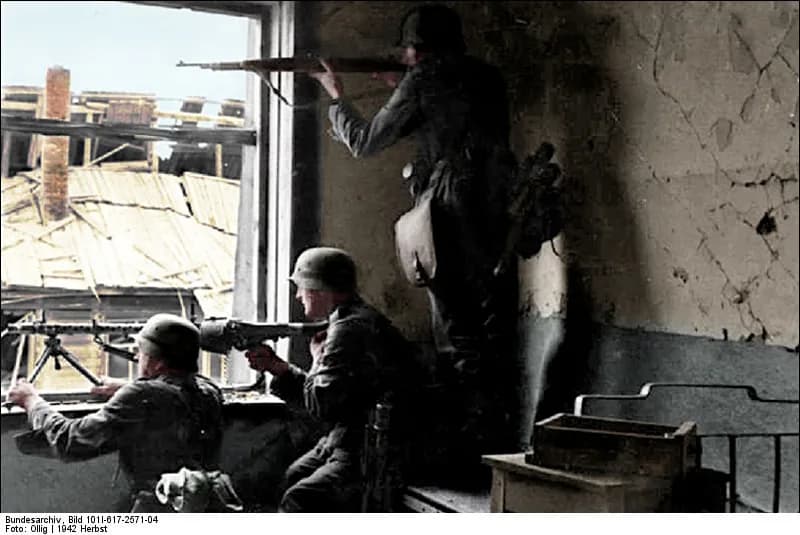
Battle of Stalingrad
The Battle of Stalingrad was among the deadliest clashes of World War II, pitting German and Soviet forces against each other in devastating urban combat that marked a decisive turning point on the Eastern Front. From 23 August 1942 to 2 February 1943, Operation Uranus encircled the German Sixth Army, whose roughly 91,000 survivors surrendered.
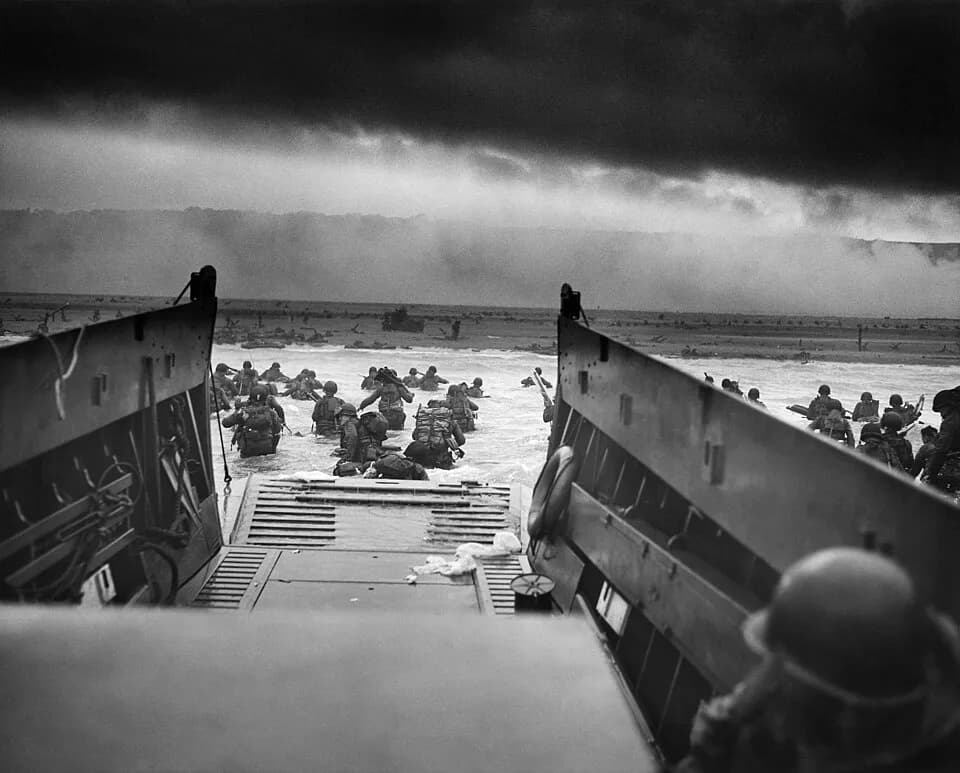
Normandy Landings
The Normandy landings, the largest amphibious operation in history, opened a second front in Western Europe on 6 June 1944, hastening the liberation of France and the defeat of Nazi Germany. Nearly 7,000 vessels put 156,000 men ashore on five beaches in a single day, under air cover and after months of deception meant to mislead the Wehrmacht.
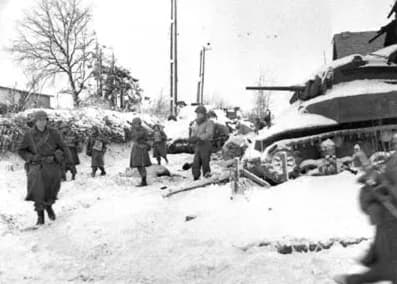
Battle of the Bulge
The Battle of the Bulge was the last major German offensive on the western front, a desperate attempt to break through Allied lines in the Belgian forests that failed against American resistance. Launched on 16 December 1944 under overcast skies that grounded Allied aircraft, it was broken by late January 1945.
Battle of Berlin
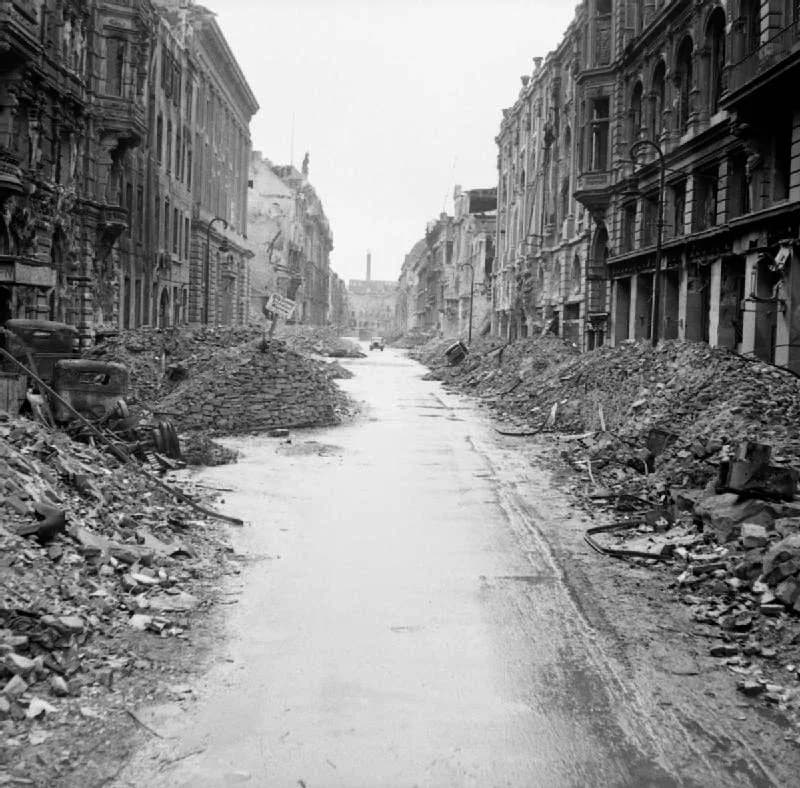
The Battle of Berlin was the final Soviet assault on the capital of the Third Reich, a massive operation involving over two million soldiers that ended the war in Europe with the fall of the Nazi regime. From 16 April to 2 May 1945, the Red Army encircled and then reduced the city street by street; Hitler took his own life in his bunker on 30 April.
