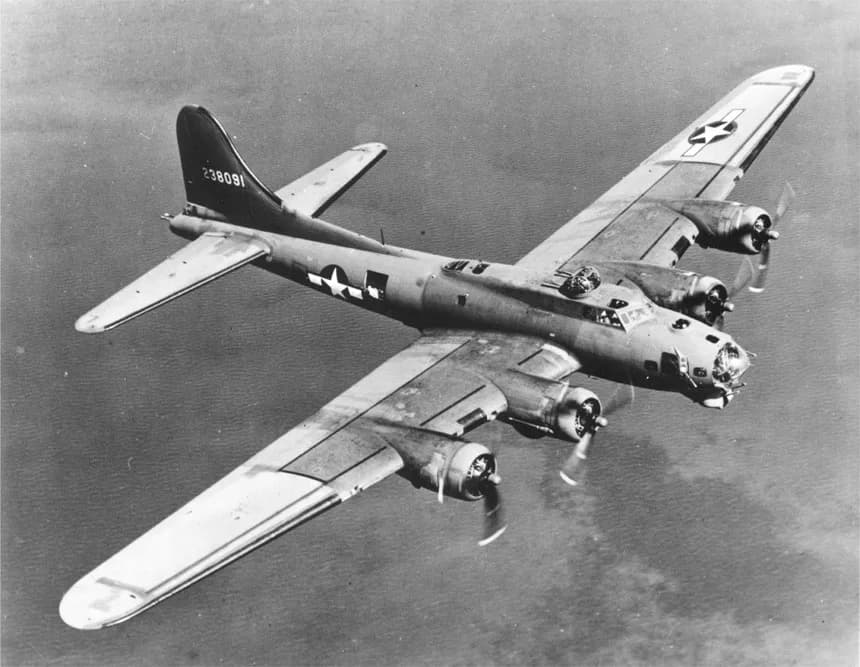
The Boeing B-17 Flying Fortress is the iconic heavy bomber of the US Army Air Forces in Europe. With its 13 machine guns and ability to absorb considerable damage, it symbolized the strategic bombing campaign that devastated German industry and cities.
The B-17 was born from a 1934 US Army Air Corps competition for a multi-engine bomber capable of defending American coastlines. Boeing proposed the Model 299, a revolutionary four-engine aircraft that flew for the first time on July 28, 1935. A Seattle journalist dubbed it 'Flying Fortress' upon seeing its numerous gun positions — Boeing immediately trademarked the name. The prototype crashed in October 1935 due to pilot error (control surfaces were locked), but the army was sufficiently impressed to order 13 evaluation units (YB-17). Early versions (B-17B, C, D) were produced in small numbers and suffered from insufficient armor and defensive armament — a painful lesson learned by the RAF which used a few B-17Cs in 1941 with disastrous results. The E version (1941) introduced a ventral turret, tail turret, and reinforced armor. It was the G version (1943), with its Bendix chin turret under the nose, that became the definitive model with 8,680 units produced — the largest number of heavy bombers of a single model.
The B-17G measured 22.7m long with a wingspan of 31.6m. Its four Wright R-1820 Cyclone engines of 1,200 horsepower each gave it a maximum speed of 462 km/h at 7,600m. Service ceiling: 10,700m. Range: 3,200 km with 2,700 kg of bombs (maximum load: 7,800 kg over short distances). The ten-man crew comprised the pilot, copilot, navigator, bombardier, radio operator, and five gunners. The defensive armament of 13 Browning M2 12.7mm machine guns covered all angles: dorsal turret, ventral turret (ball turret), chin turret, waist gun positions, and tail gun. The Norden bombsight, a top-secret analog device, allowed precision bombing from high altitude — at least in theory, as weather conditions over Europe often limited visibility. The B-17's structural robustness was legendary: numerous aircraft returned to base with damage that seemed incompatible with flight.
The B-17 was at the heart of the American strategic bombing campaign in Europe, based on the doctrine of precision daylight formation bombing — as opposed to RAF night raids. The 8th Air Force, based in England from 1942, launched increasingly deep missions into enemy territory. B-17 formations flew in 'combat box' formations, tight groupings maximizing mutual defensive fire coverage. However, without long-range fighter escort, losses were catastrophic. The Schweinfurt-Regensburg mission of August 17, 1943 lost 60 bombers out of 376 engaged (16%). The second Schweinfurt mission on October 14, 1943 ('Black Thursday') lost 77 bombers — unsustainable losses that forced a temporary halt to deep penetration missions. The arrival of the P-51 Mustang as a long-range escort fighter in early 1944 was a game-changer: B-17s could finally strike Berlin and the entire Reich with adequate protection. In total, 8th Air Force B-17s dropped 640,000 tons of bombs on Europe.
The B-17 existed in a dozen main variants. Versions A through D were pre-war models in small series. The B-17E (512 units) introduced the redesigned tail and dorsal turret. The B-17F (3,405 units) improved engines and armor. The B-17G (8,680 units) added the chin turret against frontal attacks by German fighters. The F-9/FB-17 was a photographic reconnaissance version. The BQ-7 'Aphrodite' was a worn-out B-17 packed with explosives, remotely guided to strike fortified targets — a drone concept ahead of its time (JFK's older brother, Joseph Kennedy Jr., died on one of these missions). The PB-1G served with the US Coast Guard for search and rescue. The SB-17 was a sea rescue aircraft carrying a droppable lifeboat. Boeing also used the B-17 as a platform for early aerial refueling tests. In total, 12,731 B-17s were built by Boeing, Douglas, and Lockheed-Vega.
The B-17 is central to the debate on strategic bombing effectiveness. The bombing campaign devastated German industry and killed approximately 300,000 to 600,000 German civilians. The post-war US Strategic Bombing Survey concluded that bombing seriously weakened Germany's war-making capacity, particularly synthetic fuel production and transportation. However, German armament production paradoxically increased until summer 1944, under Albert Speer's direction. The human cost for bomber crews was staggering: 4,735 B-17s were lost in combat in Europe, and total 8th Air Force losses amounted to 26,000 killed. A B-17 crew in 1943 had statistically less than a 25% chance of completing their 25 missions. Despite these losses, the B-17 remains a symbol of determination and sacrifice. The film 'Memphis Belle' (1990) and numerous accounts have immortalized the crew experience. Today, about a dozen B-17s still fly, drawing crowds at air shows.
The B-17G carried 13 Browning M2 .50-caliber machine guns covering all angles of attack: dorsal turret, ball turret, chin turret, waist gun positions, and tail gun. Its legendary structural toughness allowed many aircraft to return to base with damage seemingly incompatible with continued flight. It flew in tight 'combat box' formations to maximize overlapping defensive fire.
On October 14, 1943, the US 8th Air Force sent 291 B-17 Flying Fortresses to bomb the Schweinfurt ball-bearing factories in Germany without fighter escort. Seventy-seven bombers were shot down — roughly 26% of aircraft engaged, or 770 airmen killed or captured. These catastrophic losses forced a halt to deep-penetration missions until the arrival of the P-51 Mustang escort fighter in early 1944.
In 1943, a B-17 crew had statistically less than a 25% chance of completing the required 25 missions. Of the 12,731 B-17s built, 4,735 were lost in combat in Europe. In total, the US 8th Air Force suffered 26,000 killed. Despite these losses, crews bombed Europe from England, dropping 640,000 tons of bombs on German industrial and military targets.
Information cross-checked against Wikipedia and reference historical works.
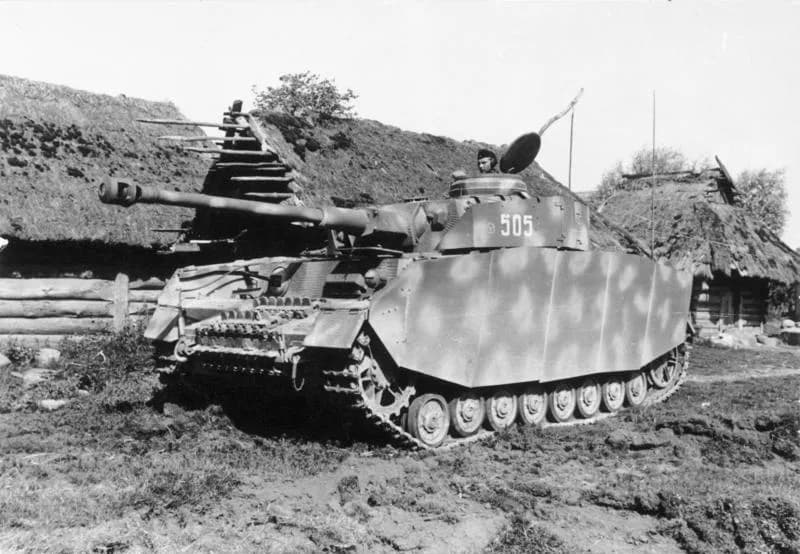
Panzer IV
The Panzerkampfwagen IV was the most produced German medium tank of World War II, with over 8,500 built. Originally designed as an infantry support tank, it evolved into the backbone of the Panzer divisions on every front. It is the only German tank in production from 1939 to 1945.
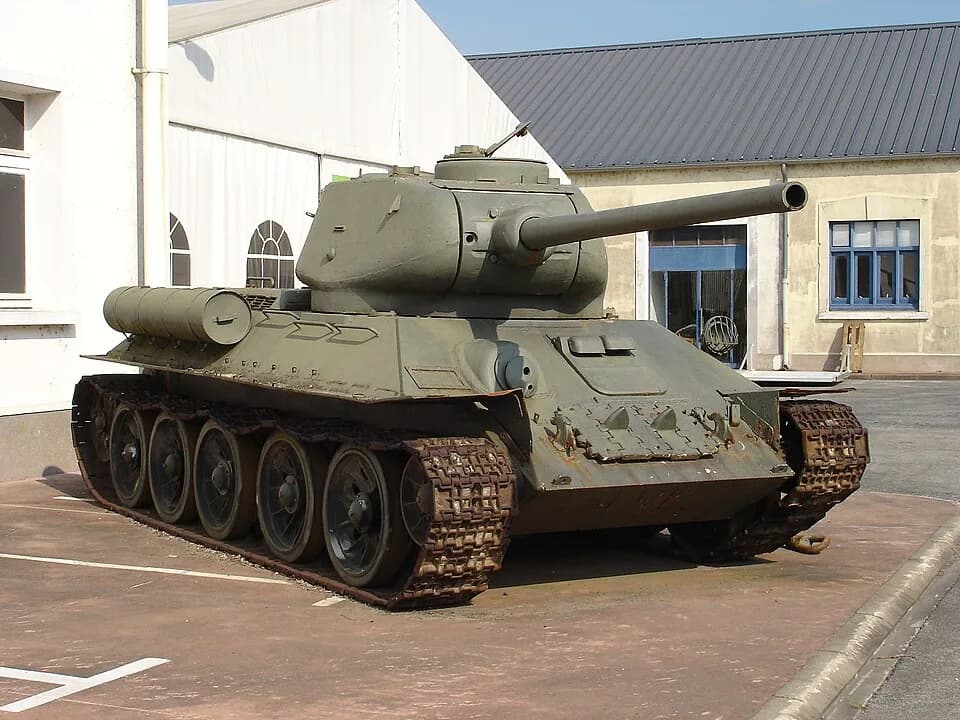
T-34
The T-34 is widely considered the best medium tank of World War II and one of the most influential in military history. Produced in over 84,000 units, its combination of sloped armor, mobility and firepower shocked the Germans in 1941 and shifted the balance of power on the Eastern Front.
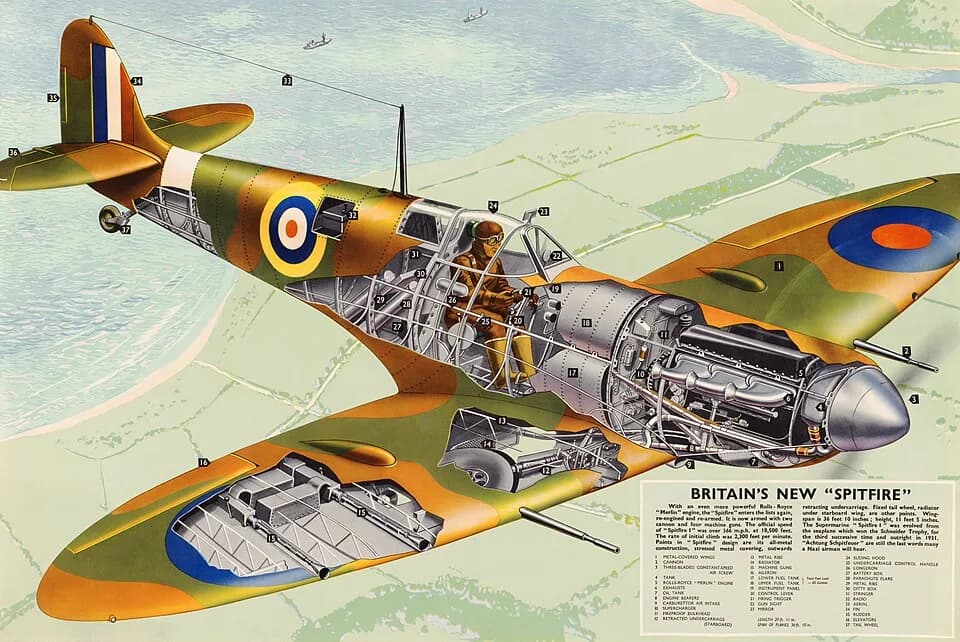
Supermarine Spitfire
The Supermarine Spitfire is the iconic fighter aircraft of the Royal Air Force and a symbol of British resistance during the Battle of Britain. Designed by R.J. Mitchell, its combination of elliptical wings, Rolls-Royce Merlin engine and exceptional agility made it one of the finest fighters of the war.
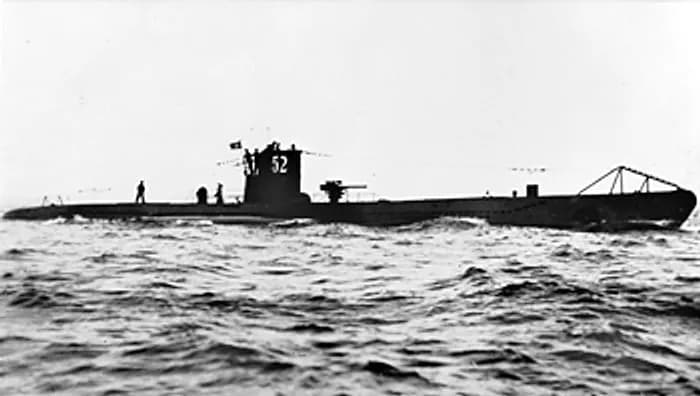
U-Boat Type VII
The Type VII U-boat is the most produced submarine in history with 703 built. The backbone of the Kriegsmarine during the Battle of the Atlantic, these vessels nearly severed the vital supply lines between America and Britain, threatening Great Britain's very survival.
