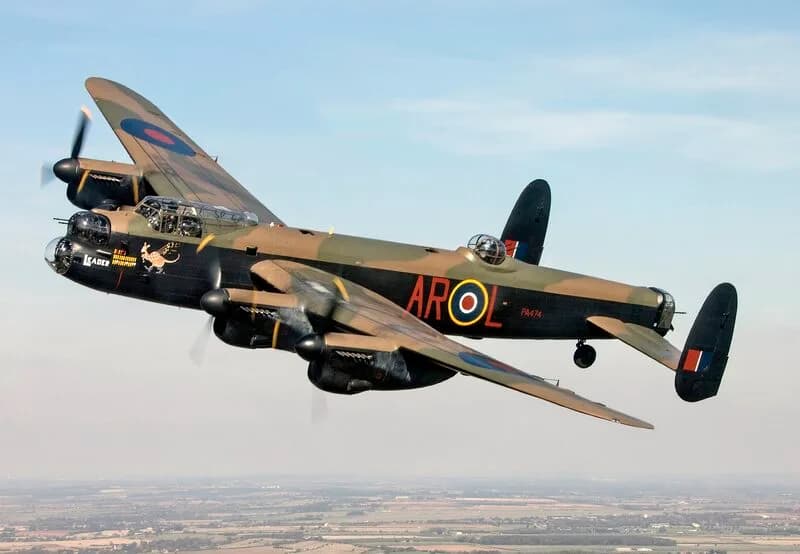
The Avro Lancaster was the principal heavy bomber of RAF Bomber Command during World War II. Capable of carrying up to 10 tons of bombs, it conducted devastating strategic raids on Nazi Germany, including the famous Dambusters raid against the Ruhr dams.
The Avro Lancaster was born from a failure transformed into a triumph. Its predecessor, the Avro Manchester, was a twin-engine bomber that entered service in 1941, but its Rolls-Royce Vulture engines proved catastrophically unreliable, with unacceptable breakdown rates during operations. Roy Chadwick, Avro's chief designer, proposed a radical solution: replace the two Vultures with four proven Rolls-Royce Merlin engines, the same powerplants driving the Spitfire and Hurricane. The prototype, designated Manchester III then Lancaster, made its first flight on January 9, 1941. The results were immediately impressive: payload increased considerably, reliability was transformed, and high-altitude performance was excellent. Bomber Command, led by Air Marshal Arthur 'Bomber' Harris from February 1942, immediately identified the Lancaster as the aircraft that would lead the strategic bombing campaign against Germany. Serial production began in 1942 and accelerated rapidly, with Avro factories at Woodford and Yeadon, Armstrong Whitworth, Austin Motors, Metropolitan-Vickers, and Vickers-Armstrong all contributing. In total, 7,377 Lancasters were built during the war.
The Lancaster B Mk I, the main version, was powered by four Rolls-Royce Merlin XX engines producing 1,280 horsepower each, giving it a maximum speed of 462 km/h at 4,000m and a service ceiling of 7,470m. The wingspan reached 31m with a length of 21.18m. The seven-man crew comprised the pilot, flight engineer, navigator, bomb aimer, wireless operator, and two gunners (dorsal turret and rear turret). The unobstructed 10m bomb bay, a unique Lancaster feature, allowed it to carry loads no other Allied bomber could accommodate: up to 6,350 kg in standard configuration, or the 5,443 kg (12,000 lb) Tallboy and even the 9,979 kg (22,000 lb) Grand Slam after special modifications. Defensive armament comprised eight .303 Browning machine guns in three turrets (nose, dorsal, rear). Range reached 4,070 km with a 3,175 kg bomb load. The Lancaster B Mk III used Merlin engines produced under license by Packard in the United States.
The Lancaster flew 156,000 sorties and dropped 608,612 tons of bombs during the war, two-thirds of Bomber Command's total tonnage. The most famous operation was the Dambusters raid (Operation Chastise) of May 16-17, 1943, during which 19 Lancasters of 617 Squadron, equipped with Barnes Wallis's bouncing bomb 'Upkeep,' attacked the Möhne, Eder, and Sorpe dams in the Ruhr. Two dams were breached, causing catastrophic flooding and disrupting German industrial production, at the cost of 8 Lancasters and 53 aircrew killed. The Lancaster participated in the Battle of Hamburg (July 1943, Operation Gomorrah) which created the first firestorm, killing approximately 37,000 civilians. The raids on Berlin (November 1943 - March 1944) proved costly for Bomber Command: 587 Lancasters lost. The Lancaster was the only aircraft capable of delivering Barnes Wallis's Tallboy and Grand Slam earthquake bombs, used to destroy the battleship Tirpitz, submarine pens, and V-2 launch sites.
The Lancaster was produced in several versions. The B Mk I (3,425 built) with Merlin XX or 22 engines was the standard version. The B Mk III (3,039 built) used Packard-built Merlin 28 or 38 engines. The B Mk X (430 built) was constructed in Canada by Victory Aircraft with Packard Merlin 224s. Special versions included the B Mk I (Special) modified to carry the Dambusters' Upkeep bouncing bomb, and the B Mk I (FE) for the Far East with additional fuel tanks. The Lancaster ASR Mk III was an air-sea rescue aircraft carrying rescue dinghies. After the war, the Lancaster was converted into the Avro Lancastrian, a long-range civil transport, and served as the basis for the Avro Shackleton maritime patrol bomber which remained in service until 1991. The Lancaster directly influenced the design of the Avro Lincoln bomber, its successor, and the iconic Avro Vulcan jet bomber of the British nuclear V-Force. Two Lancasters survive in flying condition today: PA474 of the Battle of Britain Memorial Flight (RAF) and FM213 of the Canadian Warplane Heritage Museum.
The Avro Lancaster is the icon of British strategic bombing and the symbol of Bomber Command during World War II. Of the 7,377 Lancasters built, 3,249 were lost in action — an appalling attrition rate reflecting the mortal danger of night missions over Germany. Approximately 55,573 Bomber Command aircrew were killed during the war, a mortality rate of 44.4%, the highest of any branch of the British armed forces. The Lancaster embodies this sacrifice. Strategically, the bombing campaign led by Lancasters contributed significantly to German defeat by destroying industrial infrastructure, communication routes, and synthetic fuel reserves of the Reich. The moral question of area bombing remains debated: the bombing of Dresden in February 1945, in which Lancasters participated, caused between 22,700 and 25,000 civilian deaths and sparked a controversy that endures. Air Marshal Harris and his crews did not receive a specific campaign medal after the war, an affront only remedied in 2012 with the inauguration of the Bomber Command Memorial in London.
The Avro Lancaster could carry up to 6,350 kg of bombs in standard configuration, thanks to its unobstructed 10-meter bomb bay — unique among Allied bombers. Special versions carried the 5,443 kg Tallboy and even the 9,979 kg (22,000 lb) Grand Slam. These Barnes Wallis earthquake bombs were used to destroy the battleship Tirpitz and German submarine pens.
The Dambusters raid (Operation Chastise, May 16-17, 1943) was conducted by 19 Lancasters of 617 Squadron equipped with Barnes Wallis's 'Upkeep' bouncing bomb. They attacked the Möhne, Eder, and Sorpe dams in Germany's industrial Ruhr region. Two dams were breached, causing flooding and industrial disruption — at the cost of 8 Lancasters lost and 53 aircrew killed.
Of the 7,377 Avro Lancasters built, 3,249 were lost in action. Approximately 55,573 RAF Bomber Command aircrew were killed during the war — a mortality rate of 44.4%, the highest of any branch of the British armed forces. Despite this sacrifice, Air Marshal Harris and his crews did not receive a specific campaign medal, an affront only remedied in 2012.
Information cross-checked against Wikipedia and reference historical works.
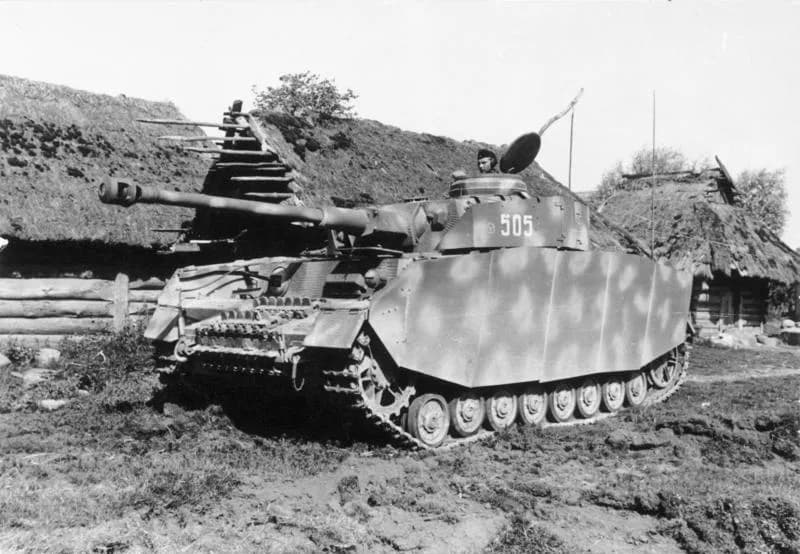
Panzer IV
The Panzerkampfwagen IV was the most produced German medium tank of World War II, with over 8,500 built. Originally designed as an infantry support tank, it evolved into the backbone of the Panzer divisions on every front. It is the only German tank in production from 1939 to 1945.
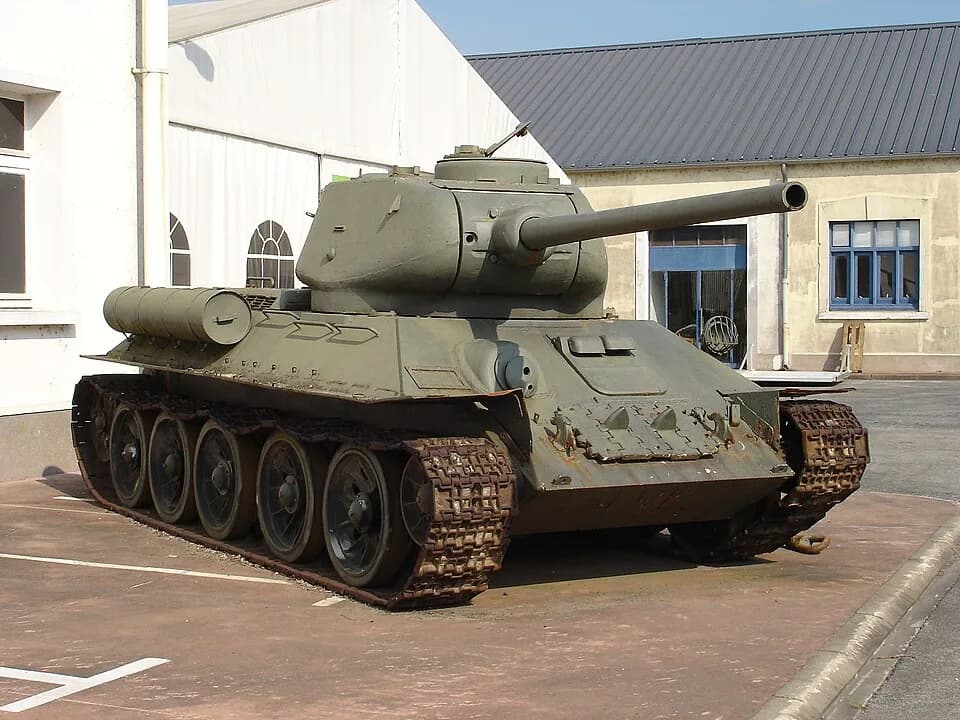
T-34
The T-34 is widely considered the best medium tank of World War II and one of the most influential in military history. Produced in over 84,000 units, its combination of sloped armor, mobility and firepower shocked the Germans in 1941 and shifted the balance of power on the Eastern Front.
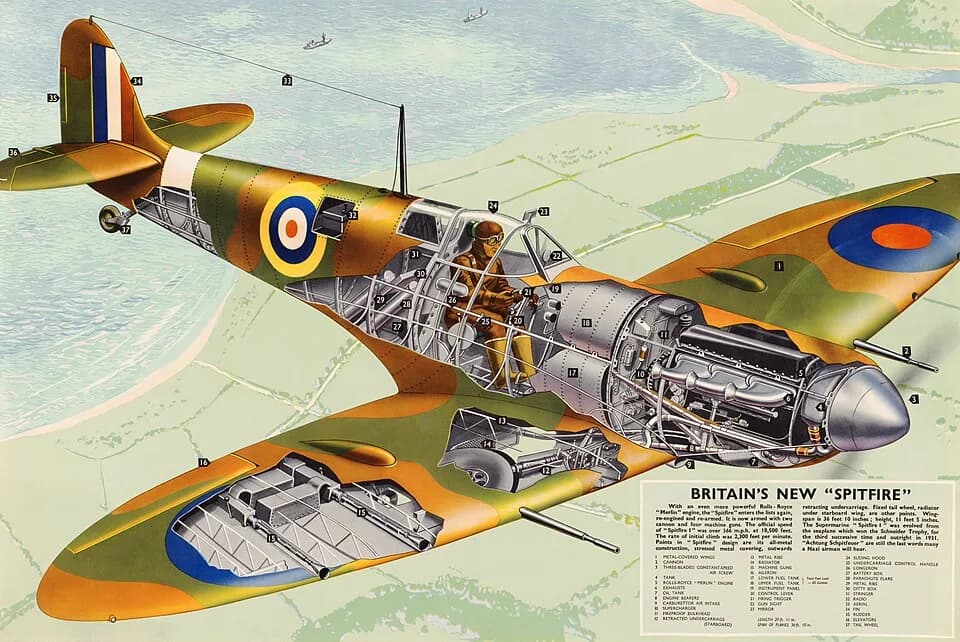
Supermarine Spitfire
The Supermarine Spitfire is the iconic fighter aircraft of the Royal Air Force and a symbol of British resistance during the Battle of Britain. Designed by R.J. Mitchell, its combination of elliptical wings, Rolls-Royce Merlin engine and exceptional agility made it one of the finest fighters of the war.
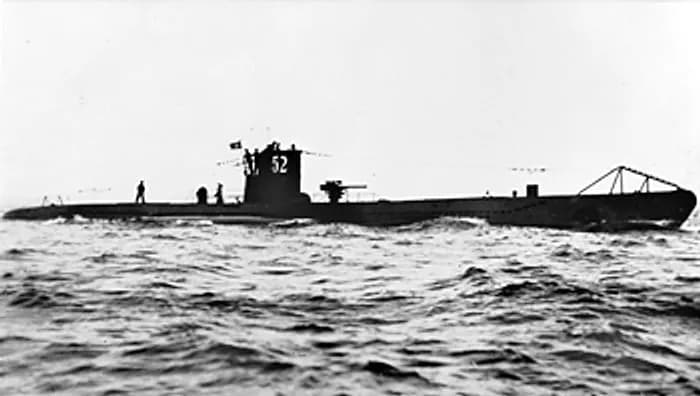
U-Boat Type VII
The Type VII U-boat is the most produced submarine in history with 703 built. The backbone of the Kriegsmarine during the Battle of the Atlantic, these vessels nearly severed the vital supply lines between America and Britain, threatening Great Britain's very survival.
