
About Toothless Wing
Biography coming soon.
Paleontological Comparison
The famous pterosaur vs the largest flying animal that ever existed.
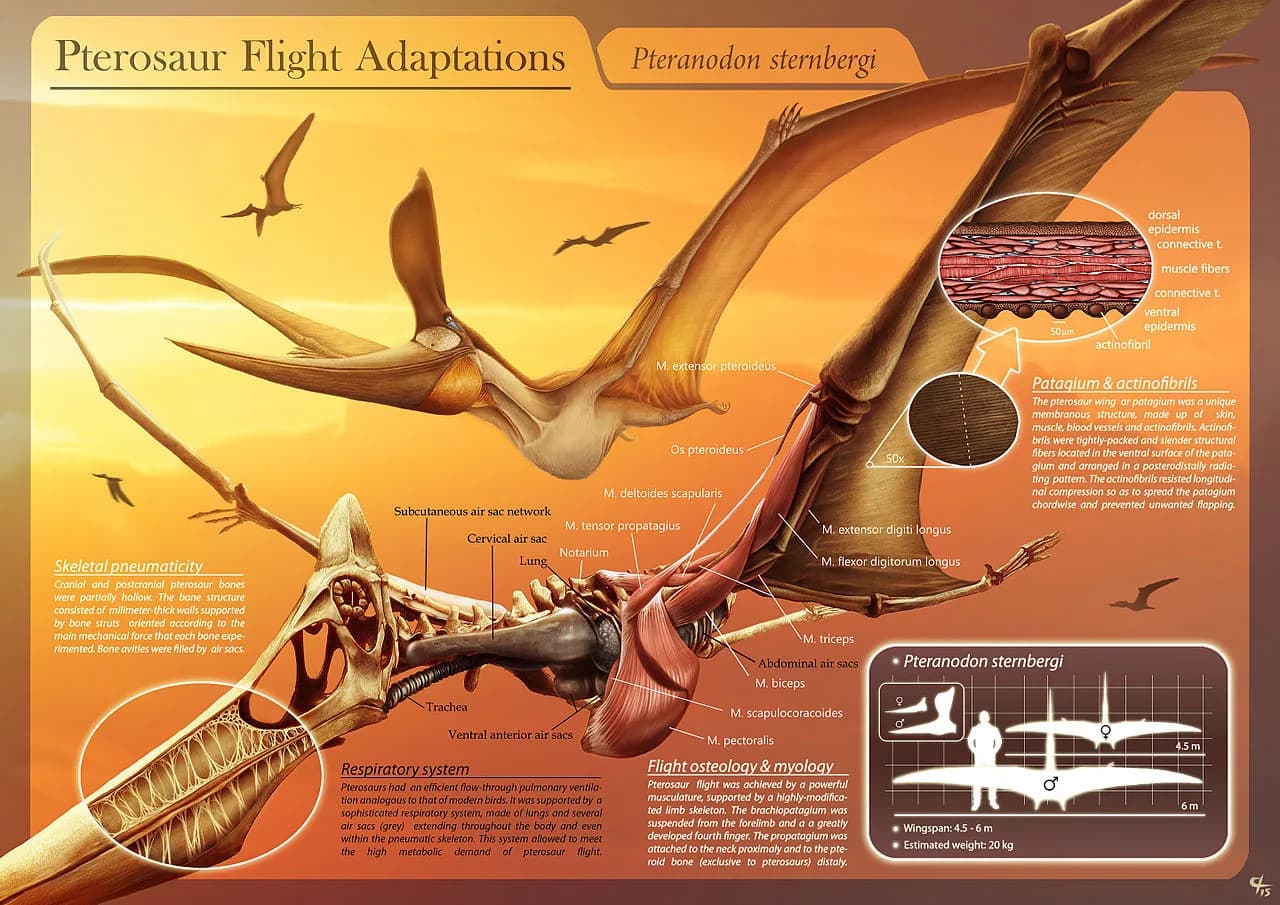
Pteranodon longiceps
Era: Mesozoic
Period: Late Cretaceous
Diet: Piscivore
Region: North America
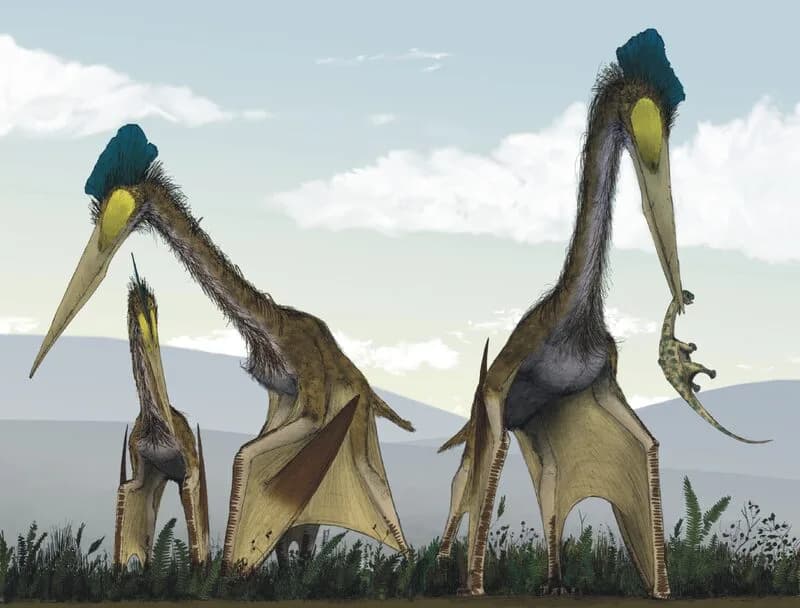
Quetzalcoatlus northropi
Era: Mesozoic
Period: Late Cretaceous
Diet: Piscivore
Region: North America
| Criterion | Toothless Wing | Quetzalcoatlus |
|---|---|---|
| Length | 1.8 m (corps m | 2.5 m (crâne m |
| Height | N/A m | 4.5-5 m (au sol m |
| Weight | 15-35 kg t | 200-250 kg t |
| Era | Mesozoic | Mesozoic |
| Diet | Piscivore | Piscivore |
Verdict (physical categories)
Quetzalcoatlusleads (2/2)
Note: size is only one factor. Speed, bite force, intelligence and hunting strategy matter too.
Biography coming soon.
Biography coming soon.
Yes, according to current estimates. Quetzalcoatlus northropi had a wingspan of 10 to 12 metres and ~200-250 kg — the largest known flying animal. Pteranodon longiceps had a wingspan of 5-7 metres and 15-20 kg. Both were pterosaurs (flying reptiles, not dinosaurs), living in the Late Cretaceous in North America.
Biomechanical studies (Habib & Witton, 2010) suggest Quetzalcoatlus northropi took off by propelling its forelimbs off the ground (quadrupedal launch) rather than running. Once airborne, its gigantism would allow it to glide hundreds of kilometres on thermals, similar to modern giant albatrosses.
No. Pteranodon flew 88 to 80 million years ago above the North American inland sea; Quetzalcoatlus appears only between 68 and 66 million years ago, just before the extinction. Some twelve million years separate them, and the latter hunted mostly on the ground, on foot, like a giant stork.
Keep exploring paleontology