
About Megalodon
Biography coming soon.
Paleontological Comparison
The giant Cenozoic shark vs the Cretaceous marine lizard.
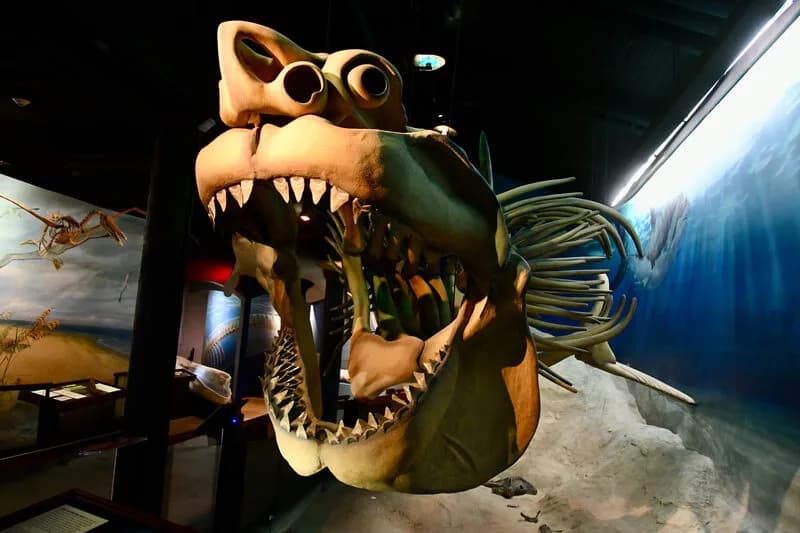
Otodus megalodon
Era: Cenozoic
Period: Miocene-Pliocene
Diet: —
Region: Worldwide oceans
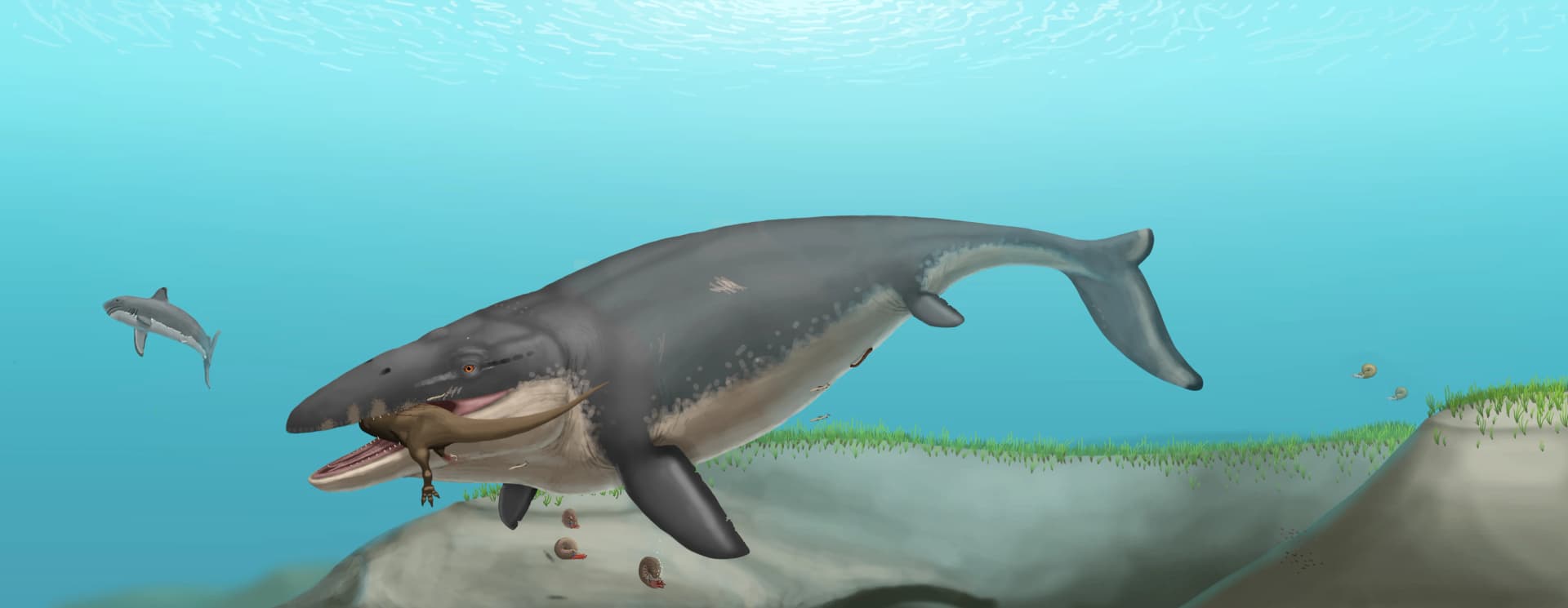
Mosasaurus hoffmannii
Era: Mesozoic
Period: Late Cretaceous
Diet: Piscivore
Region: Worldwide (Netherlands, North America, Africa, Antarctica)
| Criterion | Megalodon | Meuse Lizard |
|---|---|---|
| Length | 15-18 m m | 12-17 m m |
| Height | 4-5 m m | 2-3 m m |
| Weight | 50-60 tonnes t | 5-15 tonnes t |
| Era | Cenozoic | Mesozoic |
| Diet | — | Piscivore |
Verdict (physical categories)
Megalodonleads (3/3)
Note: size is only one factor. Speed, bite force, intelligence and hunting strategy matter too.
Biography coming soon.
Biography coming soon.
No. Mosasaurus hoffmannii (a marine lizard, not a dinosaur) went extinct 66 Ma at the end of the Cretaceous. Megalodon (Otodus megalodon) emerged ~23 Ma in the Miocene and went extinct ~3.6 Ma. Separated by 60 million years, they never shared the same oceans.
No. Mosasaurus hoffmannii was a mosasaur — a large squamate marine reptile (related to monitor lizards and snakes, not dinosaurs). Measuring up to 14-17 metres, it was the apex predator of Late Cretaceous oceans (82-66 Ma). Mosasaurs went extinct with non-avian dinosaurs 66 Ma.
Megalodon, far bulkier. It reached 15 to 18 metres and 50 to 60 tonnes, while Mosasaurus hoffmannii topped out at 12–17 metres and 5 to 15 tonnes. At near-comparable lengths, the shark therefore weighed several times more, with a much thicker body and teeth measuring 18 centimetres.
Keep exploring paleontology