
About Woolly Mammoth
Biography coming soon.
Paleontological Comparison
The Ice Age giant vs the saber-toothed cat.
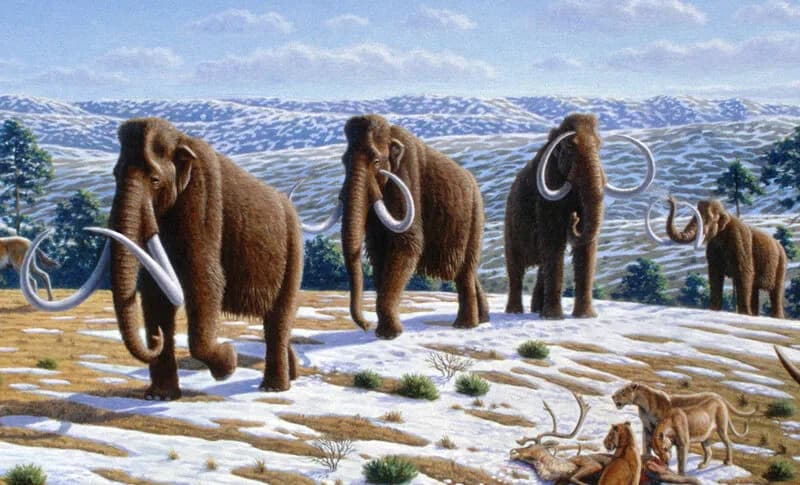
Mammuthus primigenius
Era: Cenozoic
Period: Pleistocene
Diet: Herbivore
Region: Northern Hemisphere (Eurasia, North America, Wrangel Island)
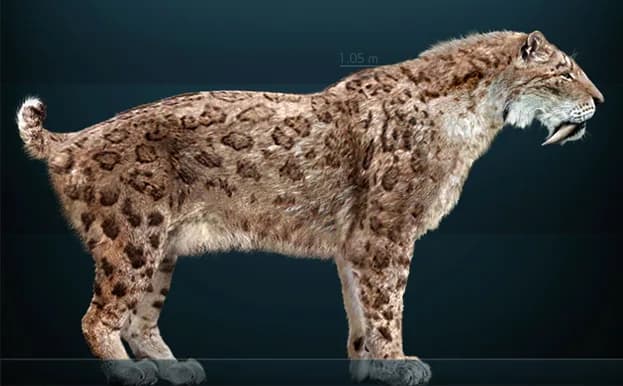
Smilodon fatalis
Era: Cenozoic
Period: Pleistocene
Diet: Carnivore
Region: Americas (North & South America)
| Criterion | Woolly Mammoth | Saber-Toothed Cat |
|---|---|---|
| Length | 4.0-5.0 m m | 1.7-2.5 m m |
| Height | 2.7-3.7 m (au garrot m | 1.0-1.2 m (au garrot m |
| Weight | 4-6 tonnes (jusqu'à 8 t t | 160-280 kg (S. fatalis), jusqu'à 400 kg (S. populator) t |
| Era | Cenozoic | Cenozoic |
| Diet | Herbivore | Carnivore |
Verdict (physical categories)
Woolly Mammothleads (2/3)
Note: size is only one factor. Speed, bite force, intelligence and hunting strategy matter too.
Biography coming soon.
Biography coming soon.
Probably rarely. Smilodon fatalis weighed 160-280 kg — much lighter than an adult Mammuthus primigenius (4-6 tonnes). Fossil evidence mainly associates Smilodon with medium-sized prey (bison, horses, giant sloths). Juvenile or sick mammoths could be targets, but a healthy adult was out of reach.
Smilodon fatalis's canines measured up to 28 cm (visible crown). Their main function was to pierce the throat or trachea of prey — a precision bite rather than crushing. Too fragile to bite bone, they required already-immobilised prey. Smilodon likely used its powerful forelegs to pin prey to the ground before the killing bite.
They overlapped little. The woolly mammoth occupied the cold steppe of Eurasia and northern America, while Smilodon fatalis stayed mainly in more temperate parts of North America, and S. populator in South America. Their ranges met in the northern part of the Americas without broadly coinciding.
Keep exploring paleontology