
About Woolly Mammoth
Biography coming soon.
Paleontological Comparison
The woolly mammoth vs the Columbian mammoth — who was bigger?
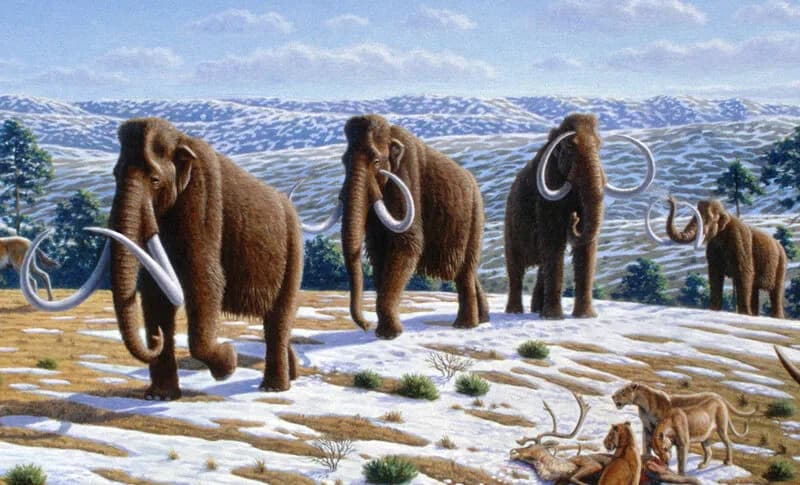
Mammuthus primigenius
Era: Cenozoic
Period: Pleistocene
Diet: Herbivore
Region: Northern Hemisphere (Eurasia, North America, Wrangel Island)
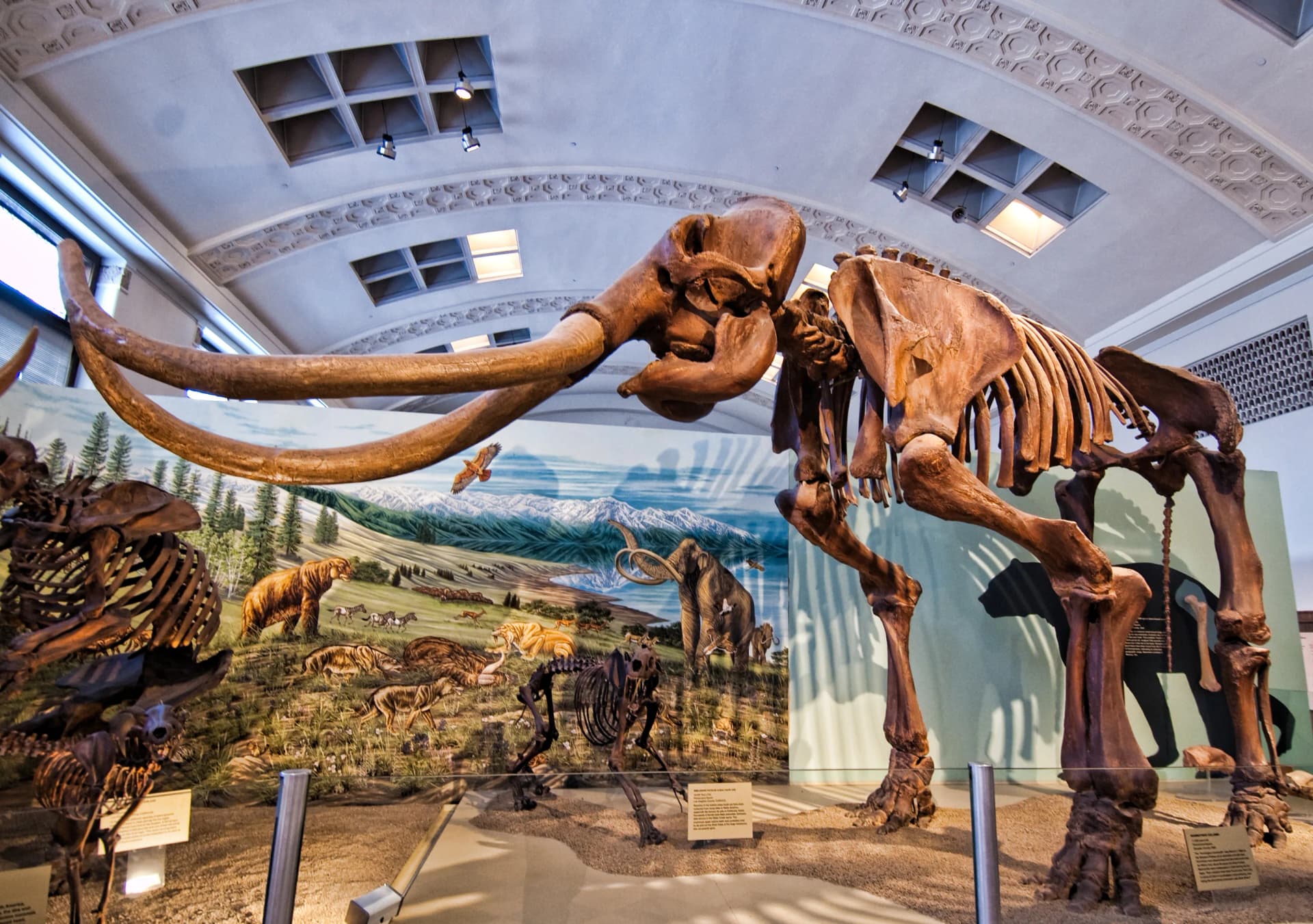
Mammuthus columbi
Era: Cenozoic
Period: Pleistocene
Diet: Herbivore
Region: North America (Canada to Mexico)
| Criterion | Woolly Mammoth | Columbian Mammoth |
|---|---|---|
| Length | 4.0-5.0 m m | 4.5 m m |
| Height | 2.7-3.7 m (au garrot m | 4 m (au garrot m |
| Weight | 4-6 tonnes (jusqu'à 8 t t | 8-10 tonnes t |
| Era | Cenozoic | Cenozoic |
| Diet | Herbivore | Herbivore |
Verdict (physical categories)
Columbian Mammothleads (2/3)
Note: size is only one factor. Speed, bite force, intelligence and hunting strategy matter too.
Biography coming soon.
Biography coming soon.
Mammuthus columbi was the larger of the two: 3.7-4 metres at the shoulder and 8-10 tonnes, versus 2.7-3.4 metres and 4-6 tonnes for Mammuthus primigenius (the woolly). The Columbian mammoth lived in the warm plains of North America, while its woolly cousin was adapted to the glacial steppes of Eurasia and North America.
Ancient DNA analyses (2021, Palkopoulou et al.) revealed that Mammuthus primigenius and Mammuthus columbi interbred where their ranges overlapped (subarctic regions of North America). These hybrids are sometimes called "Wrangel mammoths," after the island where the last population of Mammuthus primigenius survived until ~4,000 years ago.
The woolly mammoth, by a wide margin. The Columbian mammoth disappears around 11,000 years ago, at the end of the Pleistocene. The woolly held on to roughly 4,000 years ago on Wrangel Island, in the Russian Arctic — that is, after the Giza pyramids were built. An isolated population outlasted the mainland by millennia.
Keep exploring paleontology