
About Liopleurodon
Biography coming soon.
Paleontological Comparison
The Jurassic pliosaur vs the Cretaceous mosasaur.
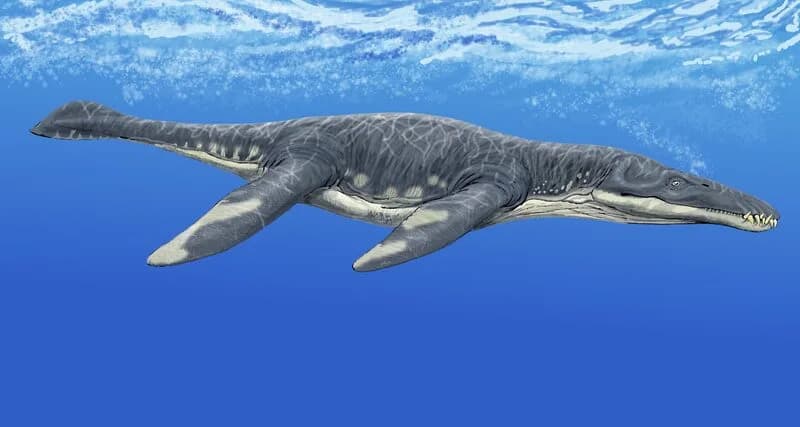
Liopleurodon ferox
Era: Mesozoic
Period: Middle Jurassic (Callovien)
Diet: Piscivore
Region: Europe (Angleterre, France, Allemagne)
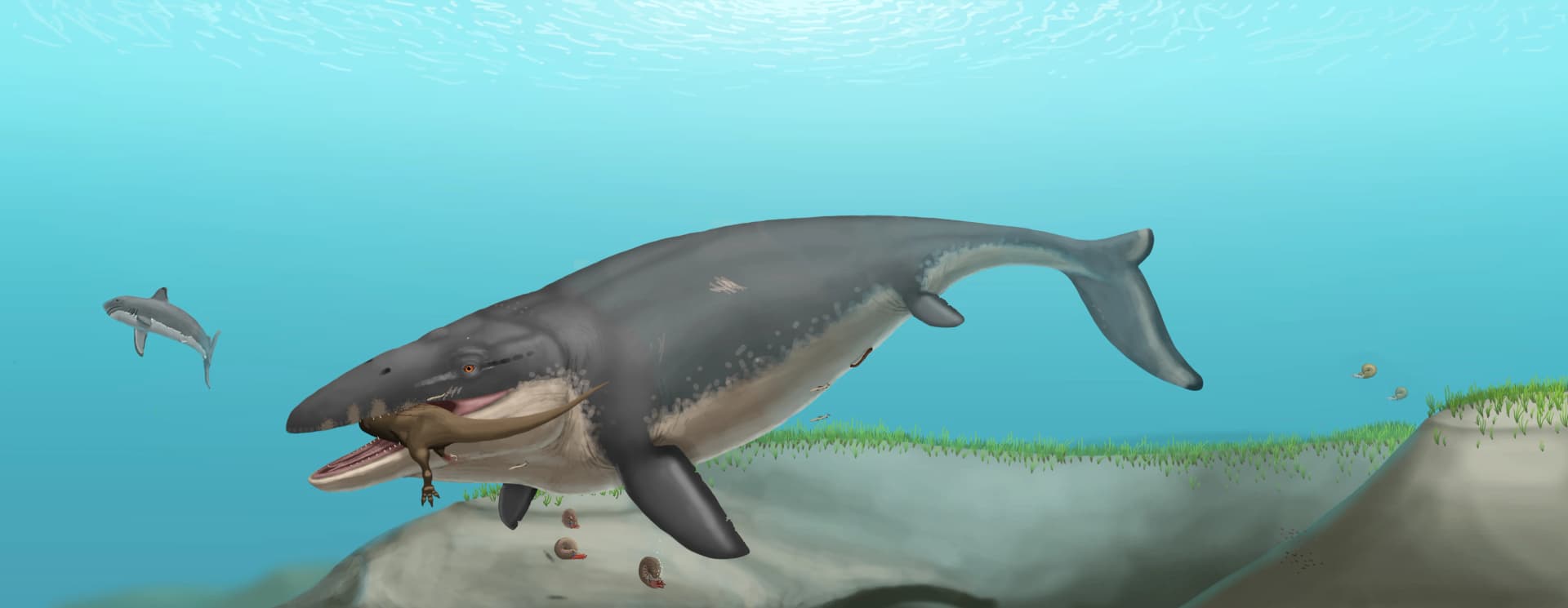
Mosasaurus hoffmannii
Era: Mesozoic
Period: Late Cretaceous
Diet: Piscivore
Region: Worldwide (Netherlands, North America, Africa, Antarctica)
| Criterion | Liopleurodon | Meuse Lizard |
|---|---|---|
| Length | 5–7 m m | 12-17 m m |
| Height | ~1.5 m m | 2-3 m m |
| Weight | 1–2 tonnes t | 5-15 tonnes t |
| Era | Mesozoic | Mesozoic |
| Diet | Piscivore | Piscivore |
Verdict (physical categories)
Meuse Lizardleads (3/3)
Note: size is only one factor. Speed, bite force, intelligence and hunting strategy matter too.
Biography coming soon.
Biography coming soon.
No. The BBC Walking with Dinosaurs series (1999) depicted Liopleurodon ferox at 25 metres — an extreme dramatisation. Real fossils indicate a size of 6-7 metres for known specimens, though fragments suggest individuals possibly reaching 10 metres. It remains a marine apex of the Late Jurassic, but not the 25 m monster of the series.
No, never. Liopleurodon swam in the Late Jurassic, 160 to 155 million years ago; Mosasaurus appears only in the Late Cretaceous, between 82 and 66 million years ago. Nearly 75 million years separate them, and they belong to two distinct lineages: a pliosaur on one side, a marine lizard on the other.
Mosasaurus, without contest. It measured 12 to 17 metres and 5 to 15 tonnes, against 5 to 7 metres and 1 to 2 tonnes for the known specimens of Liopleurodon ferox. Liopleurodon's outsized reputation comes from a television dramatisation, not from the fossil record.
Keep exploring paleontology