
About Dire Wolf
Biography coming soon.
Paleontological Comparison
The dire wolf vs the saber-toothed cat — Pleistocene super-predator duel.
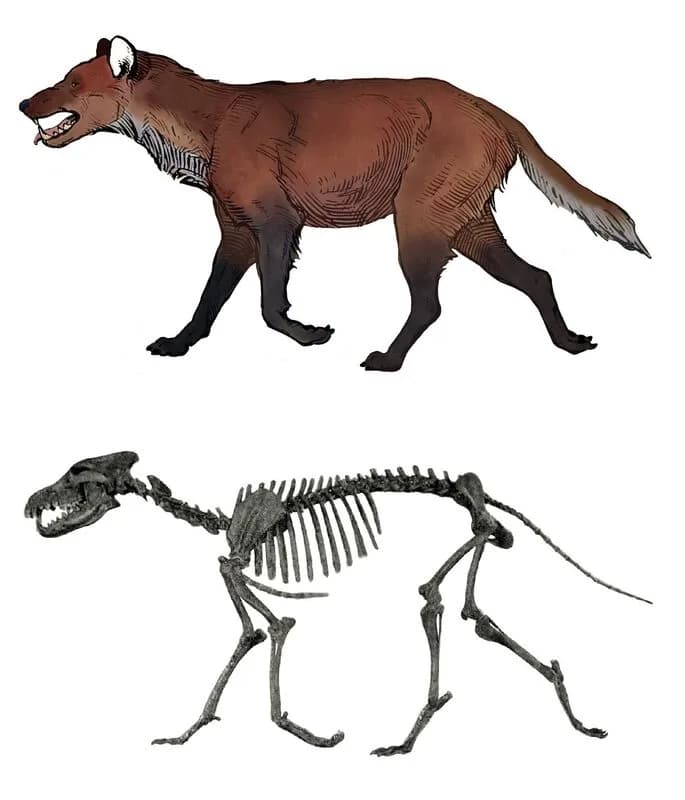
Aenocyon dirus
Era: Cenozoic
Period: Pleistocene
Diet: Carnivore
Region: Americas
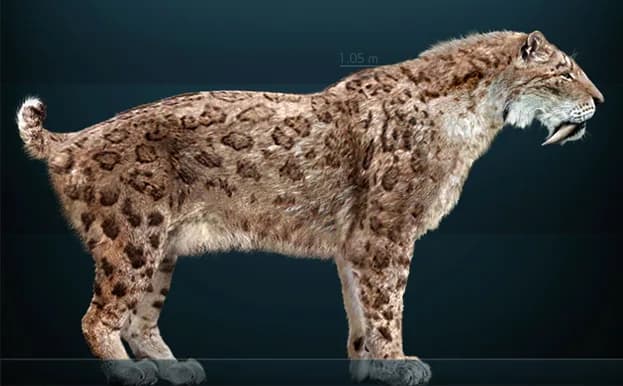
Smilodon fatalis
Era: Cenozoic
Period: Pleistocene
Diet: Carnivore
Region: Americas (North & South America)
| Criterion | Dire Wolf | Saber-Toothed Cat |
|---|---|---|
| Length | 1.5-1.7 m m | 1.7-2.5 m m |
| Height | 0.8-0.9 m m | 1.0-1.2 m (au garrot m |
| Weight | 50-80 kg t | 160-280 kg (S. fatalis), jusqu'à 400 kg (S. populator) t |
| Era | Cenozoic | Cenozoic |
| Diet | Carnivore | Carnivore |
Verdict (physical categories)
Saber-Toothed Catleads (3/3)
Note: size is only one factor. Speed, bite force, intelligence and hunting strategy matter too.
Biography coming soon.
Biography coming soon.
Canis dirus weighed 60-68 kg, roughly 25% more than a modern grey wolf (Canis lupus, 25-50 kg). The difference is less dramatic than its name implies: the "dire wolf" was stockier and more robust, with a more powerful jaw. However, its legs were proportionally shorter, making it slower.
Yes — the La Brea tar pits (Los Angeles) have yielded thousands of individuals of both species trapped in the same asphalt pits. Smilodon fatalis and Canis dirus hunted the same Pleistocene North American grasslands. They likely competed for the same prey — bison, horses, giant sloths — regularly stealing carcasses from each other.
Partly, but not the same way. The dire wolf, at 50 to 80 kilograms, made up for its size with pack numbers and stamina. Smilodon fatalis, at 160 to 280 kilograms — up to 400 for S. populator — ambushed far heavier prey. The La Brea tar pits yield both by the thousand, often in the same layers.
Keep exploring paleontology