
About Argentinosaurus
Biography coming soon.
Paleontological Comparison
The most massive vs the longest: who impresses most?
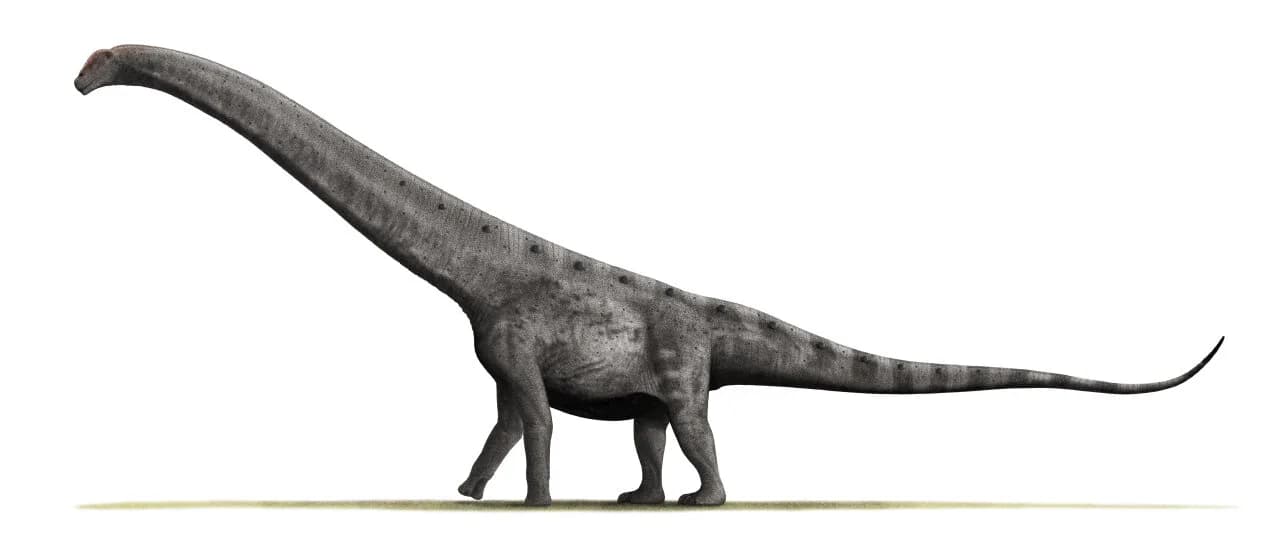
Argentinosaurus huinculensis
Era: Mesozoic
Period: Late Cretaceous (Cénomanien–Turonien)
Diet: Herbivore
Region: South America (Argentine
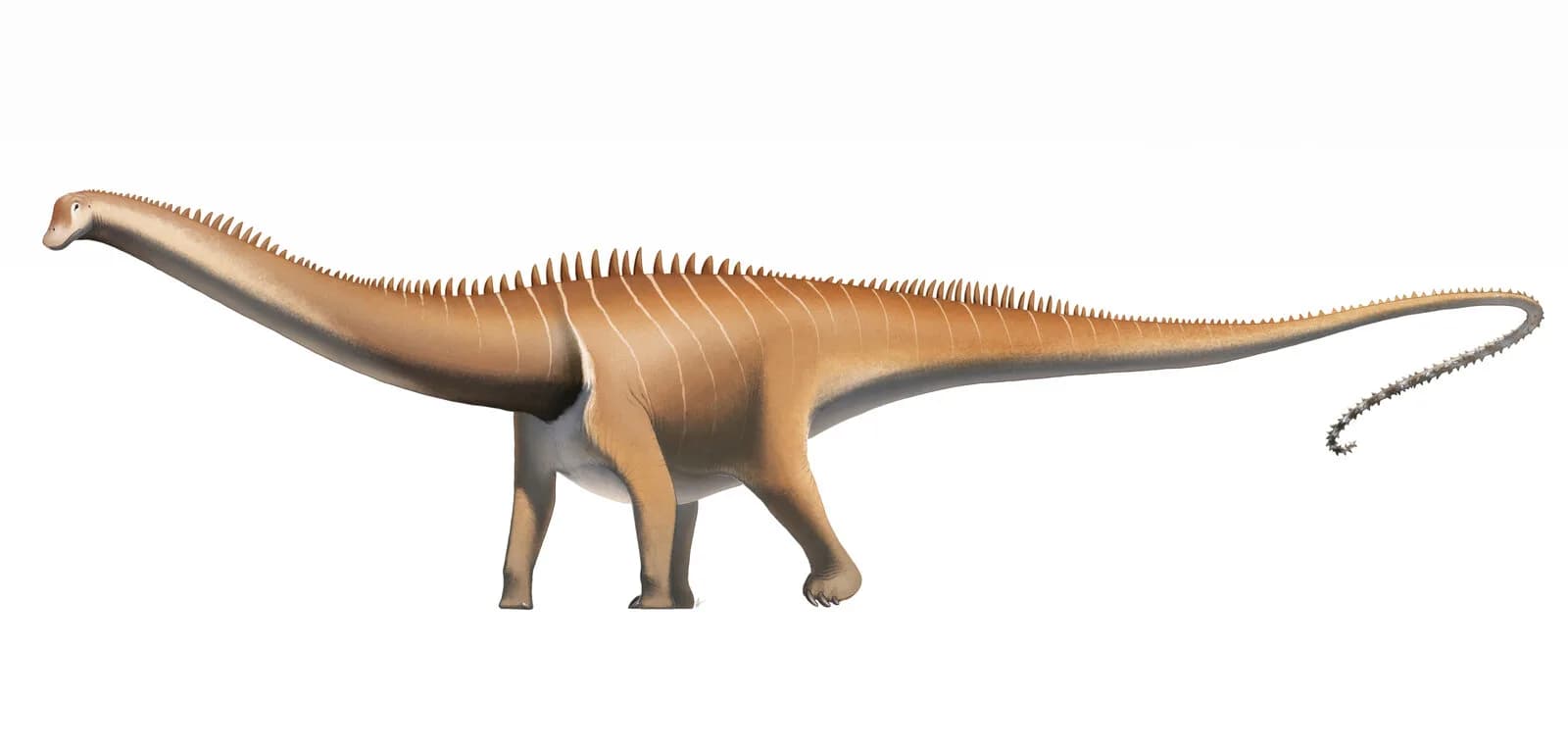
Diplodocus carnegii
Era: Mesozoic
Period: Late Jurassic
Diet: Herbivore
Region: North America (Wyoming, Colorado, Utah)
| Criterion | Argentinosaurus | Diplodocus |
|---|---|---|
| Length | 30–35 m m | 24–27 m m |
| Height | ~7 m m | ~4–5 m (épaules) m |
| Weight | 65 000–80 000 kg t | 10 000–16 000 kg t |
| Era | Mesozoic | Mesozoic |
| Diet | Herbivore | Herbivore |
Verdict (physical categories)
Argentinosaurusleads (3/3)
Note: size is only one factor. Speed, bite force, intelligence and hunting strategy matter too.
Biography coming soon.
Biography coming soon.
Estimates range from 70 to 100 tonnes for Argentinosaurus huinculensis, based on partial vertebrae — the most complete bones available. The high estimates (100 t) remain debated. Patagotitan mayorum, better preserved with 70% of the skeleton, is estimated at 70 tonnes and allows more reliable comparison.
No. Diplodocus carnegii lived in the Late Jurassic (154-152 Ma) in North America. Argentinosaurus huinculensis lived in the Late Cretaceous (~96 Ma) in South America. Separated by 60 million years and a continent, they belong to distinct sauropod lineages: Diplodocidae vs Titanosauria.
Extremely. At 24 to 27 metres it nearly matches Argentinosaurus in length, yet weighs only 10 to 16 tonnes against 65 to 80. Its size sits in a whip-like tail and a very long neck, mounted on a relatively light trunk with air-hollowed vertebrae. Argentinosaurus, by contrast, was built for thickness.
Keep exploring paleontology